VIB Center for Brain & Disease Research, Herestraat 49, B-3000, Leuven, Belgium.
Department of Neurosciences, KU Leuven, Herestraat 49, B-3000, Leuven, Belgium.
Exp Mol Med. 2018 Apr 9;50(4):1-9. doi: 10.1038/s12276-017-0023-8.
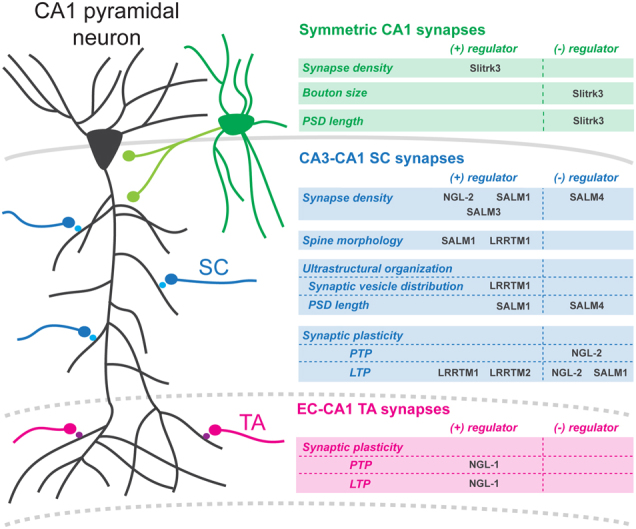
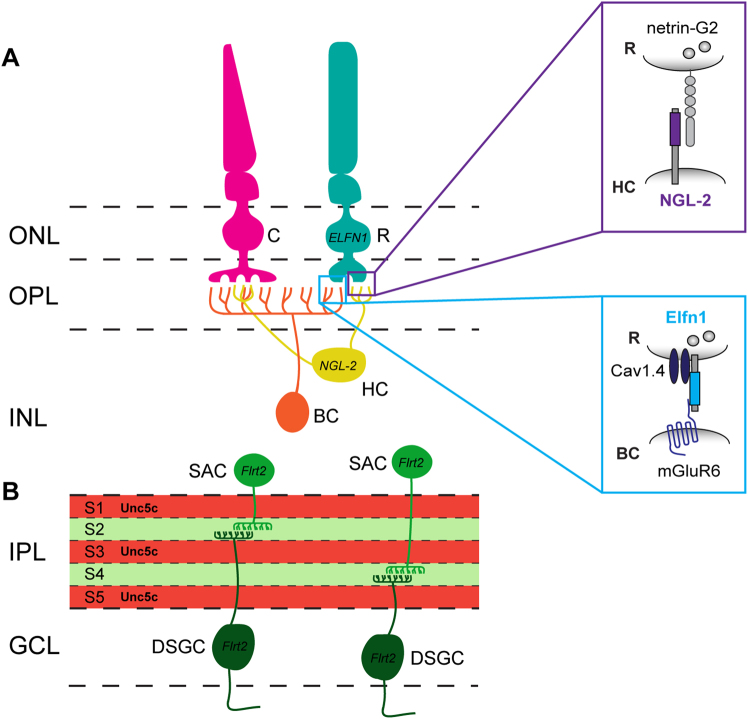
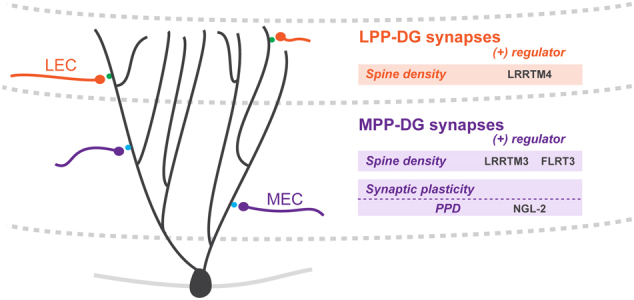
The brain harbors billions of neurons that form distinct neural circuits with exquisite specificity. Specific patterns of connectivity between distinct neuronal cell types permit the transfer and computation of information. The molecular correlates that give rise to synaptic specificity are incompletely understood. Recent studies indicate that cell-surface molecules are important determinants of cell type identity and suggest that these are essential players in the specification of synaptic connectivity. Leucine-rich repeat (LRR)-containing adhesion molecules in particular have emerged as key organizers of excitatory and inhibitory synapses. Here, we discuss emerging evidence that LRR proteins regulate the assembly of specific connectivity patterns across neural circuits, and contribute to the diverse structural and functional properties of synapses, two key features that are critical for the proper formation and function of neural circuits.
大脑中蕴藏着数以亿计的神经元,这些神经元形成了具有高度特异性的独特神经回路。不同神经元类型之间特定的连接模式允许信息的传递和计算。突触特异性产生的分子相关性尚不完全清楚。最近的研究表明,细胞表面分子是细胞类型身份的重要决定因素,并表明这些分子是突触连接特异性的关键参与者。富含亮氨酸重复(LRR)的细胞粘附分子尤其成为兴奋性和抑制性突触的关键组织者。在这里,我们讨论了新出现的证据,即 LRR 蛋白调节整个神经回路中特定连接模式的组装,并有助于突触的多种结构和功能特性,这两个关键特征对于神经回路的正确形成和功能至关重要。