Department of Cardiology, Xijing Hospital, Fourth Military Medical University, Xi'an, China.
Student Brigade, Preclinical School of Medicine, The Fourth Military Medical University, Xi'an, China.
Front Immunol. 2021 Feb 24;12:614429. doi: 10.3389/fimmu.2021.614429. eCollection 2021.
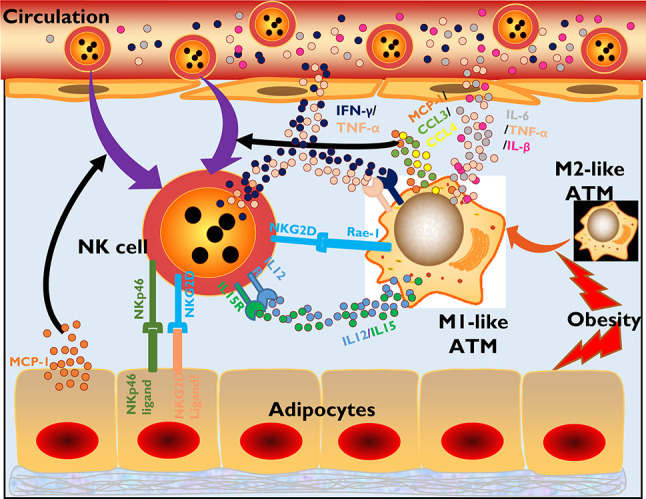
The worldwide epidemic of metabolic diseases, especially obesity and other diseases caused by it, has shown a dramatic increase in incidence. A great deal of attention has been focused on the underlying mechanisms of these pathological processes and potential strategies to solve these problems. Chronic inflammation initiated by abdominal adipose tissues and immune cell activation in obesity is the major cause of the consequent development of complications. In addition to adipocytes, macrophages and monocytes, natural killer (NK) cells have been verified to be vital components involved in shaping the inflammatory microenvironment, thereby leading to various obesity-related metabolic diseases. Here, we provide an overview of the roles of NK cells and the interactions of these cells with other immune and nonimmune cells in the pathological processes of metabolic diseases. Finally, we also discuss potential therapeutic strategies targeting NK cells to treat metabolic diseases.
全球代谢性疾病(尤其是肥胖症及其引发的其他疾病)的流行发病率呈现出显著的上升趋势。人们对这些病理过程的潜在机制以及解决这些问题的潜在策略给予了高度关注。肥胖症中腹部脂肪组织和免疫细胞的慢性炎症激活是导致后续并发症发展的主要原因。除了脂肪细胞,巨噬细胞和单核细胞外,自然杀伤(NK)细胞已被证实是参与塑造炎症微环境的重要组成部分,从而导致各种与肥胖相关的代谢性疾病。在这里,我们概述了 NK 细胞的作用以及这些细胞与其他免疫细胞和非免疫细胞在代谢性疾病病理过程中的相互作用。最后,我们还讨论了针对 NK 细胞的潜在治疗策略,以治疗代谢性疾病。