Dickin Katherine L, Litvin Kate, McCann Juliet K, Coleman Fiona M
Program in International Nutrition, Division of Nutritional Sciences, Cornell University, Ithaca, NY, USA.
USAID Advancing Nutrition, Crystal City, VA, USA.
Curr Dev Nutr. 2021 Jan 16;5(2):nzab001. doi: 10.1093/cdn/nzab001. eCollection 2021 Feb.
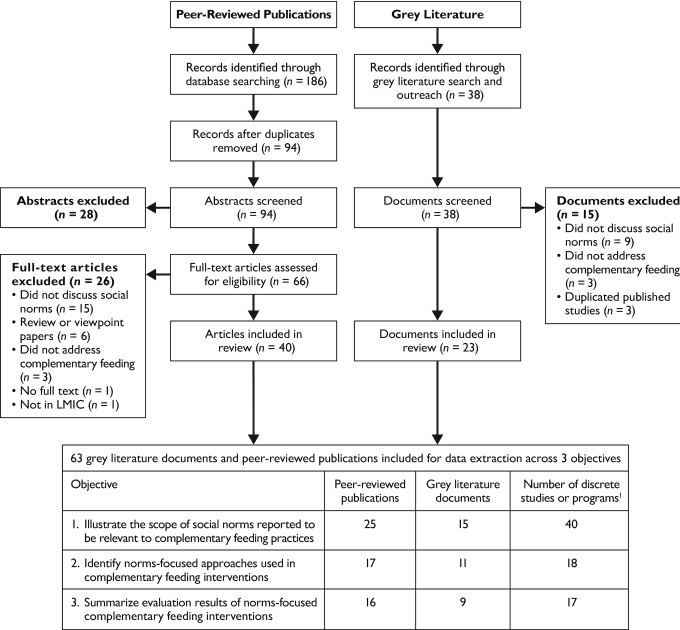
The influence of social norms on child feeding is recognized, but guidance is lacking on how to address norms and related perceptions that hinder or support positive nutrition practices. We reviewed recent peer-reviewed and grey literature to summarize social norms relevant to complementary feeding (CF), intervention approaches that address norms, and their impacts on social norms and CF outcomes. Many reports described various norms, customs, and perceptions related to appropriate foods for young children, parenting practices, gender, and family roles, but rarely explored how they motivated behavior. Community engagement and media interventions addressed norms through facilitated discussions, challenging negative norms, portraying positive norms, engaging emotions, and correcting misperceptions. Evaluations of norms-focused interventions reported improved CF practices, but few assessed impacts on social norms. Although multiple contextual factors influence CF practices, evidence suggests the feasibility and effectiveness of addressing social norms as one component of programs to improve CF practices.
社会规范对儿童喂养的影响已得到认可,但在如何应对阻碍或支持积极营养实践的规范及相关观念方面,仍缺乏指导。我们回顾了近期的同行评审文献和灰色文献,以总结与辅食喂养(CF)相关的社会规范、应对规范的干预方法及其对社会规范和CF结果的影响。许多报告描述了与幼儿适宜食物、养育方式、性别和家庭角色相关的各种规范、习俗和观念,但很少探讨它们如何激发行为。社区参与和媒体干预通过促进讨论、挑战负面规范、描绘正面规范、激发情感和纠正误解来应对规范。对以规范为重点的干预措施的评估报告称CF实践有所改善,但很少评估对社会规范的影响。尽管多种背景因素影响CF实践,但有证据表明,将应对社会规范作为改善CF实践项目的一个组成部分具有可行性和有效性。