Yu Tingting, Zhu Jingtan, Li Dongyu, Zhu Dan
Britton Chance Center for Biomedical Photonics, Wuhan National Laboratory for Optoelectronics-Huazhong University of Science and Technology, Wuhan, Hubei 430074, China.
MoE Key Laboratory for Biomedical Photonics, School of Engineering Sciences, Huazhong University of Science and Technology, Wuhan, Hubei 430074, China.
iScience. 2021 Feb 12;24(3):102178. doi: 10.1016/j.isci.2021.102178. eCollection 2021 Mar 19.
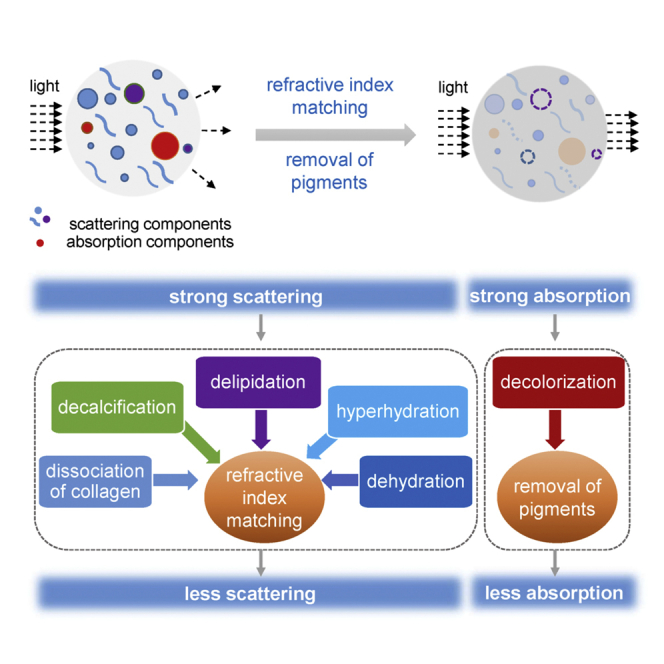
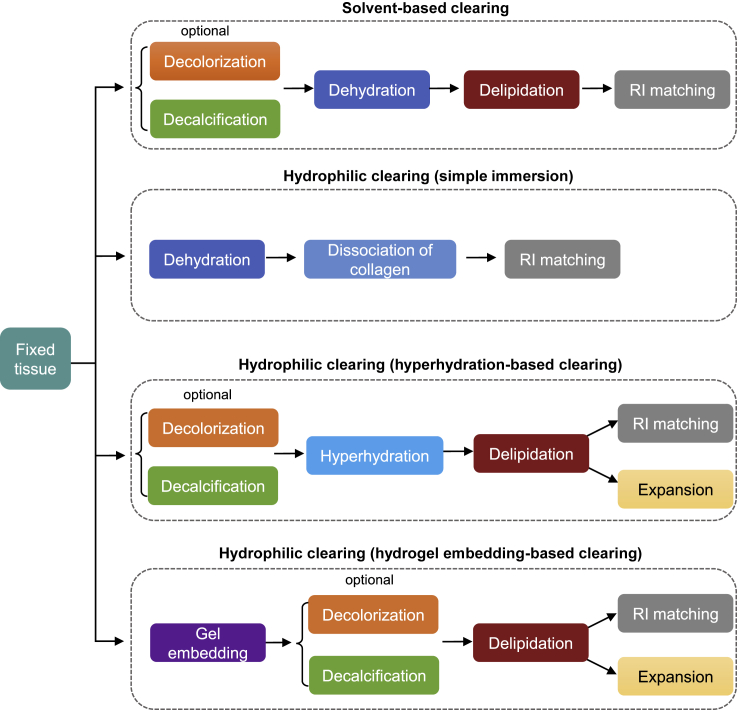
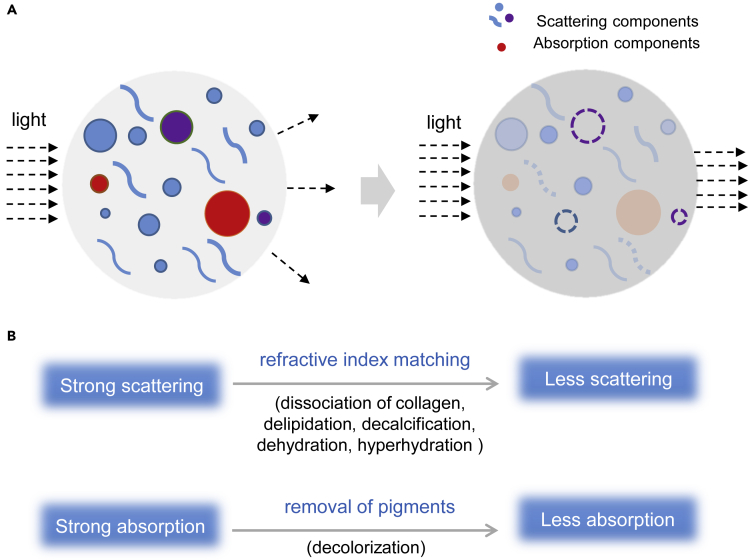
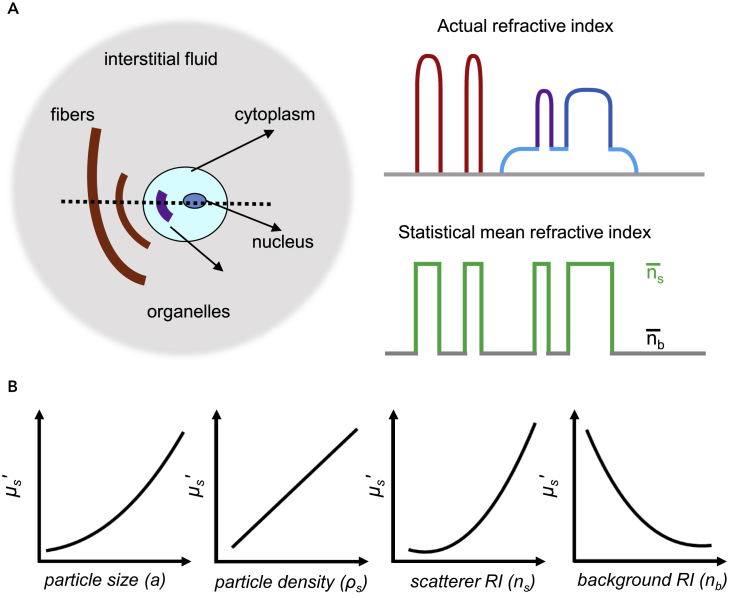
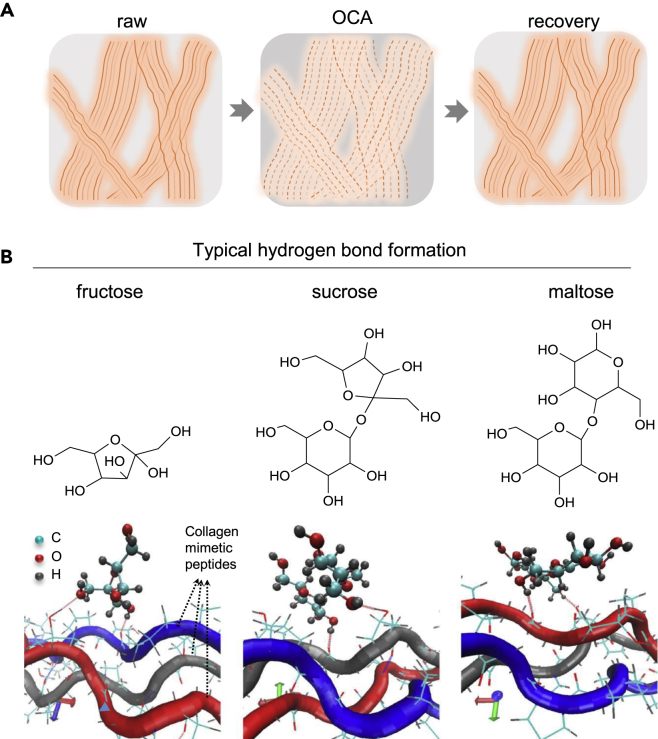
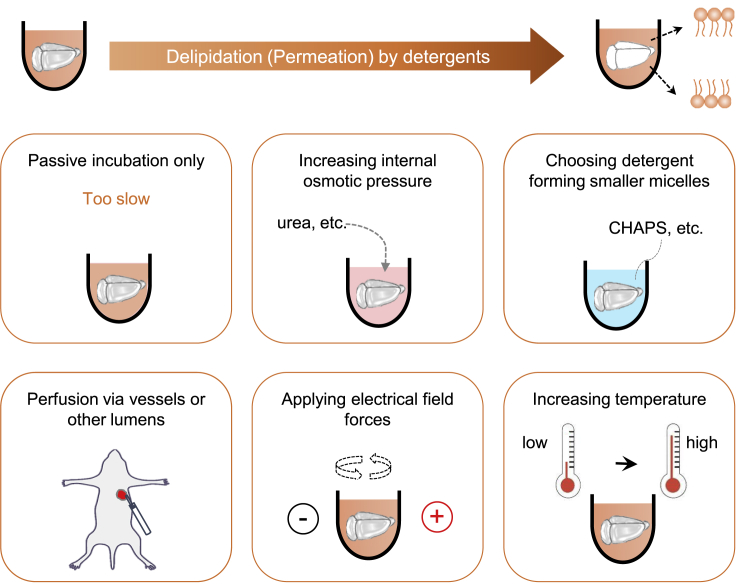
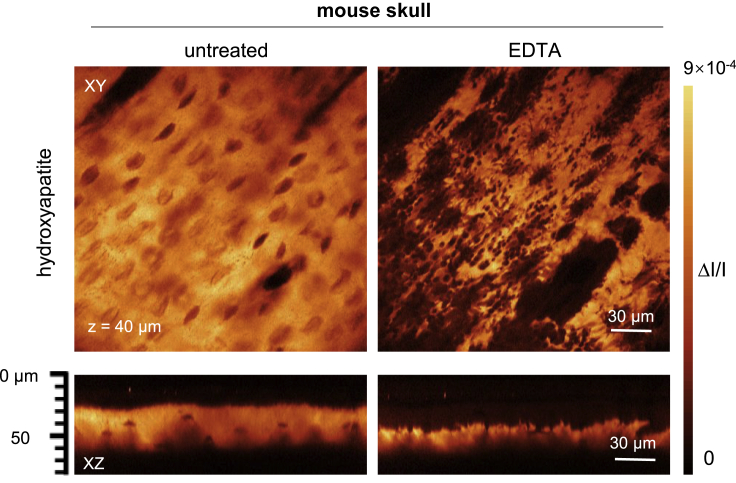
Advanced optical methods combined with various probes pave the way toward molecular imaging within living cells. However, major challenges are associated with the need to enhance the imaging resolution even further to the subcellular level for the imaging of larger tissues, as well as for studies. High scattering and absorption of opaque tissues limit the penetration of light into deep tissues and thus the optical imaging depth. Tissue optical clearing technique provides an innovative way to perform deep-tissue imaging. Recently, various optical clearing methods have been developed, which provide tissue clearing based on similar physical principles via different chemical approaches. Here, we introduce the mechanisms of the current clearing methods from fundamental physical and chemical perspectives, including the main physical principle, refractive index matching via various chemical approaches, such as dissociation of collagen, delipidation, decalcification, dehydration, and hyperhydration, to reduce scattering, as well as decolorization to reduce absorption.
先进的光学方法与各种探针相结合,为活细胞内的分子成像铺平了道路。然而,主要挑战在于,为了对更大的组织进行成像以及开展相关研究,需要将成像分辨率进一步提高到亚细胞水平。不透明组织的高散射和吸收限制了光进入深层组织的深度,从而限制了光学成像深度。组织光学透明技术为进行深层组织成像提供了一种创新方法。最近,已开发出各种光学透明方法,这些方法通过不同的化学途径基于相似的物理原理实现组织透明化。在此,我们从基本的物理和化学角度介绍当前透明方法的机制,包括主要物理原理、通过各种化学方法进行折射率匹配,如胶原蛋白解离、脱脂、脱钙、脱水和高水化以减少散射,以及脱色以减少吸收。