Department of Chemistry and Chemical Engineering, Chalmers University of Technology, SE-412 96, Gothenburg, Sweden.
Department of Biomaterials, Sahlgrenska Academy at University of Gothenburg, Box 412, SE-405 30 Gothenburg, Sweden.
ACS Biomater Sci Eng. 2021 Apr 12;7(4):1693-1702. doi: 10.1021/acsbiomaterials.1c00029. Epub 2021 Mar 15.
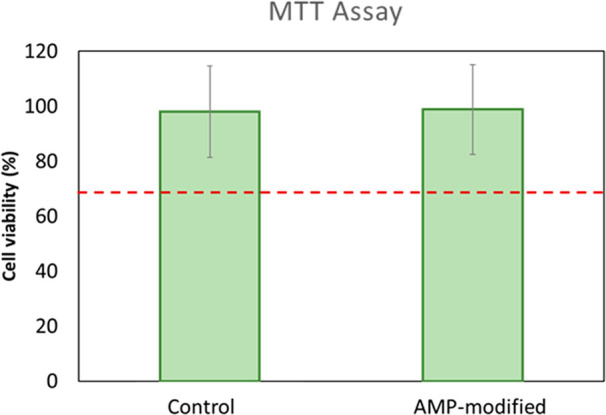
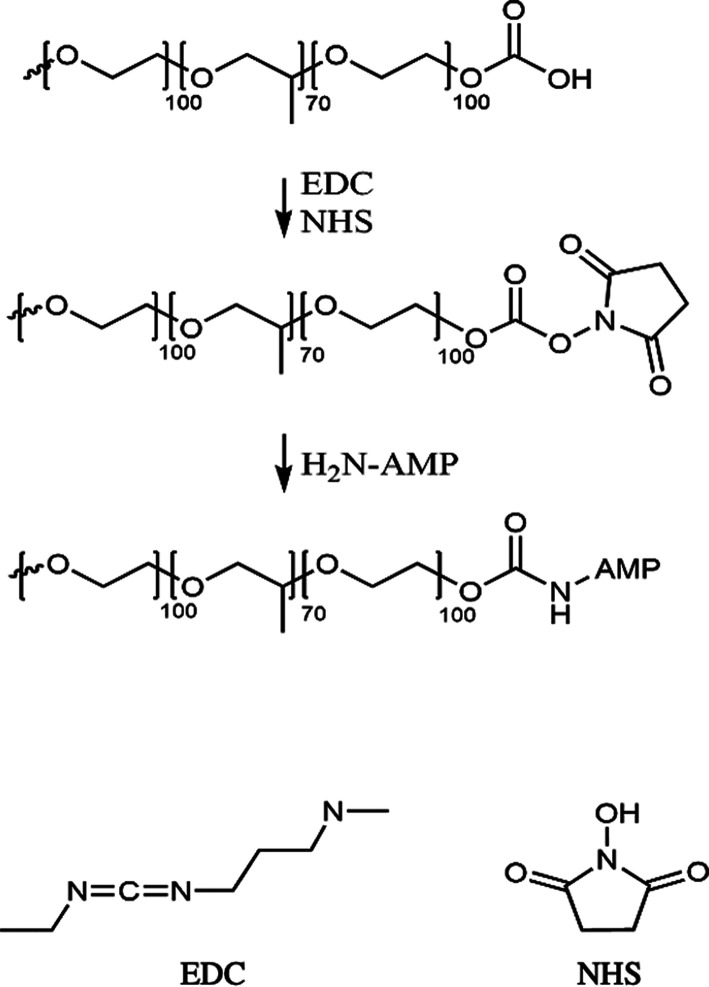
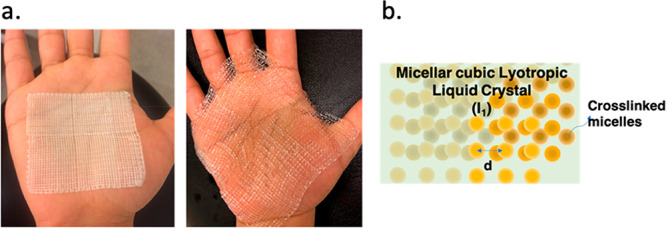
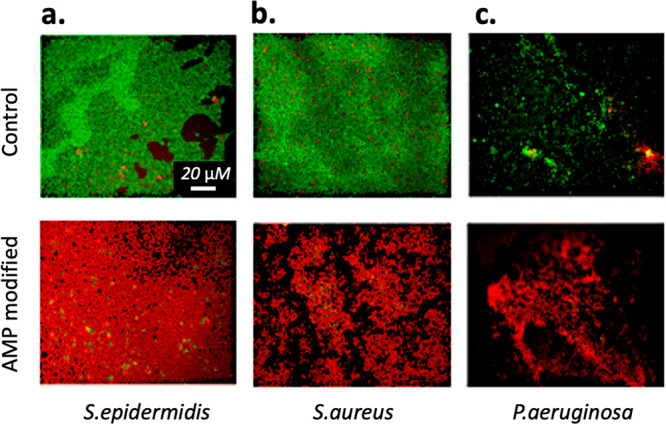
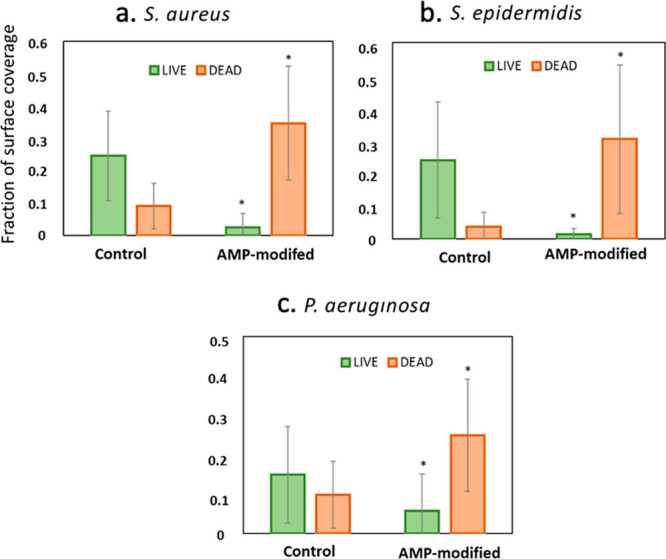
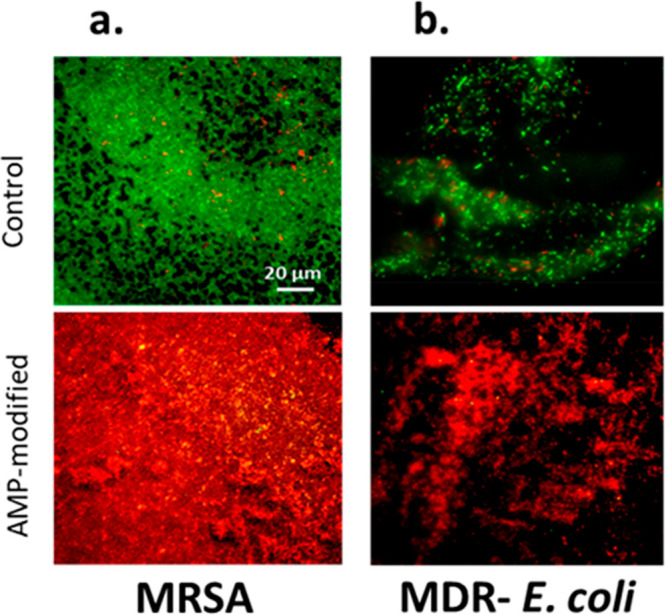
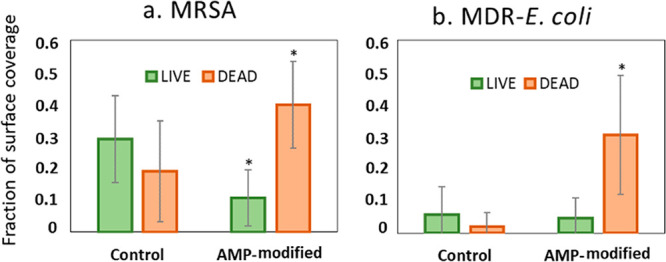
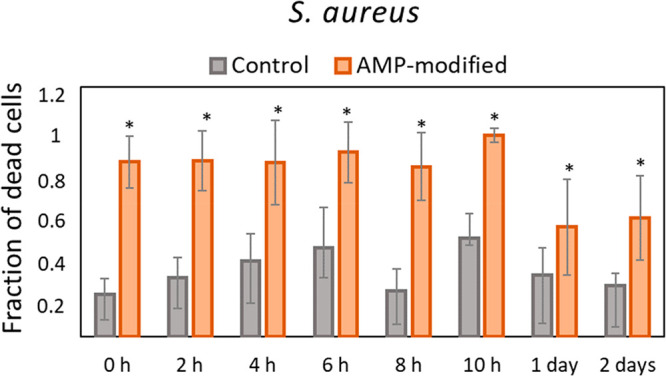
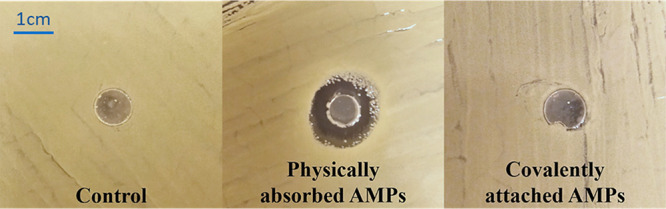
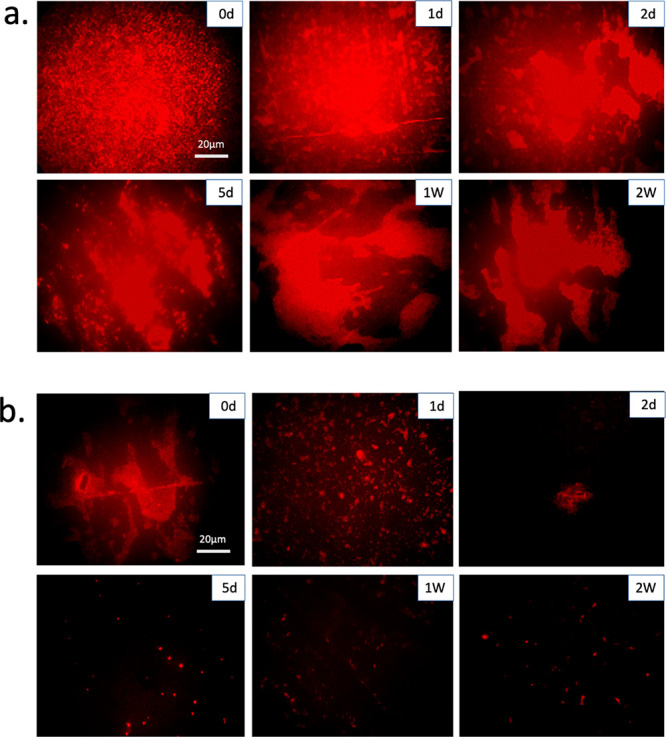
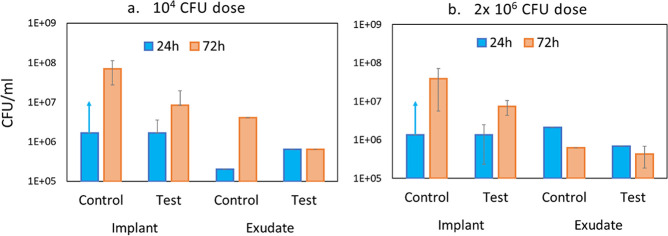
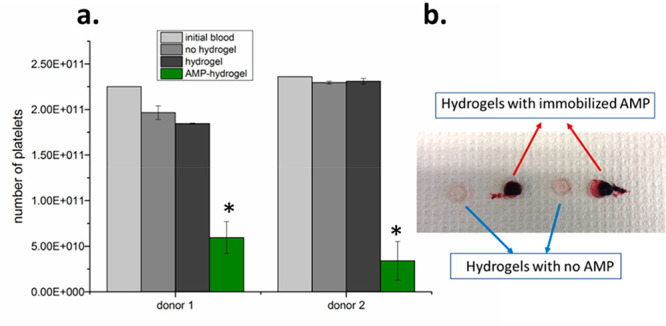
Antimicrobial peptides (AMPs) are seen as a promising replacement to conventional antibiotics for the prevention of skin wound infections. However, due to the short half-life of AMPs in biological environments, such as blood, their use in clinical applications has been limited. The covalent immobilization of AMPs onto suitable substrates is an effective solution to create contact-killing surfaces with increased long-term stability. In this work, an antimicrobial peptide, RRPRPRPRPWWWW-NH2 (RRP9W4N), was covalently attached to amphiphilic and ordered mesoporous Pluronic F127 hydrogels made of cross-linked lyotropic liquid crystals through 1-ethyl-3-(3-(dimethylamino)propyl) carbodiimide (EDC) and -hydroxysuccinimide (NHS) chemistry. The AMP-hydrogels showed high antibacterial activity against , , methicillin-resistant (MRSA), and multidrug-resistant for up to 24 h. Furthermore, the AMP-hydrogels did not present any toxicity to human fibroblasts. The AMPs retained their antimicrobial activity up to 48 h in human blood serum, which is a significant increase in stability compared to when used in dissolved state. A pilot rat model showed 10-100× less viable counts of on AMP-hydrogels compared with control hydrogels during the first 3 days of infection. Studies performed on human whole blood showed that blood coagulated more readily in the presence of AMP-hydrogels as compared to hydrogels without AMPs, indicating potential hemostatic activity. Overall, the results suggest that the combination of amphiphilic hydrogels with covalently bonded AMPs has potential to be used as antibacterial wound dressing material to reduce infections and promote hemostatic activity as an alternative to antibiotics or other antimicrobial agents, whose use should be restricted.
抗菌肽(AMPs)被视为预防皮肤伤口感染的传统抗生素的有前途替代品。然而,由于 AMP 在血液等生物环境中的半衰期短,其在临床应用中的使用受到限制。将 AMP 共价固定在合适的基质上是一种有效的解决方案,可以创建具有增加的长期稳定性的接触杀伤表面。在这项工作中,抗菌肽 RRPRPRPRPWWWW-NH2(RRP9W4N)通过 1-乙基-3-(3-(二甲基氨基)丙基)碳二亚胺(EDC)和 -羟基琥珀酰亚胺( NHS)化学共价连接到两亲性和有序介孔 Pluronic F127 水凝胶上,该水凝胶由交联溶致液晶制成。AMP-水凝胶对 、 、耐甲氧西林金黄色葡萄球菌(MRSA)和多药耐药 表现出高达 24 小时的高抗菌活性。此外,AMP-水凝胶对人成纤维细胞没有任何毒性。与溶解状态相比,AMP 在人血清中可稳定存在长达 48 小时,稳定性显著提高。在大鼠模型中,与对照水凝胶相比,AMP-水凝胶在感染的头 3 天内的细菌数量减少了 10-100 倍。在人全血中进行的研究表明,与不含 AMP 的水凝胶相比,在 AMP-水凝胶存在下血液更容易凝结,表明其具有潜在的止血活性。总体而言,这些结果表明,两亲水凝胶与共价结合的 AMP 的组合具有作为抗菌伤口敷料材料的潜力,可减少感染并促进止血活性,可替代抗生素或其他抗菌剂,而应限制后者的使用。