Laboratory of Chemical Physics, National Institute of Diabetes and Digestive and Kidney Diseases, National Institutes of Health, Bethesda, Maryland 20892-0520, United States.
J Phys Chem B. 2021 Apr 15;125(14):3452-3467. doi: 10.1021/acs.jpcb.1c00206. Epub 2021 Mar 16.
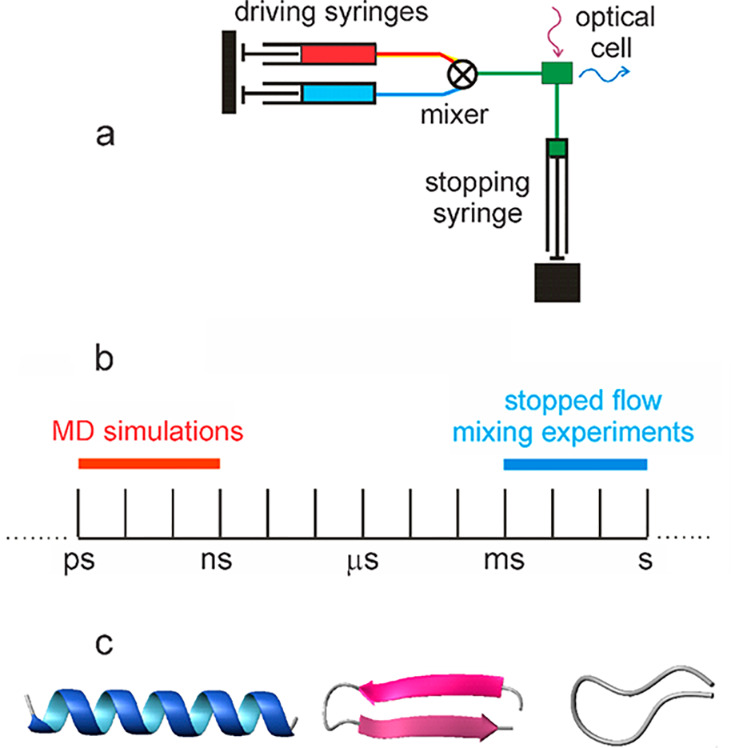
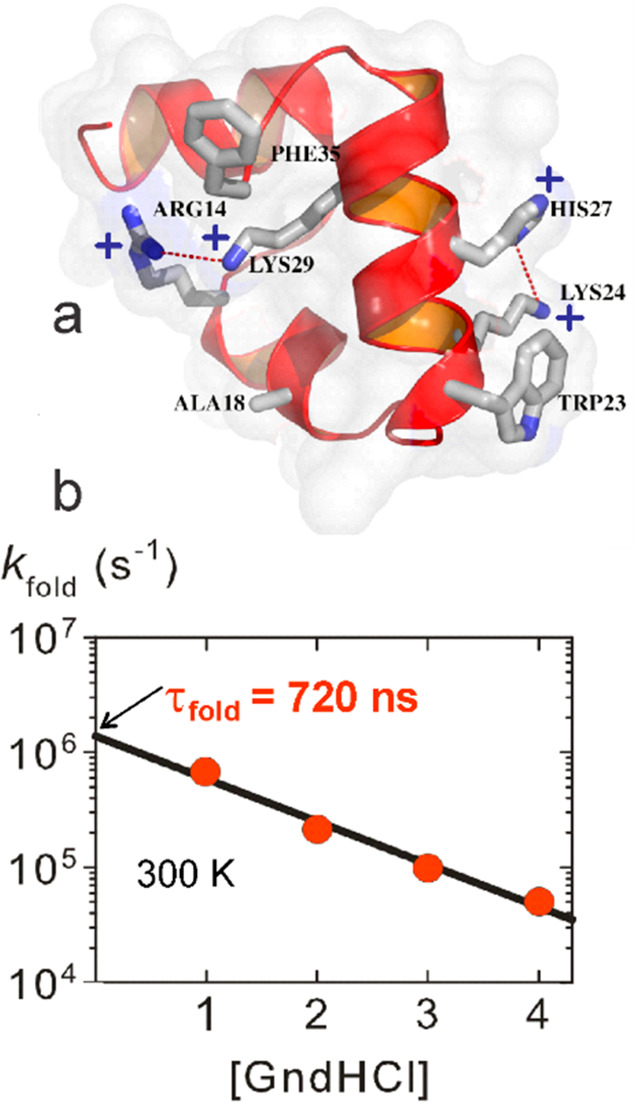
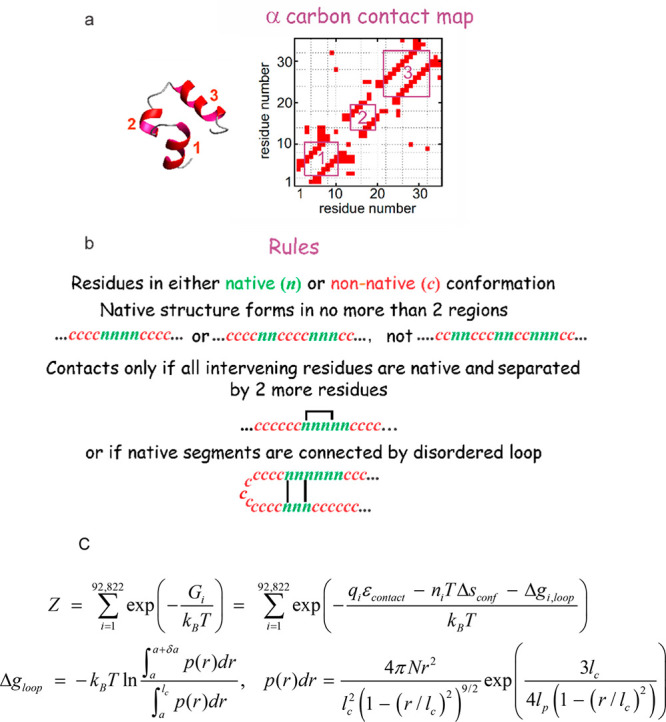
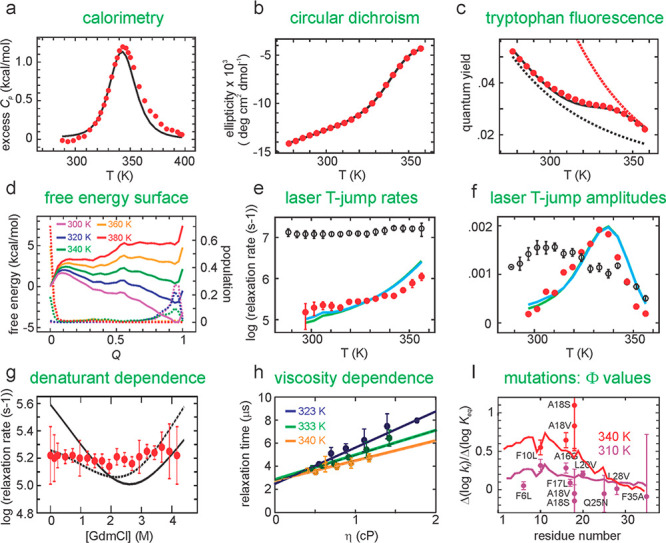
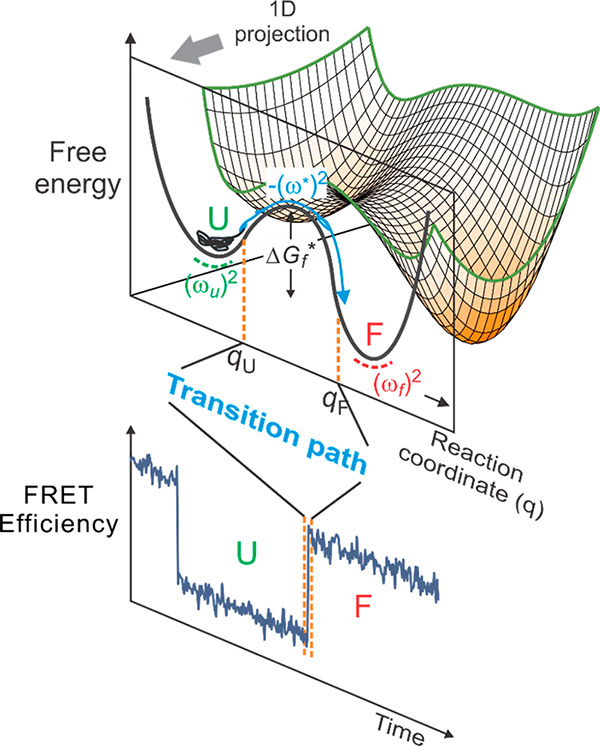
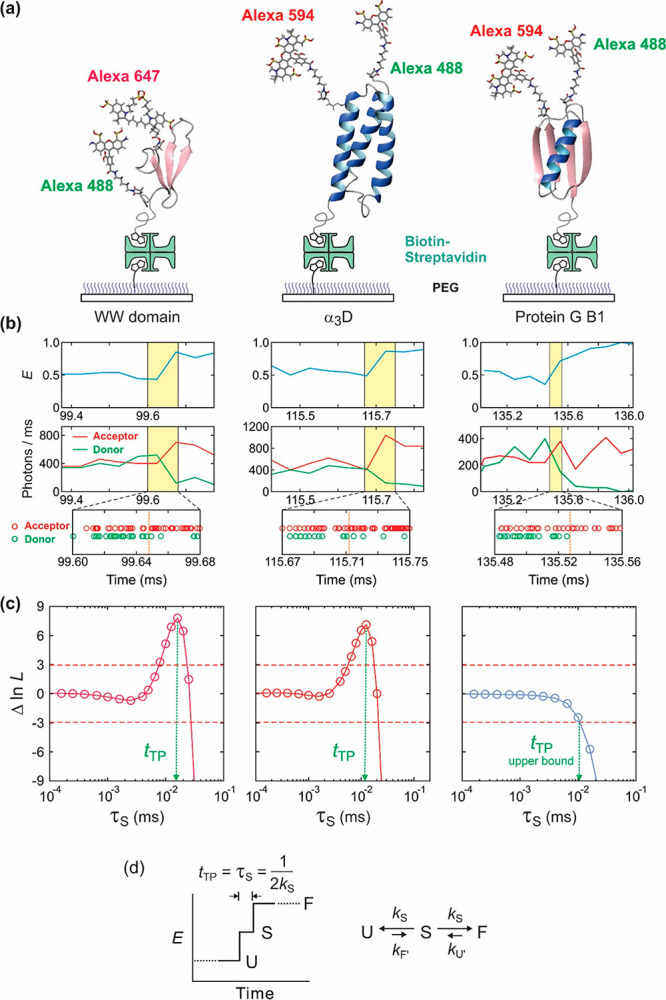
Modern experimental kinetics of protein folding began in the early 1990s with the introduction of nanosecond laser pulses to trigger the folding reaction, providing an almost 10-fold improvement in time resolution over the stopped-flow method being employed at the time. These experiments marked the beginning of the "fast-folding" subfield that enabled investigation of the kinetics of formation of secondary structural elements and disordered loops for the first time, as well as the fastest folding proteins. When I started to work on this subject, a fast folding protein was one that folded in milliseconds. There were, moreover, no analytical theoretical models and no atomistic or coarse-grained molecular dynamics simulations to describe the mechanism. Two of the most important discoveries from my lab since then are a protein that folds in hundreds of nanoseconds, as determined from nanosecond laser temperature experiments, and the discovery that the theoretically predicted barrier crossing time is about the same for proteins that differ in folding rates by 10-fold, as determined from single molecule fluorescence measurements. We also developed what has been called the "Hückel model" of protein folding, which quantitatively explains a wide range of equilibrium and kinetic measurements. This retrospective traces the history of contributions to the "fast folding" subfield from my lab until about 3 years ago, when I left protein folding to spend the rest of my research career trying to discover an inexpensive drug for treating sickle cell disease.
现代蛋白质折叠实验动力学始于 20 世纪 90 年代初,当时引入纳秒激光脉冲来触发折叠反应,与当时使用的停流方法相比,时间分辨率提高了近 10 倍。这些实验标志着“快速折叠”子领域的开始,使人们首次能够研究二级结构元件和无规环的形成动力学,以及折叠最快的蛋白质。当我开始研究这个课题时,一个快速折叠的蛋白质是指在毫秒内折叠的蛋白质。此外,没有分析理论模型,也没有原子或粗粒分子动力学模拟来描述其机制。从那以后,我的实验室最重要的两项发现是,从纳秒激光温度实验中确定的,一种在数百纳秒内折叠的蛋白质,以及从单分子荧光测量中确定的,理论预测的势垒穿越时间对于折叠速率相差 10 倍的蛋白质是相同的。我们还开发了所谓的蛋白质折叠“休克尔模型”,它定量解释了广泛的平衡和动力学测量。本回顾追溯了我的实验室在“快速折叠”子领域的贡献历史,直到大约 3 年前,我离开蛋白质折叠领域,将我的剩余研究生涯用于尝试发现一种治疗镰状细胞病的廉价药物。