Wolff Noa, Hendling Michaela, Schroeder Fabian, Schönthaler Silvia, Geiss Andreas F, Bedenic Branka, Barišić Ivan
Molecular Diagnostics, AIT Austrian Institute of Technology, Giefinggasse 4, 1210, Vienna, Austria.
Ekorefugium, Slunj, Croatia.
Sci Rep. 2021 Mar 16;11(1):6001. doi: 10.1038/s41598-021-85438-5.
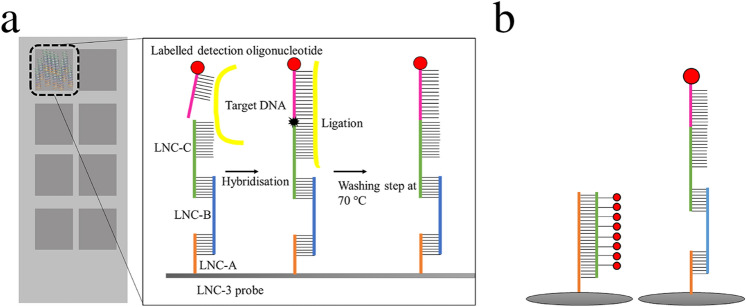
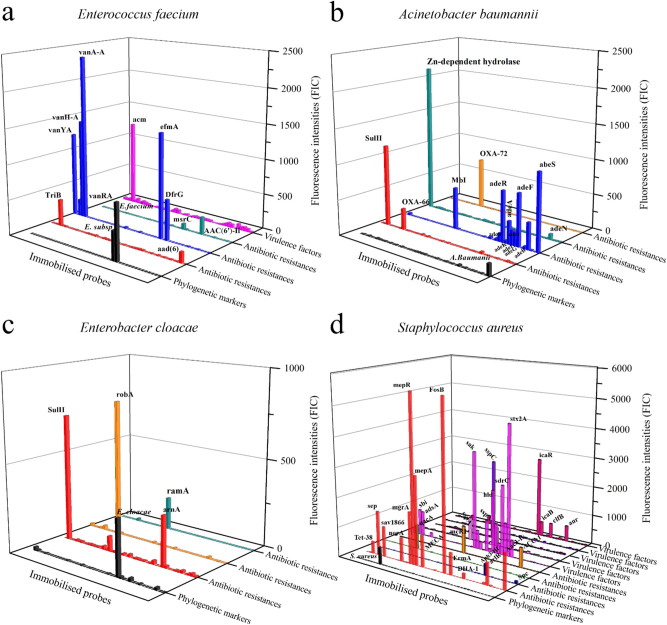
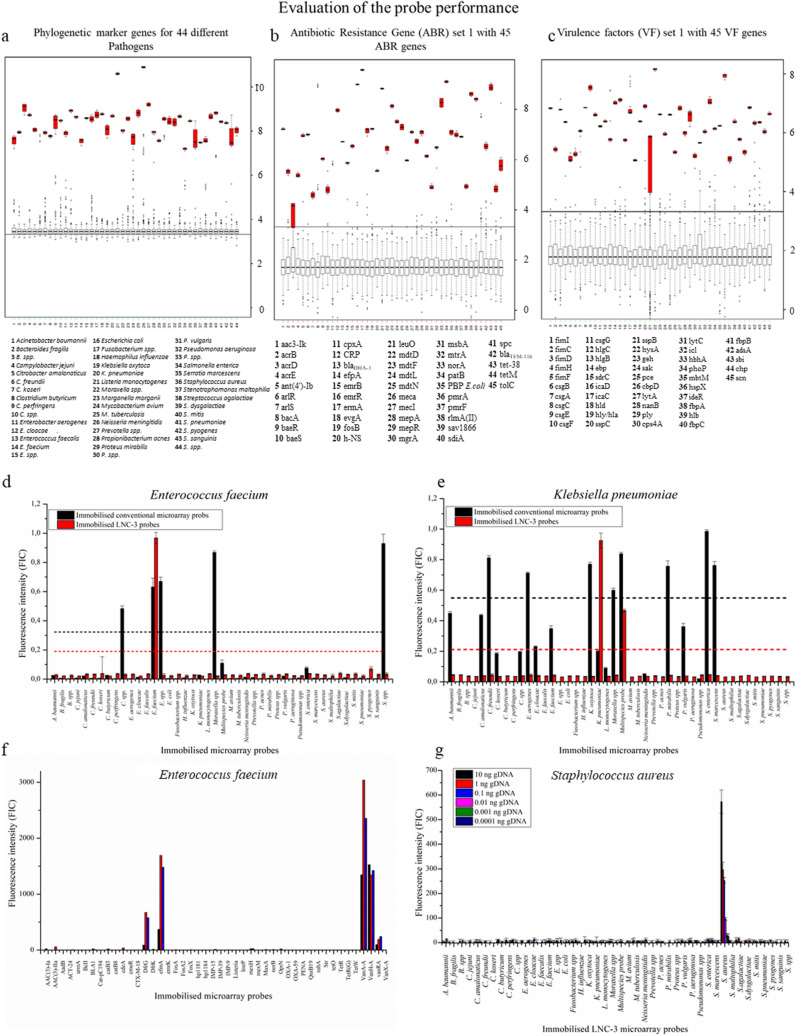
Antibiotic resistances progressively cause treatment failures, and their spreading dynamics reached an alarming level. Some strains have already been classified as highly critical, e.g. the ones summarised by the acronym ESKAPE (Enterococcus faecium, Staphylococcus aureus, Klebsiella pneumoniae, Acinetobacter baumannii, Pseudomonas aeruginosa and Enterobacter spp.). To restrain this trend and enable effective medication, as much information as possible must be obtained in the least possible time. Here, we present a DNA microarray-based assay that screens for the most important sepsis-relevant 44 pathogenic species, 360 virulence factors (mediate pathogenicity in otherwise non-pathogenic strains), and 409 antibiotic resistance genes in parallel. The assay was evaluated with 14 multidrug resistant strains, including all ESKAPE pathogens, mainly obtained from clinical isolates. We used a cost-efficient ligation-based detection platform designed to emulate the highly specific multiplex detection of padlock probes. Results could be obtained within one day, requiring approximately 4 h for amplification, application to the microarray, and detection.
抗生素耐药性逐渐导致治疗失败,其传播动态已达到令人担忧的程度。一些菌株已被列为高度危急菌株,例如以首字母缩写ESKAPE概括的那些菌株(粪肠球菌、金黄色葡萄球菌、肺炎克雷伯菌、鲍曼不动杆菌、铜绿假单胞菌和肠杆菌属)。为抑制这一趋势并实现有效用药,必须在尽可能短的时间内获取尽可能多的信息。在此,我们展示了一种基于DNA微阵列的检测方法,该方法可同时筛选44种与败血症最相关的致病物种、360种毒力因子(在原本无致病性的菌株中介导致病性)以及409种抗生素耐药基因。该检测方法用14种多重耐药菌株进行了评估,这些菌株主要从临床分离株中获得,包括所有ESKAPE病原体。我们使用了一种基于连接的经济高效的检测平台,旨在模拟锁式探针的高特异性多重检测。一天内即可获得结果,扩增、应用于微阵列和检测大约需要4小时。