Khan Muhammad Sohail, Ikram Muhammad, Park Tae Ju, Kim Myeong Ok
Division of Life Science and Applied Life Science (BK 21), College of Natural Sciences, Gyeongsang National University, Jinju 52828, Republic of Korea.
Haemato-oncology/Systems Medicine Group, Paul O'Gorman Leukaemia Research Centre, Institute of Cancer Sciences, MVLS, University of Glasgow, UK.
Oxid Med Cell Longev. 2021 Feb 27;2021:4051207. doi: 10.1155/2021/4051207. eCollection 2021.
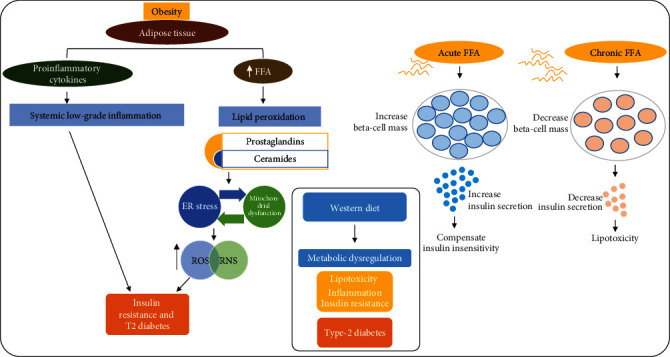
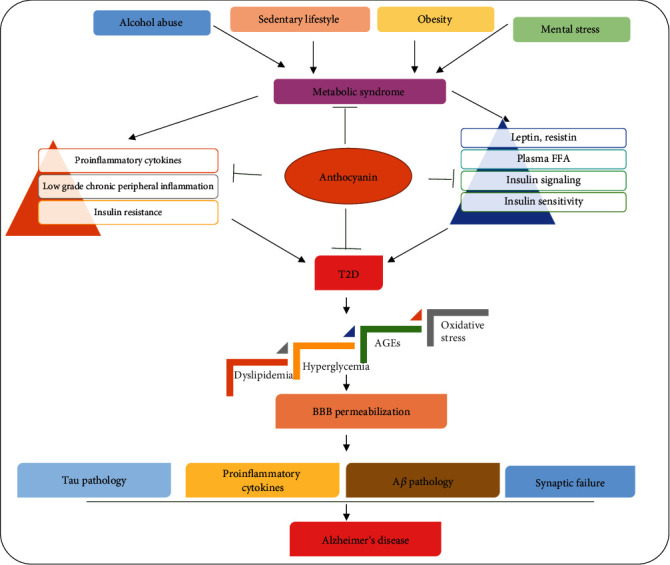
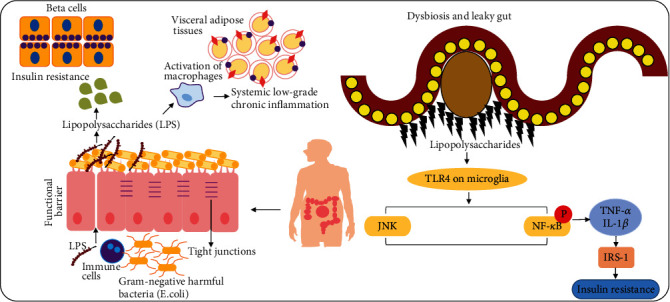
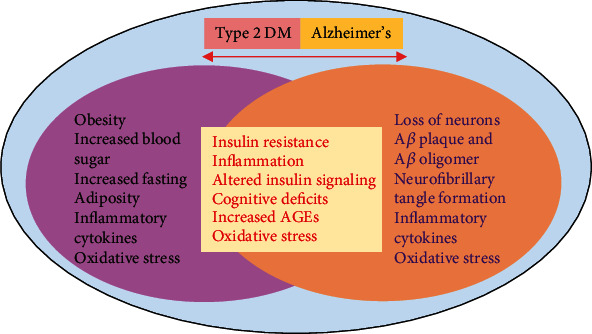
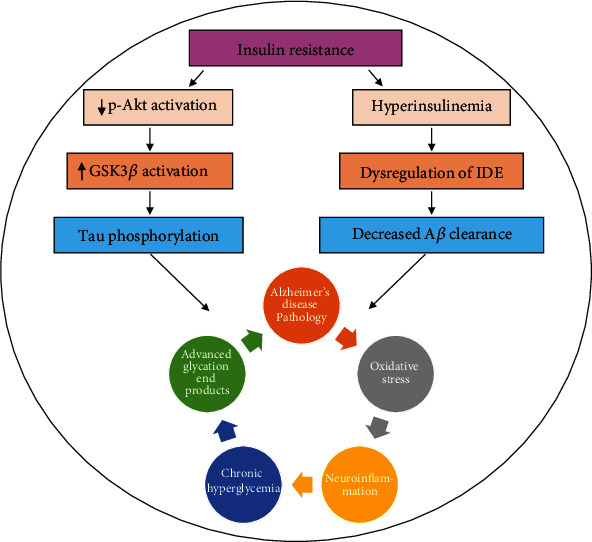
The pathology and neurodegeneration in type 2 diabetes- (T2D-) mediated Alzheimer's disease (AD) have been reported in several studies. Despite the lack of information regarding the basic underlying mechanisms involved in the development of T2D-mediated AD, some common features of the two conditions have been reported, such as brain atrophy, reduced cerebral glucose metabolism, and insulin resistance. T2D phenotypes such as glucose dyshomeostasis, insulin resistance, impaired insulin signaling, and systemic inflammatory cytokines have been shown to be involved in the progression of AD pathology by increasing amyloid-beta accumulation, tau hyperphosphorylation, and overall neuroinflammation. Similarly, oxidative stress, mitochondrial dysfunction, and the generation of advanced glycation end products (AGEs) and their receptor (RAGE) as a result of chronic hyperglycemia may serve as critical links between diabetes and AD. The natural dietary polyflavonoid anthocyanin enhances insulin sensitivity, attenuates insulin resistance at the level of the target tissues, inhibits free fatty acid oxidation, and abrogates the release of peripheral inflammatory cytokines in obese (prediabetic) individuals, which are responsible for insulin resistance, systemic hyperglycemia, systemic inflammation, brain metabolism dyshomeostasis, amyloid-beta accumulation, and neuroinflammatory responses. In this review, we have shown that obesity may induce T2D-mediated AD and assessed the recent therapeutic advances, especially the use of anthocyanin, against T2D-mediated AD pathology. Taken together, the findings of current studies may help elucidate a new approach for the prevention and treatment of T2D-mediated AD by using the polyflavonoid anthocyanin.
多项研究报道了2型糖尿病(T2D)介导的阿尔茨海默病(AD)中的病理学和神经退行性变。尽管缺乏关于T2D介导的AD发病基本潜在机制的信息,但已报道了这两种病症的一些共同特征,如脑萎缩、脑葡萄糖代谢降低和胰岛素抵抗。T2D的表型,如葡萄糖稳态失衡、胰岛素抵抗、胰岛素信号受损和全身炎症细胞因子,已被证明通过增加β淀粉样蛋白积累、tau蛋白过度磷酸化和整体神经炎症参与AD病理学的进展。同样,慢性高血糖导致的氧化应激、线粒体功能障碍以及晚期糖基化终产物(AGEs)及其受体(RAGE)的产生可能是糖尿病和AD之间的关键联系。天然膳食多黄酮类花青素可增强胰岛素敏感性,在靶组织水平减轻胰岛素抵抗,抑制游离脂肪酸氧化,并消除肥胖(糖尿病前期)个体中负责胰岛素抵抗、全身高血糖、全身炎症、脑代谢失衡、β淀粉样蛋白积累和神经炎症反应的外周炎症细胞因子的释放。在本综述中,我们表明肥胖可能诱发T2D介导的AD,并评估了针对T2D介导的AD病理学的最新治疗进展,特别是花青素的使用。综上所述,当前研究的结果可能有助于阐明一种通过使用多黄酮类花青素预防和治疗T2D介导的AD的新方法。