Zaleska-Żmijewska Anna, Wawrzyniak Zbigniew, Kupis Magdalena, Szaflik Jacek P
Department of Ophthalmology, SPKSO Ophthalmic Hospital, Medical University of Warsaw, Warsaw, Poland.
Faculty of Electronics and Information Technology, Warsaw University of Technology, Warsaw, Poland.
J Ophthalmol. 2021 Feb 26;2021:6642059. doi: 10.1155/2021/6642059. eCollection 2021.
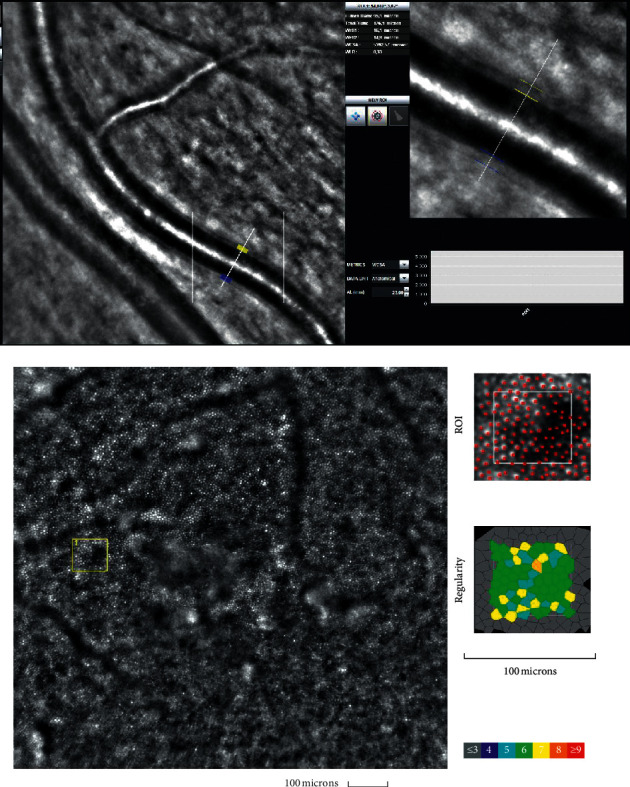
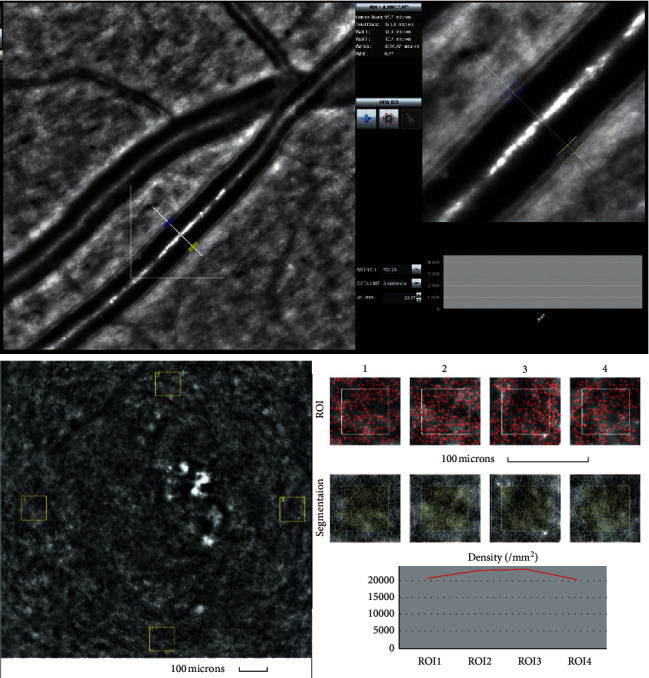
Overweight and obese patients are at risk for diabetes, cardiovascular disorders, and microvascular complications. The rtx1 (Imagine Eyes, France) is a microscope that allows near histological visualizations of cones and retinal microcirculation.
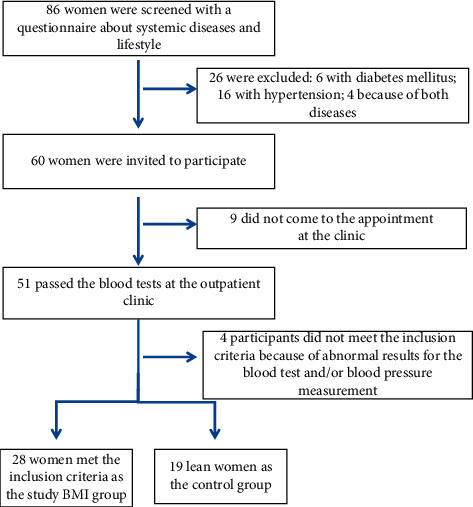
This study analysed the cones and retinal microvascular changes in a group of 47 healthy women with different BMI values. Participants were divided into 2 groups: the BMI group (28 women with BMI >/25) and the control group (19 lean women with BMI <25).
The lumen and diameter of retinal arteries were not significantly different between groups. There were significant differences in the thickness of arteriole walls. The WLR and WCSA values differed significantly between the control and BMI groups (for WLR 0.25 ± 0.03 vs. 0.29 ± 0.03, < 0.001; for WCSA 4136.7 ± 1140.0 vs. 5217.3 ± 944.0, respectively, < 0.001). In healthy eyes, cone density and morphology were not affected by weight.
Retinal image analysis with rtx1 offers a novel noninvasive measurement of early changes in retinal vasculature that are not detectable during routine clinical examination. Abnormalities of retinal arterioles found by rtx1™examination should be considered as a strong risk factor for cardiovascular changes resulting from overweight and obesity.
超重和肥胖患者有患糖尿病、心血管疾病和微血管并发症的风险。rtx1(法国Imagine Eyes公司)是一种显微镜,可实现对视锥细胞和视网膜微循环的近乎组织学的可视化观察。
本研究分析了一组47名具有不同BMI值的健康女性的视锥细胞和视网膜微血管变化。参与者被分为两组:BMI组(28名BMI≥25的女性)和对照组(19名BMI<25的瘦女性)。
两组之间视网膜动脉的管腔和直径无显著差异。小动脉壁厚度存在显著差异。对照组和BMI组的WLR和WCSA值有显著差异(WLR分别为0.25±0.03和0.29±0.03,P<0.001;WCSA分别为4136.7±1140.0和5217.3±944.0,P<0.001)。在健康眼睛中,视锥细胞密度和形态不受体重影响。
使用rtx1进行视网膜图像分析提供了一种新型的非侵入性测量方法,可检测常规临床检查中无法检测到的视网膜血管早期变化。通过rtx1检查发现的视网膜小动脉异常应被视为超重和肥胖导致心血管变化的强烈危险因素。