Department of Pediatric Cardiovascular Medicine, Xi'an Children's Hospital, Xi'an 710003, China.
School of Computer Science and Engineering, Northwestern Polytechnical University, Xi'an 710072, China.
Biomed Res Int. 2021 Feb 26;2021:6618918. doi: 10.1155/2021/6618918. eCollection 2021.
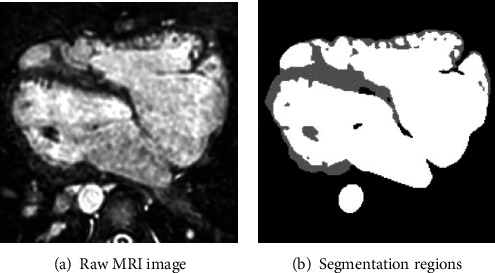
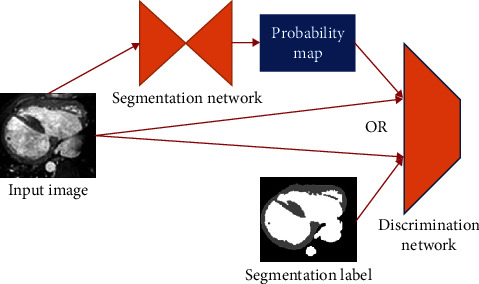
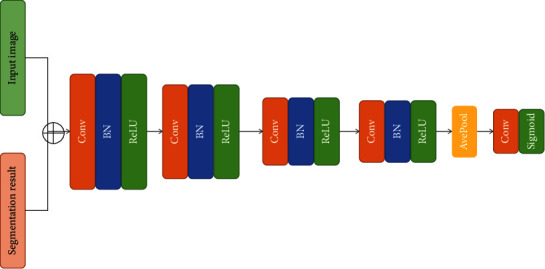
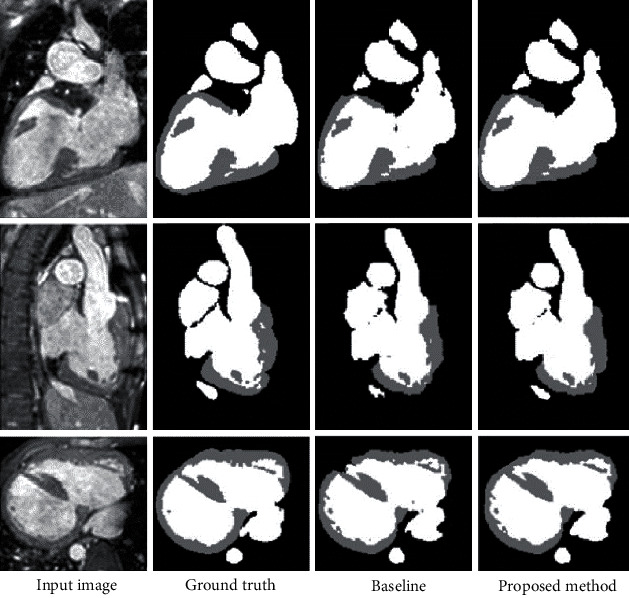
Congenital heart defects (CHD) are structural imperfections of the heart or large blood vessels that are detected around birth and their symptoms vary wildly, with mild case patients having no obvious symptoms and serious cases being potentially life-threatening. Using cardiovascular magnetic resonance imaging (CMRI) technology to create a patient-specific 3D heart model is an important prerequisite for surgical planning in children with CHD. Manually segmenting 3D images using existing tools is time-consuming and laborious, which greatly hinders the routine clinical application of 3D heart models. Therefore, automatic myocardial segmentation algorithms and related computer-aided diagnosis systems have emerged. Currently, the conventional methods for automatic myocardium segmentation are based on deep learning, rather than on the traditional machine learning method. Better results have been achieved, however, difficulties still exist such as CMRI often has, inconsistent signal strength, low contrast, and indistinguishable thin-walled structures near the atrium, valves, and large blood vessels, leading to challenges in automatic myocardium segmentation. Additionally, the labeling of 3D CMR images is time-consuming and laborious, causing problems in obtaining enough accurately labeled data. To solve the above problems, we proposed to apply the idea of adversarial learning to the problem of myocardial segmentation. Through a discriminant model, some additional supervision information is provided as a guide to further improve the performance of the segmentation model. Experiment results on real-world datasets show that our proposed adversarial learning-based method had improved performance compared with the baseline segmentation model and achieved better results on the automatic myocardium segmentation problem.
先天性心脏病(CHD)是心脏或大血管的结构缺陷,在出生时被检测到,其症状差异很大,轻度病例患者没有明显症状,严重病例可能危及生命。使用心血管磁共振成像(CMRI)技术创建患者特定的 3D 心脏模型是 CHD 儿童手术规划的重要前提。使用现有的工具手动分割 3D 图像既耗时又费力,极大地阻碍了 3D 心脏模型的常规临床应用。因此,自动心肌分割算法和相关的计算机辅助诊断系统应运而生。目前,自动心肌分割的常规方法基于深度学习,而不是传统的机器学习方法。然而,已经取得了更好的结果,但仍然存在困难,例如 CMRI 通常具有不一致的信号强度、低对比度以及心房、瓣膜和大血管附近难以区分的薄壁结构,这导致自动心肌分割面临挑战。此外,3D CMR 图像的标记既耗时又费力,导致难以获得足够准确的标记数据。为了解决上述问题,我们提出将对抗学习的思想应用于心肌分割问题。通过判别模型,提供一些额外的监督信息作为指导,以进一步提高分割模型的性能。在真实数据集上的实验结果表明,与基线分割模型相比,我们提出的基于对抗学习的方法在自动心肌分割问题上取得了更好的结果。