POSCO Health Center, POSCO, Pohang, Republic of Korea.
Department of Occupational and Environmental Medicine, Ulsan University Hospital, University of Ulsan College of Medicine, Ulsan, Republic of Korea.
PLoS One. 2021 Mar 18;16(3):e0248624. doi: 10.1371/journal.pone.0248624. eCollection 2021.
The purpose of this study was to examine the association of allergic rhinitis with air pollutant concentrations using the follow-up data of elementary school children in Ulsan, Korea.
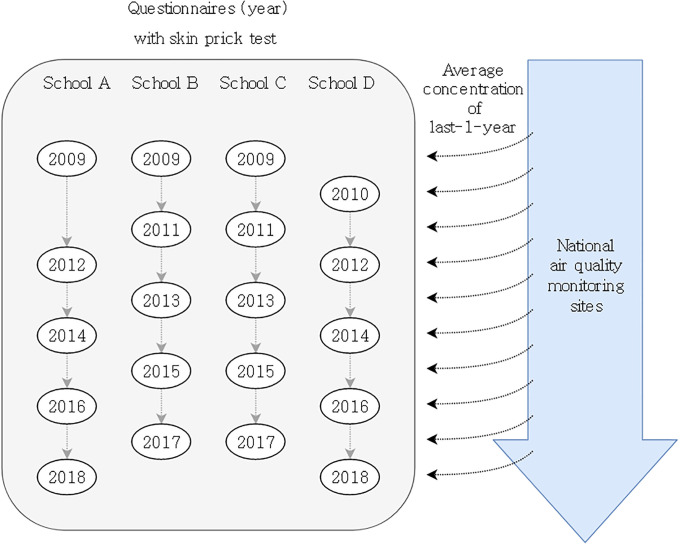
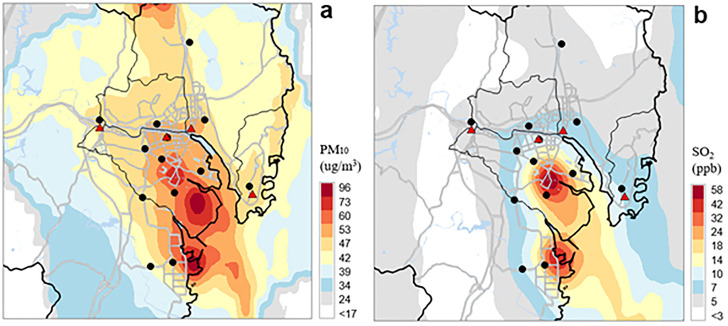
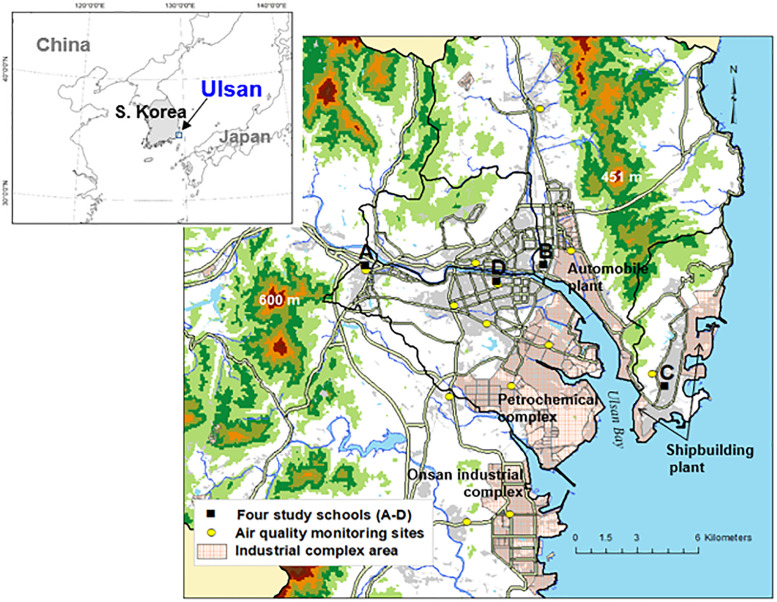
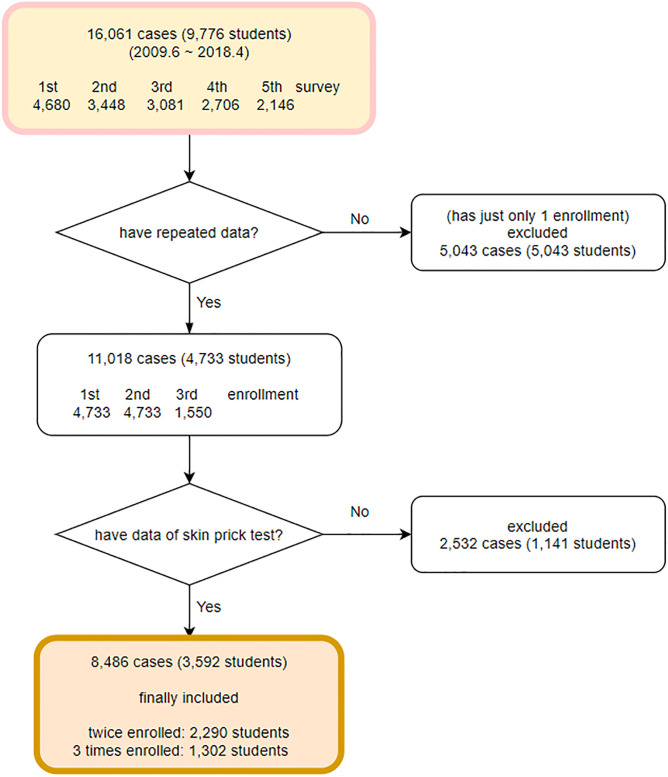
All students of four elementary schools in Ulsan, South Korea were surveyed at two-year intervals. The survey used data collected five times, over a nine-year period from June 2009 to April 2018. The questionnaire used in the survey was a modified version of the ISAAC (International society of asthma and allergy of children) questionnaire. A skin prick test (SPT) was performed with 24 standard antigens. To estimate the levels of exposure to outdoor air pollution, the concentrations of sulfur dioxide (SO2), nitrogen dioxide (NO2), ozone (O3), carbon monoxide (CO), and particulate matter 10 μm or less in diameter (PM10) were used. As a dependent variable, a history of allergic rhinitis diagnosed by a doctor during the last 1-year was considered. Logistic regression analysis was used to select variables suitable for the statistical model. The selected variables were then used to assess their association with the dependent variable using the generalized estimation equation.
Among environmental factors, SO2 was associated with a high risk and PM10 was associated with a low risk of allergic rhinitis. The risk of allergic rhinitis from living in a house built within the last year was high, and the risk from living in a multi-family house or apartment was higher than that from living in a segregated house. History of allergic diseases in the family was a high-risk factor for allergic rhinitis. There was a relationship between a history of bronchiolitis at less than 2 years of age and a high risk of allergic rhinitis. Boys were at a higher risk than girls.
From the follow-up data of elementary school students in Ulsan, Korea, the concentration of SO2, which is an indicator of the degree of industrialization, was related to the prevalence of allergic rhinitis. Among all the risk factors, history of allergic disease in the parents was the most important factor, and the study reconfirmed the results of the previous studies.
本研究旨在利用韩国蔚山小学生的随访数据,探讨变应性鼻炎与空气污染物浓度的关系。
对韩国蔚山的四所小学的所有学生进行了每两年一次的调查。该调查共使用了 2009 年 6 月至 2018 年 4 月九年期间五次收集的数据。调查中使用的问卷是经过改良的儿童国际哮喘和过敏协会(ISAAC)问卷。对 24 种标准抗原进行了皮肤点刺试验(SPT)。为了估算室外空气污染的暴露水平,使用了二氧化硫(SO2)、二氧化氮(NO2)、臭氧(O3)、一氧化碳(CO)和直径 10μm 或以下的颗粒物(PM10)的浓度。将医生在过去 1 年内诊断的变应性鼻炎史作为因变量。使用逻辑回归分析选择适合统计模型的变量。然后使用广义估计方程选择的变量来评估它们与因变量的关系。
在环境因素中,SO2 与患变应性鼻炎的高风险相关,PM10 与低风险相关。居住在过去一年建造的房屋中患变应性鼻炎的风险较高,居住在多户住宅或公寓中的风险高于居住在独立住宅中的风险。家族中有过敏病史是变应性鼻炎的高危因素。2 岁以下患细支气管炎的病史与患变应性鼻炎的高风险有关。男孩比女孩的风险更高。
从韩国蔚山小学生的随访数据来看,工业化程度的指标 SO2 浓度与变应性鼻炎的患病率有关。在所有危险因素中,父母的过敏病史是最重要的因素,该研究再次证实了以往研究的结果。