Guo Wei, Wang Min, Chen Guangfu, Chen Kuan-Hung, Wan Yong, Chen Bailing, Zou Xuenong, Peng Xinsheng
Department of Orthopedic Surgery, the First Affiliated Hospital, Sun Yat-sen University, Guangzhou, China.
Guangdong Provincial Key Laboratory of Orthopedics and Traumatology, Guangzhou, China.
BMC Musculoskelet Disord. 2021 Mar 18;22(1):288. doi: 10.1186/s12891-021-04155-2.
Pyogenic spondylodiscitis (PSD) is challenging to the orthopedist with regards to diagnosis and treatment. The present study was designed to assess and suggest the most indicative diagnostic method and evaluate the effect of surgery comprising of debridement, instrumentation and fusion in treating PSD.
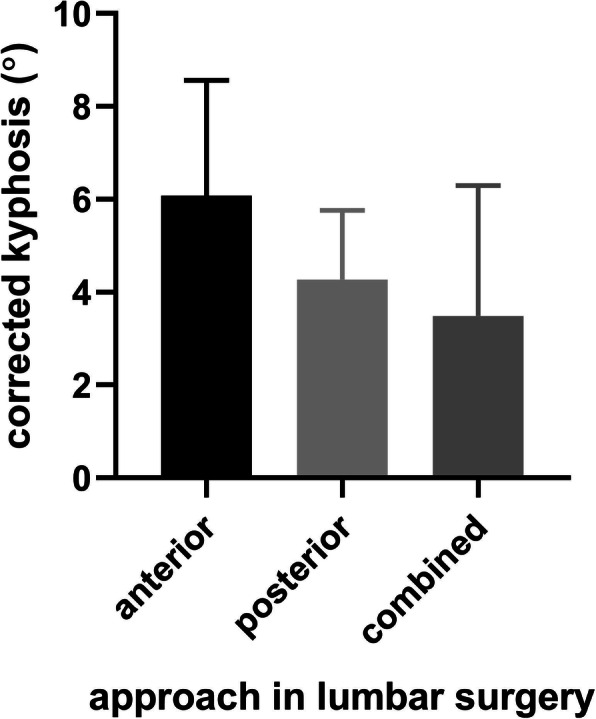
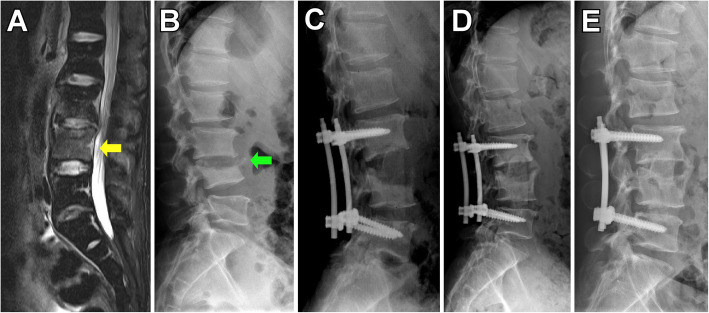
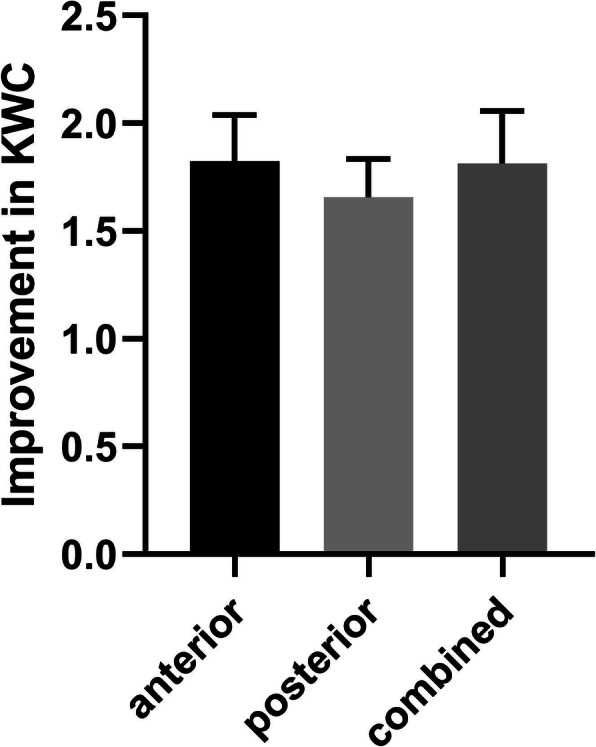
Seventy-six patients with PSD who underwent surgical intervention were retrospectively enrolled. Their medical documents, corrections of spinal alignment and improvements in neurological function were assessed. Surgical approaches were compared in lumbar surgeries regarding the improvements in lordotic angle and neurological function.
Elevated c-reactive protein (CRP) and erythrocyte sedimentation rate (ESR) were found in 77.6 and 71.1% patients respectively. Infectious lesions were found at lumbar (85.5%), cervical (10.5%) and thoracic (3.9%), ascertained with contrast-enhanced MRI. For lumbar patients, surgery was performed through the anterior (26.2%), posterior (49.2%) or combined approach (24.6%), and differences in improvement of lordosis and neurological function between each approach were insignificant. The pathogen was identified in 22.4% of the patients. Postoperative antibiotic therapy was managed against the result of susceptibility test, or empirically given to patients with negative cultures. All antibiotic therapy was initiated intravenously for 4-6 weeks and orally for 6 weeks.
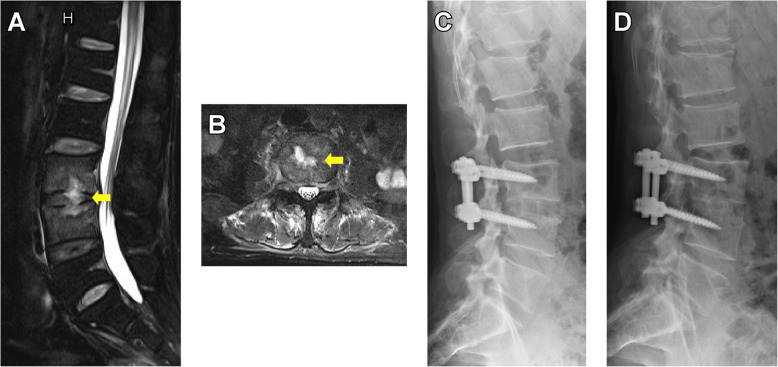
Elevated CRP and/or ESR, with focal hyper-intensity on contrast-enhanced MRI are suggestive of possible PSD. Surgical intervention comprising of debridement, short-segment instrumentation and fusion that early applied to the PSD patients followed by postoperative antibiotic therapy have demonstrated preferable outcomes, but require further study.
This article advocates early surgery to enable prompt diagnosis and treatment of PSD, and thus guarantee favorable outcomes for patients, as is shown in our study. In addition, different surgical approaches to the lesions were compared and discussed in this manuscript, but no differences in outcome between approaches were found. This suggests that thorough debridement should be prioritized over selection of surgical approach. In summary, this article has large translational potential to be applied clinically.
化脓性脊椎间盘炎(PSD)在诊断和治疗方面给骨科医生带来了挑战。本研究旨在评估并提出最具指示性的诊断方法,并评估包括清创、内固定和融合在内的手术治疗PSD的效果。
回顾性纳入76例行手术干预的PSD患者。评估他们的病历、脊柱排列矫正情况及神经功能改善情况。比较腰椎手术中不同手术入路对前凸角和神经功能改善的影响。
分别有77.6%和71.1%的患者C反应蛋白(CRP)和红细胞沉降率(ESR)升高。通过增强磁共振成像(MRI)确定,感染性病变位于腰椎(85.5%)、颈椎(10.5%)和胸椎(3.9%)。对于腰椎患者,手术通过前路(26.2%)、后路(49.2%)或联合入路(24.6%)进行,各入路在前凸改善和神经功能方面的差异不显著。22.4%的患者鉴定出了病原体。术后抗生素治疗根据药敏试验结果进行,或对培养阴性的患者进行经验性给药。所有抗生素治疗均先静脉给药4 - 6周,然后口服6周。
CRP和/或ESR升高,增强MRI显示局灶性高信号提示可能为PSD。包括清创、短节段内固定和融合的手术干预,早期应用于PSD患者并术后给予抗生素治疗已显示出较好的效果,但仍需进一步研究。
本文主张早期手术以实现PSD的及时诊断和治疗,从而为患者保证良好的预后,如我们的研究所示。此外,本手稿比较并讨论了针对病变的不同手术入路,但未发现各入路在结果上的差异。这表明应优先进行彻底清创而非选择手术入路。总之,本文具有很大的临床应用转化潜力。