• 文献检索
  • 文档翻译
  • 深度研究
  • 学术资讯
  • Suppr Zotero 插件Zotero 插件
  • 邀请有礼
  • 套餐&价格
  • 历史记录
应用&插件
Suppr Zotero 插件Zotero 插件浏览器插件Mac 客户端Windows 客户端微信小程序
定价
高级版会员购买积分包购买API积分包
服务
文献检索文档翻译深度研究API 文档MCP 服务
关于我们
关于 Suppr公司介绍联系我们用户协议隐私条款
关注我们

Suppr 超能文献

核心技术专利:CN118964589B侵权必究
粤ICP备2023148730 号-1Suppr @ 2026

文献检索

告别复杂PubMed语法,用中文像聊天一样搜索,搜遍4000万医学文献。AI智能推荐,让科研检索更轻松。

立即免费搜索

文件翻译

保留排版,准确专业,支持PDF/Word/PPT等文件格式,支持 12+语言互译。

免费翻译文档

深度研究

AI帮你快速写综述,25分钟生成高质量综述,智能提取关键信息,辅助科研写作。

立即免费体验

SE-OnionNet:一种用于蛋白质-配体结合亲和力预测的卷积神经网络。

SE-OnionNet: A Convolution Neural Network for Protein-Ligand Binding Affinity Prediction.

作者信息

Wang Shudong, Liu Dayan, Ding Mao, Du Zhenzhen, Zhong Yue, Song Tao, Zhu Jinfu, Zhao Renteng

机构信息

College of Computer Science and Technology, China University of Petroleum (East China), Qingdao, China.

Department of Neurology Medicine, The Second Hospital, Cheeloo College of Medicine, Shandong University, Jinan, China.

出版信息

Front Genet. 2021 Feb 19;11:607824. doi: 10.3389/fgene.2020.607824. eCollection 2020.

DOI:10.3389/fgene.2020.607824
PMID:33737946
原文链接:https://pmc.ncbi.nlm.nih.gov/articles/PMC7962986/
Abstract

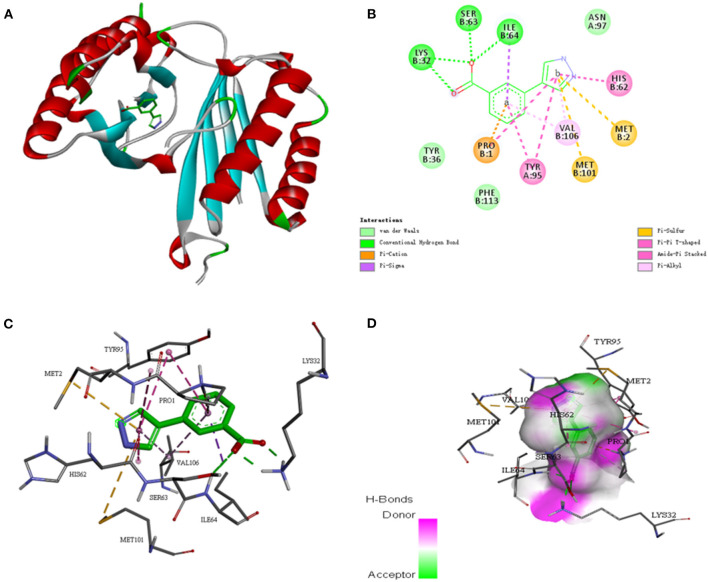
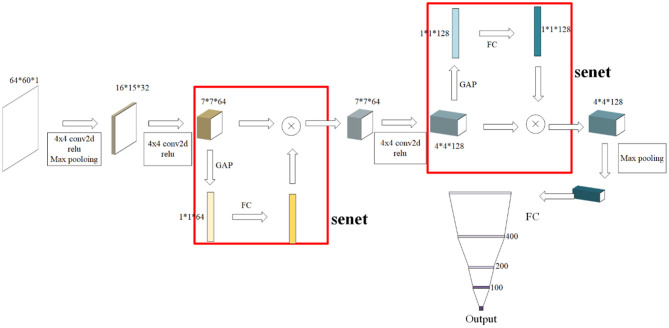
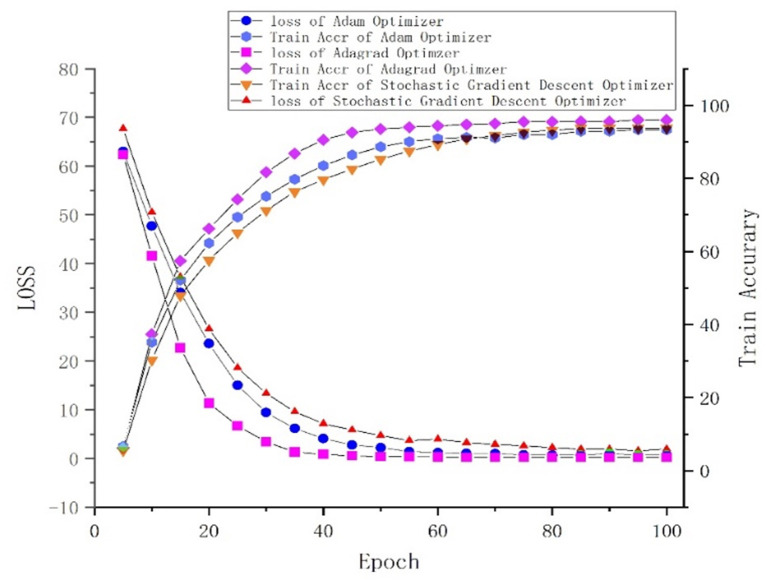
Deep learning methods, which can predict the binding affinity of a drug-target protein interaction, reduce the time and cost of drug discovery. In this study, we propose a novel deep convolutional neural network called SE-OnionNet, with two squeeze-and-excitation (SE) modules, to computationally predict the binding affinity of a protein-ligand complex. The OnionNet is used to extract a feature map from the three-dimensional structure of a protein-drug molecular complex. The SE module is added to the second and third convolutional layers to improve the non-linear expression of the network to improve model performance. Three different optimizers, stochastic gradient descent (SGD), Adam, and Adagrad, were also used to improve the performance of the model. A majority of protein-molecule complexes were used for training, and the comparative assessment of scoring functions (CASF-2016) was used as the benchmark. Experimental results show that our model performs better than OnionNet, Pafnucy, and AutoDock Vina. Finally, we chose the macrophage migration inhibitor factor (PDB ID: 6cbg) to test the stability and robustness of the model. We found that the prediction results were not affected by the docking position, and thus, our model is of acceptable robustness.

摘要

深度学习方法能够预测药物-靶标蛋白相互作用的结合亲和力,从而减少药物研发的时间和成本。在本研究中,我们提出了一种名为SE-OnionNet的新型深度卷积神经网络,它带有两个挤压激励(SE)模块,用于通过计算预测蛋白质-配体复合物的结合亲和力。OnionNet用于从蛋白质-药物分子复合物的三维结构中提取特征图。SE模块被添加到第二和第三卷积层,以提高网络的非线性表达能力,从而提升模型性能。我们还使用了三种不同的优化器,即随机梯度下降(SGD)、Adam和Adagrad,来提高模型的性能。大多数蛋白质-分子复合物被用于训练,并以评分函数的比较评估(CASF-2016)作为基准。实验结果表明,我们的模型比OnionNet、Pafnucy和AutoDock Vina表现更好。最后,我们选择巨噬细胞迁移抑制因子(PDB ID:6cbg)来测试模型的稳定性和鲁棒性。我们发现预测结果不受对接位置的影响,因此,我们的模型具有可接受的鲁棒性。
https://cdn.ncbi.nlm.nih.gov/pmc/blobs/7cfa/7962986/342f06a319bf/fgene-11-607824-g0007.jpg
https://cdn.ncbi.nlm.nih.gov/pmc/blobs/7cfa/7962986/46d78bdd8bab/fgene-11-607824-g0001.jpg
https://cdn.ncbi.nlm.nih.gov/pmc/blobs/7cfa/7962986/26f2bf64effa/fgene-11-607824-g0002.jpg
https://cdn.ncbi.nlm.nih.gov/pmc/blobs/7cfa/7962986/020de470e454/fgene-11-607824-g0003.jpg
https://cdn.ncbi.nlm.nih.gov/pmc/blobs/7cfa/7962986/3ade0c9eddd8/fgene-11-607824-g0004.jpg
https://cdn.ncbi.nlm.nih.gov/pmc/blobs/7cfa/7962986/6137c6160cb3/fgene-11-607824-g0005.jpg
https://cdn.ncbi.nlm.nih.gov/pmc/blobs/7cfa/7962986/e2c62cd6304a/fgene-11-607824-g0006.jpg
https://cdn.ncbi.nlm.nih.gov/pmc/blobs/7cfa/7962986/342f06a319bf/fgene-11-607824-g0007.jpg
https://cdn.ncbi.nlm.nih.gov/pmc/blobs/7cfa/7962986/46d78bdd8bab/fgene-11-607824-g0001.jpg
https://cdn.ncbi.nlm.nih.gov/pmc/blobs/7cfa/7962986/26f2bf64effa/fgene-11-607824-g0002.jpg
https://cdn.ncbi.nlm.nih.gov/pmc/blobs/7cfa/7962986/020de470e454/fgene-11-607824-g0003.jpg
https://cdn.ncbi.nlm.nih.gov/pmc/blobs/7cfa/7962986/3ade0c9eddd8/fgene-11-607824-g0004.jpg
https://cdn.ncbi.nlm.nih.gov/pmc/blobs/7cfa/7962986/6137c6160cb3/fgene-11-607824-g0005.jpg
https://cdn.ncbi.nlm.nih.gov/pmc/blobs/7cfa/7962986/e2c62cd6304a/fgene-11-607824-g0006.jpg
https://cdn.ncbi.nlm.nih.gov/pmc/blobs/7cfa/7962986/342f06a319bf/fgene-11-607824-g0007.jpg

相似文献

1
SE-OnionNet: A Convolution Neural Network for Protein-Ligand Binding Affinity Prediction.SE-OnionNet:一种用于蛋白质-配体结合亲和力预测的卷积神经网络。
Front Genet. 2021 Feb 19;11:607824. doi: 10.3389/fgene.2020.607824. eCollection 2020.
2
OnionNet: a Multiple-Layer Intermolecular-Contact-Based Convolutional Neural Network for Protein-Ligand Binding Affinity Prediction.洋葱网络:一种基于多层分子间接触的卷积神经网络,用于蛋白质-配体结合亲和力预测。
ACS Omega. 2019 Sep 16;4(14):15956-15965. doi: 10.1021/acsomega.9b01997. eCollection 2019 Oct 1.
3
OnionNet-2: A Convolutional Neural Network Model for Predicting Protein-Ligand Binding Affinity Based on Residue-Atom Contacting Shells.洋葱网络-2:一种基于残基-原子接触壳预测蛋白质-配体结合亲和力的卷积神经网络模型。
Front Chem. 2021 Oct 27;9:753002. doi: 10.3389/fchem.2021.753002. eCollection 2021.
4
DeepBindRG: a deep learning based method for estimating effective protein-ligand affinity.DeepBindRG:一种基于深度学习的有效蛋白质-配体亲和力估算方法。
PeerJ. 2019 Jul 25;7:e7362. doi: 10.7717/peerj.7362. eCollection 2019.
5
Sfcnn: a novel scoring function based on 3D convolutional neural network for accurate and stable protein-ligand affinity prediction.Sfcnn:一种基于 3D 卷积神经网络的新型评分函数,用于准确稳定的蛋白质-配体亲和力预测。
BMC Bioinformatics. 2022 Jun 8;23(1):222. doi: 10.1186/s12859-022-04762-3.
6
Learning protein-ligand binding affinity with atomic environment vectors.利用原子环境向量学习蛋白质-配体结合亲和力。
J Cheminform. 2021 Aug 14;13(1):59. doi: 10.1186/s13321-021-00536-w.
7
Improving protein-ligand docking and screening accuracies by incorporating a scoring function correction term.通过纳入打分函数校正项来提高蛋白-配体对接和筛选的准确性。
Brief Bioinform. 2022 May 13;23(3). doi: 10.1093/bib/bbac051.
8
Development and evaluation of a deep learning model for protein-ligand binding affinity prediction.开发和评估用于预测蛋白质-配体结合亲和力的深度学习模型。
Bioinformatics. 2018 Nov 1;34(21):3666-3674. doi: 10.1093/bioinformatics/bty374.
9
PLANET: A Multi-objective Graph Neural Network Model for Protein-Ligand Binding Affinity Prediction.PLANET:一种用于蛋白质-配体结合亲和力预测的多目标图神经网络模型。
J Chem Inf Model. 2024 Apr 8;64(7):2205-2220. doi: 10.1021/acs.jcim.3c00253. Epub 2023 Jun 15.
10
Prediction of drug protein interactions based on variable scale characteristic pyramid convolution network.基于可变尺度特征金字塔卷积网络的药物-蛋白质相互作用预测
Methods. 2023 Mar;211:42-47. doi: 10.1016/j.ymeth.2023.02.007. Epub 2023 Feb 15.

引用本文的文献

1
Multiscale topology-enabled structure-to-sequence transformer for protein-ligand interaction predictions.用于蛋白质-配体相互作用预测的多尺度拓扑结构到序列变压器
Nat Mach Intell. 2024 Jul;6(7):799-810. doi: 10.1038/s42256-024-00855-1. Epub 2024 Jun 21.
2
A beginner's approach to deep learning applied to VS and MD techniques.深度学习应用于VS和MD技术的初学者方法。
J Cheminform. 2025 Apr 8;17(1):47. doi: 10.1186/s13321-025-00985-7.
3
Interactomic Analyses and a Reverse Engineering Study Identify Specific Functional Activities of One-to-One Interactions of the S1 Subunit of the SARS-CoV-2 Spike Protein with the Human Proteome.

本文引用的文献

1
Target identification among known drugs by deep learning from heterogeneous networks.通过异质网络深度学习在已知药物中进行靶点识别。
Chem Sci. 2020 Jan 13;11(7):1775-1797. doi: 10.1039/c9sc04336e.
2
Repurpose Open Data to Discover Therapeutics for COVID-19 Using Deep Learning.利用深度学习重新利用公开数据发现 COVID-19 治疗方法。
J Proteome Res. 2020 Nov 6;19(11):4624-4636. doi: 10.1021/acs.jproteome.0c00316. Epub 2020 Jul 24.
3
Exploration of the correlation between GPCRs and drugs based on a learning to rank algorithm.基于排序学习算法探索G蛋白偶联受体与药物之间的相关性。
相互作用组分析和逆向工程研究确定了新冠病毒刺突蛋白S1亚基与人蛋白质组一对一相互作用的特定功能活性。
Biomolecules. 2024 Dec 3;14(12):1549. doi: 10.3390/biom14121549.
4
Advances in Protein-Ligand Binding Affinity Prediction via Deep Learning: A Comprehensive Study of Datasets, Data Preprocessing Techniques, and Model Architectures.基于深度学习的蛋白质-配体结合亲和力预测方法进展:数据集、数据预处理技术和模型架构的综合研究。
Curr Drug Targets. 2024;25(15):1041-1065. doi: 10.2174/0113894501330963240905083020.
5
Small-Molecule Inhibitors of TIPE3 Protein Identified through Deep Learning Suppress Cancer Cell Growth In Vitro.通过深度学习鉴定的 TIPE3 蛋白小分子抑制剂在体外抑制癌细胞生长。
Cells. 2024 Apr 30;13(9):771. doi: 10.3390/cells13090771.
6
TopoFormer: Multiscale Topology-enabled Structure-to-Sequence Transformer for Protein-Ligand Interaction Predictions.TopoFormer:用于蛋白质-配体相互作用预测的多尺度拓扑结构序列Transformer
Res Sq. 2024 Feb 9:rs.3.rs-3640878. doi: 10.21203/rs.3.rs-3640878/v1.
7
Potential Signature Therapeutic Biomarkers TOP2A, MAD2L1, and CDK1 in Colorectal Cancer: A Systems Biomedicine-Based Approach.结直肠癌潜在的治疗性生物标志物 TOP2A、 MAD2L1 和 CDK1:基于系统生物医学的方法。
Biochem Genet. 2024 Jun;62(3):2166-2194. doi: 10.1007/s10528-023-10544-0. Epub 2023 Oct 26.
8
Multi-dimensional Insight into the Coexistence of Pathogenic Genes for ADAR1 and TSC2: Careful Consideration is Essential for Interpretation of ADAR1 Variants.多维洞察 ADAR1 和 TSC2 致病基因的共存:对 ADAR1 变异体的解读需谨慎考虑。
Biochem Genet. 2024 Jun;62(3):1811-1826. doi: 10.1007/s10528-023-10488-5. Epub 2023 Sep 23.
9
A universal lesion detection method based on partially supervised learning.一种基于部分监督学习的通用病变检测方法。
Front Pharmacol. 2023 Aug 1;14:1084155. doi: 10.3389/fphar.2023.1084155. eCollection 2023.
10
DeepBindGCN: Integrating Molecular Vector Representation with Graph Convolutional Neural Networks for Protein-Ligand Interaction Prediction.DeepBindGCN:将分子向量表示与图卷积神经网络集成用于蛋白质-配体相互作用预测。
Molecules. 2023 Jun 10;28(12):4691. doi: 10.3390/molecules28124691.
Comput Biol Med. 2020 Apr;119:103660. doi: 10.1016/j.compbiomed.2020.103660. Epub 2020 Feb 13.
4
OnionNet: a Multiple-Layer Intermolecular-Contact-Based Convolutional Neural Network for Protein-Ligand Binding Affinity Prediction.洋葱网络:一种基于多层分子间接触的卷积神经网络,用于蛋白质-配体结合亲和力预测。
ACS Omega. 2019 Sep 16;4(14):15956-15965. doi: 10.1021/acsomega.9b01997. eCollection 2019 Oct 1.
5
Protein Function Prediction: From Traditional Classifier to Deep Learning.蛋白质功能预测:从传统分类器到深度学习。
Proteomics. 2019 Jul;19(14):e1900119. doi: 10.1002/pmic.201900119. Epub 2019 Jul 11.
6
Squeeze-and-Excitation Networks.挤压激励网络。
IEEE Trans Pattern Anal Mach Intell. 2020 Aug;42(8):2011-2023. doi: 10.1109/TPAMI.2019.2913372. Epub 2019 Apr 29.
7
Spiking Neural P Systems With Learning Functions.具有学习功能的尖峰神经网络系统。
IEEE Trans Nanobioscience. 2019 Apr;18(2):176-190. doi: 10.1109/TNB.2019.2896981. Epub 2019 Feb 1.
8
Comparative Assessment of Scoring Functions: The CASF-2016 Update.评分函数的比较评估:CASF-2016 更新。
J Chem Inf Model. 2019 Feb 25;59(2):895-913. doi: 10.1021/acs.jcim.8b00545. Epub 2018 Dec 11.
9
A Parallel Workflow Pattern Modeling Using Spiking Neural P Systems With Colored Spikes.使用带颜色 spikes 的尖峰神经网络系统进行并行工作流模式建模。
IEEE Trans Nanobioscience. 2018 Oct;17(4):474-484. doi: 10.1109/TNB.2018.2873221. Epub 2018 Oct 1.
10
Evaluation of AutoDock and AutoDock Vina on the CASF-2013 Benchmark.评价 AutoDock 和 AutoDock Vina 在 CASF-2013 基准测试中的表现。
J Chem Inf Model. 2018 Aug 27;58(8):1697-1706. doi: 10.1021/acs.jcim.8b00312. Epub 2018 Jul 25.