Ran Mingxia, Huang Huaxuan, Hu Bo, Hu Shenqiang, Hu Jiwei, Li Liang, He Hua, Liu Hehe, Wang Jiwen
Farm Animal Genetic Resources Exploration and Innovation Key Laboratory of Sichuan Province, Sichuan Agricultural University, Chengdu, China.
Front Genet. 2021 Mar 2;12:627384. doi: 10.3389/fgene.2021.627384. eCollection 2021.
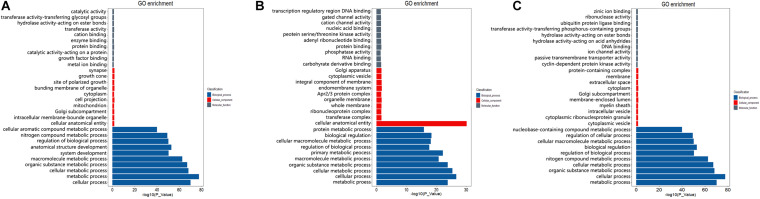
Landes geese and Sichuan White geese are two important genetic materials for commercial goose breeding. However, the differences in the male reproductive capacity between these two breeds and the potential molecular mechanisms and associated key genes have not been reported to date. The present study compared the testicular histology and mRNA-long non-coding RNA (lncRNA) expression patterns to reveal the differences in male reproductive performance between Sichuan White geese and Landes geese, as well as to explore the underlying molecular mechanisms. Histological results showed that the testicular organ index, semen volume, and long diameter of seminiferous tubules of Landes geese were significantly larger than those of Sichuan White geese. Analyses of mRNA-lncRNA expression profile showed that compared with Sichuan White geese, a total of 462 differentially expressed mRNAs (DEGs) (173 up-regulated and 289 down-regulated) and 329 differentially expressed lncRNAs (DE lncRNAs) (280 up-regulated, 49 down-regulated) were identified in Landes geese. Among these DEGs, there were 10 spermatogenesis-related and highly expressed (FPKM > 10) DEGs. Except for , all of these DEGs were significantly up-regulated in the testes of Landes geese. Functional enrichment analysis indicated that the pathway related to metabolism progress and phosphoinositol signal is vitally responsible for differences in male reproductive performance between Landes geese and Sichuan White geese. These results show that compared with Sichuan White geese, the spermatogenesis in the testis of Landes geese was more active, which may be mainly related to the inositol phosphate signal. These data contribute to a better understanding of the mechanisms underlying different male reproductive performances between Landes geese and Sichuan White geese. This knowledge might eventually provide a theoretical basis for improving male reproductive performance in geese.
朗德鹅和四川白鹅是商业鹅养殖的两种重要遗传材料。然而,这两个品种之间雄性繁殖能力的差异以及潜在的分子机制和相关关键基因,迄今为止尚未见报道。本研究比较了睾丸组织学和mRNA-长链非编码RNA(lncRNA)表达模式,以揭示四川白鹅和朗德鹅雄性繁殖性能的差异,并探索其潜在的分子机制。组织学结果表明,朗德鹅的睾丸器官指数、精液量和生精小管长径均显著大于四川白鹅。mRNA-lncRNA表达谱分析表明,与四川白鹅相比,朗德鹅共鉴定出462个差异表达mRNA(DEGs)(173个上调,289个下调)和329个差异表达lncRNA(DE lncRNAs)(280个上调,49个下调)。在这些DEGs中,有10个与精子发生相关且高表达(FPKM>10)的DEGs。除了 ,所有这些DEGs在朗德鹅睾丸中均显著上调。功能富集分析表明,与代谢进程和磷酸肌醇信号相关的通路对朗德鹅和四川白鹅雄性繁殖性能的差异起着至关重要的作用。这些结果表明,与四川白鹅相比,朗德鹅睾丸中的精子发生更为活跃,这可能主要与肌醇磷酸信号有关。这些数据有助于更好地理解朗德鹅和四川白鹅不同雄性繁殖性能的潜在机制。这些知识最终可能为提高鹅的雄性繁殖性能提供理论依据。