Public Health England COVID-19 Surveillance Cell, London, United Kingdom.
Department of Computer Science, University College London, London, United Kingdom.
Euro Surveill. 2021 Mar;26(11). doi: 10.2807/1560-7917.ES.2021.26.11.2001062.
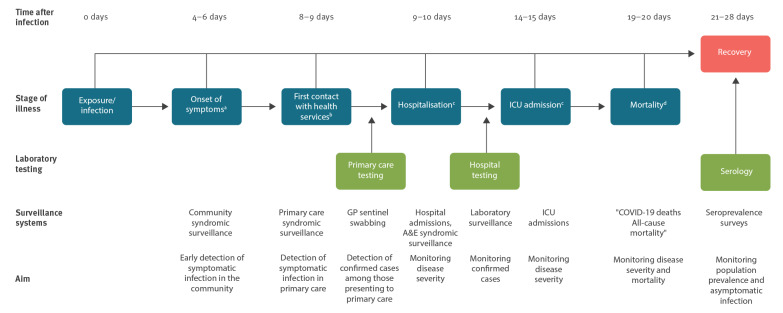
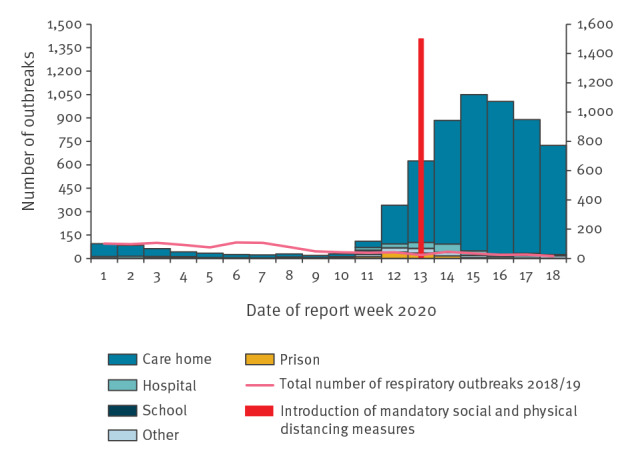
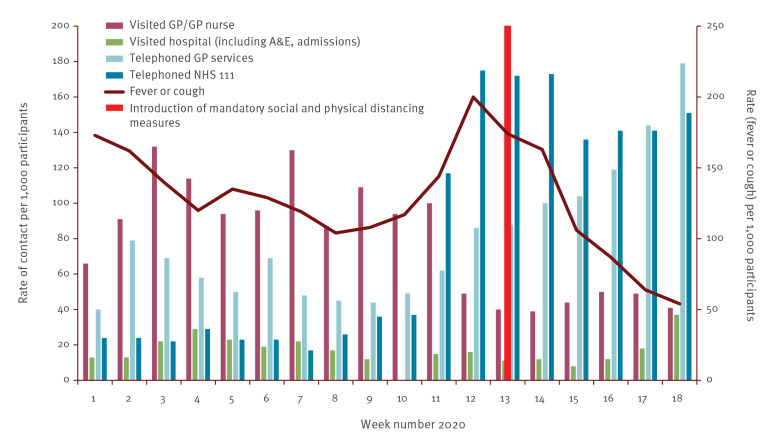
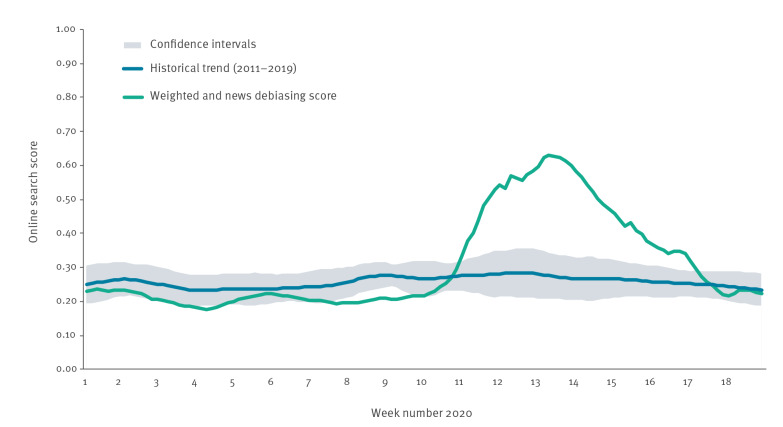
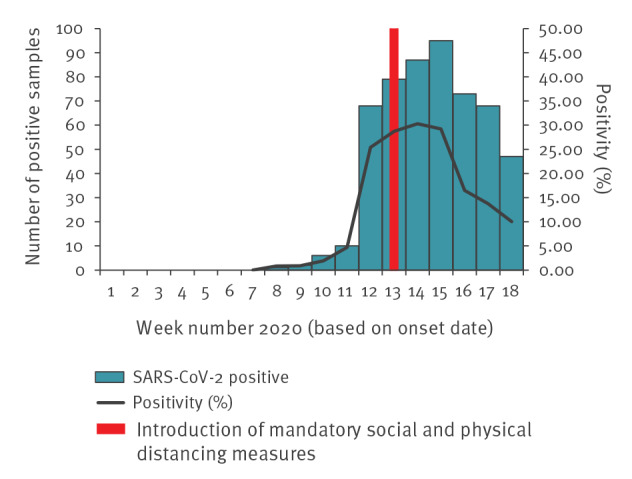
BackgroundA multi-tiered surveillance system based on influenza surveillance was adopted in the United Kingdom in the early stages of the coronavirus disease (COVID-19) epidemic to monitor different stages of the disease. Mandatory social and physical distancing measures (SPDM) were introduced on 23 March 2020 to attempt to limit transmission.AimTo describe the impact of SPDM on COVID-19 activity as detected through the different surveillance systems.MethodsData from national population surveys, web-based indicators, syndromic surveillance, sentinel swabbing, respiratory outbreaks, secondary care admissions and mortality indicators from the start of the epidemic to week 18 2020 were used to identify the timing of peaks in surveillance indicators relative to the introduction of SPDM. This timing was compared with median time from symptom onset to different stages of illness and levels of care or interactions with healthcare services.ResultsThe impact of SPDM was detected within 1 week through population surveys, web search indicators and sentinel swabbing reported by onset date. There were detectable impacts on syndromic surveillance indicators for difficulty breathing, influenza-like illness and COVID-19 coding at 2, 7 and 12 days respectively, hospitalisations and critical care admissions (both 12 days), laboratory positivity (14 days), deaths (17 days) and nursing home outbreaks (4 weeks).ConclusionThe impact of SPDM on COVID-19 activity was detectable within 1 week through community surveillance indicators, highlighting their importance in early detection of changes in activity. Community swabbing surveillance may be increasingly important as a specific indicator, should circulation of seasonal respiratory viruses increase.
背景
在冠状病毒病(COVID-19)疫情早期,英国采用了基于流感监测的多层次监测系统,以监测疾病的不同阶段。2020 年 3 月 23 日,引入了强制性的社会和身体距离措施(SPDM),试图限制传播。
目的
描述 SPDM 对通过不同监测系统检测到的 COVID-19 活动的影响。
方法
使用从疫情开始到 2020 年第 18 周的全国人口调查、基于网络的指标、综合征监测、哨点拭子、呼吸暴发、二级护理入院和死亡率指标的数据,确定监测指标的峰值与 SPDM 引入的时间关系。将此时间与症状出现到疾病不同阶段和护理水平或与医疗保健服务的交互作用的中位数时间进行比较。
结果
通过发病日期报告的人口调查、网络搜索指标和哨点拭子,在 1 周内即可检测到 SPDM 的影响。呼吸窘迫、流感样疾病和 COVID-19 编码的综合征监测指标分别在 2、7 和 12 天可检测到影响,住院和重症监护入院(均为 12 天)、实验室阳性(14 天)、死亡(17 天)和疗养院暴发(4 周)。
结论
通过社区监测指标在 1 周内即可检测到 SPDM 对 COVID-19 活动的影响,突出了它们在早期检测活动变化方面的重要性。随着季节性呼吸道病毒的传播,如果循环增加,社区拭子监测可能会成为一个越来越重要的特定指标。