Shenyang National Laboratory for Materials Science, Institute of Metal Research, Chinese Academy of Sciences, Shenyang, China.
School of Material Science and Engineering, University of Science and Technology of China, Hefei, China.
Nat Commun. 2021 Mar 19;12(1):1798. doi: 10.1038/s41467-021-22047-w.
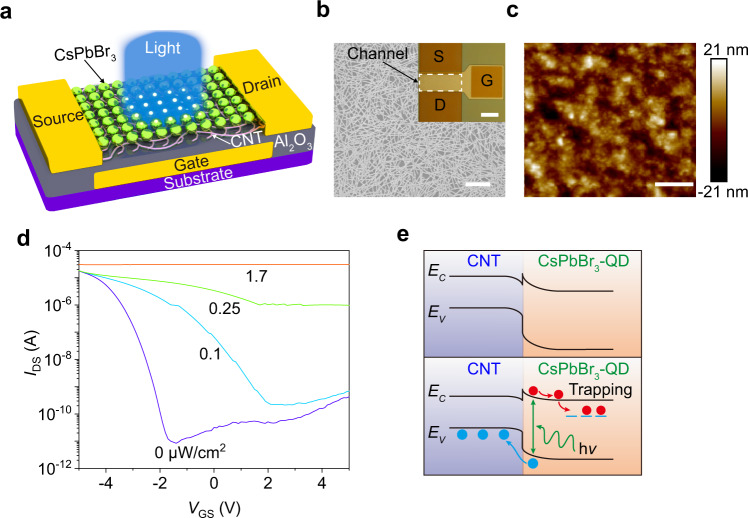
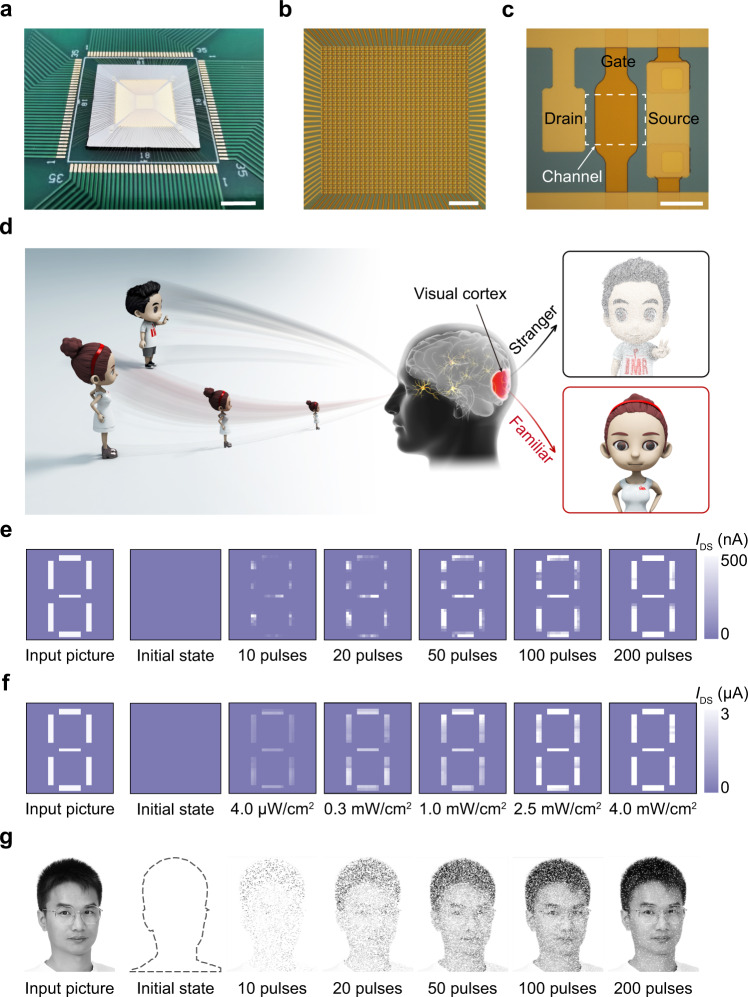
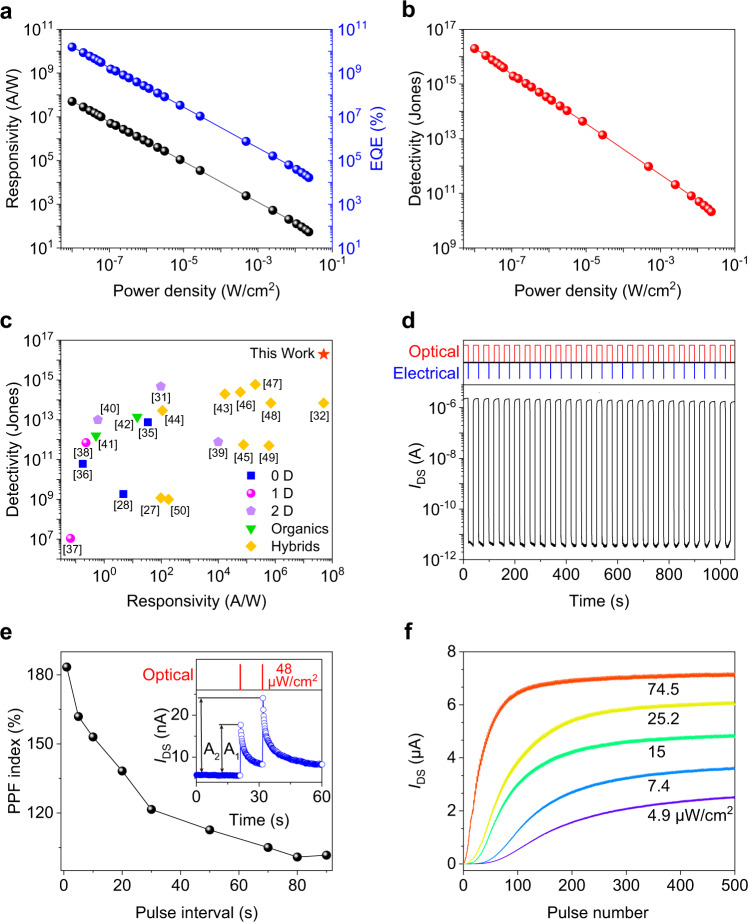
The challenges of developing neuromorphic vision systems inspired by the human eye come not only from how to recreate the flexibility, sophistication, and adaptability of animal systems, but also how to do so with computational efficiency and elegance. Similar to biological systems, these neuromorphic circuits integrate functions of image sensing, memory and processing into the device, and process continuous analog brightness signal in real-time. High-integration, flexibility and ultra-sensitivity are essential for practical artificial vision systems that attempt to emulate biological processing. Here, we present a flexible optoelectronic sensor array of 1024 pixels using a combination of carbon nanotubes and perovskite quantum dots as active materials for an efficient neuromorphic vision system. The device has an extraordinary sensitivity to light with a responsivity of 5.1 × 10 A/W and a specific detectivity of 2 × 10 Jones, and demonstrates neuromorphic reinforcement learning by training the sensor array with a weak light pulse of 1 μW/cm.
受人类眼睛启发的神经形态视觉系统的发展面临着诸多挑战,不仅需要重现动物系统的灵活性、复杂性和适应性,还需要具备计算效率和简洁性。与生物系统类似,这些神经形态电路将图像感应、存储和处理功能集成到设备中,并实时处理连续的模拟亮度信号。高集成度、灵活性和超灵敏度对于试图模拟生物处理的实际人工视觉系统至关重要。在这里,我们展示了一种使用碳纳米管和钙钛矿量子点作为活性材料的 1024 像素柔性光电传感器阵列,用于高效的神经形态视觉系统。该器件对光具有非凡的灵敏度,响应率为 5.1×10 A/W,特定探测率为 2×10 琼斯,并且通过用 1 μW/cm 的弱光脉冲对传感器阵列进行训练,展示了神经形态强化学习。