Shim Jae Sung, Park Su-Hyun, Lee Dong-Keun, Kim Youn Shic, Park Soo-Chul, Redillas Mark Christian Felipe R, Seo Jun Sung, Kim Ju-Kon
Crop Biotechnology Institute, GreenBio Science and Technology, Seoul National University, Pyeongchang, 25354, South Korea.
School of Biological Sciences and Technology, Chonnam National University, Gwangju, 61186, South Korea.
Rice (N Y). 2021 Mar 19;14(1):31. doi: 10.1186/s12284-021-00473-0.
Plant glycine-rich proteins are categorized into several classes based on their protein structures. The glycine-rich RNA binding proteins (GRPs) are members of class IV subfamily possessing N-terminus RNA-recognition motifs (RRMs) and proposed to be involved in post-transcriptional regulation of its target transcripts. GRPs are involved in developmental process and cellular stress responses, but the molecular mechanisms underlying these regulations are still elusive.
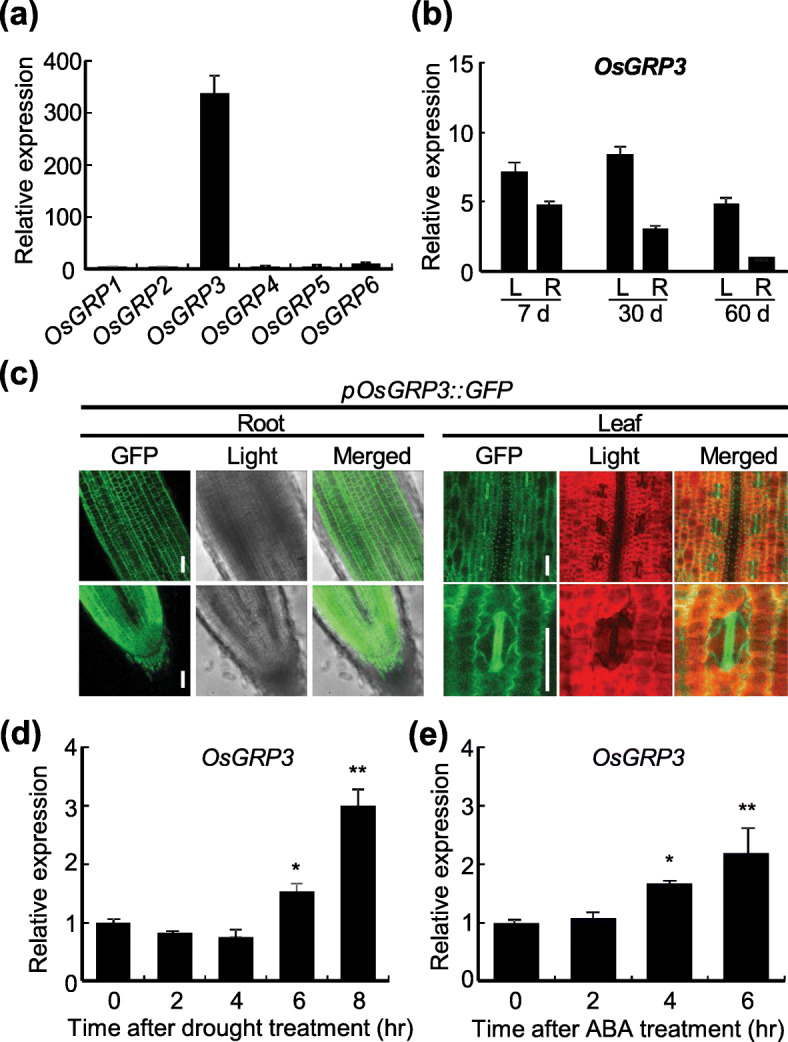
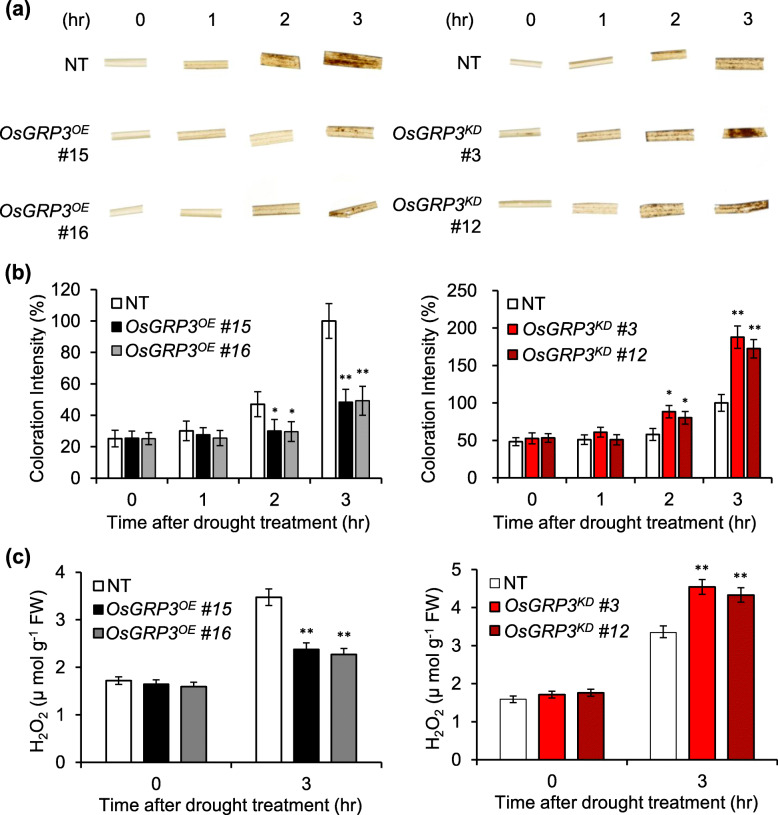
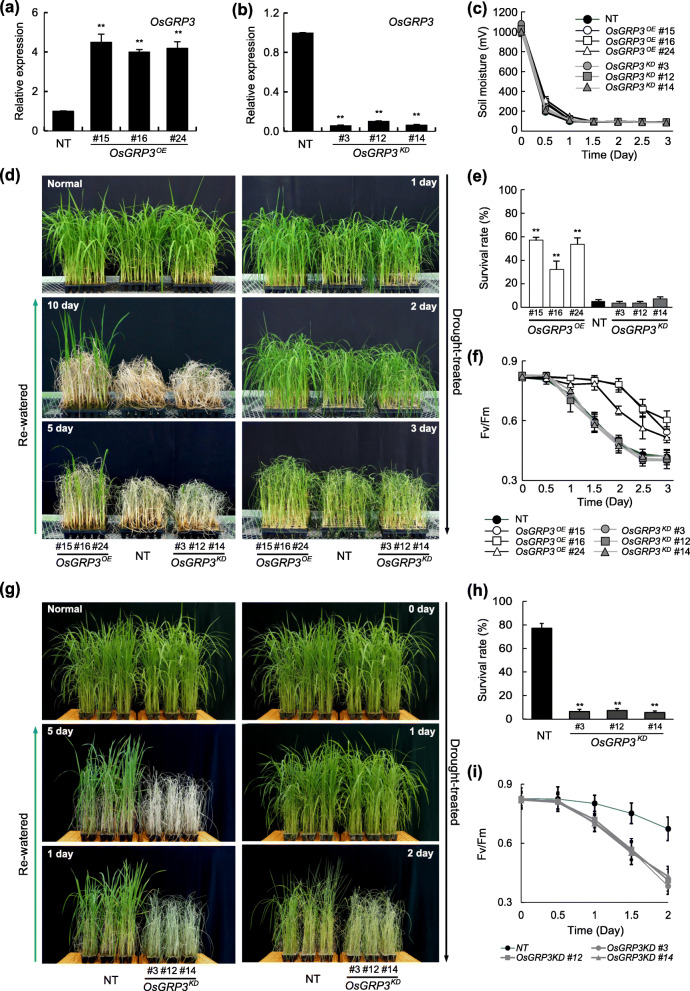
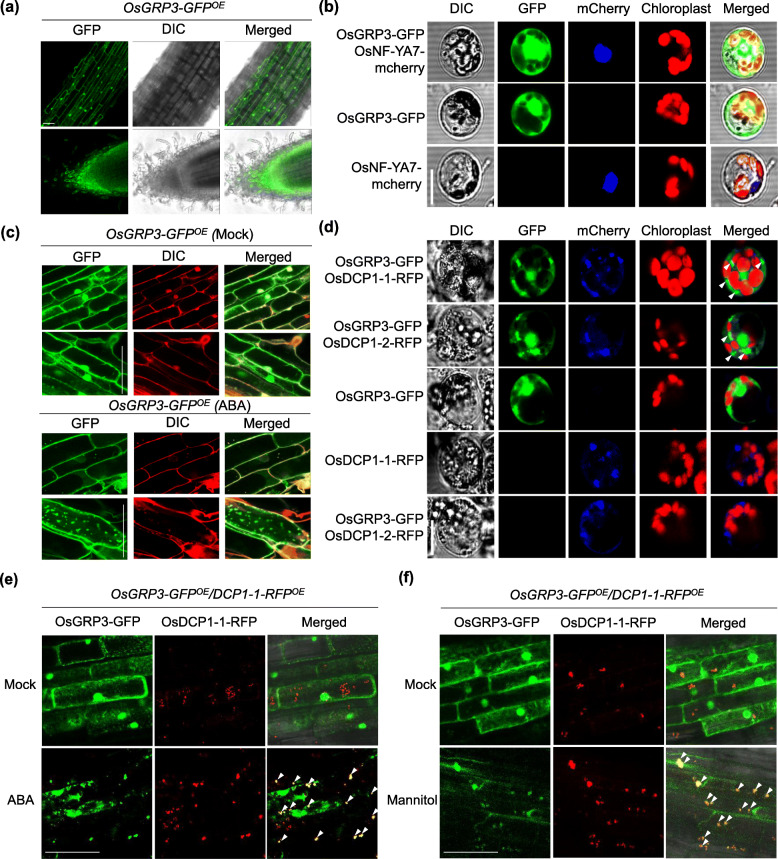
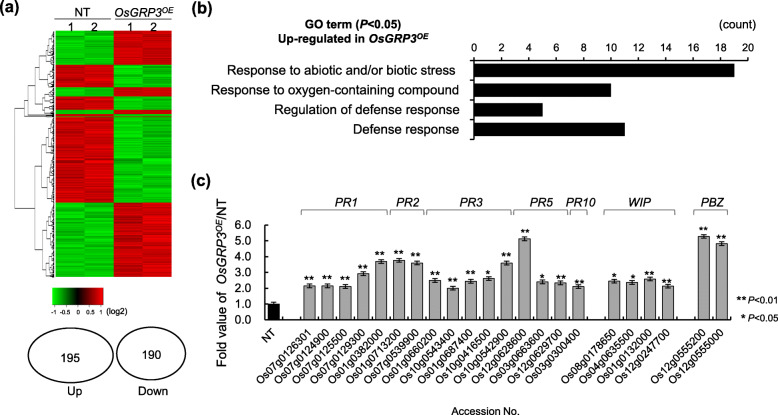
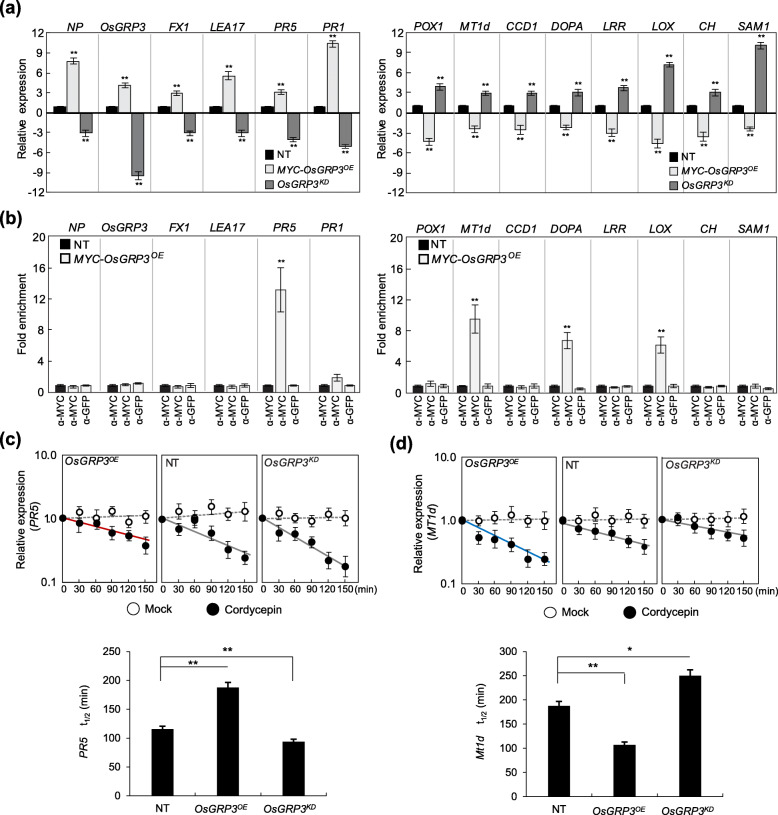
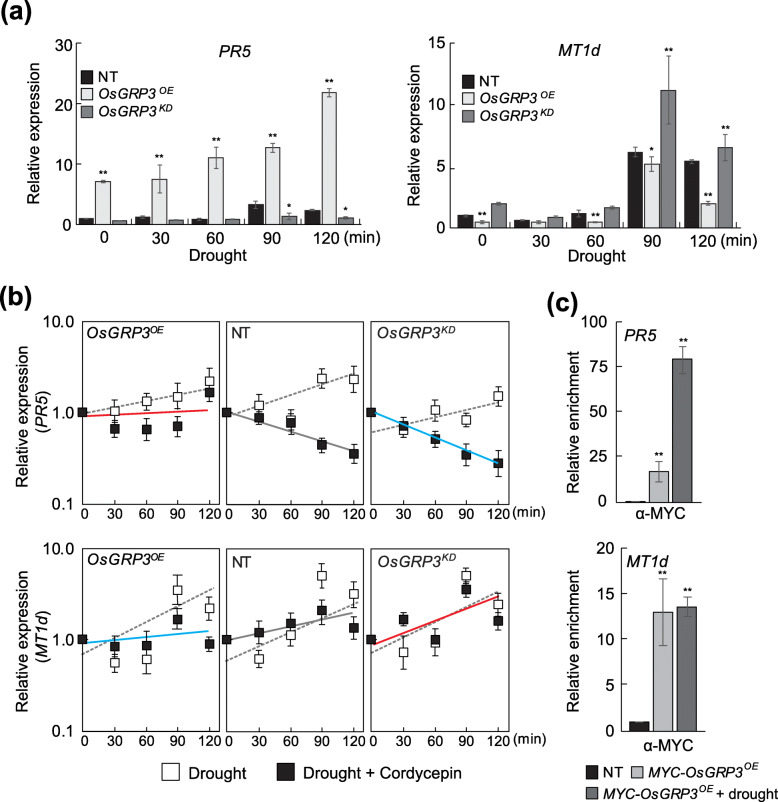
Here, we report the functional characterization of rice GLYCINE-RICH PROTEIN 3 (OsGRP3) and its physiological roles in drought stress response. Both drought stress and ABA induce the expression of OsGRP3. Transgenic plants overexpressing OsGRP3 (OsGRP3) exhibited tolerance while knock-down plants (OsGRP3) were susceptible to drought compared to the non-transgenic control. In vivo, subcellular localization analysis revealed that OsGRP3-GFP was transported from cytoplasm/nucleus into cytoplasmic foci following exposure to ABA and mannitol treatments. Comparative transcriptomic analysis between OsGRP3 and OsGRP3 plants suggests that OsGRP3 is involved in the regulation of the ROS related genes. RNA-immunoprecipitation analysis revealed the associations of OsGRP3 with PATHOGENESIS RELATED GENE 5 (PR5), METALLOTHIONEIN 1d (MT1d), 4,5-DOPA-DIOXYGENASE (DOPA), and LIPOXYGENASE (LOX) transcripts. The half-life analysis showed that PR5 transcripts decayed slower in OsGRP3 but faster in OsGRP3, while MT1d and LOX transcripts decayed faster in OsGRP3 but slower in OsGRP3 plants. HO accumulation was reduced in OsGRP3 and increased in OsGRP3 plants compared to non-transgenic plants (NT) under drought stress.
OsGRP3 plays a positive regulator in rice drought tolerance and modulates the transcript level and mRNA stability of stress-responsive genes, including ROS-related genes. Moreover, OsGRP3 contributes to the reduction of ROS accumulation during drought stress. Our results suggested that OsGRP3 alleviates ROS accumulation by regulating ROS-related genes' mRNA stability under drought stress, which confers drought tolerance.
植物富含甘氨酸的蛋白质根据其蛋白质结构可分为几类。富含甘氨酸的RNA结合蛋白(GRPs)是IV类亚家族的成员,具有N端RNA识别基序(RRMs),并被认为参与其靶转录本的转录后调控。GRPs参与发育过程和细胞应激反应,但这些调控背后的分子机制仍然难以捉摸。
在此,我们报道了水稻富含甘氨酸蛋白3(OsGRP3)的功能特性及其在干旱胁迫响应中的生理作用。干旱胁迫和脱落酸(ABA)均诱导OsGRP3的表达。与非转基因对照相比,过表达OsGRP3的转基因植株(OsGRP3)表现出耐受性,而敲低植株(OsGRP3)对干旱敏感。在体内,亚细胞定位分析表明,在ABA和甘露醇处理后,OsGRP3-GFP从细胞质/细胞核转运到细胞质聚集体中。对OsGRP3和OsGRP3植株进行的比较转录组分析表明,OsGRP3参与了与活性氧(ROS)相关基因的调控。RNA免疫沉淀分析揭示了OsGRP3与病程相关基因5(PR5)、金属硫蛋白1d(MT1d)、4,5-二羟基苯丙氨酸双加氧酶(DOPA)和脂氧合酶(LOX)转录本的关联。半衰期分析表明,PR5转录本在OsGRP3中降解较慢,而在OsGRP3中较快,而MT1d和LOX转录本在OsGRP3中降解较快,而在OsGRP3植株中较慢。在干旱胁迫下,与非转基因植株(NT)相比,OsGRP3中HO积累减少,而OsGRP3植株中HO积累增加。
OsGRP3在水稻耐旱性中起正调控作用,并调节包括ROS相关基因在内的胁迫响应基因的转录水平和mRNA稳定性。此外,OsGRP3有助于在干旱胁迫期间减少ROS积累。我们的结果表明,OsGRP3通过在干旱胁迫下调节ROS相关基因的mRNA稳定性来减轻ROS积累,从而赋予耐旱性。