HUS Medical Imaging Center, Radiology, University of Helsinki and Helsinki University Hospital, Helsinki, Finland.
Folkhälsan Institute of Genetics, Folkhälsan Research Center, Helsinki, Finland.
Acta Diabetol. 2021 Jul;58(7):929-937. doi: 10.1007/s00592-021-01678-x. Epub 2021 Mar 20.
To determine if arterial functional and structural changes are associated with underlying cerebral small vessel disease in neurologically asymptomatic individuals with type 1 diabetes.
We enrolled 186 individuals (47.8% men; median age 40.0, IQR 33.0-45.0 years) with type 1 diabetes (median diabetes duration of 21.6, IQR 18.2-30.3 years), and 30 age- and sex-matched healthy controls, as part of the Finnish Diabetic Nephropathy (FinnDiane) Study. All individuals underwent a biochemical work-up, brain magnetic resonance imaging (MRI), ultrasound of the common carotid arteries and arterial tonometry. Arterial structural and functional parameters were assessed by carotid intima-media thickness (CIMT), pulse wave velocity and augmentation index.
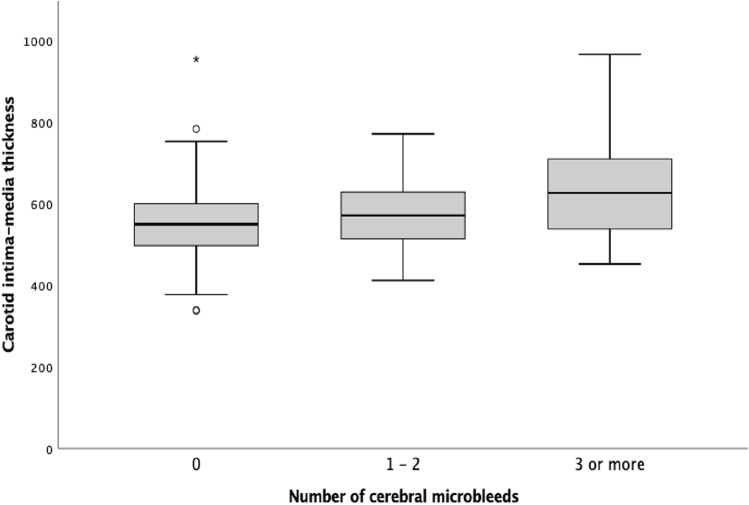
Cerebral microbleeds (CMBs) were present in 23.7% and white matter hyperintensities (WMHs) in 16.7% of individuals with type 1 diabetes. Those with type 1 diabetes and CMBs had higher median (IQR) CIMT 583 (525 - 663) μm than those without 556 (502 - 607) μm, p = 0.016). Higher CIMT was associated with the presence of CMBs (p = 0.046) independent of age, eGFR, ApoB, systolic blood pressure, albuminuria, history of retinal photocoagulation and HbA. Arterial stiffness and CIMT were increased in individuals with type 1 diabetes and WMHs compared to those without; however, these results were not independent of cardiovascular risk factors.
Structural, but not functional, arterial changes are associated with underlying CMBs in asymptomatic individuals with type 1 diabetes.
确定在无神经系统症状的 1 型糖尿病个体中,动脉功能和结构变化是否与潜在的脑小血管疾病相关。
我们招募了 186 名(47.8%为男性;中位年龄 40.0,IQR 33.0-45.0 岁)1 型糖尿病患者(中位糖尿病病程 21.6,IQR 18.2-30.3 年)和 30 名年龄和性别匹配的健康对照者,作为芬兰糖尿病肾病(FinnDiane)研究的一部分。所有个体均进行了生化检查、脑磁共振成像(MRI)、颈总动脉超声和动脉张力测定。通过颈动脉内膜中层厚度(CIMT)、脉搏波速度和增强指数评估动脉结构和功能参数。
1 型糖尿病患者中存在脑微出血(CMBs)的占 23.7%,存在脑白质高信号(WMHs)的占 16.7%。患有 1 型糖尿病且存在 CMBs 的患者的中位(IQR)CIMT 为 583(525-663)μm,高于不存在 CMBs 的患者的 556(502-607)μm,p=0.016)。在调整年龄、eGFR、ApoB、收缩压、白蛋白尿、视网膜光凝病史和 HbA 后,较高的 CIMT 与 CMBs 的存在相关(p=0.046)。与无 WMHs 的患者相比,患有 1 型糖尿病且存在 WMHs 的患者的动脉僵硬度和 CIMT 增加;然而,这些结果与心血管危险因素无关。
在无症状的 1 型糖尿病个体中,动脉结构变化,而不是功能变化,与潜在的 CMBs 相关。