Department of Radiation Oncology, Shanghai Chest Hospital, Shanghai Jiao Tong University, Shanghai, 200030, P. R. China.
State Key Laboratory of Molecular Engineering of Polymers, Department of Macromolecular Science, and Laboratory of Advanced Materials, Fudan University, Shanghai, 200438, P. R. China.
J Nanobiotechnology. 2021 Mar 20;19(1):80. doi: 10.1186/s12951-021-00823-6.
The recently developed biomimetic strategy is one of the mostly effective strategies for improving the theranostic efficacy of diverse nanomedicines, because nanoparticles coated with cell membranes can disguise as "self", evade the surveillance of the immune system, and accumulate to the tumor sites actively.
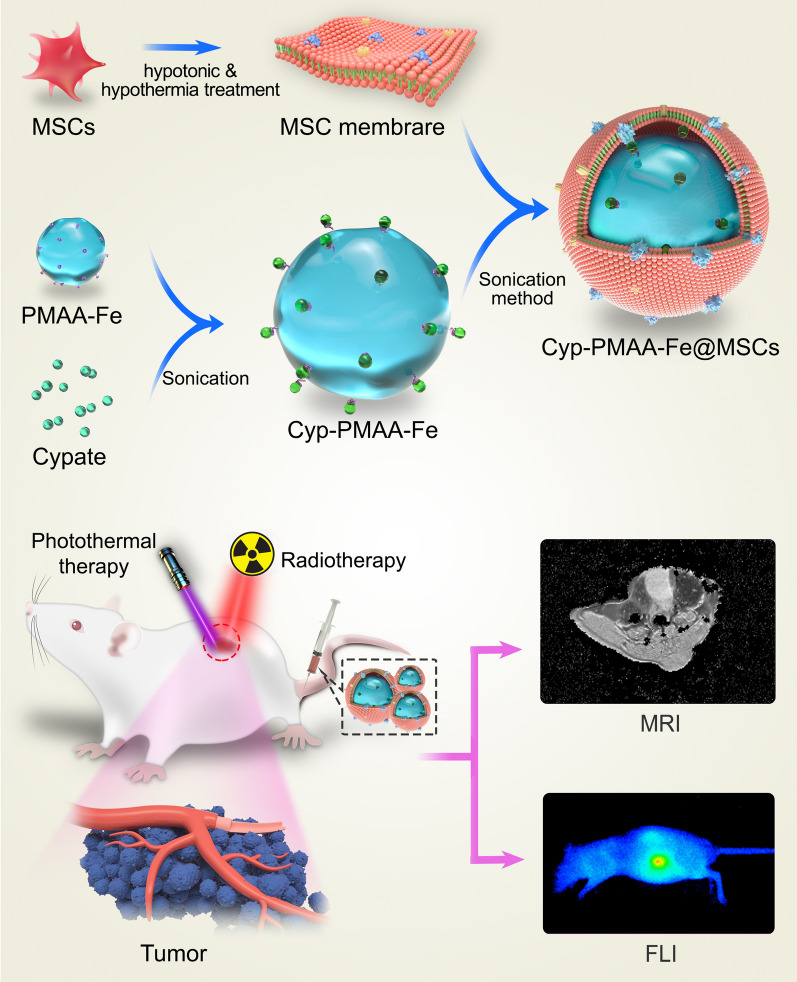
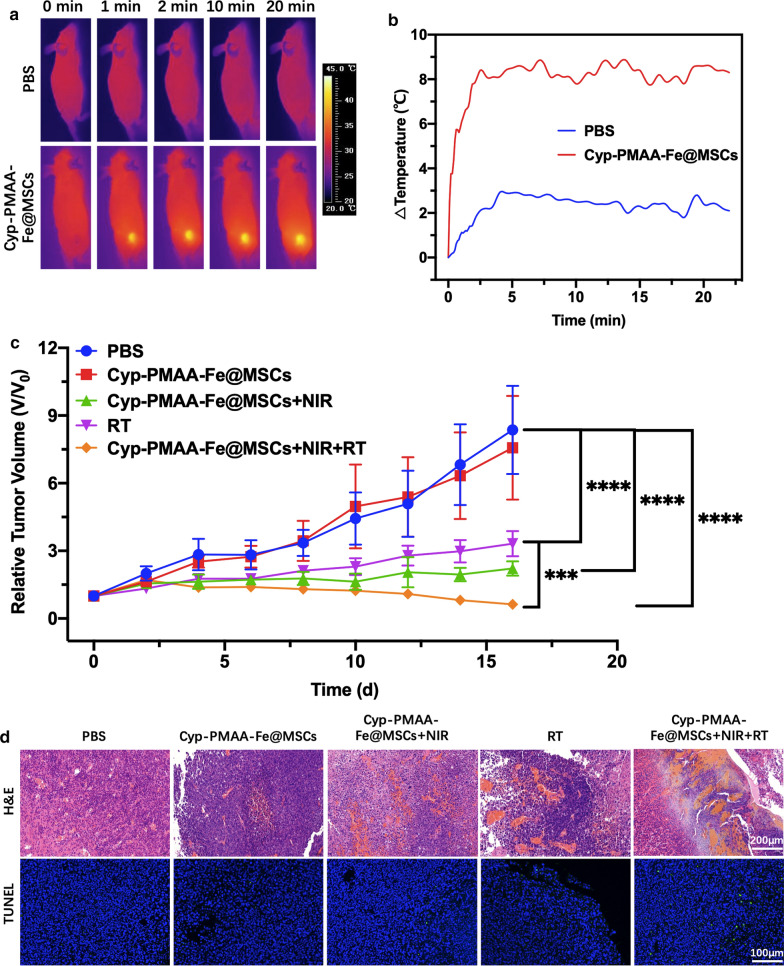
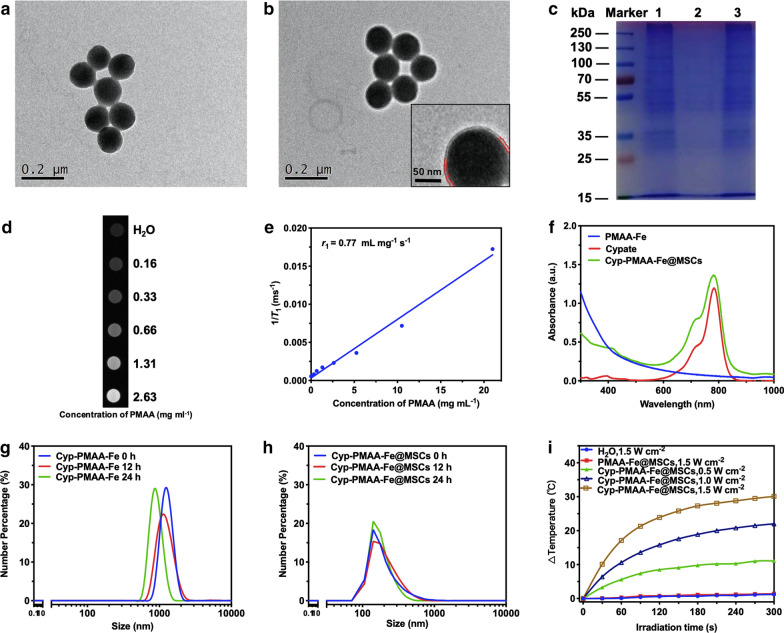
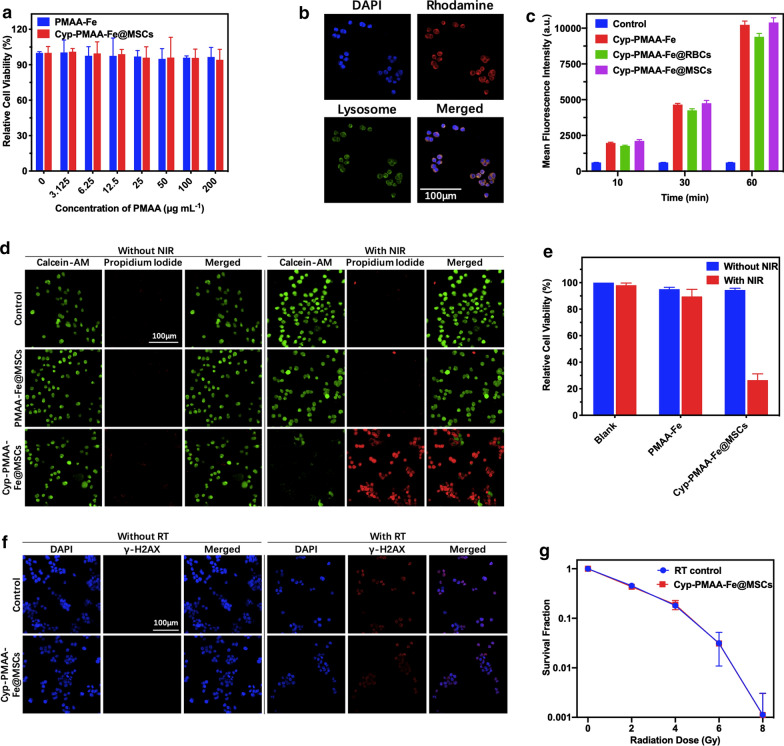
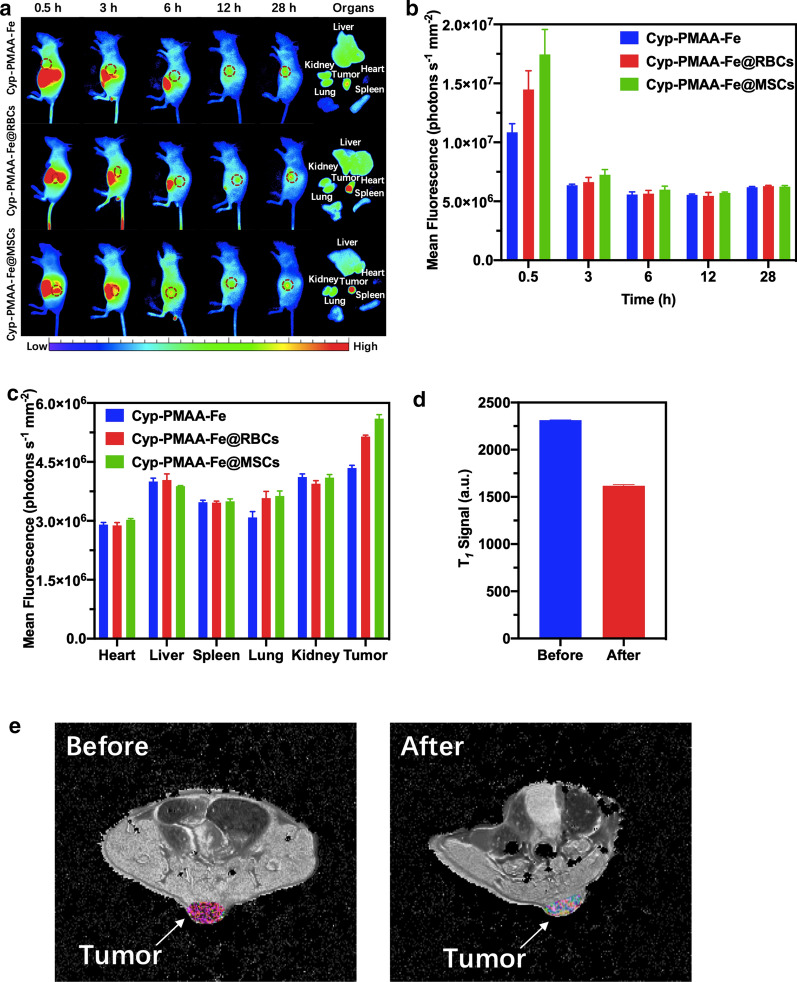
Herein, we utilized mesenchymal stem cell memabranes (MSCs) to coat polymethacrylic acid (PMAA) nanoparticles loaded with Fe(III) and cypate-an derivative of indocyanine green to fabricate Cyp-PMAA-Fe@MSCs, which featured high stability, desirable tumor-accumulation and intriguing photothermal conversion efficiency both in vitro and in vivo for the treatment of lung cancer. After intravenous administration of Cyp-PMAA-Fe@MSCs and Cyp-PMAA-Fe@RBCs (RBCs, red blood cell membranes) separately into tumor-bearing mice, the fluorescence signal in the MSCs group was 21% stronger than that in the RBCs group at the tumor sites in an in vivo fluorescence imaging system. Correspondingly, the T-weighted magnetic resonance imaging (MRI) signal at the tumor site decreased 30% after intravenous injection of Cyp-PMAA-Fe@MSCs. Importantly, the constructed Cyp-PMAA-Fe@MSCs exhibited strong photothermal hyperthermia effect both in vitro and in vivo when exposed to 808 nm laser irradiation, thus it could be used for photothermal therapy. Furthermore, tumors on mice treated with phototermal therapy and radiotherapy shrank 32% more than those treated with only radiotherapy.
These results proved that Cyp-PMAA-Fe@MSCs could realize fluorescence/MRI bimodal imaging, while be used in phototermal-therapy-enhanced radiotherapy, providing desirable nanoplatforms for tumor diagnosis and precise treatment of non-small cell lung cancer.
最近开发的仿生策略是提高各种纳米药物治疗效果的最有效策略之一,因为细胞膜包裹的纳米粒子可以伪装成“自身”,逃避免疫系统的监视,并主动聚集到肿瘤部位。
本文利用间充质干细胞膜(MSCs)包裹载有 Fe(III)和 Cy5.5 衍生物的聚甲基丙烯酸(PMAA)纳米粒子,制备了 Cyp-PMAA-Fe@MSCs,其在体外和体内均具有高稳定性、良好的肿瘤积累能力和令人感兴趣的光热转换效率,可用于治疗肺癌。将 Cyp-PMAA-Fe@MSCs 和 Cyp-PMAA-Fe@RBCs(RBCs,红细胞膜)分别静脉注射到荷瘤小鼠体内后,在活体荧光成像系统中,MSCs 组肿瘤部位的荧光信号比 RBCs 组强 21%。相应地,静脉注射 Cyp-PMAA-Fe@MSCs 后,肿瘤部位的 T1 加权磁共振成像(MRI)信号降低了 30%。重要的是,当暴露于 808nm 激光照射时,构建的 Cyp-PMAA-Fe@MSCs 在体外和体内均表现出强烈的光热超热效应,因此可用于光热治疗。此外,接受光热治疗和放射治疗的小鼠肿瘤缩小了 32%,比仅接受放射治疗的肿瘤缩小了 32%。
这些结果证明 Cyp-PMAA-Fe@MSCs 可以实现荧光/MRI 双模式成像,同时可用于光热治疗增强放疗,为非小细胞肺癌的肿瘤诊断和精确治疗提供了理想的纳米平台。