Garvan Institute of Medical Research, Darlinghurst, Sydney, NSW, Australia.
St Vincent's Clinical School, UNSW Sydney, Sydney, NSW, Australia.
Prostate Cancer Prostatic Dis. 2021 Sep;24(3):860-870. doi: 10.1038/s41391-021-00338-z. Epub 2021 Mar 21.
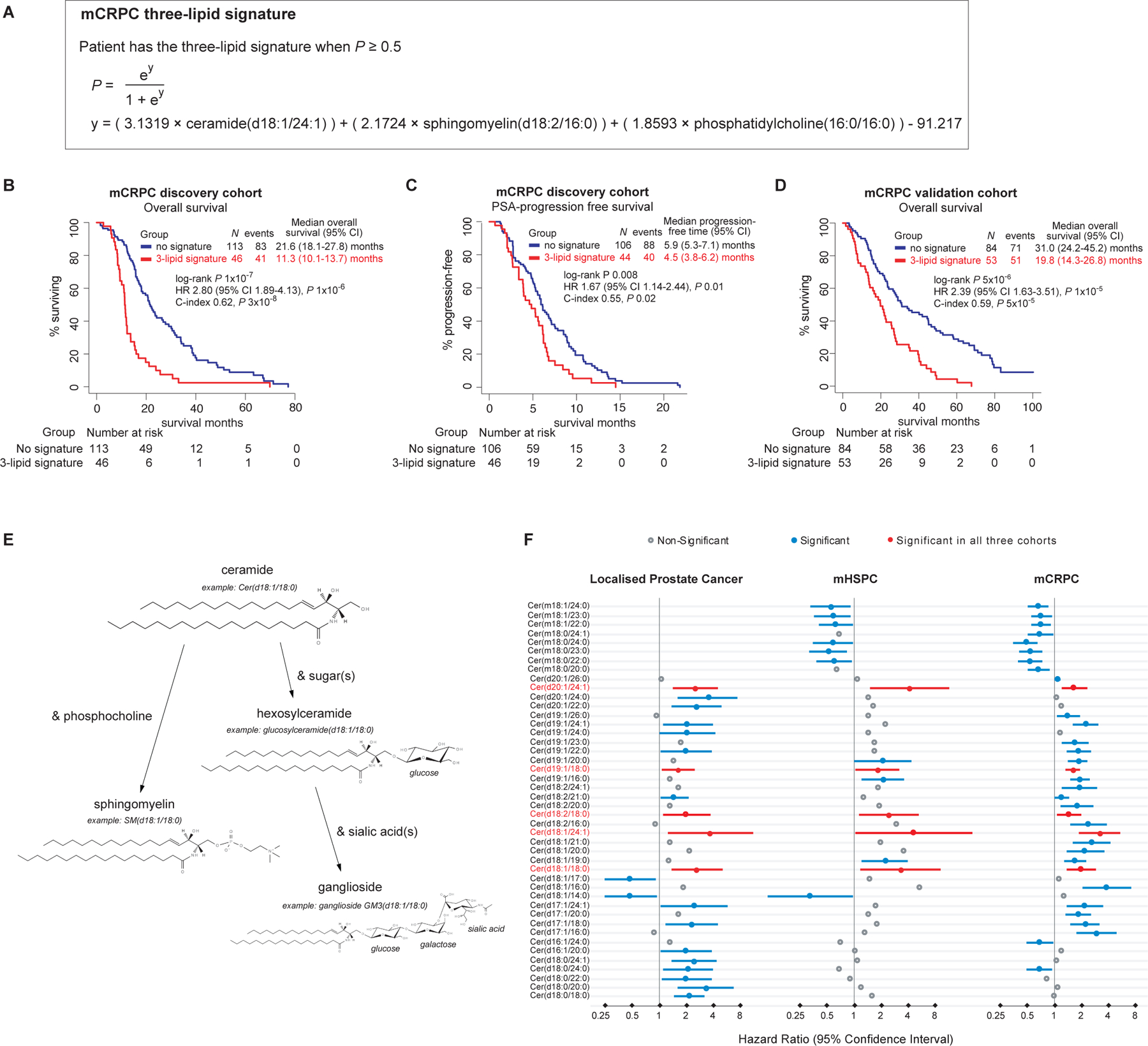
Dysregulated lipid metabolism is associated with more aggressive pathology and poorer prognosis in prostate cancer (PC). The primary aim of the study is to assess the relationship between the plasma lipidome and clinical outcomes in localised and metastatic PC. The secondary aim is to validate a prognostic circulating 3-lipid signature specific to metastatic castration-resistant PC (mCRPC).
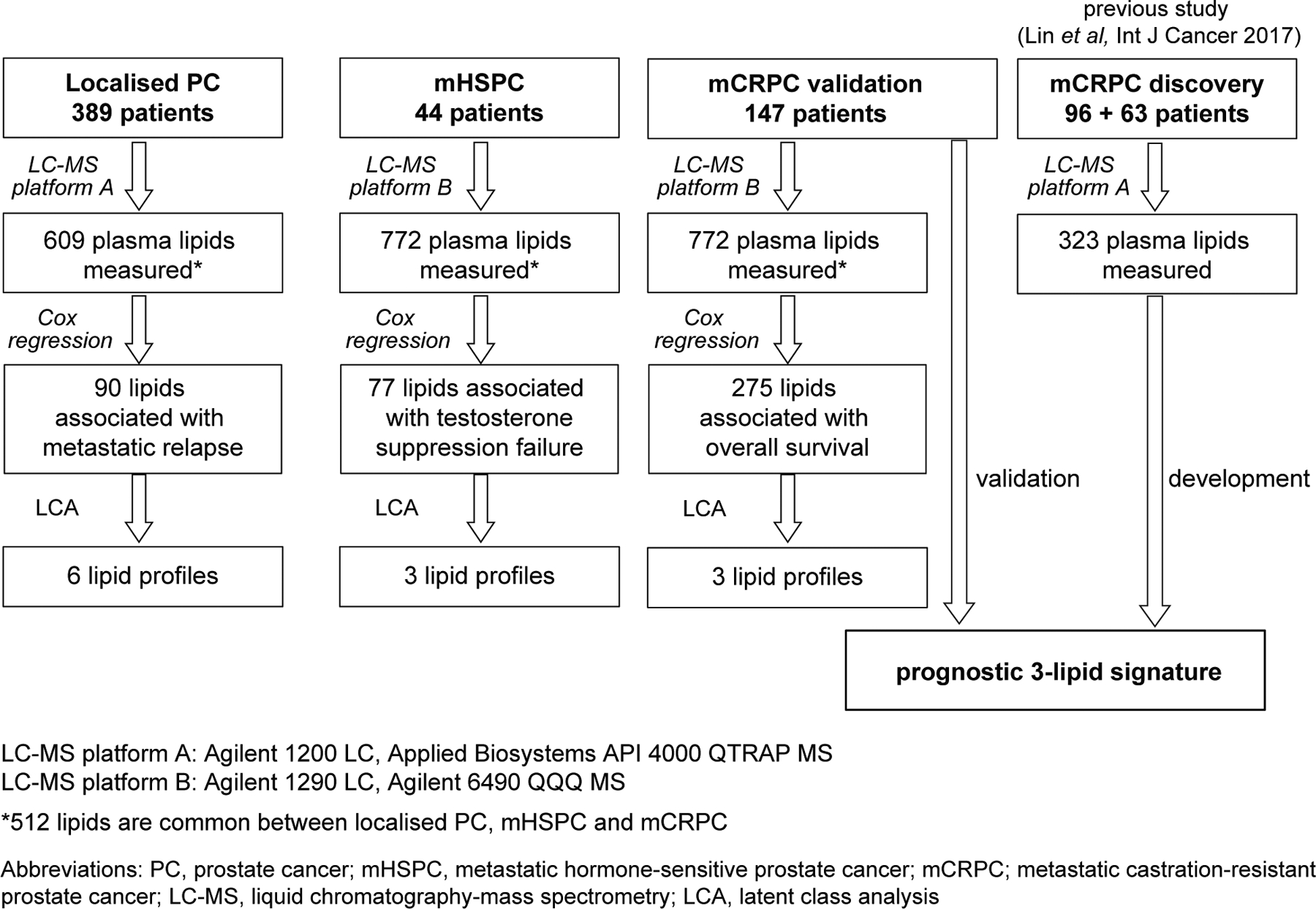
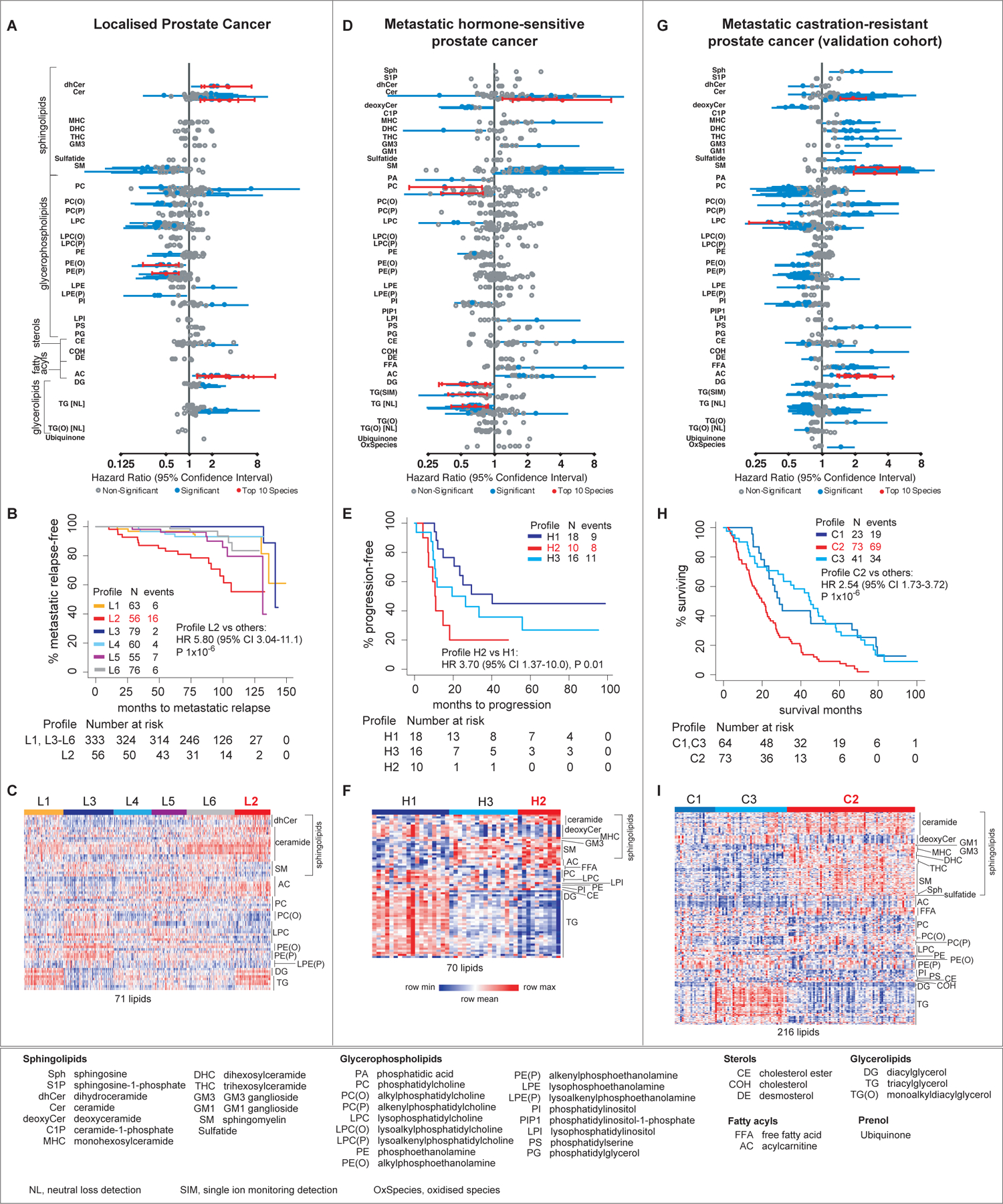
Comprehensive lipidomic analysis was performed on pre-treatment plasma samples from men with localised PC (N = 389), metastatic hormone-sensitive PC (mHSPC)(N = 44), or mCRPC (validation cohort, N = 137). Clinical outcomes from our previously published mCRPC cohort (N = 159) that was used to derive the prognostic circulating 3-lipid signature, were updated. Associations between circulating lipids and clinical outcomes were examined by Cox regression and latent class analysis.
Circulating lipid profiles featuring elevated levels of ceramide species were associated with metastatic relapse in localised PC (HR 5.80, 95% CI 3.04-11.1, P = 1 × 10), earlier testosterone suppression failure in mHSPC (HR 3.70, 95% CI 1.37-10.0, P = 0.01), and shorter overall survival in mCRPC (HR 2.54, 95% CI 1.73-3.72, P = 1 × 10). The prognostic significance of circulating lipid profiles in localised PC was independent of standard clinicopathological and metabolic factors (P < 0.0002). The 3-lipid signature was verified in the mCRPC validation cohort (HR 2.39, 95% CI 1.63-3.51, P = 1 × 10).
Elevated circulating ceramide species are associated with poorer clinical outcomes across the natural history of PC. These clinically actionable lipid profiles could be therapeutically targeted in prospective clinical trials to potentially improve PC outcomes.
脂质代谢失调与前列腺癌(PC)更具侵袭性的病理和更差的预后有关。本研究的主要目的是评估局部和转移性 PC 患者血浆脂质组与临床结局之间的关系。次要目的是验证一种针对转移性去势抵抗性 PC(mCRPC)的预后性循环 3-脂质特征。
对局部 PC(N=389)、转移性激素敏感性 PC(mHSPC)(N=44)或 mCRPC(验证队列,N=137)患者的预处理血浆样本进行综合脂质组学分析。对之前发表的 mCRPC 队列(N=159)的临床结局进行了更新,该队列用于推导预后性循环 3-脂质特征。通过 Cox 回归和潜在类别分析来检验循环脂质与临床结局之间的关联。
特征为神经酰胺水平升高的循环脂质谱与局部 PC 中的转移复发相关(HR 5.80,95%CI 3.04-11.1,P=1×10),mHSPC 中较早出现睾酮抑制失败(HR 3.70,95%CI 1.37-10.0,P=0.01),以及 mCRPC 中总生存期较短(HR 2.54,95%CI 1.73-3.72,P=1×10)。局部 PC 中循环脂质谱的预后意义独立于标准临床病理和代谢因素(P<0.0002)。3-脂质特征在 mCRPC 验证队列中得到验证(HR 2.39,95%CI 1.63-3.51,P=1×10)。
循环神经酰胺水平升高与 PC 整个自然史中的临床结局较差有关。这些具有临床可操作性的脂质谱可以在前瞻性临床试验中进行靶向治疗,以潜在改善 PC 的结局。