Korac Aleksandra, Srdic-Galic Biljana, Kalezic Andjelika, Stancic Ana, Otasevic Vesna, Korac Bato, Jankovic Aleksandra
Center for Electron Microscopy, Faculty of Biology, University of Belgrade, Belgrade, Serbia.
Department of Anatomy, Faculty of Medicine, University of Novi Sad, Novi Sad, Serbia.
Arch Med Sci. 2021 Feb 26;17(2):323-336. doi: 10.5114/aoms/92118. eCollection 2021.
Metabolic syndrome arises from abnormal adipose function accompanied by insulin resistance. As early factors reflecting/impacting lipid storage dysfunction of adipose tissues, we sought to determine adipokine levels in subcutaneous and visceral adipose tissues (SAT and VAT).
Gene and protein expression levels of leptin, adiponectin, and resistin were analysed in SAT and VAT of normal-weight and overweight/obese women, subclassified according to insulin resistance index, triglyceride, total, low-density lipoprotein (LDL) and high-density lipoprotein (HDL) cholesterol levels into metabolically healthy and "at risk" groups.
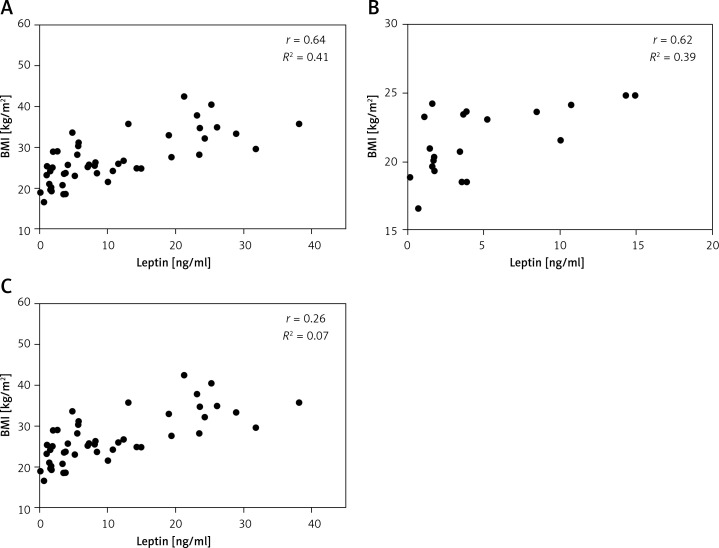
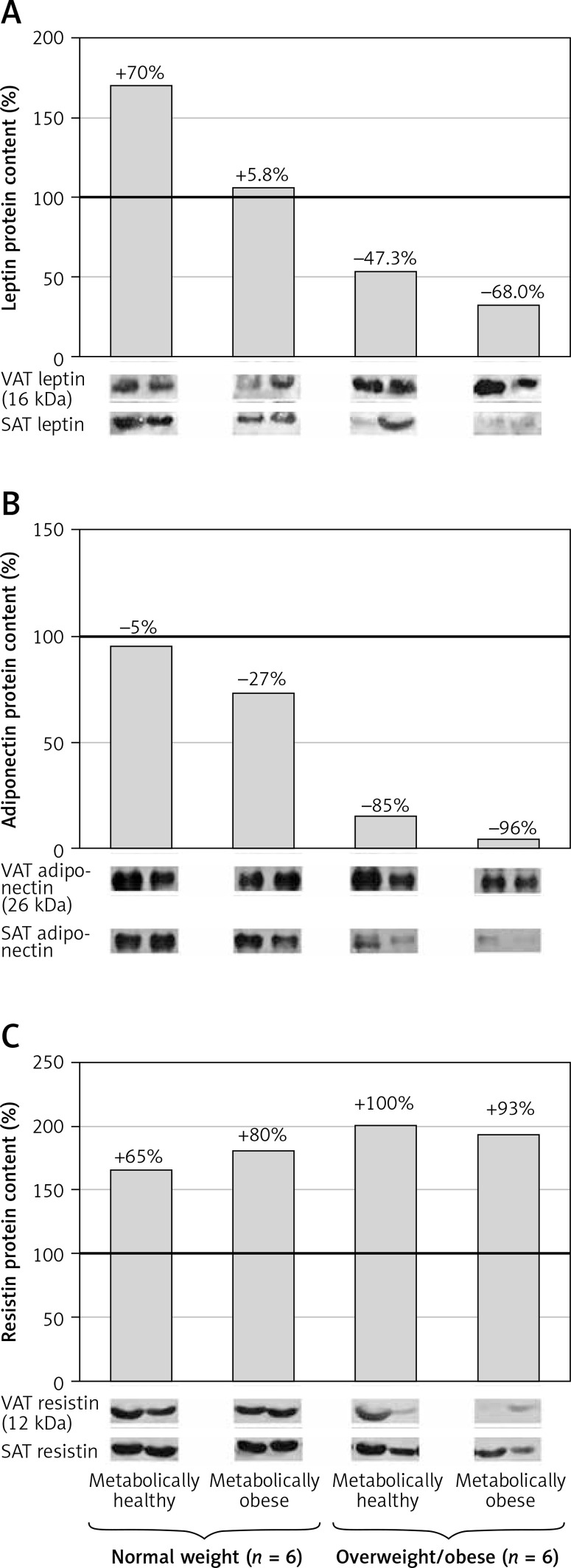
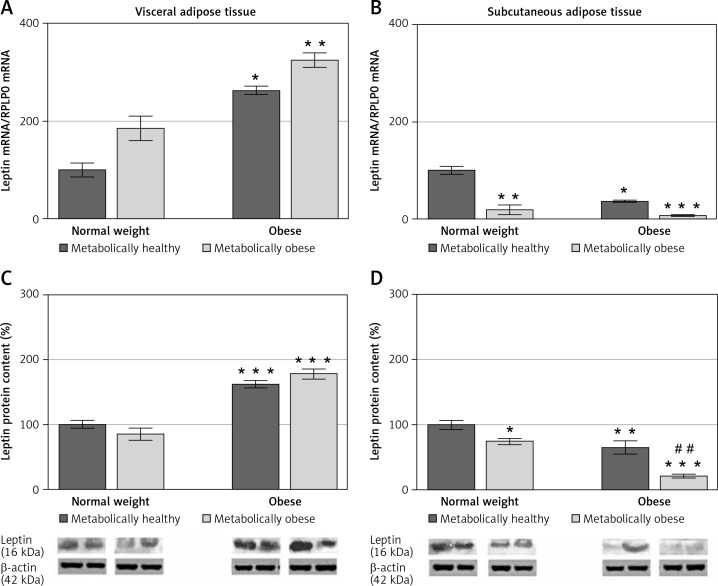
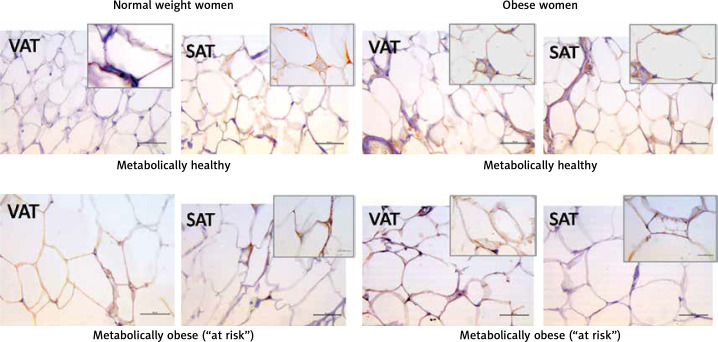
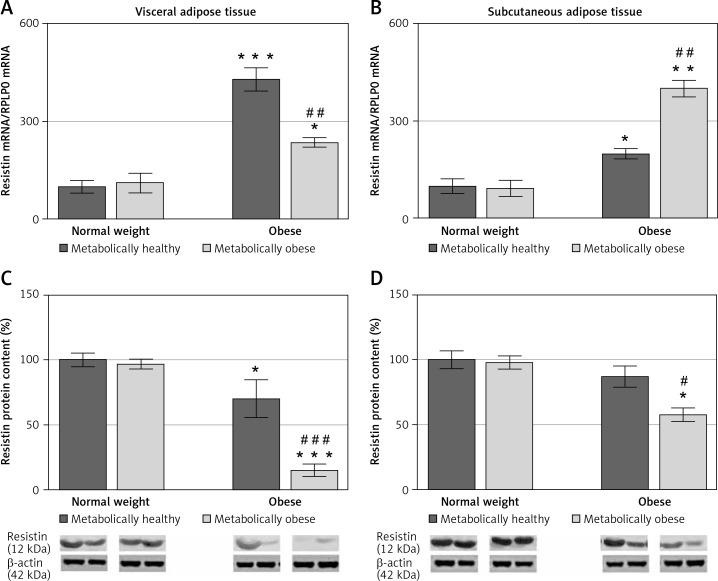
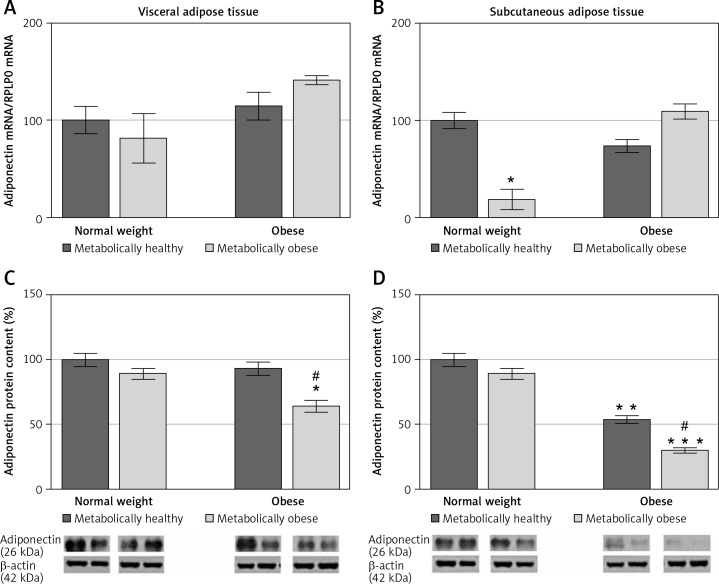
Compared with normal-weight women, obese women had higher serum leptin levels ( < 0.05), as well as increased leptin gene and protein expression in VAT. Conversely, expression levels of leptin were lower in SAT of obese women, and minor in the SAT of "at risk" groups of women, compared with weight-matched healthy groups. In addition, lower adiponectin levels were detected in SAT of metabolically healthy obese women ( < 0.01), and lower in SAT and VAT ( < 0.05) of "at risk" obese women compared to healthy, obese women. Significant differences in resistin levels were only observed in obese women; resistin gene expression was higher in VAT and SAT of obese, compared to normal-weight women. However, higher gene expression was not consistent with protein expression of resistin.
Low adiponectin in both examined adipose tissues and inappropriate leptin expression levels in SAT appear to be important characteristics of obesity-related metabolic syndrome. Intriguingly, this adipokine dysregulation is primary seen in SAT, suggesting that endocrine dysfunction in this abdominal depot may be an early risk sign of metabolic syndrome.
代谢综合征源于异常的脂肪功能并伴有胰岛素抵抗。作为反映/影响脂肪组织脂质储存功能障碍的早期因素,我们试图测定皮下和内脏脂肪组织(SAT和VAT)中的脂肪因子水平。
分析正常体重和超重/肥胖女性的SAT和VAT中瘦素、脂联素和抵抗素的基因和蛋白表达水平,根据胰岛素抵抗指数、甘油三酯、总胆固醇、低密度脂蛋白(LDL)和高密度脂蛋白(HDL)胆固醇水平将其分为代谢健康组和“有风险”组。
与正常体重女性相比,肥胖女性血清瘦素水平更高(<0.05),VAT中瘦素基因和蛋白表达也增加。相反,肥胖女性SAT中瘦素表达水平较低,与体重匹配的健康组相比,“有风险”组女性的SAT中瘦素表达更低。此外,代谢健康的肥胖女性SAT中脂联素水平较低(<0.01),与健康肥胖女性相比,“有风险”肥胖女性的SAT和VAT中脂联素水平更低(<0.05)。仅在肥胖女性中观察到抵抗素水平有显著差异;与正常体重女性相比,肥胖女性的VAT和SAT中抵抗素基因表达更高。然而,更高的基因表达与抵抗素的蛋白表达不一致。
在两个检测的脂肪组织中脂联素水平低以及SAT中瘦素表达水平不当似乎是肥胖相关代谢综合征的重要特征。有趣的是,这种脂肪因子失调主要见于SAT,提示该腹部脂肪库的内分泌功能障碍可能是代谢综合征的早期风险信号。