Li Xiaoyu, Liao Zheting, Deng Zhonghao, Chen Nachun, Zhao Liang
Department of Orthopaedics, Nanfang Hospital, Southern Medical University, Guangzhou, China.
Key Laboratory of Bone and Cartilage Regeneration Medicine, Nanfang Hospital, Southern Medical University, Guangzhou, China.
Bioengineered. 2021 Dec;12(1):997-1007. doi: 10.1080/21655979.2021.1903207.
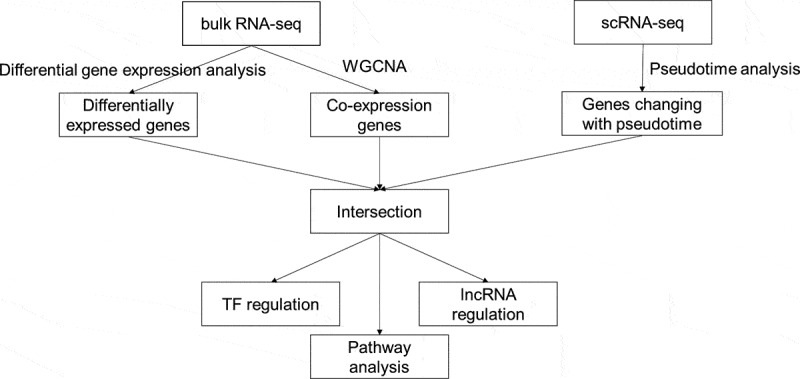
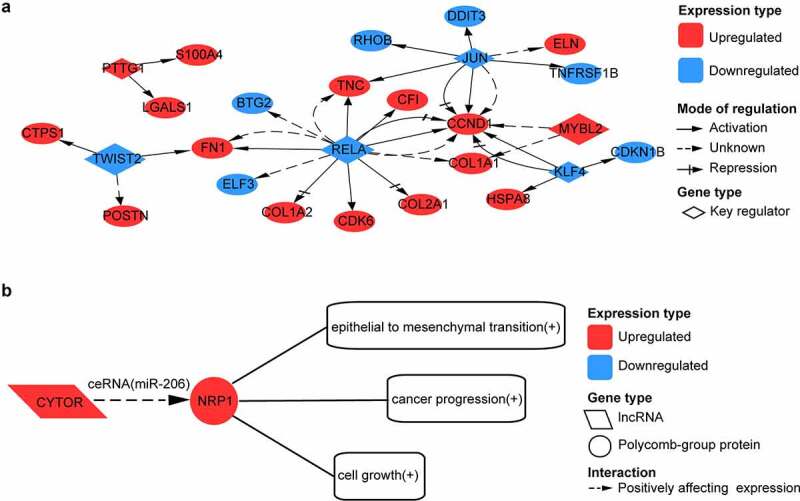
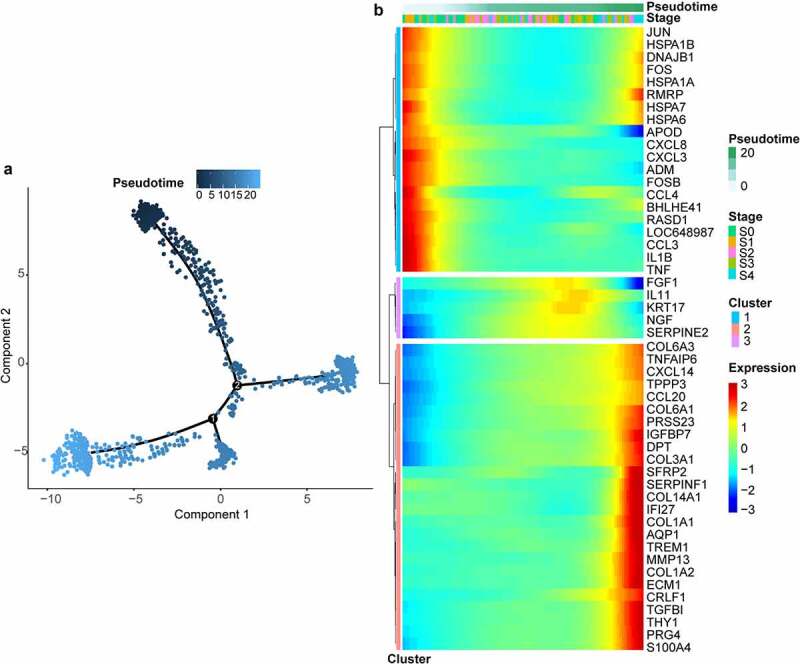
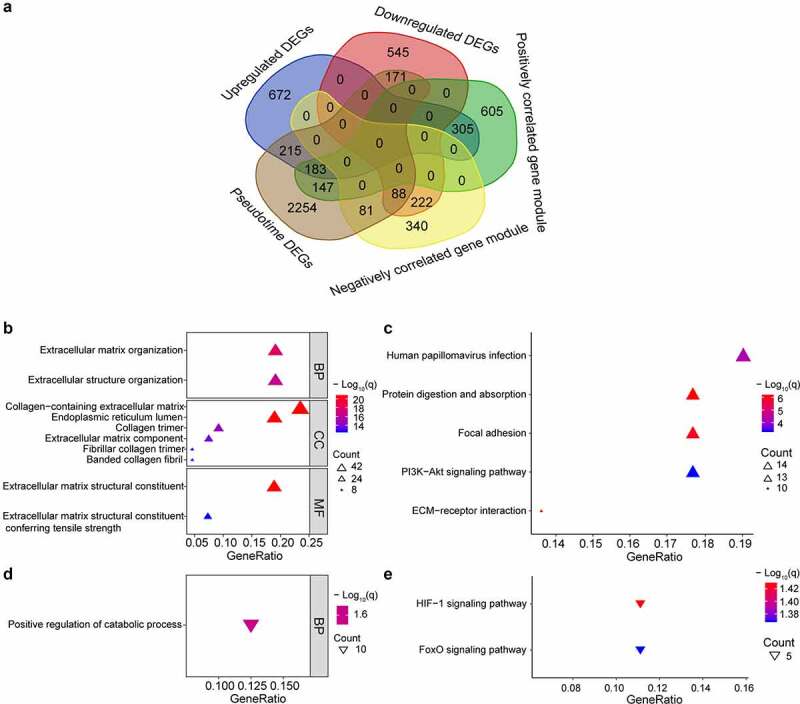
Osteoarthritis (OA) occurs mostly in the knees, hips, finger interphalangeal joints, and spinal facet joints, and is characterized by cartilage degeneration. The existing bulk RNA sequencing (bulk RNA-seq) and single-cell sequencing (scRNA-seq) data for chondrocytes in the osteoarthritic knee joint provide the expression profiles of entire cell populations and individual cells, respectively. Here, we aimed to analyze these two types of sequencing data in order to obtain a more comprehensive understanding of OA. We compared the analysis results of bulk RNA-seq and scRNA-seq from the dataset GSE114007 and the dataset GSE104782, respectively, and identified the differentially expressed genes (DEGs). Then, we tried to find the key The transcription factor is a more fomal term (TFs) and long non-coding RNA (lncRNA) regulation. We highlighted 271 genes that were simultaneously suggested by these two types of data and provided their possible expression pattern in OA. Among the 271 genes, we identified 14 TFs, and TWIST2, MYBL2, RELA, JUN, KLF4, and PTTG1 could be the key TFs for the 271 genes. We also found that 8 lncRNAs among the 271 genes and the lncRNA regulation between CYTOR and NRP1 could contribute to the pain and vascularization of cartilage in the osteoarthritic knee. In short, our research combined the analysis results of bulk RNA-seq and scRNA-seq data for OA chondrocytes, which will contribute to further elucidation of the molecular mechanisms of OA pathogenesis.[Figure: see text].
骨关节炎(OA)大多发生在膝关节、髋关节、手指指间关节和脊柱小关节,其特征为软骨退变。骨关节炎膝关节软骨细胞现有的大量RNA测序(bulk RNA-seq)和单细胞测序(scRNA-seq)数据分别提供了整个细胞群体和单个细胞的表达谱。在此,我们旨在分析这两种测序数据,以便更全面地了解骨关节炎。我们分别比较了数据集GSE114007和数据集GSE104782的大量RNA-seq和scRNA-seq分析结果,并鉴定了差异表达基因(DEG)。然后,我们试图找到关键转录因子(TF)和长链非编码RNA(lncRNA)调控。我们突出显示了这两种数据类型共同提示的271个基因,并给出了它们在骨关节炎中可能的表达模式。在这271个基因中,我们鉴定出14个转录因子,其中TWIST2、MYBL2、RELA、JUN、KLF4和PTTG1可能是这271个基因的关键转录因子。我们还发现这271个基因中的8个lncRNA以及CYTOR和NRP1之间的lncRNA调控可能与骨关节炎膝关节软骨的疼痛和血管生成有关。简而言之,我们的研究结合了骨关节炎软骨细胞的大量RNA-seq和scRNA-seq数据的分析结果,这将有助于进一步阐明骨关节炎发病机制的分子机制。[图:见正文]