Neuroscience Division, Garvan Institute of Medical Research, St. Vincent's Hospital, Darlinghurst, NSW, Australia.
Division of Pharmacology, Otto Loewi Research Center, Medical University of Graz, Graz, Austria.
FASEB J. 2021 Apr;35(4):e21435. doi: 10.1096/fj.202002215R.
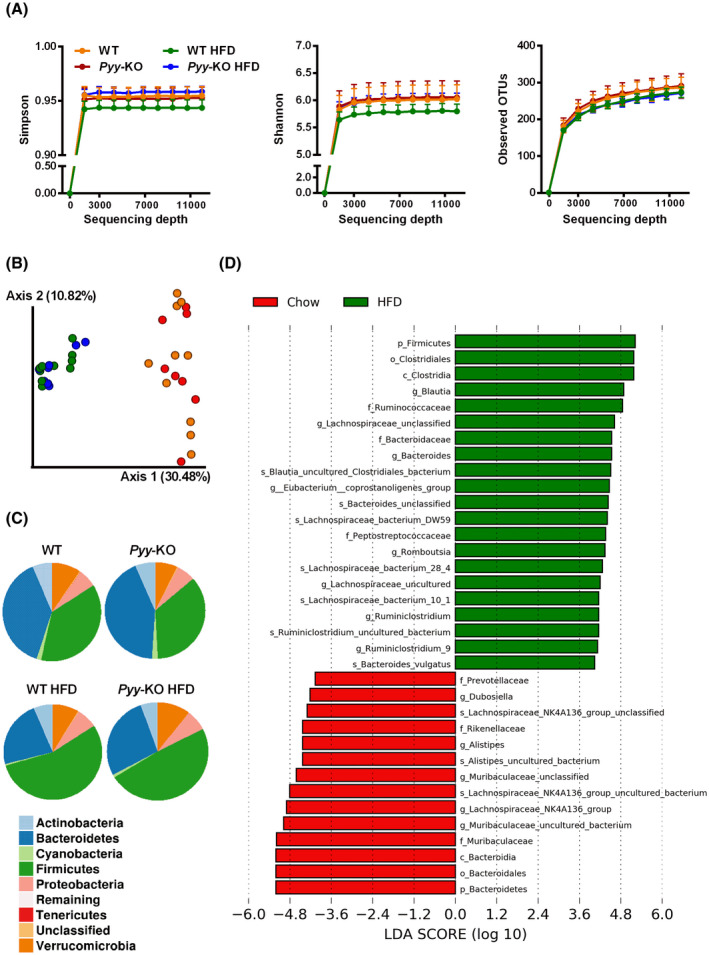
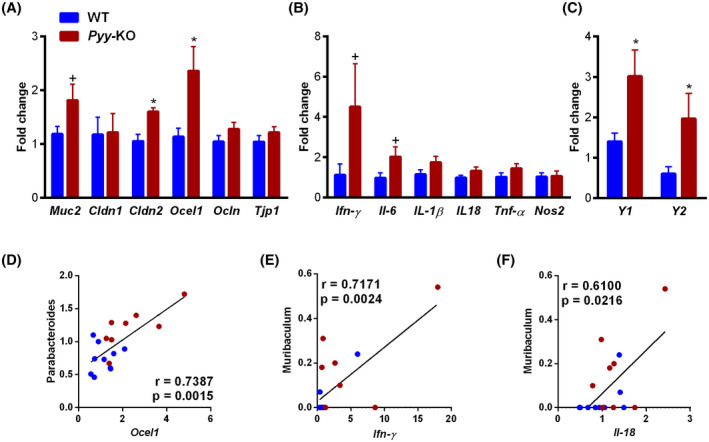
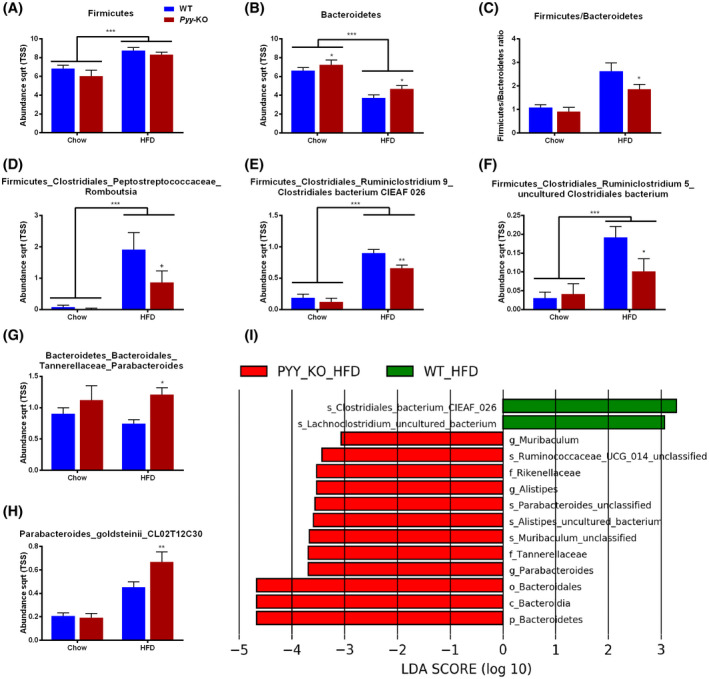
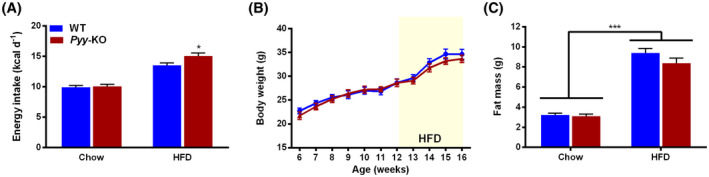
Peptide YY (PYY), produced by endocrine L cells in the gut, is known for its critical role in regulating gastrointestinal functions as well as satiety. However, how these processes are integrated with maintaining a healthy gut microbiome composition is unknown. Here, we show that lack of PYY in mice leads to distinct changes in gut microbiome composition that are diet-dependent. While under chow diet only slight differences in gut microbiome composition could be observed, high-fat diet (HFD) aggravated these differences. Specifically an increased abundance of the Bacteroidetes phylum with a corresponding decrease of the Firmicutes/Bacteroidetes ratio could be detected in Pyy-knockout (KO) mice in response to HFD. Detailed analysis of the Bacteroidetes phylum further revealed that the Alistipes genus belonging to the Rikenellaceae family, the Parabacteroides belonging to the Tannerellaceae family, as well as Muribaculum were increased in Pyy-KO mice. In order to investigate whether these changes are associated with changed markers of gut barrier and immunity, we analyzed the colonic expression of various pro-inflammatory cytokines, as well as tight junction proteins and mucin 2, and identified increased mRNA expression of the tight junction proteins Cldn2 and Ocel1 in Pyy-KO mice, while pro-inflammatory cytokine expression was not significantly altered. Together these results highlight a critical gene-environment interaction between diet and the gut microbiome and its impact on homeostasis of the intestinal epithelium under conditions of reduced PYY signaling which is commonly seen under obese conditions.
肽 YY(PYY)由肠道内分泌 L 细胞产生,其在调节胃肠道功能和饱腹感方面起着关键作用。然而,这些过程如何与维持健康的肠道微生物组组成相整合尚不清楚。在这里,我们表明,缺乏 PYY 的小鼠会导致肠道微生物组组成的明显变化,这种变化依赖于饮食。虽然在普通饮食下只能观察到肠道微生物组组成的微小差异,但高脂肪饮食(HFD)加剧了这些差异。具体来说,在高脂肪饮食下,PYY 敲除(KO)小鼠中厚壁菌门的丰度增加,而拟杆菌门/厚壁菌门的比例相应降低,可以检测到这些差异。对厚壁菌门的详细分析进一步表明,属于理研菌科的 Alistipes 属、属于 Tannerellaceae 家族的 Parabacteroides 属以及 Muribaculum 在 Pyy-KO 小鼠中增加。为了研究这些变化是否与肠道屏障和免疫的改变标志物有关,我们分析了各种促炎细胞因子、紧密连接蛋白和粘蛋白 2 的结肠表达,并在 Pyy-KO 小鼠中鉴定出紧密连接蛋白 Cldn2 和 Ocel1 的 mRNA 表达增加,而促炎细胞因子的表达没有明显改变。这些结果共同强调了饮食和肠道微生物组之间的关键基因-环境相互作用及其对减少 PYY 信号转导条件下肠道上皮内稳态的影响,这种情况在肥胖条件下很常见。