Jiangsu Agri-animal Husbandry Vocational College, 8 Feng Huang East Road, Taizhou, Jiangsu, People's Republic of China.
Food, Animal and Plant Inspection and Quarantine Technical Center of Shanghai Customs, Shanghai, People's Republic of China.
BMC Vet Res. 2021 Mar 22;17(1):127. doi: 10.1186/s12917-021-02804-1.
Cryopreservation is an efficient way to store spermatozoa and is closely associated with the quality of sperm after the freeze-thaw process. During freeze-thaw cycling, excessive reactive oxygen species (ROS) are produced, and the effects of ROS on boar sperm during cryopreservation have not been identified.
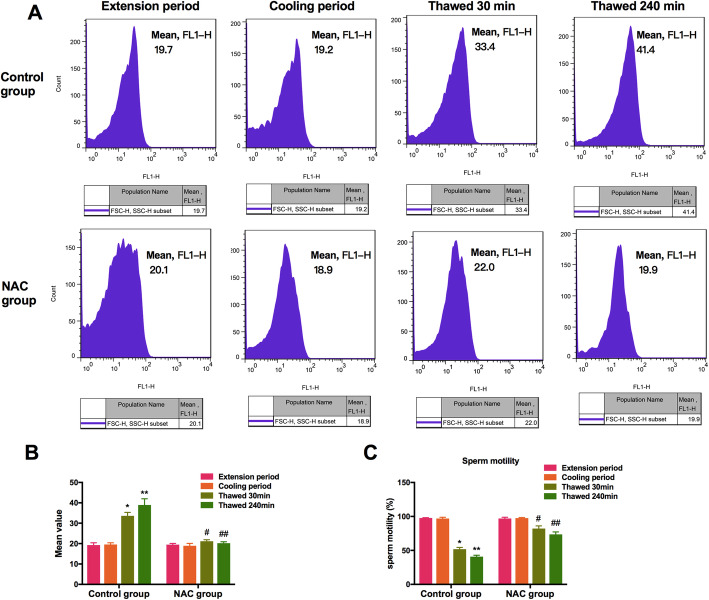
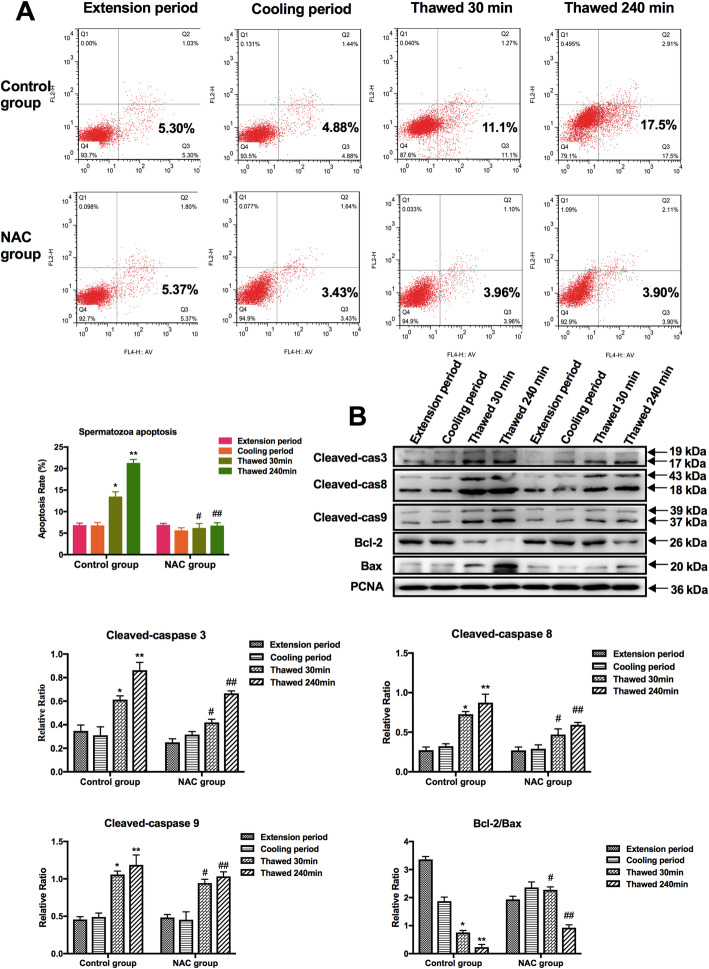
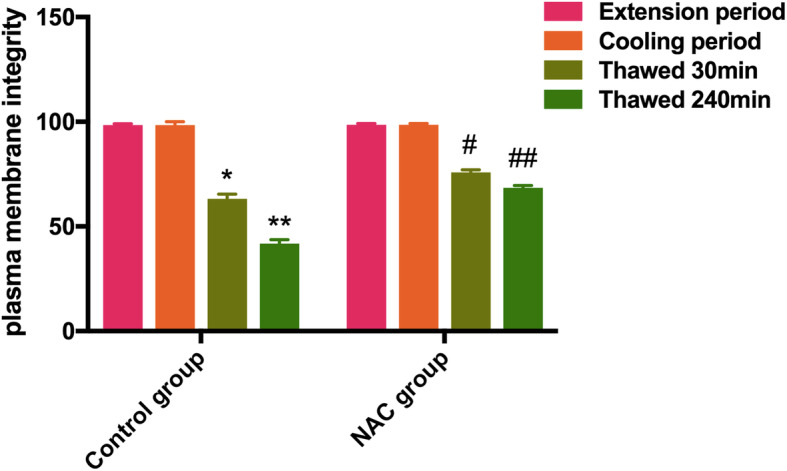
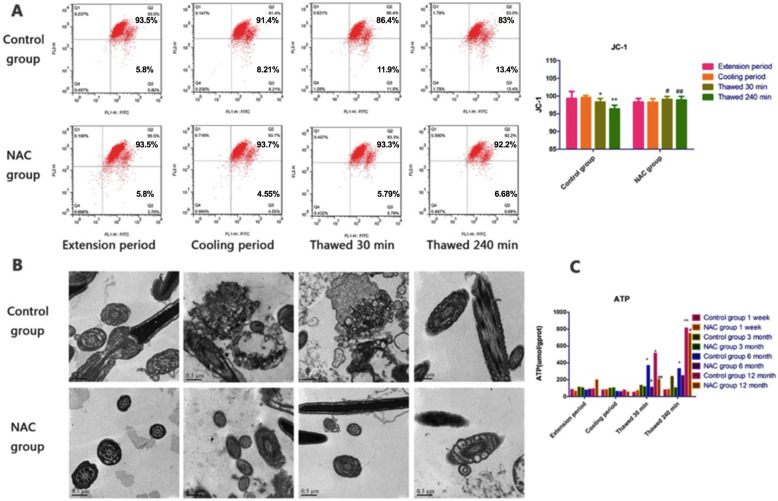
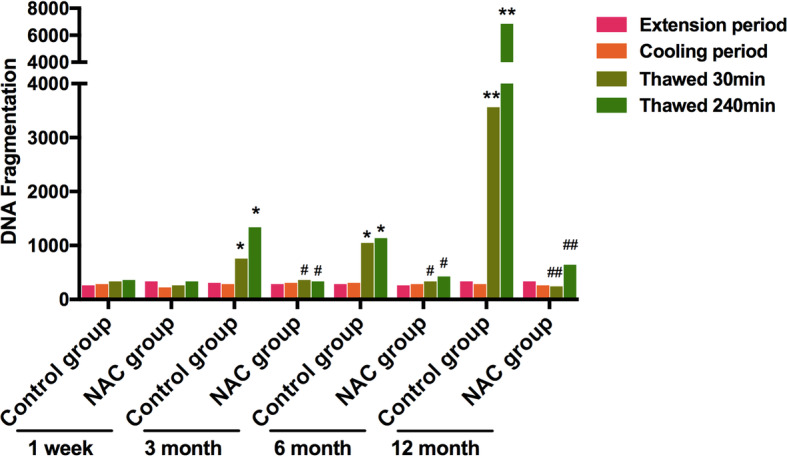
In this study, we evaluated the quality of boar spermatozoa in different steps of cryopreservation (extension, cooling, and thawing for 30 min and 240 min) with or without boar-sperm antioxidant (N-acetylcysteine (NAC)). The ROS levels, sperm motility, plasma membrane integrity, mitochondrial activity, sperm chromatin structure, ATP content, and sperm apoptosis were assayed. After thawing, the ROS level and sperm apoptosis were significantly increased, and the sperm motility, plasma membrane integrity, mitochondrial activity, sperm chromatin structure, and ATP content were significantly impaired compared with those at the extension period and cooling period. Moreover, the addition of N-acetyl L-cysteine (NAC) reversed these changes.
The freeze-thawing of boar spermatozoa impaired their motility, plasma membrane, mitochondrial activity, sperm chromatin structure and apoptosis by producing excessive ROS. Thus, the downregulation of ROS level by antioxidants, especially the NAC, is important for manufacturing frozen pig sperm to increase reproductive cells and livestock propagation, as well as to improve the application of frozen semen in pigs worldwide.
冷冻保存是一种有效的储存精子的方法,与精子在冻融过程后的质量密切相关。在冻融循环过程中,会产生过多的活性氧(ROS),但 ROS 对冷冻保存过程中猪精子的影响尚未确定。
在这项研究中,我们评估了不同冷冻保存阶段(延伸、冷却和 30min 及 240min 的解冻)中猪精子的质量,方法是在有或没有猪精子抗氧化剂(N-乙酰半胱氨酸(NAC))的情况下进行。测定了 ROS 水平、精子活力、质膜完整性、线粒体活性、精子染色质结构、ATP 含量和精子凋亡。与延伸期和冷却期相比,解冻后 ROS 水平和精子凋亡显著增加,精子活力、质膜完整性、线粒体活性、精子染色质结构和 ATP 含量显著受损。此外,添加 N-乙酰 L-半胱氨酸(NAC)可逆转这些变化。
猪精子的冻融通过产生过多的 ROS 损害了其活力、质膜、线粒体活性、精子染色质结构和凋亡。因此,抗氧化剂,特别是 NAC,下调 ROS 水平对于制造冷冻猪精子以增加生殖细胞和家畜繁殖以及提高冷冻精液在全球猪中的应用非常重要。