State Key Laboratory of Molecular Vaccinology and Molecular Diagnostics, School of Public Health, Xiamen University, Xiamen City, Fujian Province, People's Republic of China.
Hunan Provincial Center for Disease Control and Prevention, Changsha City, Hunan Province, People's Republic of China.
PLoS Negl Trop Dis. 2021 Mar 24;15(3):e0009233. doi: 10.1371/journal.pntd.0009233. eCollection 2021 Mar.
Hand, foot, and mouth disease (HFMD) is a global infectious disease; particularly, it has a high disease burden in China. This study was aimed to explore the temporal and spatial distribution of the disease by analyzing its epidemiological characteristics, and to calculate the early warning signals of HFMD by using a logistic differential equation (LDE) model.
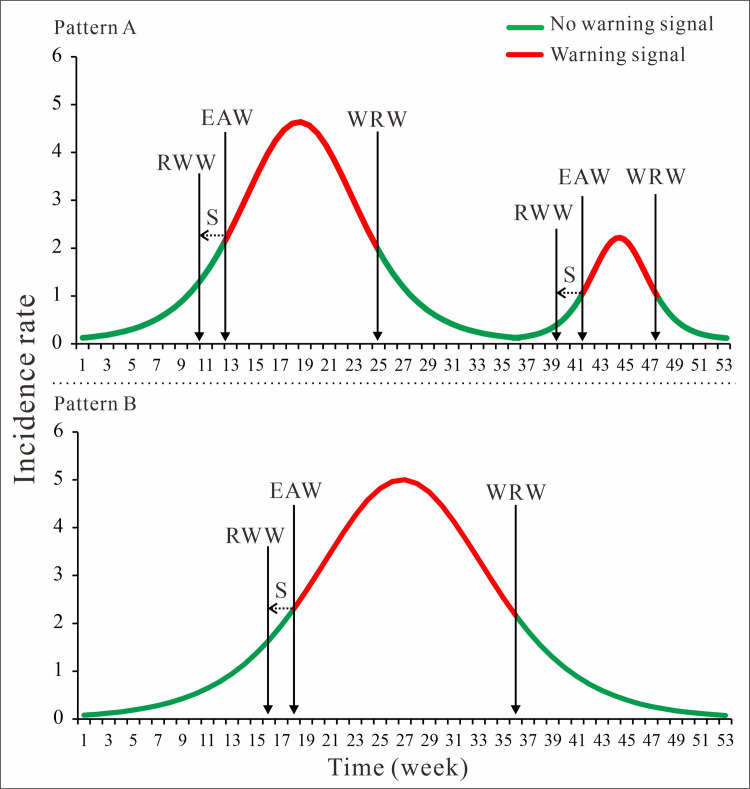
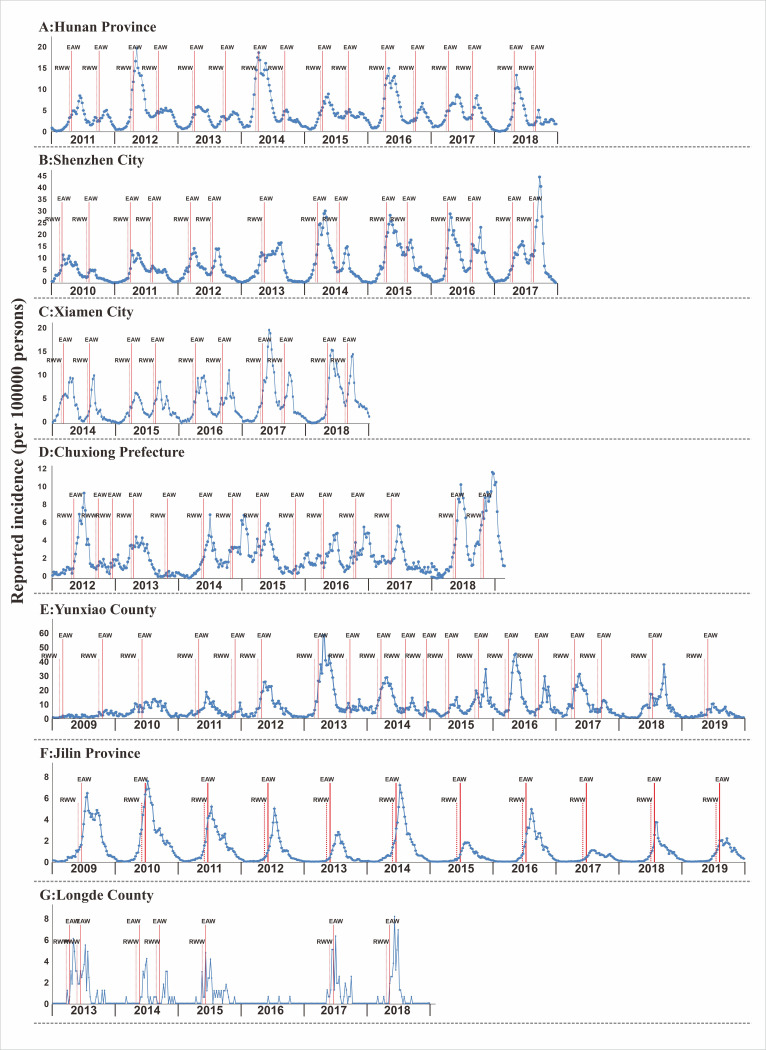
This study included datasets of HFMD cases reported in seven regions in Mainland China. The early warning time (week) was calculated using the LDE model with the key parameters estimated by fitting with the data. Two key time points, "epidemic acceleration week (EAW)" and "recommended warning week (RWW)", were calculated to show the early warning time.
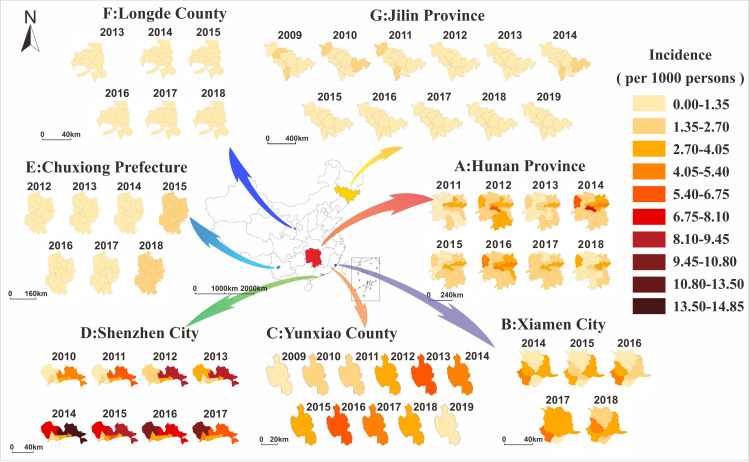
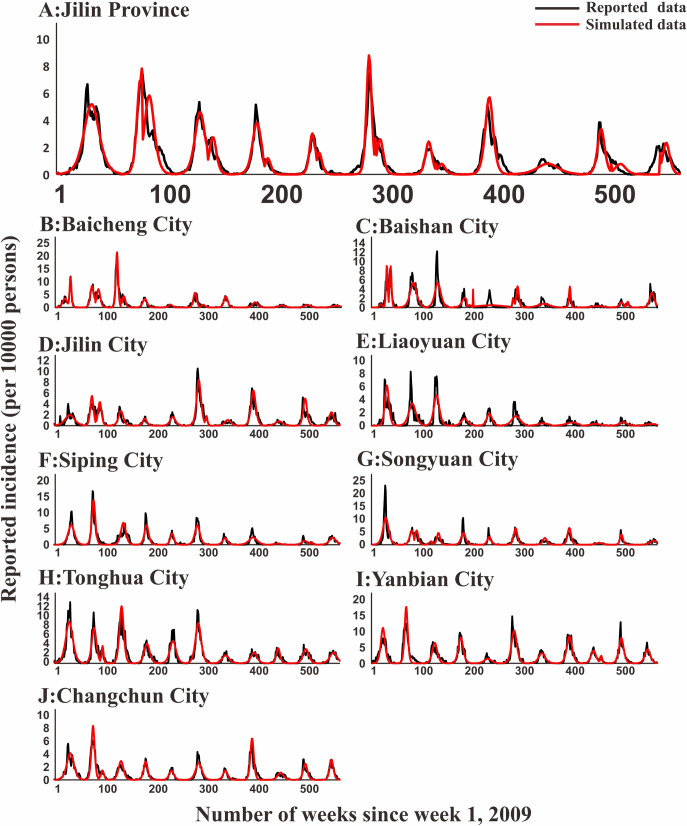
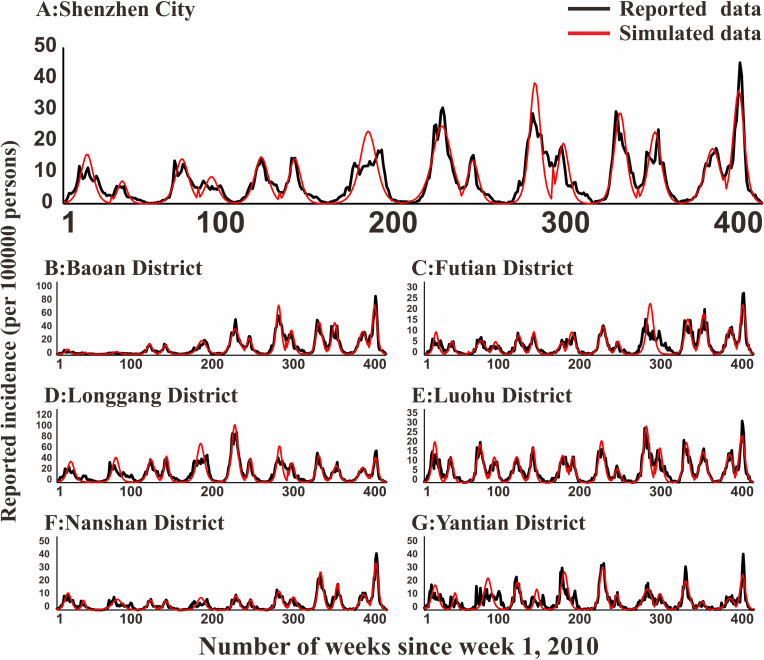
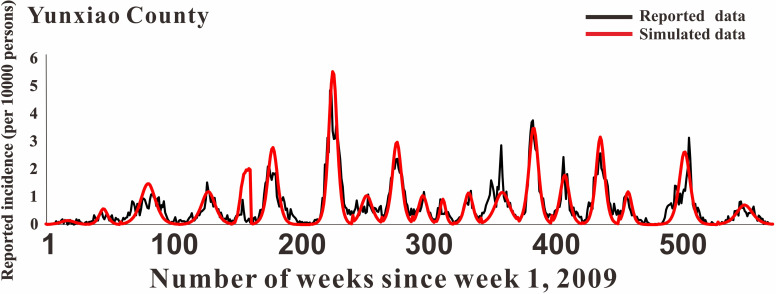
The mean annual incidence of HFMD cases per 100,000 per year was 218, 360, 223, 124, and 359 in Hunan Province, Shenzhen City, Xiamen City, Chuxiong Prefecture, Yunxiao County across the southern regions, respectively and 60 and 34 in Jilin Province and Longde County across the northern regions, respectively. The LDE model fitted well with the reported data (R2 > 0.65, P < 0.001). Distinct temporal patterns were found across geographical regions: two early warning signals emerged in spring and autumn every year across southern regions while one early warning signals in summer every year across northern regions.
The disease burden of HFMD in China is still high, with more cases occurring in the southern regions. The early warning of HFMD across the seven regions is heterogeneous. In the northern regions, it has a high incidence during summer and peaks in June every year; in the southern regions, it has two waves every year with the first wave during spring spreading faster than the second wave during autumn. Our findings can help predict and prepare for active periods of HFMD.
手足口病(HFMD)是一种全球性传染病;特别是在中国,该病的疾病负担很高。本研究旨在通过分析其流行病学特征,探讨疾病的时空分布,并通过逻辑斯蒂差分方程(LDE)模型计算 HFMD 的预警信号。
本研究纳入了中国大陆七个地区报告的 HFMD 病例数据集。使用 LDE 模型计算预警时间(周),并通过拟合数据估计关键参数。计算“流行加速周(EAW)”和“推荐预警周(RWW)”两个关键时间点,以显示预警时间。
湖南省、深圳市、厦门市、楚雄州、云霄县等南方地区的 HFMD 年发病率分别为每 10 万人 218、360、223、124 和 359 例,吉林省和龙井县的年发病率分别为每 10 万人 60 和 34 例。LDE 模型与报告数据拟合良好(R2 > 0.65,P < 0.001)。地理区域之间存在明显的时间模式:南方地区每年春、秋两季出现两个预警信号,北方地区每年夏季出现一个预警信号。
中国 HFMD 的疾病负担仍然很高,南方地区的病例更多。七个地区的 HFMD 预警存在异质性。北方地区夏季发病率较高,每年 6 月达到高峰;南方地区每年有两个流行高峰,春季的第一个高峰比秋季的第二个高峰传播速度更快。我们的研究结果有助于预测和准备 HFMD 的活跃期。