Department of Bioengineering, University of Washington, Seattle, WA 98195, USA; Molecular and Cellular Biology Program, University of Washington, Seattle, WA 98195, USA.
Department of Bioengineering, University of Washington, Seattle, WA 98195, USA; Molecular Engineering and Sciences Institute, University of Washington, Seattle, WA 98195, USA.
Cell Rep. 2021 Mar 23;34(12):108888. doi: 10.1016/j.celrep.2021.108888.
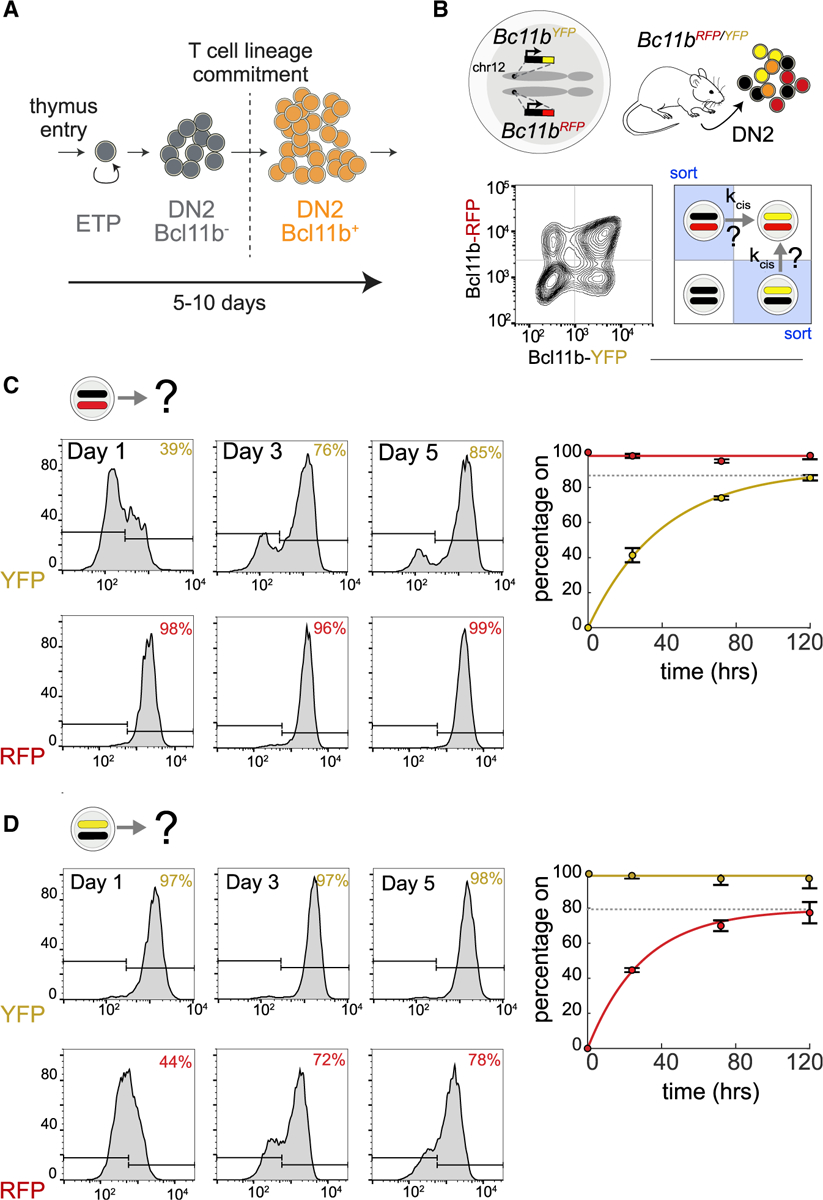
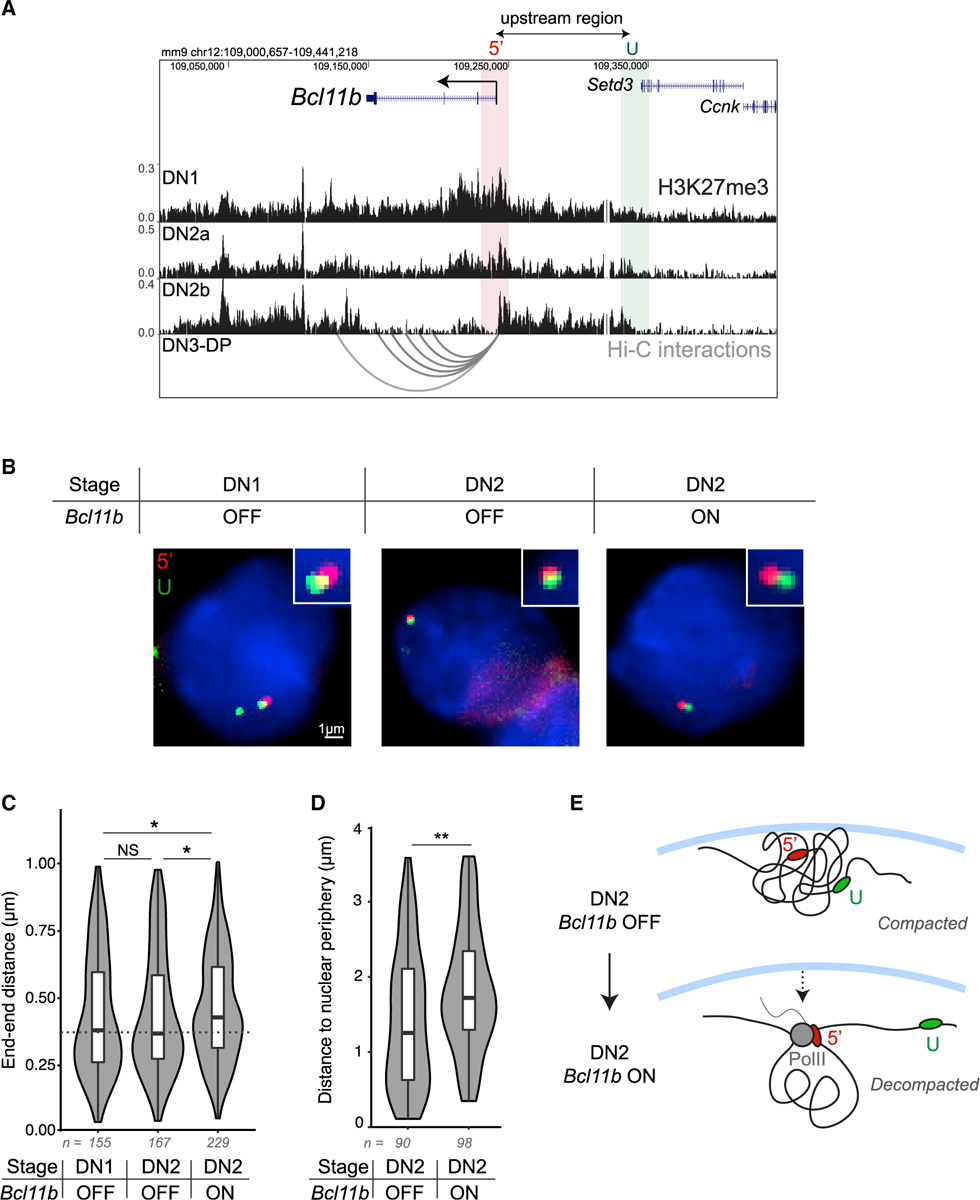
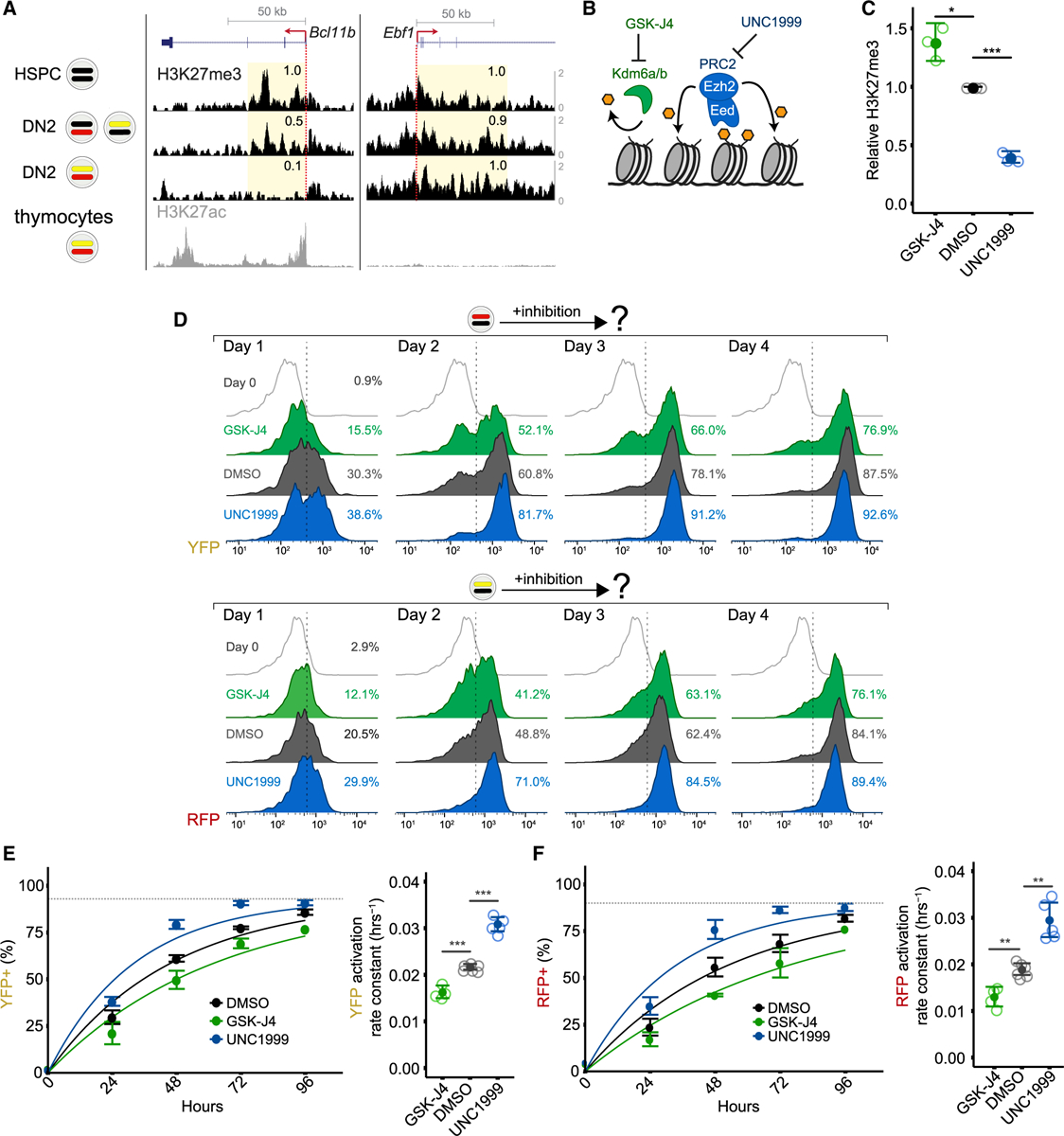
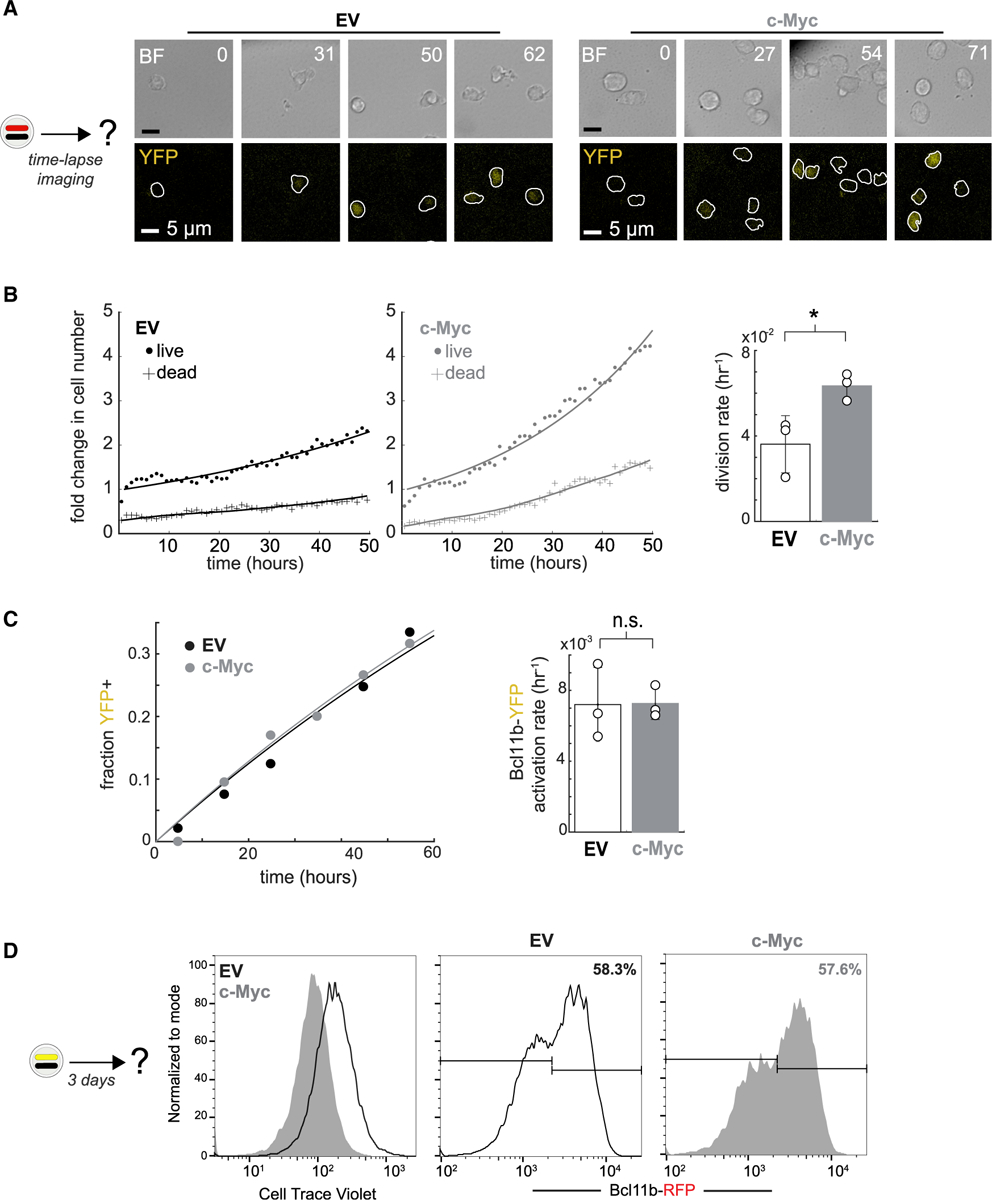
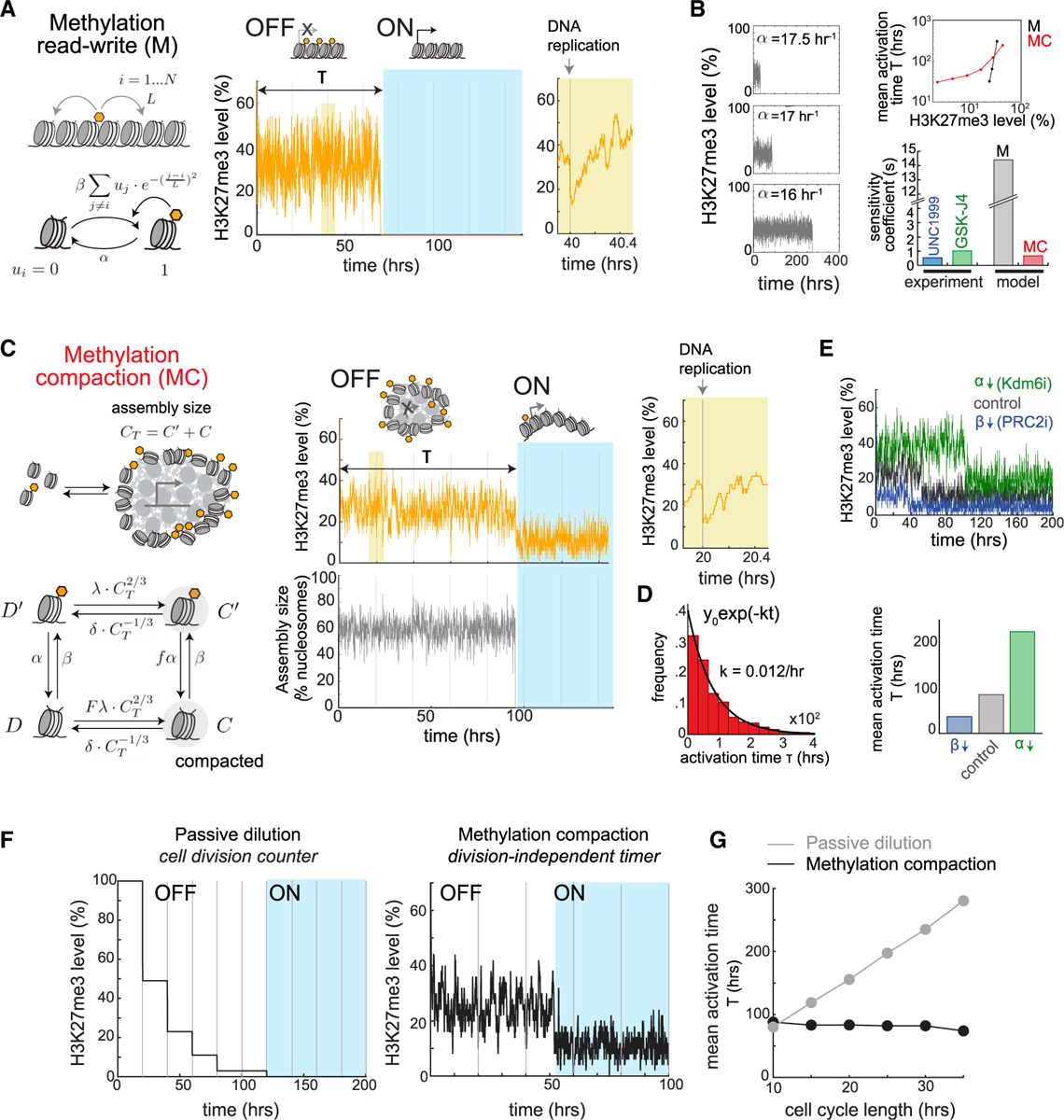
During development, progenitors often differentiate many cell generations after receiving signals. These delays must be robust yet tunable for precise population size control. Polycomb repressive mechanisms, involving histone H3 lysine-27 trimethylation (H3K27me3), restrain the expression of lineage-specifying genes in progenitors and may delay their activation and ensuing differentiation. Here, we elucidate an epigenetic switch controlling the T cell commitment gene Bcl11b that holds its locus in a heritable inactive state for multiple cell generations before activation. Integrating experiments and modeling, we identify a mechanism where H3K27me3 levels at Bcl11b, regulated by methyltransferase and demethylase activities, set the time delay at which the locus switches from a compacted, silent state to an extended, active state. This activation delay robustly spans many cell generations, is tunable by chromatin modifiers and transcription factors, and is independent of cell division. With their regulatory flexibility, such timed epigenetic switches may broadly control timing in development.
在发育过程中,祖细胞在接收到信号后通常会分化出许多细胞世代。这些延迟必须具有稳健性,但又要可调节,以实现精确的种群大小控制。多梳抑制机制涉及组蛋白 H3 赖氨酸-27 三甲基化 (H3K27me3),可抑制祖细胞中谱系特异性基因的表达,并可能延迟其激活和随后的分化。在这里,我们阐明了一种控制 T 细胞定向基因 Bcl11b 的表观遗传开关,该基因在激活前可使其基因座在多个细胞世代中保持可遗传的非活性状态。通过整合实验和建模,我们发现了一种机制,其中 Bcl11b 的 H3K27me3 水平受甲基转移酶和去甲基化酶活性的调节,设定了基因座从紧凑、沉默状态转换为扩展、活跃状态的时间延迟。这种激活延迟稳健地跨越多个细胞世代,可通过染色质修饰剂和转录因子进行调节,并且与细胞分裂无关。具有这种调节灵活性的定时表观遗传开关可能广泛控制发育中的时间。