OptumLabs, UnitedHealth Group, Minnetonka, MN, United States of America.
Division of Infectious Diseases, Department of Medicine, Columbia University, New York, NY, United States of America.
PLoS One. 2021 Mar 25;16(3):e0248783. doi: 10.1371/journal.pone.0248783. eCollection 2021.
COVID-19 test sensitivity and specificity have been widely examined and discussed, yet optimal use of these tests will depend on the goals of testing, the population or setting, and the anticipated underlying disease prevalence. We model various combinations of key variables to identify and compare a range of effective and practical surveillance strategies for schools and businesses.
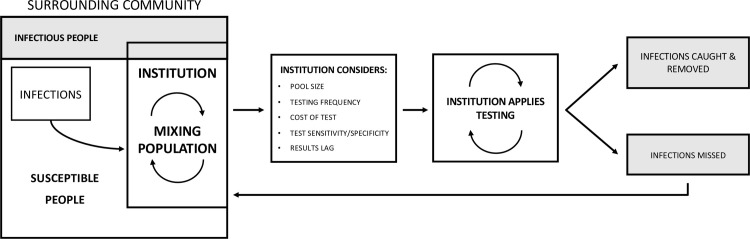
We coupled a simulated data set incorporating actual community prevalence and test performance characteristics to a susceptible, infectious, removed (SIR) compartmental model, modeling the impact of base and tunable variables including test sensitivity, testing frequency, results lag, sample pooling, disease prevalence, externally-acquired infections, symptom checking, and test cost on outcomes including case reduction and false positives.
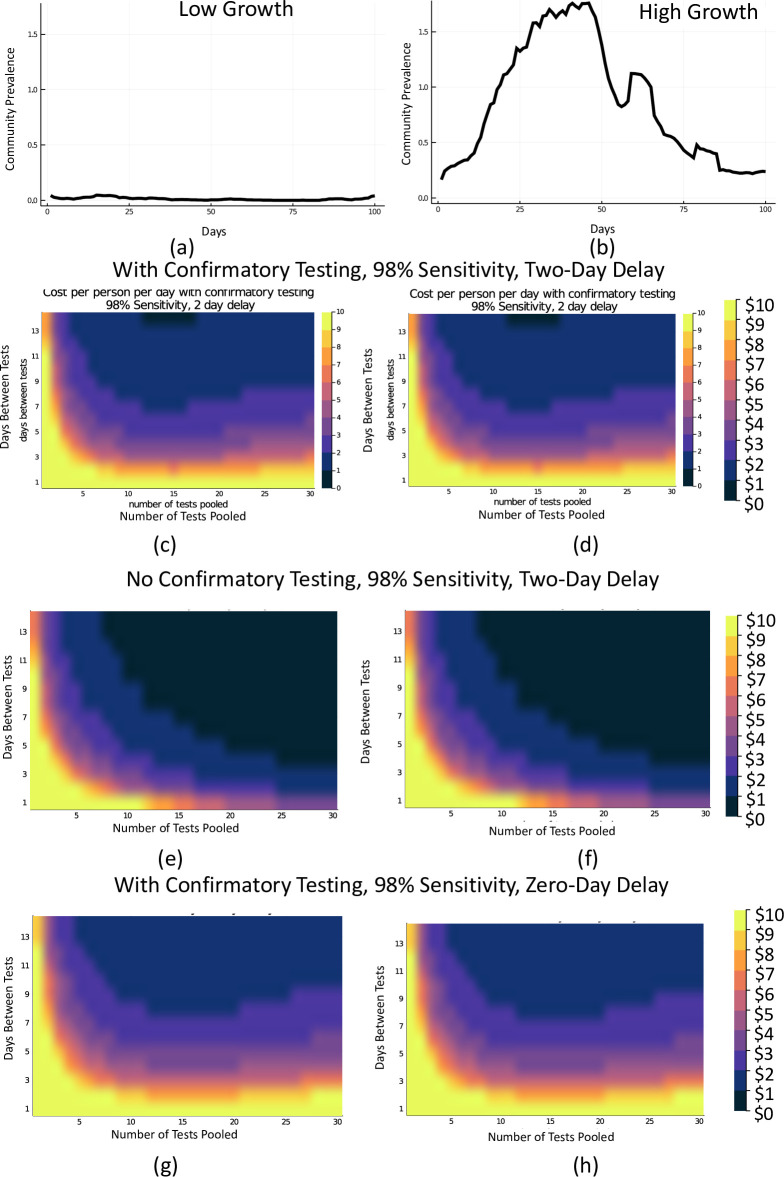
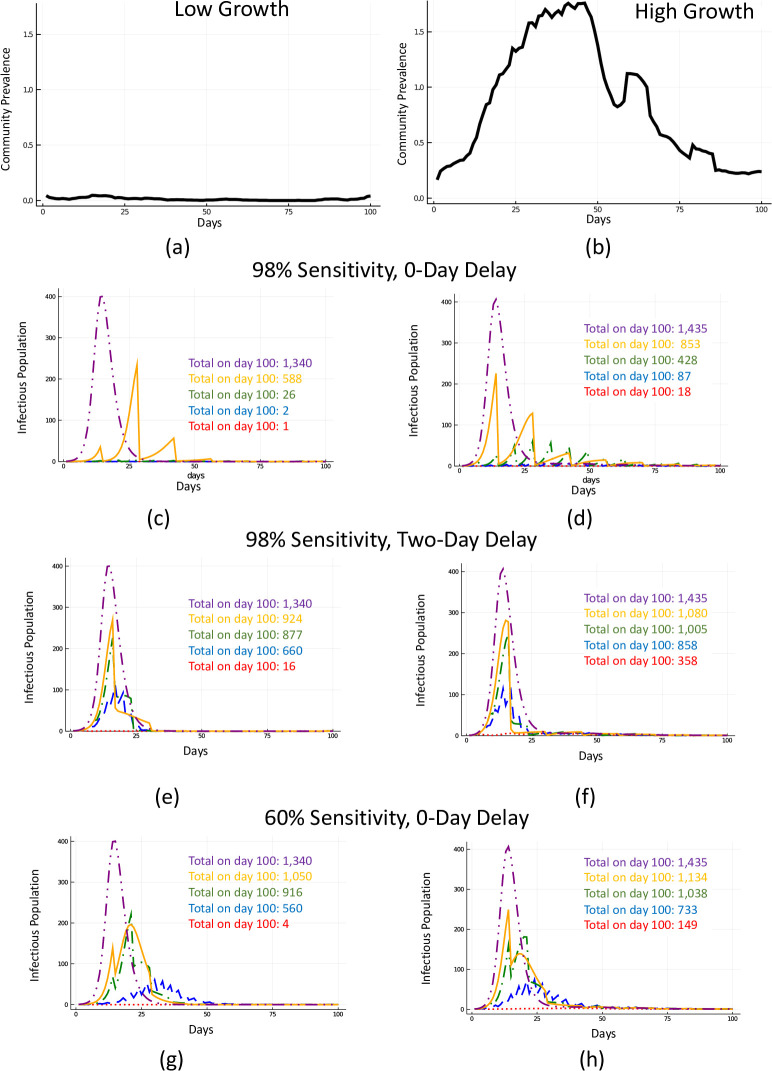
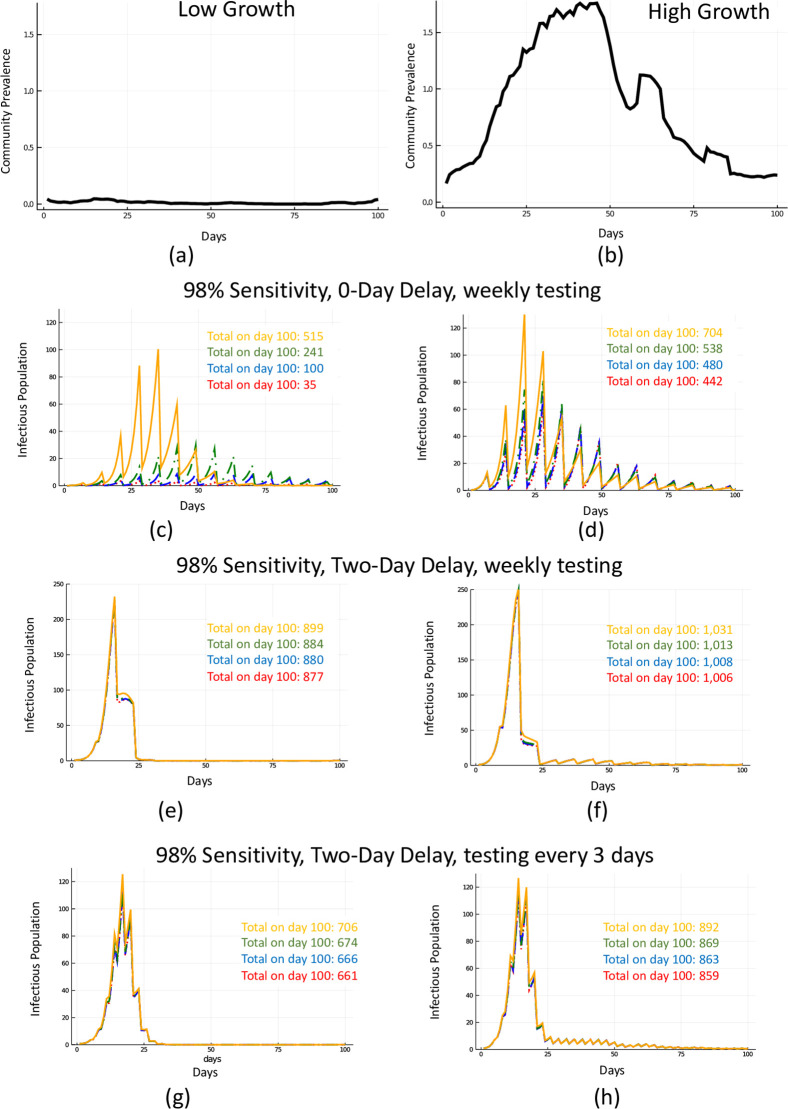
Increasing testing frequency was associated with a non-linear positive effect on cases averted over 100 days. While precise reductions in cumulative number of infections depended on community disease prevalence, testing every 3 days versus every 14 days (even with a lower sensitivity test) reduces the disease burden substantially. Pooling provided cost savings and made a high-frequency approach practical; one high-performing strategy, testing every 3 days, yielded per person per day costs as low as $1.32.
A range of practically viable testing strategies emerged for schools and businesses. Key characteristics of these strategies include high frequency testing with a moderate or high sensitivity test and minimal results delay. Sample pooling allowed for operational efficiency and cost savings with minimal loss of model performance.
COVID-19 检测的敏感性和特异性已经得到了广泛的研究和讨论,但这些检测的最佳使用将取决于检测的目的、人群或环境以及预期的基础疾病流行率。我们模拟了各种关键变量的组合,以确定和比较学校和企业的一系列有效和实用的监测策略。
我们将一个包含实际社区流行率和测试性能特征的模拟数据集与一个易感、感染、清除(SIR)的隔室模型相结合,对基础和可调变量的影响进行建模,包括测试敏感性、测试频率、结果滞后、样本汇集、疾病流行率、外部获得的感染、症状检查和测试成本对结果的影响,包括病例减少和假阳性。
增加测试频率与 100 天内避免的病例数量呈非线性正相关。虽然累计感染人数的精确减少取决于社区疾病流行率,但与每 14 天相比,每 3 天测试一次(即使使用敏感性较低的测试)可以大大减轻疾病负担。汇集提供了成本节约,并使高频方法变得实用;一种高绩效的策略,即每 3 天测试一次,每个人每天的成本低至 1.32 美元。
出现了一系列针对学校和企业的实用可行的测试策略。这些策略的关键特征包括使用中等或高敏感性测试进行高频测试,以及最小的结果延迟。样本汇集允许操作效率和成本节约,同时对模型性能的损失最小。