Department of Food Science, Czech University of Life Sciences Prague, Prague, Czech Republic.
Department of Medical Microbiology, 2nd Faculty of Medicine, Charles University, Motol University Hospital, Prague, Czech Republic.
PLoS One. 2021 Mar 25;16(3):e0247378. doi: 10.1371/journal.pone.0247378. eCollection 2021.
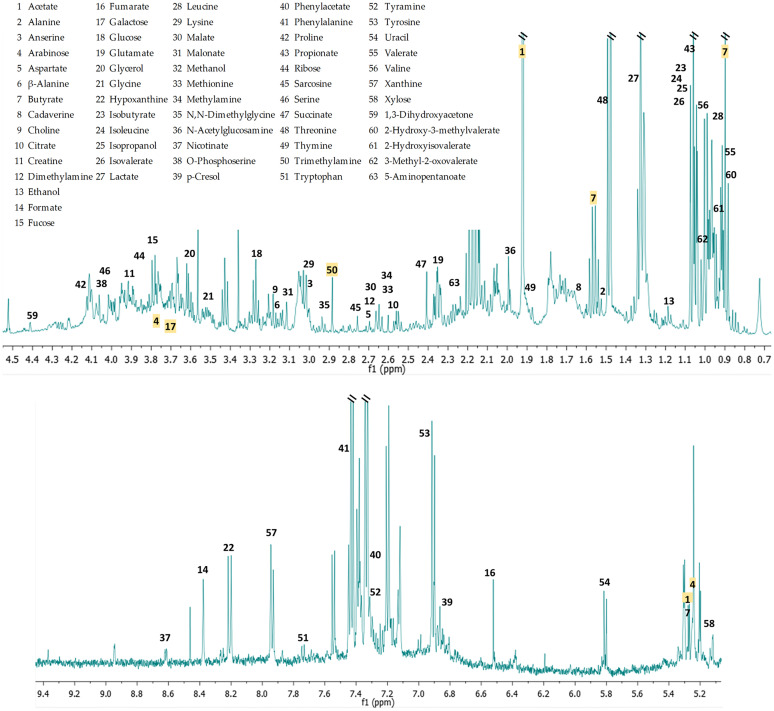
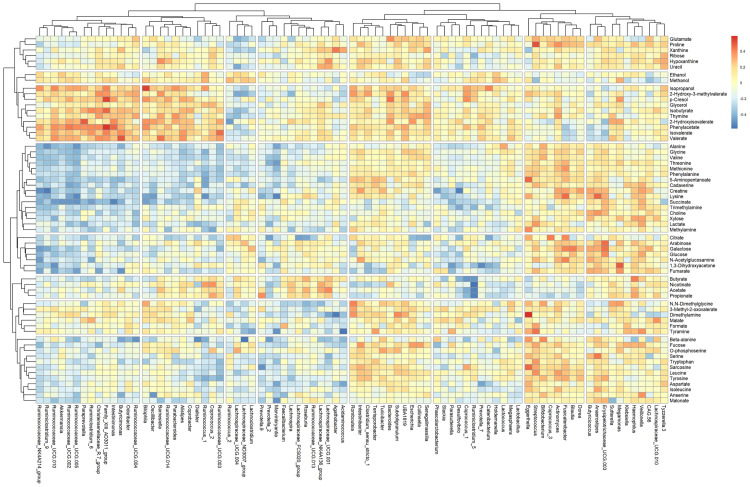
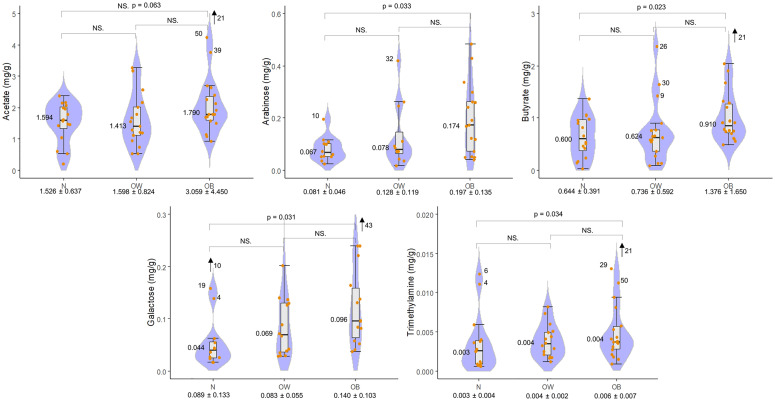
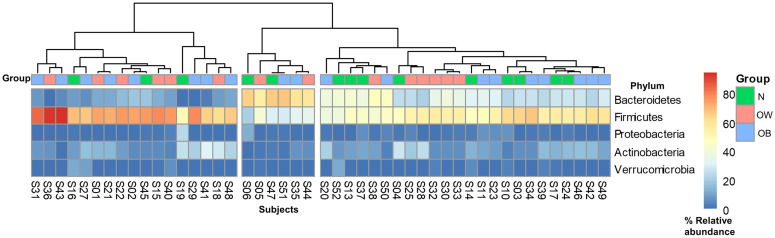
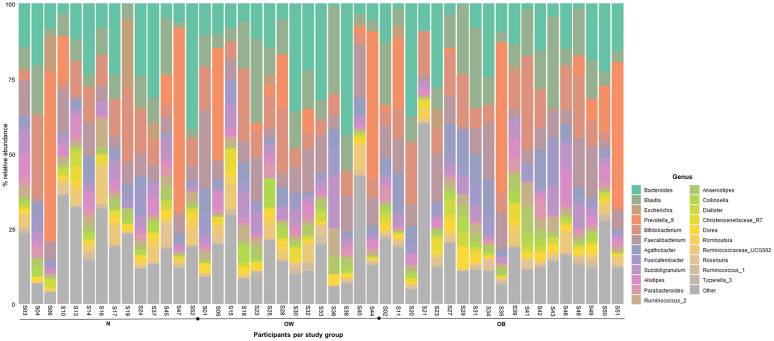
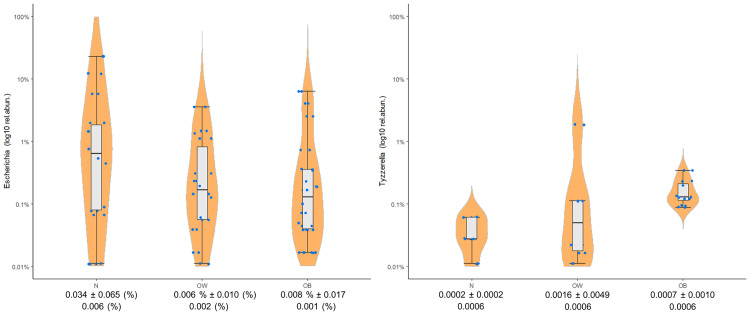
Characterization of metabolites and microbiota composition from human stool provides powerful insight into the molecular phenotypic difference between subjects with normal weight and those with overweight/obesity. The aim of this study was to identify potential metabolic and bacterial signatures from stool that distinguish the overweight/obesity state in children/adolescents. Using 1H NMR spectral analysis and 16S rRNA gene profiling, the fecal metabolic profile and bacterial composition from 52 children aged 7 to 16 was evaluated. The children were classified into three groups (16 with normal-weight, 17 with overweight, 19 with obesity). The metabolomic analysis identified four metabolites that were significantly different (p < 0.05) among the study groups based on one-way ANOVA testing: arabinose, butyrate, galactose, and trimethylamine. Significantly different (p < 0.01) genus-level taxa based on edgeR differential abundance tests were genus Escherichia and Tyzzerella subgroup 3. No significant difference in alpha-diversity was detected among the three study groups, and no significant correlations were found between the significant taxa and metabolites. The findings support the hypothesis of increased energy harvest in obesity by human gut bacteria through the growing observation of increased fecal butyrate in children with overweight/obesity, as well as an increase of certain monosaccharides in the stool. Also supported is the increase of trimethylamine as an indicator of an unhealthy state.
从人类粪便中对代谢产物和微生物群落组成的特征分析,为了解体重正常和超重/肥胖人群之间的分子表型差异提供了有力的依据。本研究旨在鉴定出粪便中可能存在的代谢物和细菌特征,以区分儿童和青少年超重/肥胖状态。采用 1H NMR 光谱分析和 16S rRNA 基因谱分析,评估了 52 名年龄在 7 至 16 岁的儿童的粪便代谢特征和细菌组成。根据孩子的体重将他们分为三组:16 名体重正常,17 名超重,19 名肥胖。代谢组学分析发现,基于单因素方差分析检验,四组儿童粪便样本中存在 4 种代谢物有显著差异(p < 0.05):阿拉伯糖、丁酸盐、半乳糖和三甲胺。基于 EdgeR 差异丰度检验,在属水平上有两种显著不同的分类群:埃希氏菌属和 Tyzzarella 亚群 3。三组研究对象的 alpha 多样性无显著差异,也未发现显著分类群与代谢物之间存在显著相关性。研究结果支持了肥胖人群的肠道细菌通过增加粪便丁酸来提高能量摄取的假设,同时也观察到超重/肥胖儿童粪便中某些单糖增加。另外,三甲胺的增加也表明存在不健康状态。