• 文献检索
  • 文档翻译
  • 深度研究
  • 学术资讯
  • Suppr Zotero 插件Zotero 插件
  • 邀请有礼
  • 套餐&价格
  • 历史记录
应用&插件
Suppr Zotero 插件Zotero 插件浏览器插件Mac 客户端Windows 客户端微信小程序
定价
高级版会员购买积分包购买API积分包
服务
文献检索文档翻译深度研究API 文档MCP 服务
关于我们
关于 Suppr公司介绍联系我们用户协议隐私条款
关注我们

Suppr 超能文献

核心技术专利:CN118964589B侵权必究
粤ICP备2023148730 号-1Suppr @ 2026

文献检索

告别复杂PubMed语法,用中文像聊天一样搜索,搜遍4000万医学文献。AI智能推荐,让科研检索更轻松。

立即免费搜索

文件翻译

保留排版,准确专业,支持PDF/Word/PPT等文件格式,支持 12+语言互译。

免费翻译文档

深度研究

AI帮你快速写综述,25分钟生成高质量综述,智能提取关键信息,辅助科研写作。

立即免费体验

住院 COVID-19 患者不良结局的危险因素:系统评价和荟萃分析。

Risk factors for poor outcomes in hospitalised COVID-19 patients: A systematic review and meta-analysis.

机构信息

Usher Institute, University of Edinburgh, Edinburgh, UK.

Information Services, University of Edinburgh, Edinburgh, UK.

出版信息

J Glob Health. 2021 Mar 1;11:10001. doi: 10.7189/jogh.11.10001.

DOI:10.7189/jogh.11.10001
PMID:33767855
原文链接:https://pmc.ncbi.nlm.nih.gov/articles/PMC7980087/
Abstract

BACKGROUND

Understanding the risk factors for poor outcomes among COVID-19 patients could help identify vulnerable populations who would need prioritisation in prevention and treatment for COVID-19. We aimed to critically appraise and synthesise published evidence on the risk factors for poor outcomes in hospitalised COVID-19 patients.

METHODS

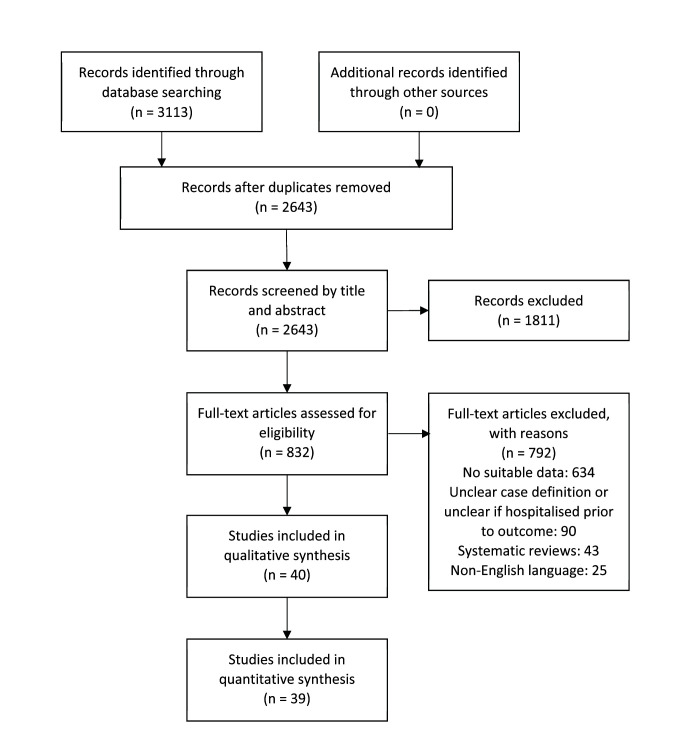
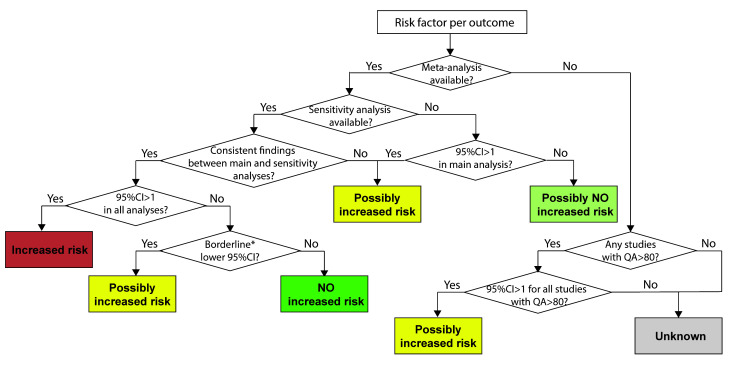
We searched PubMed, medRxiv and the WHO COVID-19 literature database for studies that reported characteristics of COVID-19 patients who required hospitalisation. We included studies published between January and May 2020 that reported adjusted effect size of any demographic and/or clinical factors for any of the three poor outcomes: mortality, intensive care unit (ICU) admission, and invasive mechanical ventilation. We appraised the quality of the included studies using Joanna Briggs Institute appraisal tools and quantitatively synthesised the evidence through a series of random-effect meta-analyses. To aid data interpretation, we further developed an interpretation framework that indicated strength of the evidence, informed by both quantity and quality of the evidence.

RESULTS

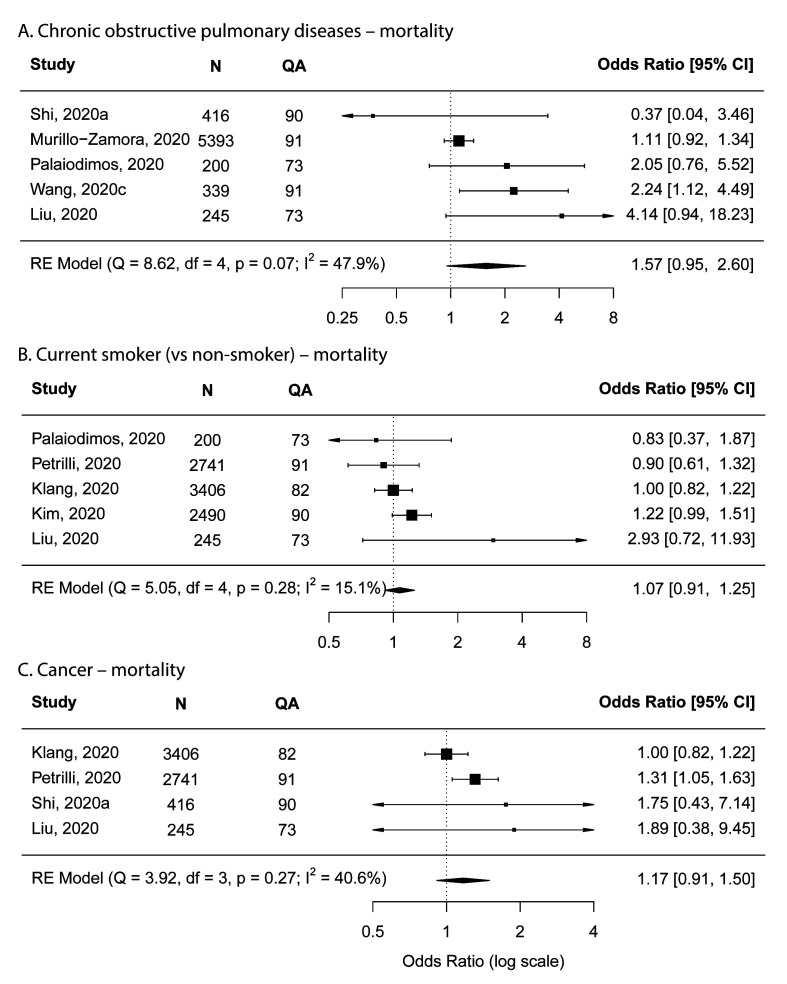
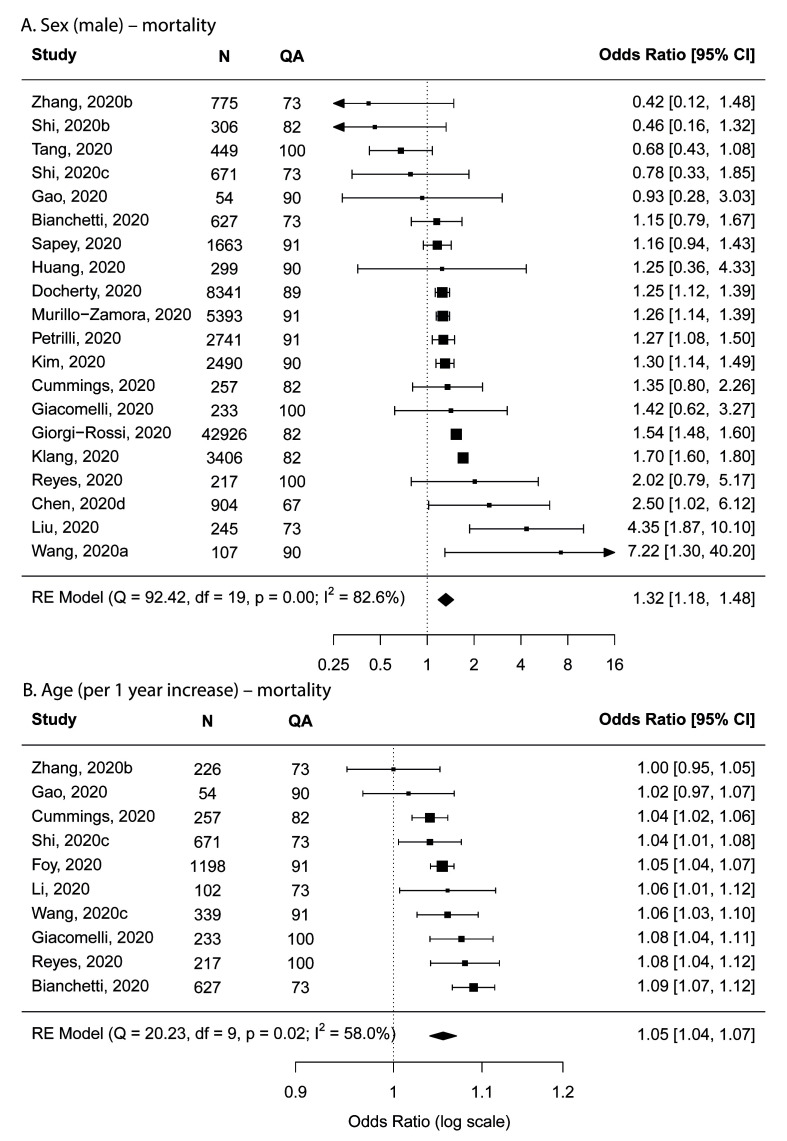
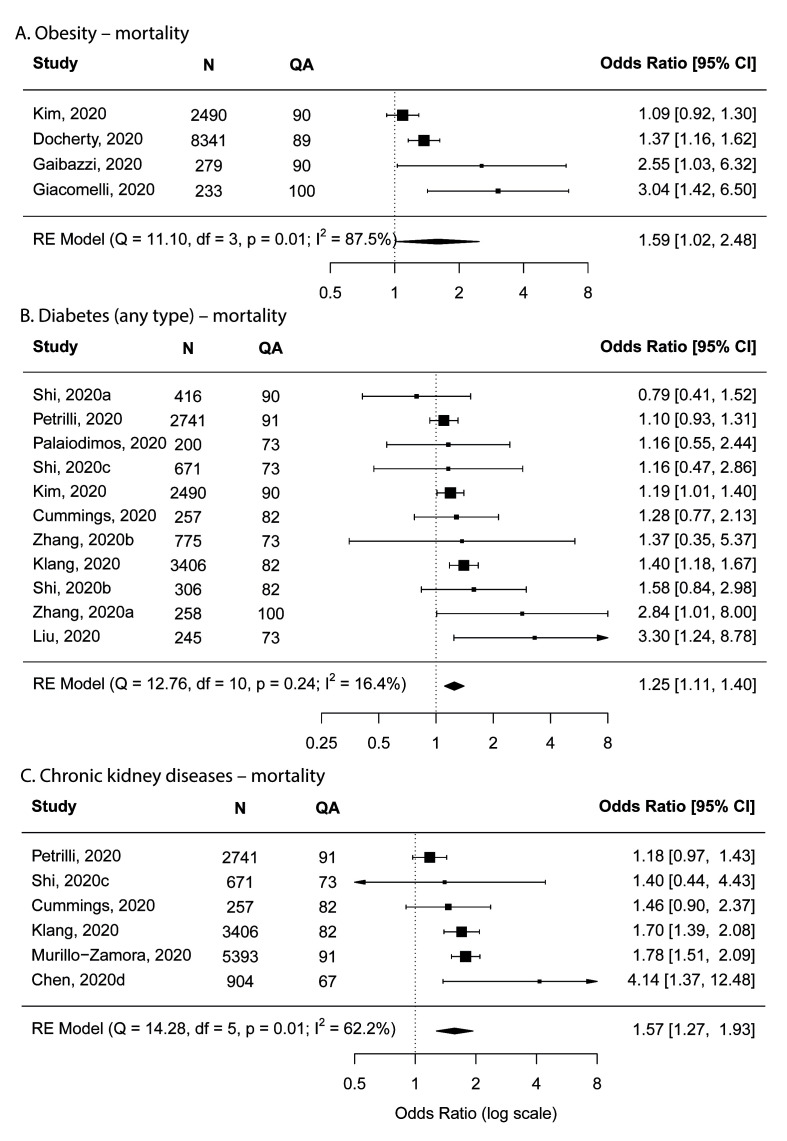
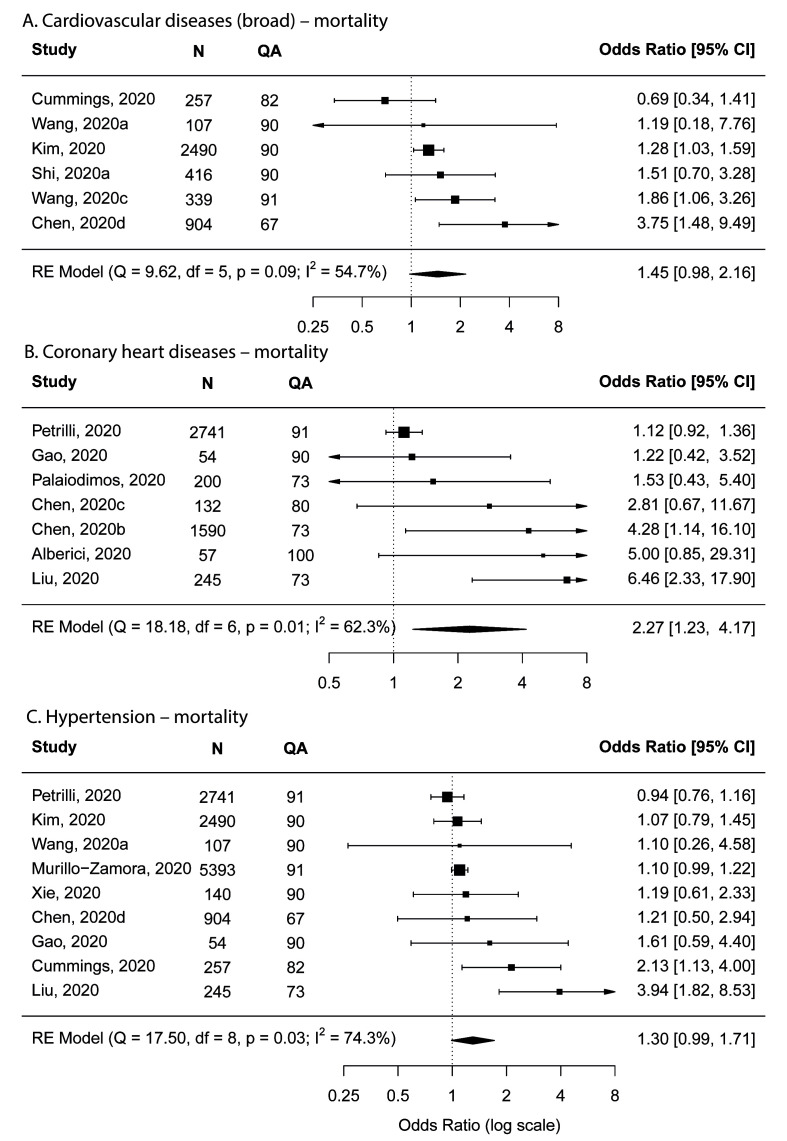
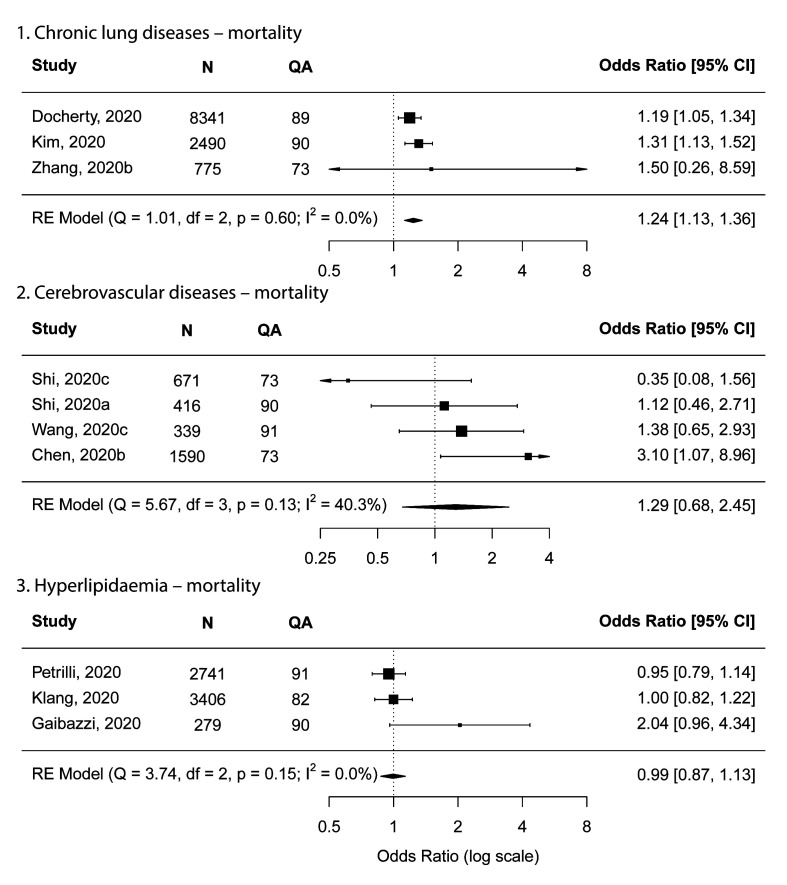
We included a total of 40 studies in our review. Most of the included studies (29/40, 73%) were assessed as "good quality", with assessment scores of 80 or more. We found that male sex (pooled odds ratio (OR) = 1.32 (95% confidence interval (CI) = 1.18-1.48; 20 studies), older age (OR = 1.05, 95% CI = 1.04-1.07, per one year of age increase; 10 studies), obesity (OR = 1.59, 95% CI = 1.02-2.48; 4 studies), diabetes (OR = 1.25, 95% CI = 1.11-1.40; 11 studies) and chronic kidney diseases (6 studies; OR = 1.57, 95% CI = 1.27-1.93) were associated with increased risks for mortality with the greatest strength of evidence based on our interpretation framework. We did not find increased risk of mortality for several factors including chronic obstructive pulmonary diseases (5 studies), cancer (4 studies), or current smoker (5 studies); however, this does not indicate absence of risk due to limited data on each of these factors.

CONCLUSION

Male sex, older age, obesity, diabetes and chronic kidney diseases are important risk factors of COVID-19 poor outcomes. Our review provides not only an appraisal and synthesis of evidence on the risk factors of COVID-19 poor outcomes, but also a data interpretation framework that could be adopted by relevant future research.

摘要

背景

了解 COVID-19 患者不良结局的风险因素有助于确定需要在 COVID-19 预防和治疗中优先考虑的脆弱人群。我们旨在批判性地评估和综合已发表的关于住院 COVID-19 患者不良结局风险因素的证据。

方法

我们在 PubMed、medRxiv 和世界卫生组织 COVID-19 文献数据库中检索了报告需要住院的 COVID-19 患者特征的研究。我们纳入了 2020 年 1 月至 5 月期间发表的研究,这些研究报告了任何人口统计学和/或临床因素对以下三种不良结局之一的调整效应大小:死亡率、重症监护病房(ICU)入院和有创机械通气。我们使用 Joanna Briggs 研究所评估工具评估纳入研究的质量,并通过一系列随机效应荟萃分析对证据进行定量综合。为了帮助解释数据,我们进一步开发了一个解释框架,根据证据的数量和质量来指示证据的强度。

结果

我们的综述共纳入了 40 项研究。纳入的大多数研究(29/40,73%)被评估为“高质量”,评估得分为 80 分或以上。我们发现男性(合并优势比(OR)=1.32(95%置信区间(CI)=1.18-1.48;20 项研究)、年龄较大(OR=1.05,95%CI=1.04-1.07,每增加一岁;10 项研究)、肥胖(OR=1.59,95%CI=1.02-2.48;4 项研究)、糖尿病(OR=1.25,95%CI=1.11-1.40;11 项研究)和慢性肾脏疾病(6 项研究;OR=1.57,95%CI=1.27-1.93)与死亡率增加相关,这是基于我们的解释框架得出的最强证据。我们没有发现慢性阻塞性肺疾病(5 项研究)、癌症(4 项研究)或当前吸烟者(5 项研究)的死亡风险增加;然而,由于对这些因素中的每一个因素的数据有限,这并不表明不存在风险。

结论

男性、年龄较大、肥胖、糖尿病和慢性肾脏疾病是 COVID-19 不良结局的重要危险因素。我们的综述不仅提供了对 COVID-19 不良结局风险因素的评估和综合,还提供了一个数据解释框架,可供未来相关研究采用。
https://cdn.ncbi.nlm.nih.gov/pmc/blobs/7b4a/7980087/56972244e14c/jogh-11-10001-F7.jpg
https://cdn.ncbi.nlm.nih.gov/pmc/blobs/7b4a/7980087/9a3e01774b95/jogh-11-10001-F1.jpg
https://cdn.ncbi.nlm.nih.gov/pmc/blobs/7b4a/7980087/86a5549d0b5f/jogh-11-10001-F2.jpg
https://cdn.ncbi.nlm.nih.gov/pmc/blobs/7b4a/7980087/2c47a0897e1c/jogh-11-10001-F3.jpg
https://cdn.ncbi.nlm.nih.gov/pmc/blobs/7b4a/7980087/7c74cbd8a2b2/jogh-11-10001-F4.jpg
https://cdn.ncbi.nlm.nih.gov/pmc/blobs/7b4a/7980087/2a4e7a7fd90c/jogh-11-10001-F5.jpg
https://cdn.ncbi.nlm.nih.gov/pmc/blobs/7b4a/7980087/917e4e6ce51c/jogh-11-10001-F6.jpg
https://cdn.ncbi.nlm.nih.gov/pmc/blobs/7b4a/7980087/56972244e14c/jogh-11-10001-F7.jpg
https://cdn.ncbi.nlm.nih.gov/pmc/blobs/7b4a/7980087/9a3e01774b95/jogh-11-10001-F1.jpg
https://cdn.ncbi.nlm.nih.gov/pmc/blobs/7b4a/7980087/86a5549d0b5f/jogh-11-10001-F2.jpg
https://cdn.ncbi.nlm.nih.gov/pmc/blobs/7b4a/7980087/2c47a0897e1c/jogh-11-10001-F3.jpg
https://cdn.ncbi.nlm.nih.gov/pmc/blobs/7b4a/7980087/7c74cbd8a2b2/jogh-11-10001-F4.jpg
https://cdn.ncbi.nlm.nih.gov/pmc/blobs/7b4a/7980087/2a4e7a7fd90c/jogh-11-10001-F5.jpg
https://cdn.ncbi.nlm.nih.gov/pmc/blobs/7b4a/7980087/917e4e6ce51c/jogh-11-10001-F6.jpg
https://cdn.ncbi.nlm.nih.gov/pmc/blobs/7b4a/7980087/56972244e14c/jogh-11-10001-F7.jpg

相似文献

1
Risk factors for poor outcomes in hospitalised COVID-19 patients: A systematic review and meta-analysis.住院 COVID-19 患者不良结局的危险因素:系统评价和荟萃分析。
J Glob Health. 2021 Mar 1;11:10001. doi: 10.7189/jogh.11.10001.
2
Global Impact of Coronavirus Disease 2019 Infection Requiring Admission to the ICU: A Systematic Review and Meta-analysis.全球 2019 年冠状病毒病感染需入住 ICU 的影响:系统评价和荟萃分析。
Chest. 2021 Feb;159(2):524-536. doi: 10.1016/j.chest.2020.10.014. Epub 2020 Oct 15.
3
Obesity in patients with COVID-19: a systematic review and meta-analysis.COVID-19 患者中的肥胖症:系统评价和荟萃分析。
Metabolism. 2020 Dec;113:154378. doi: 10.1016/j.metabol.2020.154378. Epub 2020 Sep 28.
4
Colchicine for the treatment of COVID-19.秋水仙碱治疗 COVID-19。
Cochrane Database Syst Rev. 2021 Oct 18;10(10):CD015045. doi: 10.1002/14651858.CD015045.
5
Outcomes following SARS-CoV-2 infection in liver transplant recipients: an international registry study.肝移植受者感染 SARS-CoV-2 后的结局:一项国际注册研究。
Lancet Gastroenterol Hepatol. 2020 Nov;5(11):1008-1016. doi: 10.1016/S2468-1253(20)30271-5. Epub 2020 Aug 28.
6
Pre-existing cerebrovascular disease and poor outcomes of COVID-19 hospitalized patients: a meta-analysis.预先存在的脑血管疾病与 COVID-19 住院患者的不良结局:一项荟萃分析。
J Neurol. 2021 Jan;268(1):240-247. doi: 10.1007/s00415-020-10141-w. Epub 2020 Aug 8.
7
Folic acid supplementation and malaria susceptibility and severity among people taking antifolate antimalarial drugs in endemic areas.在流行地区,服用抗叶酸抗疟药物的人群中,叶酸补充剂与疟疾易感性和严重程度的关系。
Cochrane Database Syst Rev. 2022 Feb 1;2(2022):CD014217. doi: 10.1002/14651858.CD014217.
8
Mental disorders and risk of COVID-19-related mortality, hospitalisation, and intensive care unit admission: a systematic review and meta-analysis.精神障碍与 COVID-19 相关死亡率、住院和重症监护病房入院风险:系统评价和荟萃分析。
Lancet Psychiatry. 2021 Sep;8(9):797-812. doi: 10.1016/S2215-0366(21)00232-7. Epub 2021 Jul 17.
9
Underlying Medical Conditions Associated With Severe COVID-19 Illness Among Children.与儿童 COVID-19 重症相关的基础医学状况。
JAMA Netw Open. 2021 Jun 1;4(6):e2111182. doi: 10.1001/jamanetworkopen.2021.11182.
10
Convalescent plasma or hyperimmune immunoglobulin for people with COVID-19: a rapid review.新冠康复者血浆或超免疫球蛋白用于新冠患者:快速综述
Cochrane Database Syst Rev. 2020 May 14;5(5):CD013600. doi: 10.1002/14651858.CD013600.

引用本文的文献

1
Elevated risk of severe COVID-19 outcomes among underweight patients in Japan: A national registry-based study.日本体重过轻患者中出现严重新冠病毒病结局的风险升高:一项基于全国登记处的研究。
Glob Health Med. 2025 Aug 31;7(4):340-346. doi: 10.35772/ghm.2025.01057.
2
Factors associated with death from COVID-19 in traditional peoples and communities in Brazil.巴西传统民族和社区中与新冠病毒疾病死亡相关的因素。
PLoS One. 2025 Jul 10;20(7):e0327140. doi: 10.1371/journal.pone.0327140. eCollection 2025.
3
Association of Polypharmacy and Burden of Comorbidities on COVID-19 Adverse Outcomes in People with Type 1 or Type 2 Diabetes.

本文引用的文献

1
Survival of Hospitalized COVID-19 Patients in Northern Italy: A Population-Based Cohort Study by the ITA-COVID-19 Network.意大利北部新冠肺炎住院患者的生存情况:由ITA-COVID-19网络开展的一项基于人群的队列研究
Clin Epidemiol. 2020 Dec 8;12:1337-1346. doi: 10.2147/CLEP.S271763. eCollection 2020.
2
Survival in adult inpatients with COVID-19.COVID-19 成年住院患者的生存情况。
Public Health. 2021 Jan;190:1-3. doi: 10.1016/j.puhe.2020.10.029. Epub 2020 Nov 10.
3
Epidemiology, risk factors and clinical course of SARS-CoV-2 infected patients in a Swiss university hospital: An observational retrospective study.
1型或2型糖尿病患者中多重用药及合并症负担与COVID-19不良结局的关联
Diabetes Ther. 2025 Feb;16(2):241-256. doi: 10.1007/s13300-024-01681-9. Epub 2024 Dec 20.
4
Cholesterol and Cholesterol-Lowering Medications in COVID-19-An Unresolved Matter.胆固醇和降胆固醇药物在 COVID-19 中的作用——一个悬而未决的问题。
Int J Mol Sci. 2024 Sep 29;25(19):10489. doi: 10.3390/ijms251910489.
5
Chemerin Levels in COVID-19 Are More Affected by Underlying Diseases than by the Virus Infection Itself.新冠病毒感染中,chemerin水平受基础疾病的影响大于病毒感染本身。
Biomedicines. 2024 Sep 14;12(9):2099. doi: 10.3390/biomedicines12092099.
6
COVID-19 Recovery Time and Its Predictors among Hospitalized Patients in Designated Hospitals in the Madhesh Province of Nepal: A Multicentric Study.尼泊尔马德西省指定医院住院患者的新冠病毒病康复时间及其预测因素:一项多中心研究
Healthcare (Basel). 2024 Aug 24;12(17):1691. doi: 10.3390/healthcare12171691.
7
Occult Serologically Confirmed Cases of SARS-CoV-2 Coronavirus among the General Population in the Era of the Fourth Vaccination.第四次疫苗接种时代普通人群中血清学确诊的隐匿性新冠病毒病例
J Clin Med. 2024 Aug 22;13(16):4953. doi: 10.3390/jcm13164953.
8
Cannabis, Tobacco Use, and COVID-19 Outcomes.大麻、烟草使用与 COVID-19 结局。
JAMA Netw Open. 2024 Jun 3;7(6):e2417977. doi: 10.1001/jamanetworkopen.2024.17977.
9
Identifying Mortality Predictors in Hospitalized COVID-19 Patients: Insights from a Single-Center Retrospective Study at a University Hospital.确定住院COVID-19患者的死亡率预测因素:来自某大学医院单中心回顾性研究的见解
Microorganisms. 2024 May 20;12(5):1032. doi: 10.3390/microorganisms12051032.
10
Type 2 Diabetes Status, Diabetes Complication Severity Index Scores, and Their Relationship With COVID-19 Severity: A Retrospective Cohort Study of Hospitalized Patients in a Southwest Virginia Health System.2型糖尿病状况、糖尿病并发症严重程度指数评分及其与COVID-19严重程度的关系:弗吉尼亚西南部卫生系统住院患者的一项回顾性队列研究。
Cureus. 2024 Feb 3;16(2):e53524. doi: 10.7759/cureus.53524. eCollection 2024 Feb.
瑞士一家大学医院中感染 SARS-CoV-2 的患者的流行病学、风险因素和临床病程:一项观察性回顾性研究。
PLoS One. 2020 Nov 13;15(11):e0240781. doi: 10.1371/journal.pone.0240781. eCollection 2020.
4
COVID-19: Impact of obesity and diabetes on disease severity.新型冠状病毒肺炎:肥胖和糖尿病对疾病严重程度的影响。
Clin Obes. 2020 Dec;10(6):e12414. doi: 10.1111/cob.12414. Epub 2020 Oct 20.
5
Association of Use of Angiotensin-Converting Enzyme Inhibitors and Angiotensin II Receptor Blockers With Testing Positive for Coronavirus Disease 2019 (COVID-19).血管紧张素转换酶抑制剂和血管紧张素 II 受体阻滞剂的使用与新型冠状病毒病 2019(COVID-19)检测阳性的关联。
JAMA Cardiol. 2020 Sep 1;5(9):1020-1026. doi: 10.1001/jamacardio.2020.1855.
6
Ethnicity and risk of death in patients hospitalised for COVID-19 infection in the UK: an observational cohort study in an urban catchment area.英国城市集水区住院 COVID-19 感染患者的死亡风险与种族的关系:一项观察性队列研究。
BMJ Open Respir Res. 2020 Sep;7(1). doi: 10.1136/bmjresp-2020-000644.
7
Risk factors for developing into critical COVID-19 patients in Wuhan, China: A multicenter, retrospective, cohort study.中国武汉新冠肺炎重症患者的危险因素:一项多中心、回顾性队列研究。
EClinicalMedicine. 2020 Aug;25:100471. doi: 10.1016/j.eclinm.2020.100471. Epub 2020 Jul 30.
8
Factors associated with COVID-19-related death using OpenSAFELY.使用 OpenSAFELY 分析与 COVID-19 相关死亡的因素。
Nature. 2020 Aug;584(7821):430-436. doi: 10.1038/s41586-020-2521-4. Epub 2020 Jul 8.
9
Predictors of fatality including radiographic findings in adults with COVID-19.COVID-19 成人患者病死率的预测因素包括影像学表现。
Respir Res. 2020 Jun 11;21(1):146. doi: 10.1186/s12931-020-01411-2.
10
Clinical Presentation of COVID19 in Dementia Patients.COVID19 患者的临床特征。
J Nutr Health Aging. 2020;24(6):560-562. doi: 10.1007/s12603-020-1389-1.