• 文献检索
  • 文档翻译
  • 深度研究
  • 学术资讯
  • Suppr Zotero 插件Zotero 插件
  • 邀请有礼
  • 套餐&价格
  • 历史记录
应用&插件
Suppr Zotero 插件Zotero 插件浏览器插件Mac 客户端Windows 客户端微信小程序
定价
高级版会员购买积分包购买API积分包
服务
文献检索文档翻译深度研究API 文档MCP 服务
关于我们
关于 Suppr公司介绍联系我们用户协议隐私条款
关注我们

Suppr 超能文献

核心技术专利:CN118964589B侵权必究
粤ICP备2023148730 号-1Suppr @ 2026

文献检索

告别复杂PubMed语法,用中文像聊天一样搜索,搜遍4000万医学文献。AI智能推荐,让科研检索更轻松。

立即免费搜索

文件翻译

保留排版,准确专业,支持PDF/Word/PPT等文件格式,支持 12+语言互译。

免费翻译文档

深度研究

AI帮你快速写综述,25分钟生成高质量综述,智能提取关键信息,辅助科研写作。

立即免费体验

病房和重症监护病房中新冠病毒疾病(COVID-19)床位占用情况的实时预测

Real-time forecasting of COVID-19 bed occupancy in wards and Intensive Care Units.

作者信息

Baas Stef, Dijkstra Sander, Braaksma Aleida, van Rooij Plom, Snijders Fieke J, Tiemessen Lars, Boucherie Richard J

机构信息

Center for Healthcare Operations Improvement and Research (CHOIR), University of Twente, Enschede, The Netherlands.

Elisabeth-TweeSteden Ziekenhuis, Tilburg, The Netherlands.

出版信息

Health Care Manag Sci. 2021 Jun;24(2):402-419. doi: 10.1007/s10729-021-09553-5. Epub 2021 Mar 25.

DOI:10.1007/s10729-021-09553-5
PMID:33768389
原文链接:https://pmc.ncbi.nlm.nih.gov/articles/PMC7993447/
Abstract

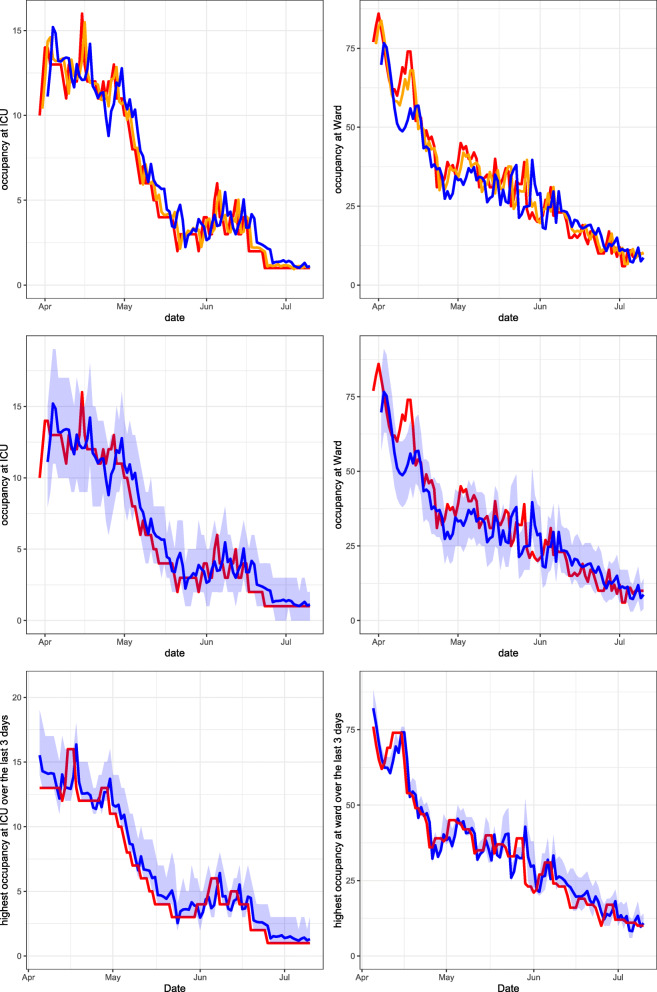
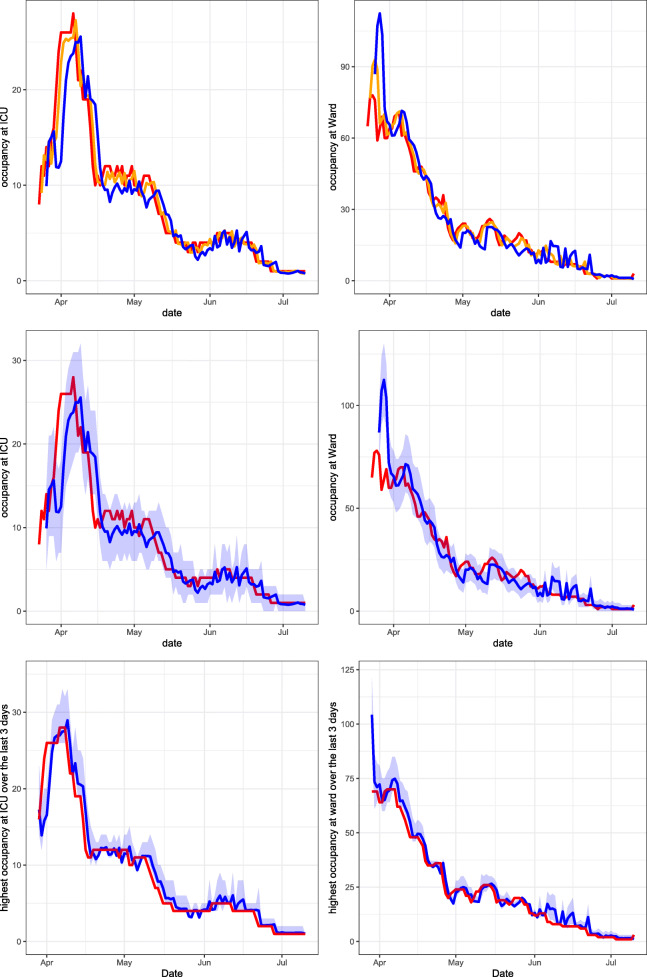
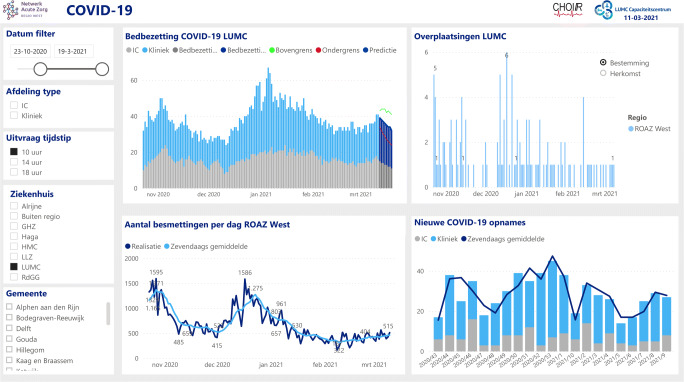
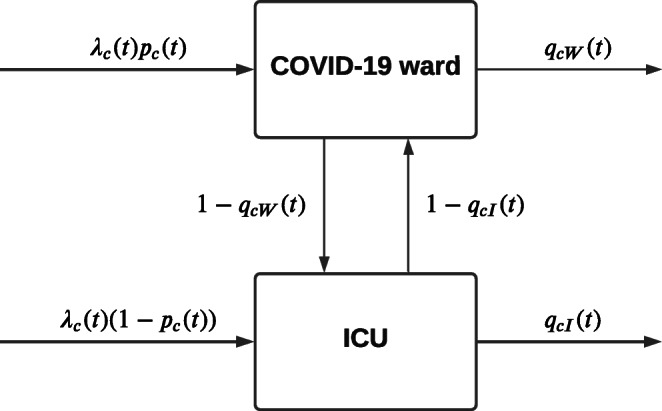
This paper presents a mathematical model that provides a real-time forecast of the number of COVID-19 patients admitted to the ward and the Intensive Care Unit (ICU) of a hospital based on the predicted inflow of patients, their Length of Stay (LoS) in both the ward and the ICU as well as transfer of patients between the ward and the ICU. The data required for this forecast is obtained directly from the hospital's data warehouse. The resulting algorithm is tested on data from the first COVID-19 peak in the Netherlands, showing that the forecast is very accurate. The forecast may be visualised in real-time in the hospital's control centre and is used in several Dutch hospitals during the second COVID-19 peak.

摘要

本文提出了一个数学模型,该模型基于预测的患者流入量、他们在病房和重症监护病房(ICU)的住院时间(LoS)以及病房和ICU之间的患者转移情况,对一家医院病房和ICU收治的COVID-19患者数量进行实时预测。该预测所需的数据直接从医院的数据仓库获取。所得算法在荷兰首个COVID-19高峰期的数据上进行了测试,结果表明预测非常准确。该预测可以在医院的控制中心进行实时可视化,并且在第二个COVID-19高峰期被多家荷兰医院使用。
https://cdn.ncbi.nlm.nih.gov/pmc/blobs/d59a/8238716/9f70085f0b08/10729_2021_9553_Fig8_HTML.jpg
https://cdn.ncbi.nlm.nih.gov/pmc/blobs/d59a/8238716/2ef17544f18a/10729_2021_9553_Fig1_HTML.jpg
https://cdn.ncbi.nlm.nih.gov/pmc/blobs/d59a/8238716/5cdae588ad9c/10729_2021_9553_Fig2_HTML.jpg
https://cdn.ncbi.nlm.nih.gov/pmc/blobs/d59a/8238716/02a406a1ebcb/10729_2021_9553_Fig3_HTML.jpg
https://cdn.ncbi.nlm.nih.gov/pmc/blobs/d59a/8238716/cc3e0a59f178/10729_2021_9553_Fig4_HTML.jpg
https://cdn.ncbi.nlm.nih.gov/pmc/blobs/d59a/8238716/72d5b9e38dd1/10729_2021_9553_Fig5_HTML.jpg
https://cdn.ncbi.nlm.nih.gov/pmc/blobs/d59a/8238716/add45604a551/10729_2021_9553_Fig6_HTML.jpg
https://cdn.ncbi.nlm.nih.gov/pmc/blobs/d59a/8238716/1f6607561163/10729_2021_9553_Fig7_HTML.jpg
https://cdn.ncbi.nlm.nih.gov/pmc/blobs/d59a/8238716/9f70085f0b08/10729_2021_9553_Fig8_HTML.jpg
https://cdn.ncbi.nlm.nih.gov/pmc/blobs/d59a/8238716/2ef17544f18a/10729_2021_9553_Fig1_HTML.jpg
https://cdn.ncbi.nlm.nih.gov/pmc/blobs/d59a/8238716/5cdae588ad9c/10729_2021_9553_Fig2_HTML.jpg
https://cdn.ncbi.nlm.nih.gov/pmc/blobs/d59a/8238716/02a406a1ebcb/10729_2021_9553_Fig3_HTML.jpg
https://cdn.ncbi.nlm.nih.gov/pmc/blobs/d59a/8238716/cc3e0a59f178/10729_2021_9553_Fig4_HTML.jpg
https://cdn.ncbi.nlm.nih.gov/pmc/blobs/d59a/8238716/72d5b9e38dd1/10729_2021_9553_Fig5_HTML.jpg
https://cdn.ncbi.nlm.nih.gov/pmc/blobs/d59a/8238716/add45604a551/10729_2021_9553_Fig6_HTML.jpg
https://cdn.ncbi.nlm.nih.gov/pmc/blobs/d59a/8238716/1f6607561163/10729_2021_9553_Fig7_HTML.jpg
https://cdn.ncbi.nlm.nih.gov/pmc/blobs/d59a/8238716/9f70085f0b08/10729_2021_9553_Fig8_HTML.jpg

相似文献

1
Real-time forecasting of COVID-19 bed occupancy in wards and Intensive Care Units.病房和重症监护病房中新冠病毒疾病(COVID-19)床位占用情况的实时预测
Health Care Manag Sci. 2021 Jun;24(2):402-419. doi: 10.1007/s10729-021-09553-5. Epub 2021 Mar 25.
2
Estimating lengths-of-stay of hospitalised COVID-19 patients using a non-parametric model: a case study in Galicia (Spain).利用非参数模型估计 COVID-19 住院患者的住院时间:加利西亚(西班牙)的案例研究。
Epidemiol Infect. 2021 Apr 27;149:e102. doi: 10.1017/S0950268821000959.
3
Dynamic fair balancing of COVID-19 patients over hospitals based on forecasts of bed occupancy.基于床位占用预测对新冠病毒疾病患者在各医院间进行动态公平调配
Omega. 2023 Apr;116:102801. doi: 10.1016/j.omega.2022.102801. Epub 2022 Nov 16.
4
How New Mexico Leveraged a COVID-19 Case Forecasting Model to Preemptively Address the Health Care Needs of the State: Quantitative Analysis.新墨西哥州如何利用新冠疫情预测模型来预先满足该州的医疗保健需求:定量分析
JMIR Public Health Surveill. 2021 Jun 9;7(6):e27888. doi: 10.2196/27888.
5
Importance of patient bed pathways and length of stay differences in predicting COVID-19 hospital bed occupancy in England.患者病床通道和住院时间差异在预测英格兰 COVID-19 病床占用率方面的重要性。
BMC Health Serv Res. 2021 Jun 9;21(1):566. doi: 10.1186/s12913-021-06509-x.
6
Forecast UTI: application for predicting intensive care unit beds in the context of the COVID-19 pandemic.预测尿路感染:在新冠疫情背景下预测重症监护病房床位的应用。
Epidemiol Serv Saude. 2020 Sep 25;29(4):e2020391. doi: 10.1590/S1679-49742020000400023. eCollection 2020.
7
Flexibility and Bed Margins of the Community of Madrid's Hospitals during the First Wave of the SARS-CoV-2 Pandemic.马德里社区医院在 SARS-CoV-2 大流行第一波期间的灵活性和床位情况。
Int J Environ Res Public Health. 2021 Mar 28;18(7):3510. doi: 10.3390/ijerph18073510.
8
Is it possible to estimate the number of patients with COVID-19 admitted to intensive care units and general wards using clinical and telemedicine data?是否可以使用临床和远程医疗数据来估计 COVID-19 患者入住重症监护病房和普通病房的数量?
Einstein (Sao Paulo). 2024 Mar 8;22:eAO0328. doi: 10.31744/einstein_journal/2024AO0328. eCollection 2024.
9
Forecasting local hospital bed demand for COVID-19 using on-request simulations.利用按需模拟预测 COVID-19 当地医院床位需求。
Sci Rep. 2023 Dec 3;13(1):21321. doi: 10.1038/s41598-023-48601-8.
10
A hybrid Neural Network-SEIR model for forecasting intensive care occupancy in Switzerland during COVID-19 epidemics.一种用于预测COVID-19疫情期间瑞士重症监护病房占用情况的混合神经网络-SEIR模型。
PLoS One. 2022 Mar 3;17(3):e0263789. doi: 10.1371/journal.pone.0263789. eCollection 2022.

引用本文的文献

1
Optimizing MRI Scheduling in High-Complexity Hospitals: A Digital Twin and Reinforcement Learning Approach.优化高复杂性医院的磁共振成像(MRI)排程:一种数字孪生与强化学习方法
Bioengineering (Basel). 2025 Jun 9;12(6):626. doi: 10.3390/bioengineering12060626.
2
Evaluation of a pragmatic approach to predicting COVID-19-positive hospital bed occupancy.一种预测新冠病毒检测呈阳性患者住院床位占用情况的实用方法的评估
BMJ Health Care Inform. 2025 Feb 5;32(1):e101055. doi: 10.1136/bmjhci-2024-101055.
3
Time series forecasting of bed occupancy in mental health facilities in India using machine learning.

本文引用的文献

1
Hospital length of stay for COVID-19 patients: Data-driven methods for forward planning.COVID-19患者的住院时间:用于前瞻性规划的数据驱动方法。
BMC Infect Dis. 2021 Jul 22;21(1):700. doi: 10.1186/s12879-021-06371-6.
2
COVID-19: Short-term forecast of ICU beds in times of crisis.COVID-19:危机时期 ICU 床位的短期预测。
PLoS One. 2021 Jan 13;16(1):e0245272. doi: 10.1371/journal.pone.0245272. eCollection 2021.
3
An ensemble approach to short-term forecast of COVID-19 intensive care occupancy in Italian regions.一种针对意大利各地区 COVID-19 重症监护占用情况的短期预测的集成方法。
使用机器学习对印度精神卫生机构的床位占用情况进行时间序列预测。
Sci Rep. 2025 Jan 21;15(1):2686. doi: 10.1038/s41598-025-86418-9.
4
Forecasting Hospital Room and Ward Occupancy Using Static and Dynamic Information Concurrently: Retrospective Single-Center Cohort Study.同时使用静态和动态信息预测医院病房占用情况:回顾性单中心队列研究
JMIR Med Inform. 2024 Mar 21;12:e53400. doi: 10.2196/53400.
5
A forecasting tool for a hospital to plan inbound transfers of COVID-19 patients from other regions.一个用于医院规划从其他地区转入的 COVID-19 患者的预测工具。
BMC Public Health. 2024 Feb 16;24(1):505. doi: 10.1186/s12889-024-18038-3.
6
A queuing model for ventilator capacity management during the COVID-19 pandemic.一种用于 COVID-19 大流行期间呼吸机容量管理的排队模型。
Health Care Manag Sci. 2023 Jun;26(2):200-216. doi: 10.1007/s10729-023-09632-9. Epub 2023 May 22.
7
Forecasting ward-level bed requirements to aid pandemic resource planning: Lessons learned and future directions.预测病房级床位需求以辅助大流行资源规划:经验教训和未来方向。
Health Care Manag Sci. 2023 Sep;26(3):477-500. doi: 10.1007/s10729-023-09639-2. Epub 2023 May 18.
8
Forecasting ICU Census by Combining Time Series and Survival Models.结合时间序列模型和生存模型预测重症监护病房床位需求
Crit Care Explor. 2023 May 5;5(5):e0912. doi: 10.1097/CCE.0000000000000912. eCollection 2023 May.
9
Modeling robust COVID-19 intensive care unit occupancy thresholds for imposing mitigation to prevent exceeding capacities.为实施缓解措施以防止超出容量而对新冠肺炎重症监护病房占用阈值进行建模。
PLOS Glob Public Health. 2022 May 5;2(5):e0000308. doi: 10.1371/journal.pgph.0000308. eCollection 2022.
10
Unraveling the COVID-19 hospitalization dynamics in Spain using Bayesian inference.利用贝叶斯推断方法揭示西班牙 COVID-19 住院动态。
BMC Med Res Methodol. 2023 Jan 25;23(1):24. doi: 10.1186/s12874-023-01842-7.
Biom J. 2021 Mar;63(3):503-513. doi: 10.1002/bimj.202000189. Epub 2020 Nov 30.
4
Forecasting for COVID-19 has failed.对新冠疫情的预测失败了。
Int J Forecast. 2022 Apr-Jun;38(2):423-438. doi: 10.1016/j.ijforecast.2020.08.004. Epub 2020 Aug 25.
5
Generalized logistic growth modeling of the COVID-19 outbreak: comparing the dynamics in the 29 provinces in China and in the rest of the world.新型冠状病毒肺炎疫情的广义逻辑斯蒂增长模型:中国29个省份与世界其他地区的动态比较
Nonlinear Dyn. 2020;101(3):1561-1581. doi: 10.1007/s11071-020-05862-6. Epub 2020 Aug 19.
6
COVID-19 in critically ill patients in North Brabant, the Netherlands: Patient characteristics and outcomes.荷兰北布拉班特省危重症 COVID-19 患者:患者特征和结局。
J Crit Care. 2020 Dec;60:111-115. doi: 10.1016/j.jcrc.2020.08.001. Epub 2020 Aug 8.
7
Estimation of COVID-19 spread curves integrating global data and borrowing information.结合全球数据和借鉴信息估计 COVID-19 传播曲线。
PLoS One. 2020 Jul 29;15(7):e0236860. doi: 10.1371/journal.pone.0236860. eCollection 2020.
8
A simplified math approach to predict ICU beds and mortality rate for hospital emergency planning under Covid-19 pandemic.一种用于在新冠疫情大流行期间为医院应急规划预测重症监护病房床位和死亡率的简化数学方法。
Comput Chem Eng. 2020 Sep 2;140:106945. doi: 10.1016/j.compchemeng.2020.106945. Epub 2020 Jun 4.
9
[The first 100 COVID-19 patients admitted to the Elisabeth-Tweesteden Hospital, Tilburg, The Netherlands].[首批100例COVID-19患者入住荷兰蒂尔堡的伊丽莎白-特威斯特登医院]
Ned Tijdschr Geneeskd. 2020 Apr 2;164:D5002.
10
ICU capacity management during the COVID-19 pandemic using a process simulation.在新冠疫情期间使用过程模拟进行重症监护病房容量管理
Intensive Care Med. 2020 Aug;46(8):1624-1626. doi: 10.1007/s00134-020-06066-7. Epub 2020 May 7.