Fruit Research Institute, Chongqing Academy of Agricultural Sciences, Chongqing, 401329, China.
The Key Laboratory of Biology and Genetic Improvement of Horticultural Crops (Fruit Tree Breeding Technology), Ministry of Agriculture, Zhengzhou Fruit Research Institute, Chinese Academy of Agricultural Sciences, Zhengzhou, 450009, China.
Sci Rep. 2021 Mar 31;11(1):7302. doi: 10.1038/s41598-021-86755-5.
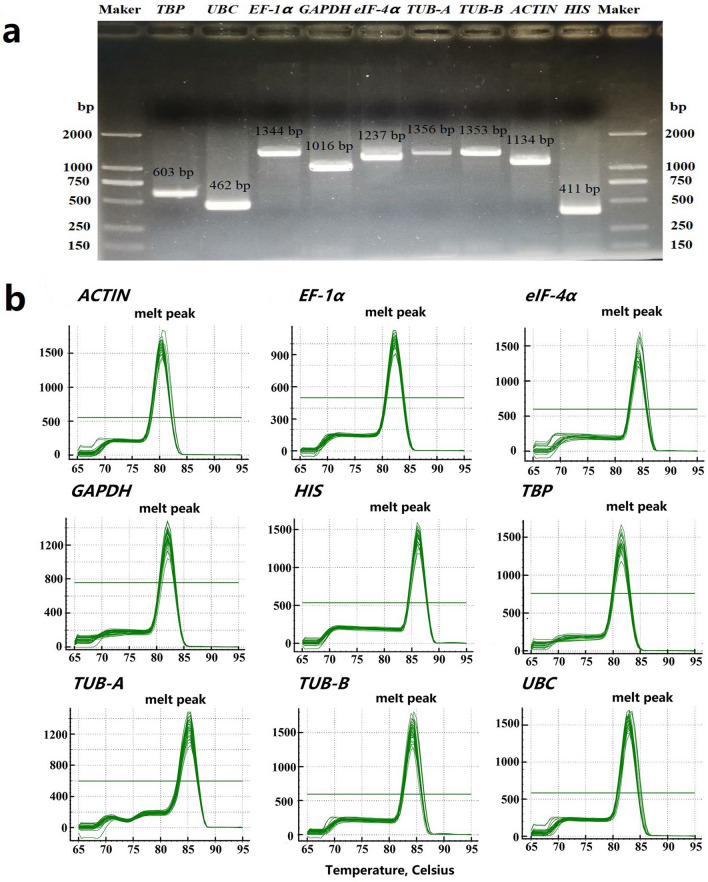
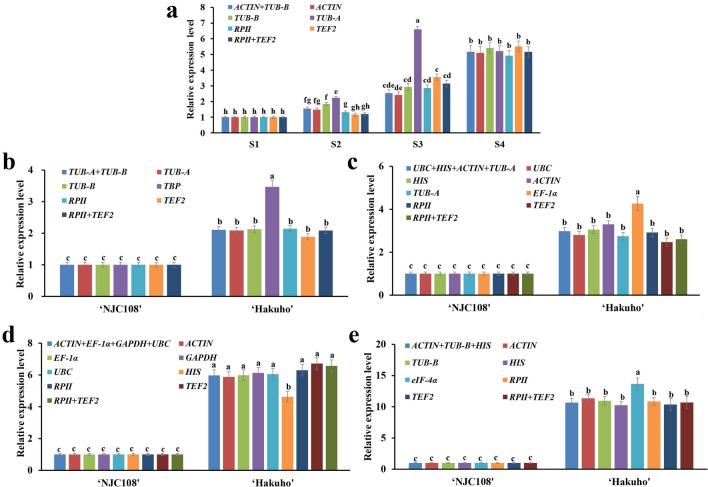
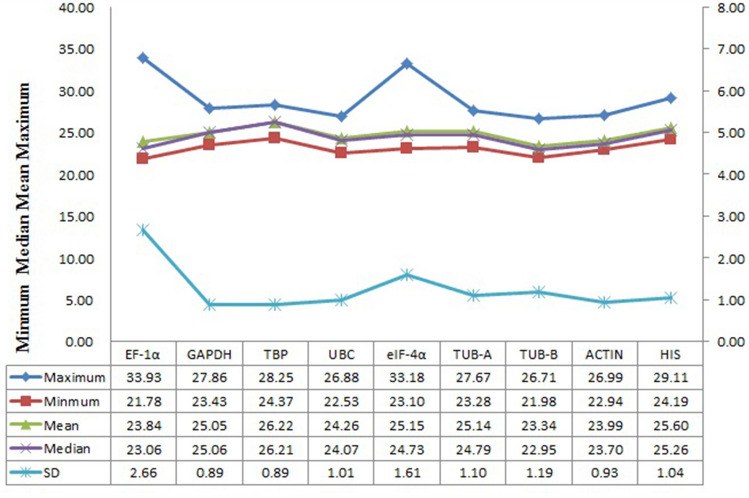
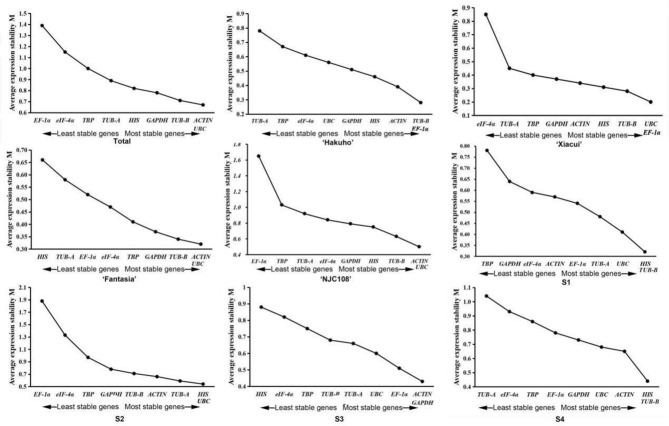
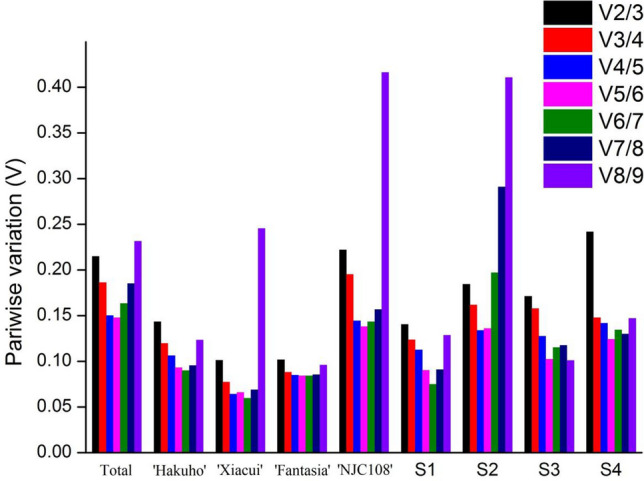
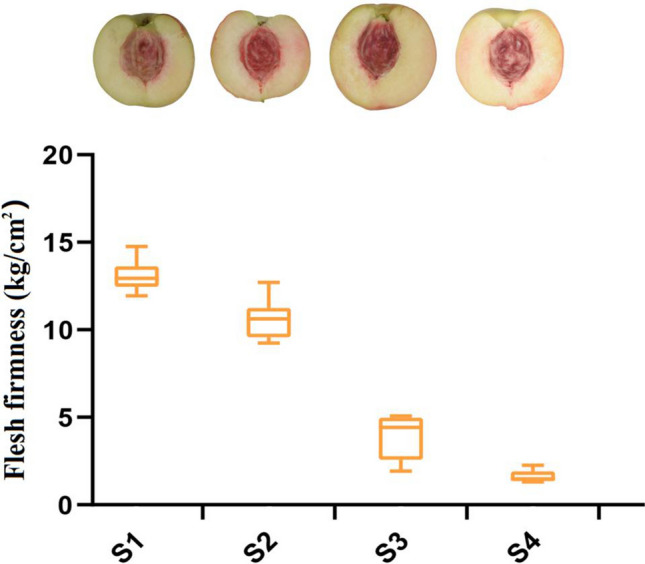
Quantitative real-time PCR (qRT-PCR) has been emerged as an effective method to explore the gene function and regulatory mechanisms. However, selecting appropriate reference gene (s) is a prerequisite for obtaining accurate qRT-PCR results. Peach is one of important fruit in Rosaceae and is widely cultivated worldwide. In this study, to explore reliable reference gene (s) in peach with different types during fruit ripening and softening (S1-S4), nine candidate reference genes (EF-1α, GAPDH, TBP, UBC, eIF-4α, TUB-A, TUB-B, ACTIN, and HIS) were selected from the whole-genome data. Then, the expression levels of the nine selected genes were detected using qRT-PCR in three peach types, including 'Hakuho' (melting type), 'Xiacui' (stony hard type), 'Fantasia' and 'NJC108' (non-melting type) cultivars were detected using qRT-PCR. Four software (geNorm, NormFinder, BestKeeper and RefFinder) were applied to evaluate the expression stability of these candidate reference genes. Gene expression was characterized in different peach types during fruit ripening and softening stages. The overall performance of each candidate in all samples was evaluated. The Actin gene (ACTIN) was a suitable reference gene and displayed excellent stability in 'Total' set, 'Hakuho' samples, S3 and S4 fruit developmental stages. Ubiquitin C gene (UBC) showed the best stability in most independent samples, including 'Fantasia', 'NJC108', S2 sets. Elongation factor-1α gene (EF-1α) was the most unstable gene across the set of all samples, 'NJC108' and S2 sets, while showed the highest stability in 'Xiacui' samples. The stability of candidate reference genes was further verified by analyzing the relative expression level of ethylene synthase gene of Prunus persica (PpACS1) in fruit ripening and softening periods of 'Hakuho'. Taken together, the results from this study provide a basis for future research on the mining of important functional genes, expression patterns and regulatory mechanisms in peach.
实时荧光定量 PCR (qRT-PCR) 已成为研究基因功能和调控机制的有效方法。然而,选择合适的内参基因是获得准确 qRT-PCR 结果的前提。桃是蔷薇科中重要的水果之一,在世界各地广泛种植。在这项研究中,为了探索桃在果实成熟和软化过程中不同类型的可靠内参基因(s)(S1-S4),从全基因组数据中选择了 9 个候选内参基因(EF-1α、GAPDH、TBP、UBC、eIF-4α、TUB-A、TUB-B、ACTIN 和 HIS)。然后,使用 qRT-PCR 检测三个桃品种(‘Hakuho’(融解型)、‘Xiacui’(石硬型)、‘Fantasia’和‘NJC108’(非融解型))中这 9 个候选基因的表达水平。使用 geNorm、NormFinder、BestKeeper 和 RefFinder 四种软件评估这些候选内参基因的表达稳定性。研究了不同桃品种在果实成熟和软化阶段的基因表达情况。评价了每个候选基因在所有样本中的整体表现。肌动蛋白基因(ACTIN)是一个合适的内参基因,在‘总’集、‘Hakuho’样品和 S3、S4 果实发育阶段表现出极好的稳定性。泛素 C 基因(UBC)在大多数独立样本中表现出最佳的稳定性,包括‘Fantasia’、‘NJC108’和 S2 集。延伸因子 1α 基因(EF-1α)是所有样本、‘NJC108’和 S2 集的最不稳定基因,而在‘Xiacui’样品中表现出最高的稳定性。通过分析桃果实成熟和软化过程中乙烯合成酶基因 Prunus persica(PpACS1)在‘Hakuho’中的相对表达水平,进一步验证了候选内参基因的稳定性。综上所述,本研究结果为进一步研究桃中重要功能基因的挖掘、表达模式和调控机制提供了依据。