MRC Centre for Global Infectious Disease Analysis, Imperial College, London.
Malaria Consortium, Abuja, Nigeria.
J Glob Health. 2021 Mar 1;11:04013. doi: 10.7189/jogh.11.04013.
Integrated community case management (iCCM) is a programme that can, via community health workers (CHWs), increase access to timely and essential treatments for children. As well as improving treatment coverage, iCCM has an additional equity-focus with the aim of targeting underserved populations. To assess the success of iCCM programmes it is important that we understand the contribution they are making to equitable health coverage.
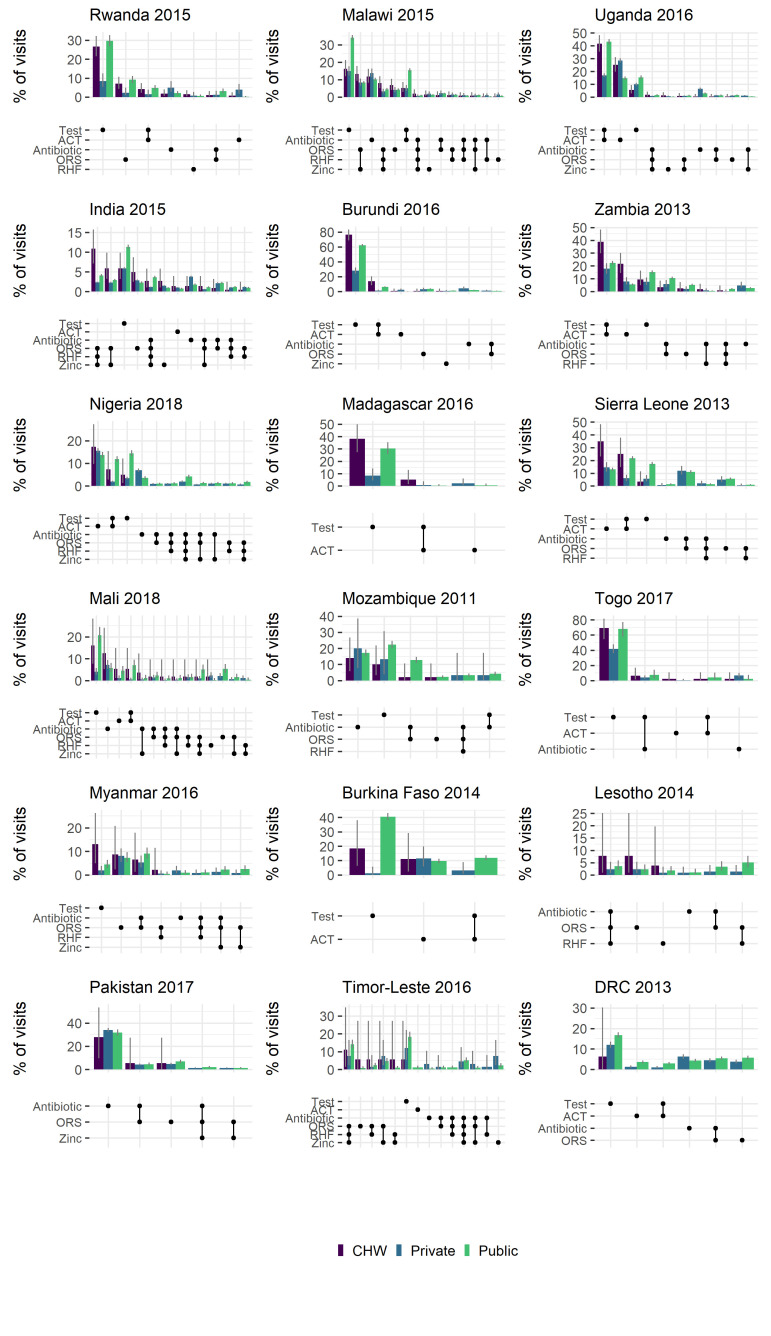
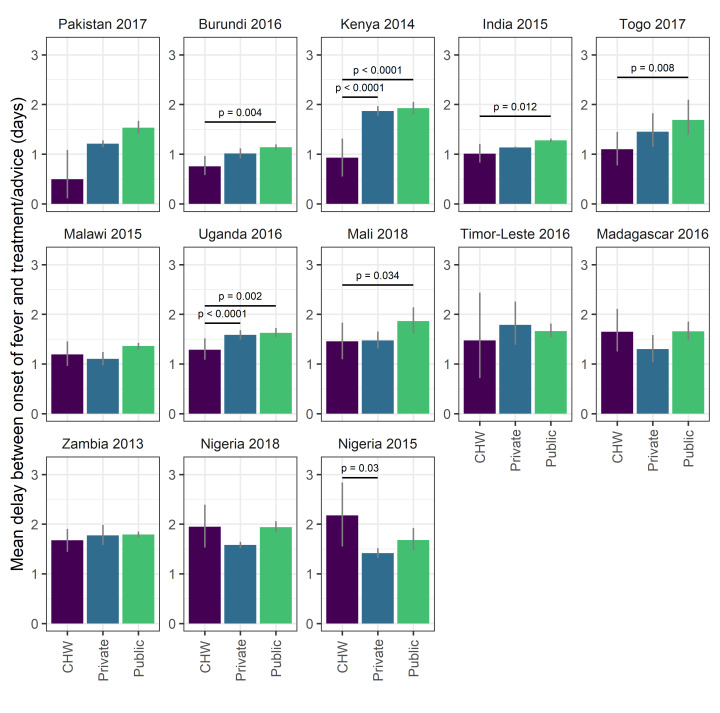
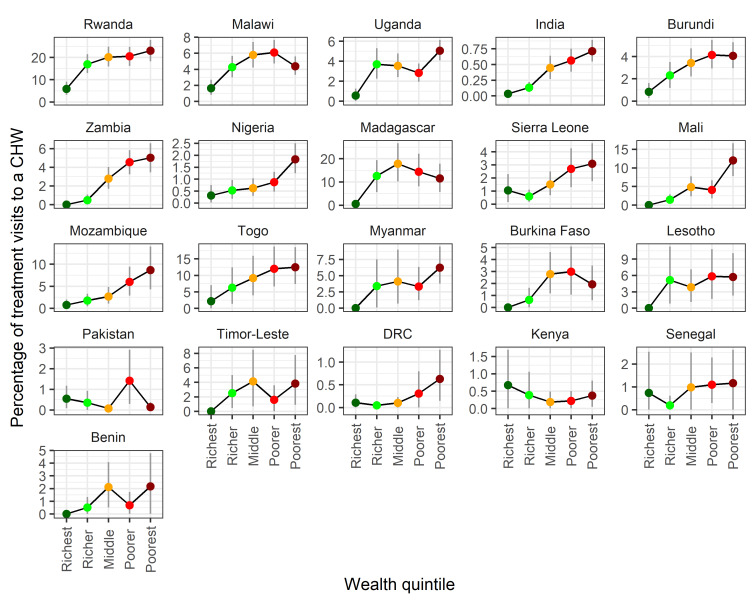
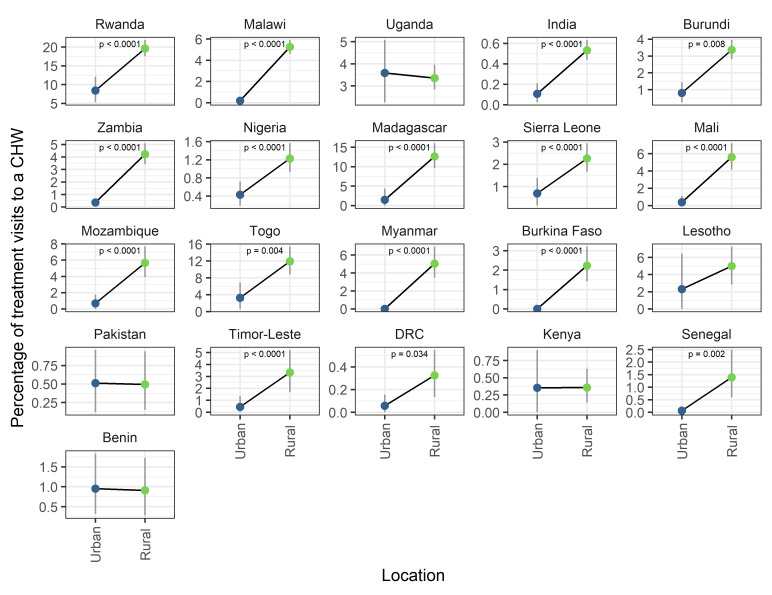
We analysed demographic and health survey data from 21 countries over 9 years to assess evidence and evaluate iCCM programmes. We summarise the contribution CHWs are making relative to other health care provider groups and what treatment combinations CHWs are commonly prescribing. We assessed the ability of CHWs to target treatment delays and health inequities by evaluating time to treatment following fever onset and relationships between CHWs and wealth, rurality and remoteness.
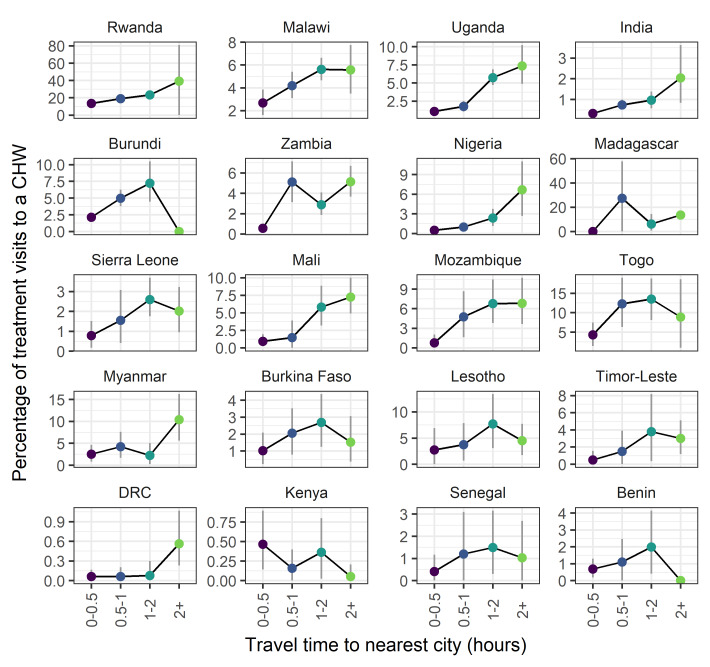
There was good evidence that CHWs are being successfully targeted to improve inequities in health care coverage. There is a larger contribution of CHWs in areas with higher poverty, rurality and remoteness. In six surveys CHWs were associated with significantly shorter average time between fever onset and advice or treatment seeking, whilst in one they were associated with significantly longer times. In areas with active CHW programmes, the contribution of CHWs relative to other health care provider groups varied between 11% to 45% of treatment visits. The distribution of types of treatment provided by CHWs was also very variable between countries.
The success of an iCCM programme depends not only on increasing treatment coverage but addressing inequities in access to timely health care. Whilst much work is still needed to attain universal health care targets, and despite incomplete data, there is evidence that iCCM is successfully addressing treatment delays and targeting underserved populations.
综合社区病例管理(iCCM)是一项通过社区卫生工作者(CHWs)提高儿童及时获得基本治疗的项目。除了提高治疗覆盖率外,iCCM 还具有额外的公平重点,旨在针对服务不足的人群。为了评估 iCCM 项目的成功,了解它们对公平健康覆盖的贡献非常重要。
我们分析了 21 个国家 9 年来的人口和健康调查数据,以评估证据并评估 iCCM 项目。我们总结了 CHWs 在相对于其他医疗保健提供者群体的治疗中所做出的贡献,以及 CHWs 通常开的治疗组合。我们通过评估发热后治疗的时间和 CHWs 与财富、农村和偏远地区之间的关系,评估 CHWs 治疗延迟和健康不公平的能力。
有很好的证据表明,CHWs 正在成功地针对改善医疗保健覆盖的不公平现象。在贫困程度较高、农村和偏远地区,CHWs 的贡献更大。在六项调查中,CHWs 与发热后寻求建议或治疗的平均时间之间的显著缩短有关,而在一项调查中,CHWs 与发热后寻求建议或治疗的平均时间之间的关系较长。在有活跃的 CHW 项目的地区,CHWs 相对于其他医疗保健提供者群体的治疗访问次数的贡献在 11%至 45%之间。CHWs 提供的治疗类型的分布在各国之间也非常不同。
iCCM 项目的成功不仅取决于提高治疗覆盖率,还取决于解决及时获得医疗保健的公平性问题。尽管在实现全民健康覆盖目标方面仍有许多工作要做,而且数据并不完整,但有证据表明,iCCM 正在成功地解决治疗延迟问题,并针对服务不足的人群。