Mao Zimu, Fan Baoshi, Wang Xinjie, Huang Ximeng, Guan Jian, Sun Zewen, Xu Bingbing, Yang Meng, Chen Zeyi, Jiang Dong, Yu Jiakuo
Sports Medicine Department, Beijing Key Laboratory of Sports Injuries, Peking University Third Hospital, Beijing, China.
Institute of Sports Medicine of Peking University, Beijing, China.
Front Bioeng Biotechnol. 2021 Mar 15;9:621483. doi: 10.3389/fbioe.2021.621483. eCollection 2021.
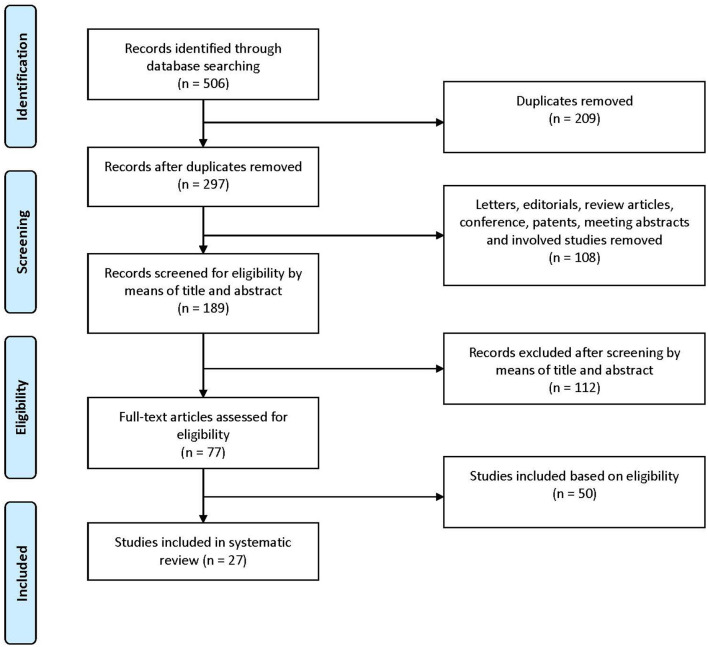
Tendon-bone healing is an important factor in determining the success of ligament reconstruction. With the development of biomaterials science, the tissue engineering scaffold plays an extremely important role in tendon-bone healing and bone tissue engineering. Electronic databases (PubMed, Embase, and the Web of Science) were systematically searched for relevant and qualitative studies published from 1 January 1990 to 31 December 2019. Only original articles that met eligibility criteria and evaluated the use of issue engineering scaffold especially biomaterials in tendon bone healing were selected for analysis. The search strategy identified 506 articles, and 27 studies were included for full review including two human trials and 25 animal studies. Fifteen studies only used biomaterials like PLGA, collage, PCL, PLA, and PET as scaffolds to repair the tendon-bone defect, on this basis, the rest of the 11 studies using biological interventions like cells or cell factors to enhance the healing. The adverse events hardly ever occurred, and the tendon bone healing with tissue engineering scaffold was effective and superior, which could be enhanced by biological interventions. Although a number of tissue engineering scaffolds have been developed and applied in tendon bone healing, the researches are mainly focused on animal models which are with limitations in clinical application. Since the efficacy and safety of tissue engineering scaffold has been proved, and can be enhanced by biological interventions, substantial clinical trials remain to be done, continued progress in overcoming current tissue engineering challenges should allow for successful clinical practice.
肌腱-骨愈合是决定韧带重建成功与否的重要因素。随着生物材料科学的发展,组织工程支架在肌腱-骨愈合和骨组织工程中发挥着极其重要的作用。我们系统检索了电子数据库(PubMed、Embase和科学网),以查找1990年1月1日至2019年12月31日发表的相关定性研究。仅选择符合纳入标准并评估组织工程支架尤其是生物材料在肌腱-骨愈合中应用的原始文章进行分析。检索策略共识别出506篇文章,其中27项研究纳入全面综述,包括2项人体试验和25项动物研究。15项研究仅使用聚乳酸-羟基乙酸共聚物、胶原、聚己内酯、聚乳酸和聚对苯二甲酸乙二酯等生物材料作为支架修复肌腱-骨缺损,在此基础上,其余11项研究使用细胞或细胞因子等生物干预措施来促进愈合。不良事件几乎未曾发生,使用组织工程支架进行肌腱-骨愈合有效且效果更佳,生物干预措施可进一步增强其效果。尽管已经开发出多种组织工程支架并应用于肌腱-骨愈合,但相关研究主要集中在动物模型上,在临床应用中存在局限性。鉴于组织工程支架的有效性和安全性已得到证实,且可通过生物干预措施增强效果,仍有待开展大量临床试验,持续攻克当前组织工程面临的挑战应能推动临床实践取得成功。