• 文献检索
  • 文档翻译
  • 深度研究
  • 学术资讯
  • Suppr Zotero 插件Zotero 插件
  • 邀请有礼
  • 套餐&价格
  • 历史记录
应用&插件
Suppr Zotero 插件Zotero 插件浏览器插件Mac 客户端Windows 客户端微信小程序
定价
高级版会员购买积分包购买API积分包
服务
文献检索文档翻译深度研究API 文档MCP 服务
关于我们
关于 Suppr公司介绍联系我们用户协议隐私条款
关注我们

Suppr 超能文献

核心技术专利:CN118964589B侵权必究
粤ICP备2023148730 号-1Suppr @ 2026

文献检索

告别复杂PubMed语法,用中文像聊天一样搜索,搜遍4000万医学文献。AI智能推荐,让科研检索更轻松。

立即免费搜索

文件翻译

保留排版,准确专业,支持PDF/Word/PPT等文件格式,支持 12+语言互译。

免费翻译文档

深度研究

AI帮你快速写综述,25分钟生成高质量综述,智能提取关键信息,辅助科研写作。

立即免费体验

基于生物反馈的连接性心理健康干预焦虑症的系统文献综述。

Biofeedback-Based Connected Mental Health Interventions for Anxiety: Systematic Literature Review.

机构信息

Department of Computer Science & Software Engineering, College of Information Technology, Al Ain, Abu Dhabi, United Arab Emirates.

出版信息

JMIR Mhealth Uhealth. 2021 Apr 22;9(4):e26038. doi: 10.2196/26038.

DOI:10.2196/26038
PMID:33792548
原文链接:https://pmc.ncbi.nlm.nih.gov/articles/PMC8103295/
Abstract

BACKGROUND

Connected mental health, which refers to the use of technology for mental health care and technology-based therapeutic solutions, has become an established field of research. Biofeedback is one of the approaches used in connected mental health solutions, which is mainly based on the analysis of physiological indicators for the assessment and management of the psychological state. Biofeedback is recommended by many therapists and has been used for conditions including depression, insomnia, and anxiety. Anxiety is associated with several physiological symptoms, including muscle tension and breathing issues, which makes the inclusion of biofeedback useful for anxiety detection and management.

OBJECTIVE

The aim of this study was to identify interventions using biofeedback as a part of their process for anxiety management and investigate their perceived effectiveness.

METHODS

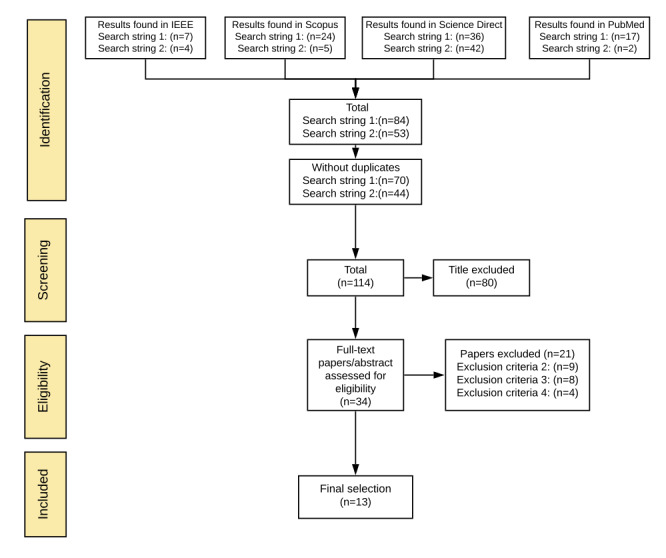
A systematic literature review of publications presenting empirically evaluated biofeedback-based interventions for anxiety was conducted. The systematic literature review was based on publications retrieved from IEEE Digital Library, PubMed, ScienceDirect, and Scopus. A preliminary selection of papers was identified, examined, and filtered to include only relevant publications. Studies in the final selection were classified and analyzed to extract the modalities of use of biofeedback in the identified interventions, the types of physiological data that were collected and analyzed and the sensors used to collect them. Processes and outcomes of the empirical evaluations were also extracted.

RESULTS

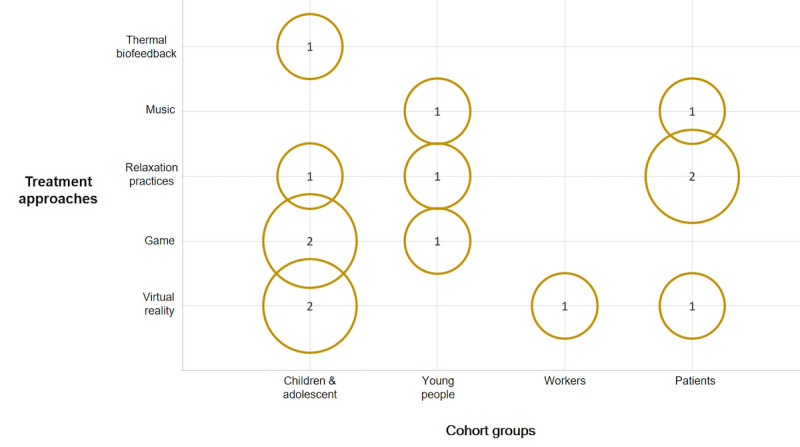
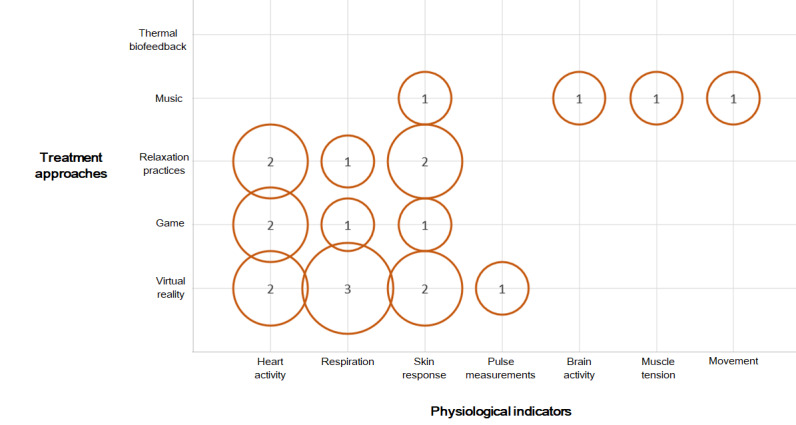
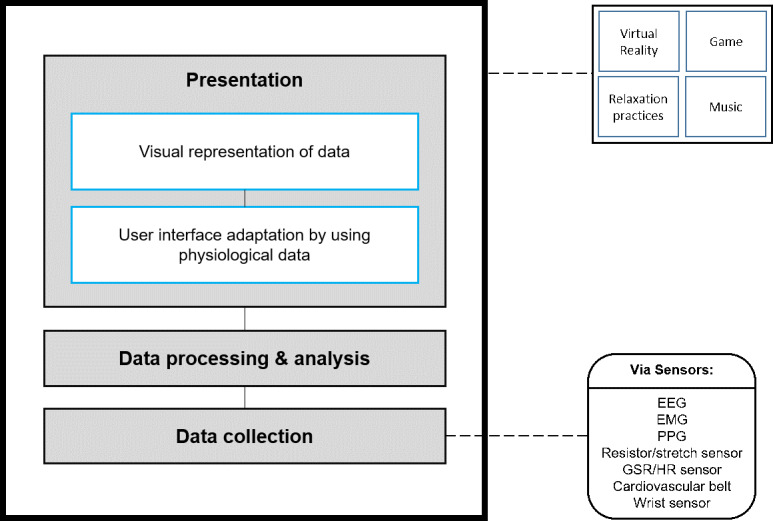
After final selection, 13 publications presenting different interventions were investigated. The interventions addressed either primarily anxiety disorders or anxiety associated with health issues such as migraine, Parkinson disease, and rheumatology. Solutions combined biofeedback with other techniques including virtual reality, music therapy, games, and relaxation practices and used different sensors including cardiovascular belts, wrist sensors, or stretch sensors to collect physiological data such as heart rate, respiration indicators, and movement information. The interventions targeted different cohorts including children, students, and patients. Overall, outcomes from the empirical evaluations yielded positive results and emphasized the effectiveness of connected mental health solutions using biofeedback for anxiety; however, certain unfavorable outcomes, such as interventions not having an effect on anxiety and patients' preferring traditional therapy, were reported in studies addressing patients with specific physical health issues.

CONCLUSIONS

The use of biofeedback in connected mental health interventions for the treatment and management of anxiety allows better screening and understanding of both psychological and physiological patient information, as well as of the association between the two. The inclusion of biofeedback could improve the outcome of interventions and boost their effectiveness; however, when used with patients suffering from certain physical health issues, suitability investigations are needed.

https://cdn.ncbi.nlm.nih.gov/pmc/blobs/aeff/8103295/a0885b8b8662/mhealth_v9i4e26038_fig5.jpg
https://cdn.ncbi.nlm.nih.gov/pmc/blobs/aeff/8103295/365cbaf4f6c5/mhealth_v9i4e26038_fig1.jpg
https://cdn.ncbi.nlm.nih.gov/pmc/blobs/aeff/8103295/4fa55882b198/mhealth_v9i4e26038_fig2.jpg
https://cdn.ncbi.nlm.nih.gov/pmc/blobs/aeff/8103295/46d174519bfe/mhealth_v9i4e26038_fig3.jpg
https://cdn.ncbi.nlm.nih.gov/pmc/blobs/aeff/8103295/3044a0e1b4be/mhealth_v9i4e26038_fig4.jpg
https://cdn.ncbi.nlm.nih.gov/pmc/blobs/aeff/8103295/a0885b8b8662/mhealth_v9i4e26038_fig5.jpg
https://cdn.ncbi.nlm.nih.gov/pmc/blobs/aeff/8103295/365cbaf4f6c5/mhealth_v9i4e26038_fig1.jpg
https://cdn.ncbi.nlm.nih.gov/pmc/blobs/aeff/8103295/4fa55882b198/mhealth_v9i4e26038_fig2.jpg
https://cdn.ncbi.nlm.nih.gov/pmc/blobs/aeff/8103295/46d174519bfe/mhealth_v9i4e26038_fig3.jpg
https://cdn.ncbi.nlm.nih.gov/pmc/blobs/aeff/8103295/3044a0e1b4be/mhealth_v9i4e26038_fig4.jpg
https://cdn.ncbi.nlm.nih.gov/pmc/blobs/aeff/8103295/a0885b8b8662/mhealth_v9i4e26038_fig5.jpg
摘要

背景

连接心理健康,指的是使用技术进行心理健康护理和基于技术的治疗解决方案,已成为一个既定的研究领域。生物反馈是连接心理健康解决方案中使用的方法之一,主要基于对生理指标的分析,用于评估和管理心理状态。生物反馈已被许多治疗师推荐,并已用于包括抑郁、失眠和焦虑在内的多种病症。焦虑与许多生理症状相关,包括肌肉紧张和呼吸问题,这使得生物反馈的纳入对于焦虑的检测和管理非常有用。

目的

本研究旨在确定将生物反馈作为其焦虑管理过程的一部分的干预措施,并调查其感知效果。

方法

对发表的实证评估基于生物反馈的焦虑管理干预措施的文献进行了系统的文献综述。系统文献综述基于从 IEEE 数字图书馆、PubMed、ScienceDirect 和 Scopus 检索到的出版物。初步选择了论文进行识别、检查和筛选,只包括相关的出版物。对最终选择的研究进行分类和分析,以提取所确定干预措施中生物反馈使用的模式、收集和分析的生理数据类型以及用于收集这些数据的传感器。还提取了实证评估的过程和结果。

结果

经过最终选择,研究了 13 篇提出不同干预措施的出版物。这些干预措施主要针对焦虑障碍,或与偏头痛、帕金森病和风湿病等健康问题相关的焦虑。解决方案将生物反馈与虚拟现实、音乐疗法、游戏和放松实践等其他技术相结合,并使用包括心血管带、手腕传感器或拉伸传感器在内的不同传感器来收集心率、呼吸指标和运动信息等生理数据。干预措施针对不同的人群,包括儿童、学生和患者。总体而言,实证评估的结果产生了积极的结果,并强调了使用生物反馈的连接心理健康解决方案治疗和管理焦虑的有效性;然而,在针对特定身体健康问题的患者的研究中,报告了一些不利的结果,例如干预对焦虑没有效果,以及患者更喜欢传统疗法。

结论

在用于治疗和管理焦虑的连接心理健康干预措施中使用生物反馈,可以更好地筛选和理解患者的心理和生理信息,以及两者之间的关联。生物反馈的纳入可以改善干预措施的效果,并提高其有效性;然而,在与患有某些身体健康问题的患者一起使用时,需要进行适用性调查。

相似文献

1
Biofeedback-Based Connected Mental Health Interventions for Anxiety: Systematic Literature Review.基于生物反馈的连接性心理健康干预焦虑症的系统文献综述。
JMIR Mhealth Uhealth. 2021 Apr 22;9(4):e26038. doi: 10.2196/26038.
2
E-Health interventions for anxiety and depression in children and adolescents with long-term physical conditions.针对患有长期身体疾病的儿童和青少年焦虑与抑郁的电子健康干预措施。
Cochrane Database Syst Rev. 2018 Aug 15;8(8):CD012489. doi: 10.1002/14651858.CD012489.pub2.
3
Home treatment for mental health problems: a systematic review.心理健康问题的居家治疗:一项系统综述
Health Technol Assess. 2001;5(15):1-139. doi: 10.3310/hta5150.
4
Music interventions for improving psychological and physical outcomes in people with cancer.音乐干预对改善癌症患者心理和生理结局的影响。
Cochrane Database Syst Rev. 2021 Oct 12;10(10):CD006911. doi: 10.1002/14651858.CD006911.pub4.
5
Signs and symptoms to determine if a patient presenting in primary care or hospital outpatient settings has COVID-19.在基层医疗机构或医院门诊环境中,如果患者出现以下症状和体征,可判断其是否患有 COVID-19。
Cochrane Database Syst Rev. 2022 May 20;5(5):CD013665. doi: 10.1002/14651858.CD013665.pub3.
6
A rapid and systematic review of the clinical effectiveness and cost-effectiveness of topotecan for ovarian cancer.拓扑替康治疗卵巢癌的临床有效性和成本效益的快速系统评价。
Health Technol Assess. 2001;5(28):1-110. doi: 10.3310/hta5280.
7
Shared decision-making interventions for people with mental health conditions.心理健康问题患者的共同决策干预措施。
Cochrane Database Syst Rev. 2022 Nov 11;11(11):CD007297. doi: 10.1002/14651858.CD007297.pub3.
8
Survivor, family and professional experiences of psychosocial interventions for sexual abuse and violence: a qualitative evidence synthesis.性虐待和暴力的心理社会干预的幸存者、家庭和专业人员的经验:定性证据综合。
Cochrane Database Syst Rev. 2022 Oct 4;10(10):CD013648. doi: 10.1002/14651858.CD013648.pub2.
9
Control interventions in randomised trials among people with mental health disorders.精神障碍患者随机试验中的对照干预措施。
Cochrane Database Syst Rev. 2022 Apr 4;4(4):MR000050. doi: 10.1002/14651858.MR000050.pub2.
10
Systemic treatments for metastatic cutaneous melanoma.转移性皮肤黑色素瘤的全身治疗
Cochrane Database Syst Rev. 2018 Feb 6;2(2):CD011123. doi: 10.1002/14651858.CD011123.pub2.

引用本文的文献

1
Precision medicine and music therapy for Parkinson's Disease.帕金森病的精准医学与音乐疗法
Clin Park Relat Disord. 2025 Aug 6;13:100382. doi: 10.1016/j.prdoa.2025.100382. eCollection 2025.
2
Anxiety Before and During Music Stage Performance: Monitoring and Coping Strategies with Innovative Biofeedback Techniques.音乐舞台表演前后的焦虑:采用创新生物反馈技术的监测与应对策略
Appl Psychophysiol Biofeedback. 2025 Jun 6. doi: 10.1007/s10484-025-09722-0.
3
Existing Meditation and Breathing Devices for Stress Reduction and Their Incorporated Stimuli: A Systematic Literature Review and Competition Analysis.

本文引用的文献

1
Connected Mental Health: Systematic Mapping Study.关联心理健康:系统映射研究。
J Med Internet Res. 2020 Aug 28;22(8):e19950. doi: 10.2196/19950.
2
An analysis on self-management and treatment-related functionality and characteristics of highly rated anxiety apps.高评分焦虑症应用程序的自我管理和治疗相关功能及特点分析。
Int J Med Inform. 2020 Sep;141:104243. doi: 10.1016/j.ijmedinf.2020.104243. Epub 2020 Jul 30.
3
On-line anxiety level detection from biosignals: Machine learning based on a randomized controlled trial with spider-fearful individuals.
现有的用于减轻压力的冥想和呼吸设备及其包含的刺激因素:系统文献综述与竞争分析
Mayo Clin Proc Digit Health. 2023 Aug 8;1(3):395-405. doi: 10.1016/j.mcpdig.2023.06.008. eCollection 2023 Sep.
4
The Integration of Psychophysiological Interventions with Psychotherapy and Pediatrics.心理生理干预与心理治疗及儿科学的整合
Appl Psychophysiol Biofeedback. 2025 Jun;50(2):297-304. doi: 10.1007/s10484-025-09695-0. Epub 2025 Apr 4.
5
Using a Wearable Brain Activity Sensing Device in the Treatment of Long COVID Symptoms in an Open-Label Clinical Trial.在一项开放标签临床试验中使用可穿戴脑活动传感设备治疗新冠后长期症状
J Prim Care Community Health. 2025 Jan-Dec;16:21501319251325639. doi: 10.1177/21501319251325639. Epub 2025 Mar 12.
6
Data Ownership in the AI-Powered Integrative Health Care Landscape.人工智能驱动的整合式医疗保健领域的数据所有权。
JMIR Med Inform. 2024 Nov 19;12:e57754. doi: 10.2196/57754.
7
The Effect of a Biofeedback-Based Integrated Intervention for Older Adults with Orthostatic Hypotension: A Secondary Analysis on Psychological Health Outcomes in a Non-Randomized Pilot Trial.基于生物反馈的综合干预对老年体位性低血压患者的影响:一项非随机试点试验中心理健康结局的二次分析。
Healthcare (Basel). 2024 Oct 28;12(21):2143. doi: 10.3390/healthcare12212143.
8
Comprehensive synthesis of mHealth interventions in psychiatry: insights from systematic, scoping, narrative reviews and content analysis.精神医学中 mHealth 干预措施的综合综合:系统、范围、叙述性综述和内容分析的见解。
Singapore Med J. 2024 Oct 1;65(10):536-543. doi: 10.4103/singaporemedj.SMJ-2024-165. Epub 2024 Oct 4.
9
Tackling anxiety through innovation: Development and pilot study of an in-the-moment messaging intervention for young adults.通过创新应对焦虑:一项针对年轻人的即时信息干预措施的开发与试点研究
Digit Health. 2024 Sep 17;10:20552076241283245. doi: 10.1177/20552076241283245. eCollection 2024 Jan-Dec.
10
The New Emerging Treatment Choice for Major Depressive Disorders: Digital Therapeutics.主要抑郁症治疗新选择:数字疗法。
Adv Exp Med Biol. 2024;1456:307-331. doi: 10.1007/978-981-97-4402-2_16.
基于蜘蛛恐惧症个体随机对照试验的机器学习的在线焦虑水平检测
PLoS One. 2020 Jun 23;15(6):e0231517. doi: 10.1371/journal.pone.0231517. eCollection 2020.
4
The Effects of Music-Contingent Gait Training on Cognition and Mood in Parkinson Disease: A Feasibility Study.音乐伴随步态训练对帕金森病认知和情绪的影响:一项可行性研究。
Neurorehabil Neural Repair. 2020 Jan;34(1):82-92. doi: 10.1177/1545968319893303. Epub 2019 Dec 26.
5
Virtual Reality-Based Biofeedback and Guided Meditation in Rheumatology: A Pilot Study.基于虚拟现实的生物反馈与引导式冥想在风湿病学中的应用:一项初步研究。
ACR Open Rheumatol. 2019 Nov 11;1(10):667-675. doi: 10.1002/acr2.11092. eCollection 2019 Dec.
6
eHealth Interventions for Anxiety Management Targeting Young Children and Adolescents: Exploratory Review.针对幼儿和青少年焦虑管理的电子健康干预措施:探索性综述。
JMIR Pediatr Parent. 2018 May 10;1(1):e5. doi: 10.2196/pediatrics.7248.
7
Using a Videogame Intervention to Reduce Anxiety and Externalizing Problems among Youths in Residential Care: an Initial Randomized Controlled Trial.使用电子游戏干预来减少寄宿照料机构中青少年的焦虑和外化问题:一项初步随机对照试验。
J Psychopathol Behav Assess. 2018;40(2):344-354. doi: 10.1007/s10862-017-9638-2. Epub 2017 Nov 29.
8
Relaxation techniques for pain management in labour.分娩疼痛管理的放松技巧。
Cochrane Database Syst Rev. 2018 Mar 28;3(3):CD009514. doi: 10.1002/14651858.CD009514.pub2.
9
Virtual reality for stroke rehabilitation.用于中风康复的虚拟现实技术。
Cochrane Database Syst Rev. 2017 Nov 20;11(11):CD008349. doi: 10.1002/14651858.CD008349.pub4.
10
A case-control study of skin conductance biofeedback on seizure frequency and emotion regulation in drug-resistant temporal lobe epilepsy.一项关于皮肤电传导生物反馈对耐药性颞叶癫痫发作频率和情绪调节影响的病例对照研究。
Int J Psychophysiol. 2018 Jan;123:103-110. doi: 10.1016/j.ijpsycho.2017.10.005. Epub 2017 Oct 16.