Department of Organizational Behavior, London Business School, London NW1 4SA, United Kingdom.
Negotiation, Organizations & Markets Unit, Harvard Business School, Boston, MA 02163;
Proc Natl Acad Sci U S A. 2021 Mar 23;118(12). doi: 10.1073/pnas.2018494118.
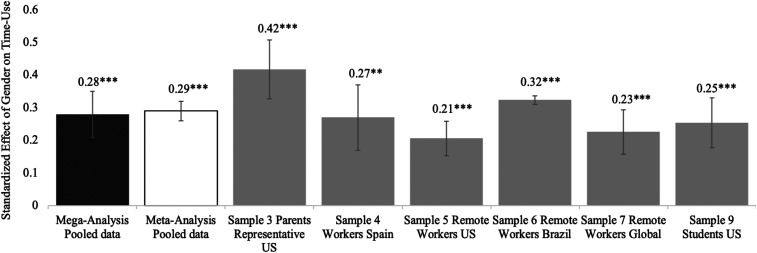
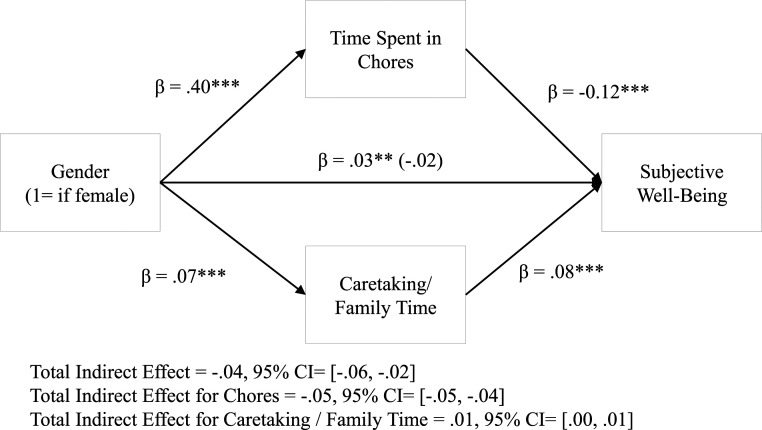
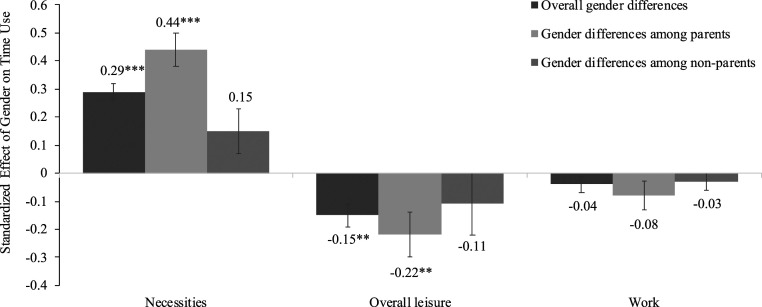
The COVID-19 pandemic has fundamentally altered how people spend time, with possible consequences for subjective well-being. Using diverse samples from the United States, Canada, Denmark, Brazil, and Spain ( = 31,141), following a preregistered analytic plan, and employing both mega- and meta-analyses, we find consistent gender differences in time spent on necessities. During the pandemic, women-especially mothers-spent more time on tasks such as childcare and household chores. To the extent that women spent more time on chores than men, they reported lower happiness. These data represent one of the most rigorous investigations of gender differences in time use during the forced lockdowns created by the COVID-19 pandemic, and point toward individual differences that should be considered when designing policies now and post-COVID-19.
新冠疫情从根本上改变了人们的时间分配方式,可能对主观幸福感产生影响。我们采用了来自美国、加拿大、丹麦、巴西和西班牙的多样化样本(=31141),按照预先注册的分析计划,同时进行了 mega 和元分析,发现人们在必需品上所花费的时间存在性别差异。在疫情期间,女性——尤其是母亲——花更多的时间在照顾孩子和家务等任务上。女性在琐事上花费的时间比男性多,她们的幸福感就越低。这些数据代表了对新冠疫情强制封锁期间性别在时间使用上的差异进行的最严格的调查之一,并指出了在制定现在和疫情后政策时应考虑的个体差异。