Institute of Neuroscience and Psychology, University of Glasgow, Glasgow, Scotland G12 8QB, UK.
School of Psychology, University of Glasgow, Glasgow, Scotland G12 8QB, UK.
Curr Biol. 2021 May 24;31(10):2243-2252.e6. doi: 10.1016/j.cub.2021.03.013. Epub 2021 Apr 1.
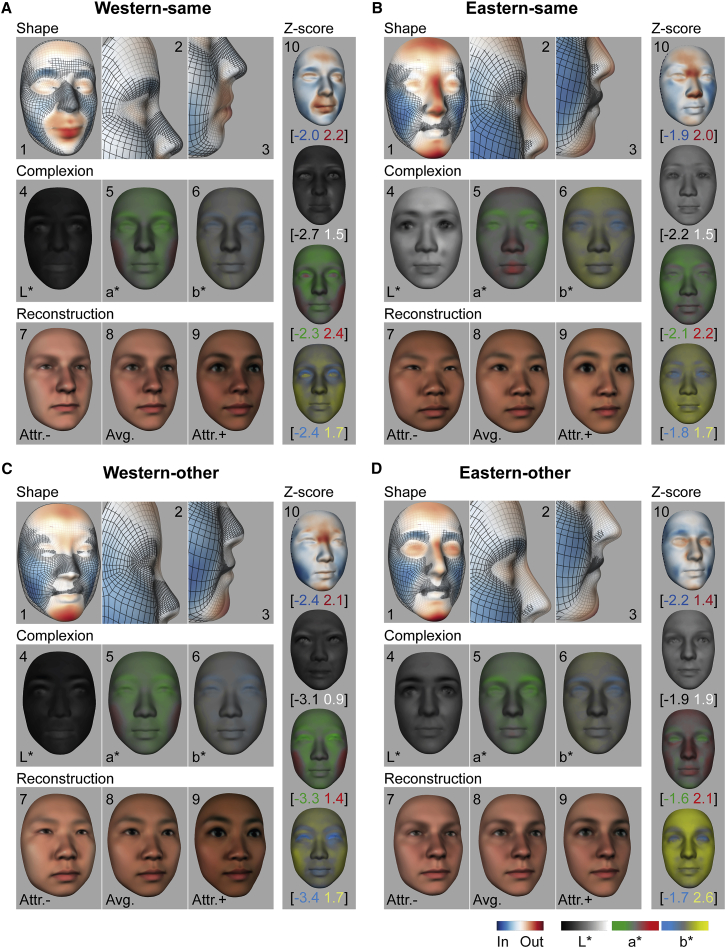
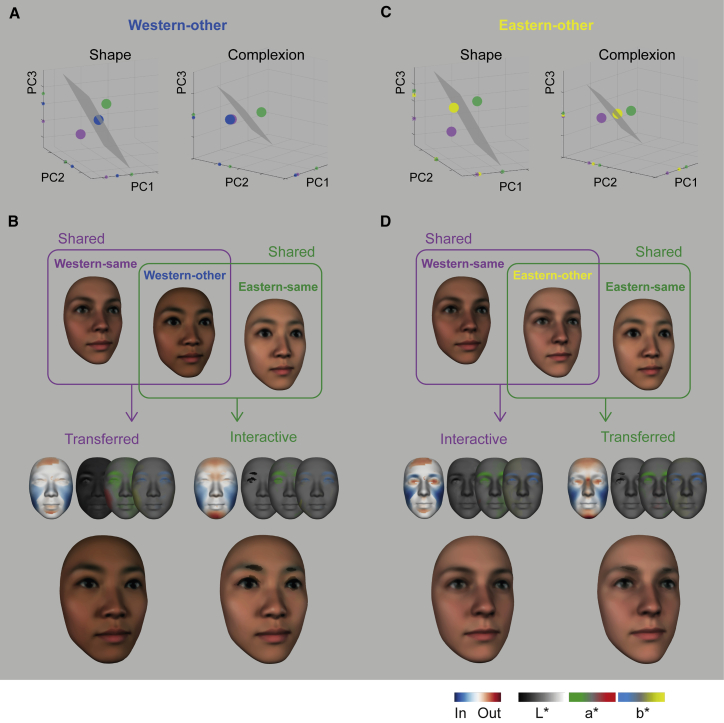
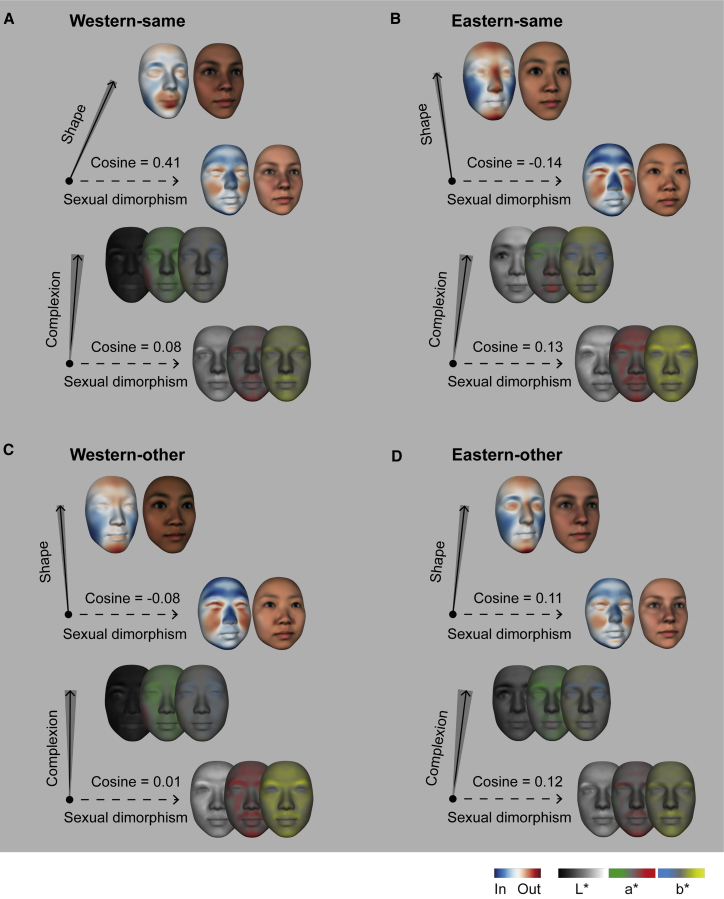
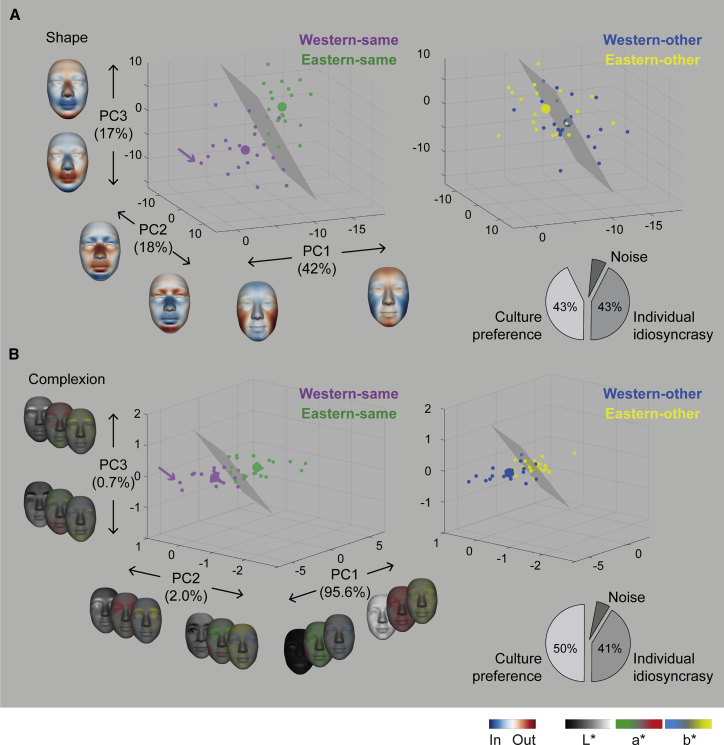
Facial attractiveness confers considerable advantages in social interactions, with preferences likely reflecting psychobiological mechanisms shaped by natural selection. Theories of universal beauty propose that attractive faces comprise features that are closer to the population average while optimizing sexual dimorphism. However, emerging evidence questions this model as an accurate representation of facial attractiveness, including representing the diversity of beauty preferences within and across cultures. Here, we demonstrate that Western Europeans (WEs) and East Asians (EAs) evaluate facial beauty using culture-specific features, contradicting theories of universality. With a data-driven method, we modeled, at both the individual and group levels, the attractive face features of young females (25 years old) in two matched groups each of 40 young male WE and EA participants. Specifically, we generated a broad range of same- and other-ethnicity female faces with naturally varying shapes and complexions. Participants rated each on attractiveness. We then reverse correlated the face features that drive perception of attractiveness in each participant. From these individual face models, we reconstructed a facial attractiveness representation space that explains preference variations. We show that facial attractiveness is distinct both from averageness and from sexual dimorphism in both cultures. Finally, we disentangled attractive face features into those shared across cultures, culture specific, and specific to individual participants, thereby revealing their diversity. Our results have direct theoretical and methodological impact for representing diversity in social perception and for the design of culturally and ethnically sensitive socially interactive digital agents.
面部吸引力在社交互动中具有很大的优势,人们的偏好可能反映了自然选择塑造的心理生物学机制。普遍美的理论提出,有吸引力的面孔包括更接近人群平均值的特征,同时优化性别二态性。然而,新出现的证据质疑了这种模式作为面部吸引力的准确代表,包括代表了不同文化中美的偏好的多样性。在这里,我们证明了西欧人(WE)和东亚人(EA)使用特定于文化的特征来评估面部美,这与普遍性理论相矛盾。我们采用数据驱动的方法,在个体和群体两个层面上,对两组各有 40 名年轻男性 WE 和 EA 参与者的年轻女性(25 岁)的迷人面孔特征进行了建模。具体来说,我们生成了具有自然变化形状和肤色的同种族和其他种族女性的广泛面孔。参与者对每个面孔的吸引力进行了评分。然后,我们对每个参与者感知吸引力的面孔特征进行了反向相关。从这些个体面孔模型中,我们重建了一个可以解释偏好变化的面部吸引力表示空间。我们表明,在这两种文化中,面部吸引力既不同于平均水平,也不同于性别二态性。最后,我们将吸引人的面部特征分解为跨文化共享的、特定于文化的和特定于个体参与者的特征,从而揭示了它们的多样性。我们的研究结果对于代表社会感知中的多样性以及设计文化和种族敏感的社会交互数字代理具有直接的理论和方法上的影响。