Centro de Investigación Príncipe Felipe, Polymer Therapeutics Laboratory, Av. Eduardo Primo Yúfera 3, E-46012 Valencia, Spain.
Centro de Investigación Príncipe Felipe, Polymer Therapeutics Laboratory, Av. Eduardo Primo Yúfera 3, E-46012 Valencia, Spain; Centro de Investigación Príncipe Felipe, Targeted Therapies on Cancer and Inflammation Laboratory, Av. Eduardo Primo Yúfera 3, E-46012 Valencia, Spain.
Adv Drug Deliv Rev. 2021 Jun;173:306-330. doi: 10.1016/j.addr.2021.03.018. Epub 2021 Mar 31.
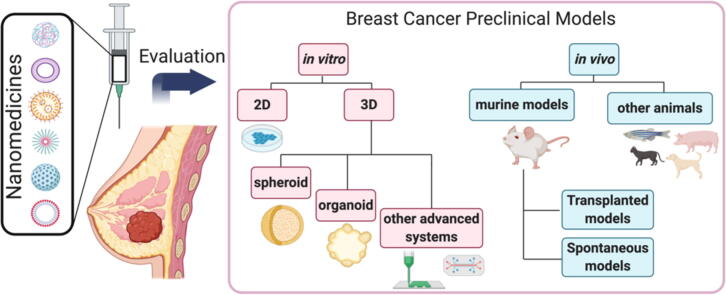
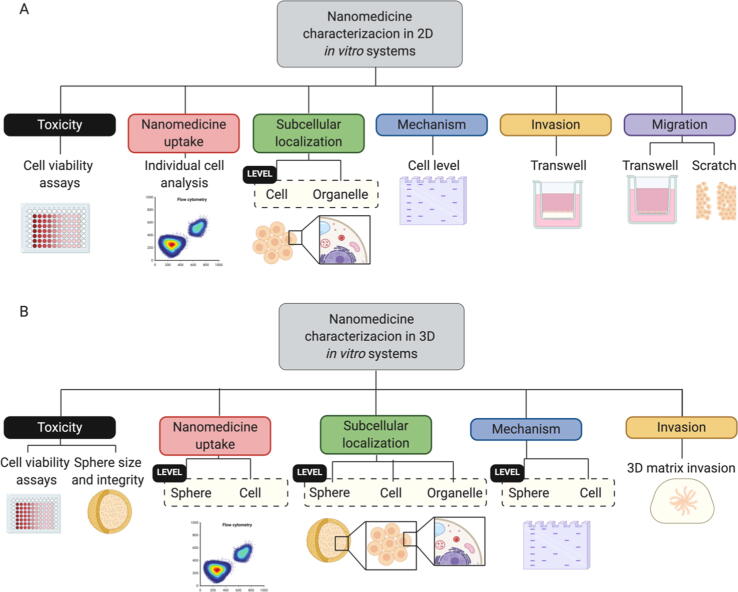
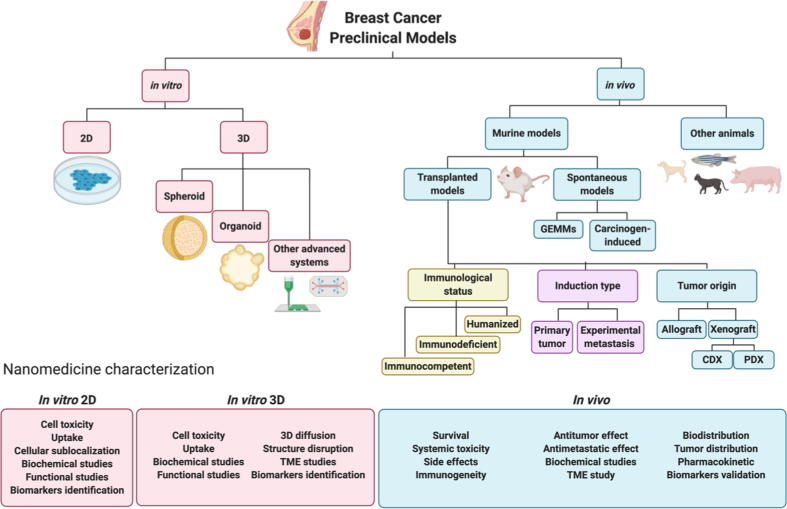
Even given recent advances in nanomedicine development of breast cancer treatment in recent years and promising results in pre-clinical models, cancer nanomedicines often fail at the clinical trial stage. Limitations of conventional in vitro models include the lack of representation of the stromal population, the absence of a three-dimensional (3D) structure, and a poor representation of inter-tumor and intra-tumor heterogeneity. Herein, we review those cell culture strategies that aim to overcome these limitations, including cell co-cultures, advanced 3D cell cultures, patient-derived cells, bioprinting, and microfluidics systems. The in vivo evaluation of nanomedicines must consider critical parameters that include the enhanced permeability and retention effect, the host's immune status, and the site of tumor implantation. Here, we critically discuss the advantages and limitations of current in vivo models and report how the improved selection and application of breast cancer models can improve the clinical translation of nanomedicines.
尽管近年来在纳米医学领域取得了进展,并且临床前模型也取得了有前景的结果,但癌症纳米药物在临床试验阶段往往会失败。传统体外模型的局限性包括缺乏基质细胞群的代表性、缺乏三维(3D)结构以及肿瘤内和肿瘤间异质性的代表性不足。在此,我们综述了旨在克服这些局限性的细胞培养策略,包括细胞共培养、先进的 3D 细胞培养、患者来源细胞、生物打印和微流控系统。纳米药物的体内评价必须考虑包括增强的渗透性和保留效应、宿主的免疫状态以及肿瘤植入部位在内的关键参数。在这里,我们批判性地讨论了当前体内模型的优缺点,并报告了如何通过改进乳腺癌模型的选择和应用来提高纳米药物的临床转化。