Klak Marta, Kowalska Patrycja, Dobrzański Tomasz, Tymicki Grzegorz, Cywoniuk Piotr, Gomółka Magdalena, Kosowska Katarzyna, Bryniarski Tomasz, Berman Andrzej, Dobrzyń Agnieszka, Sadowski Wojciech, Górecki Bartosz, Wszoła Michał
Foundation of Research and Science Development, 01-793 Warsaw, Poland.
Nencki Institute of Experimental Biology, Polish Academy of Sciences, 02-093 Warsaw, Poland.
Micromachines (Basel). 2021 Mar 14;12(3):304. doi: 10.3390/mi12030304.
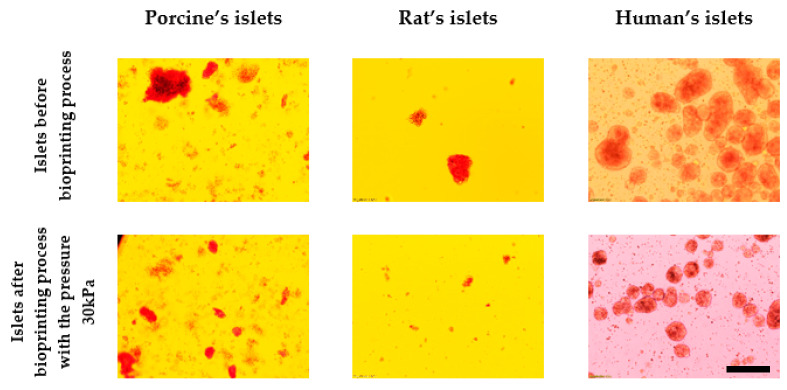
3D bioprinting is the future of constructing functional organs. Creating a bioactive scaffold with pancreatic islets presents many challenges. The aim of this paper is to assess how the 3D bioprinting process affects islet viability.
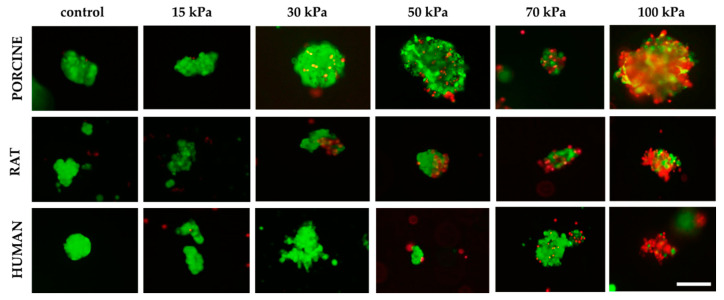
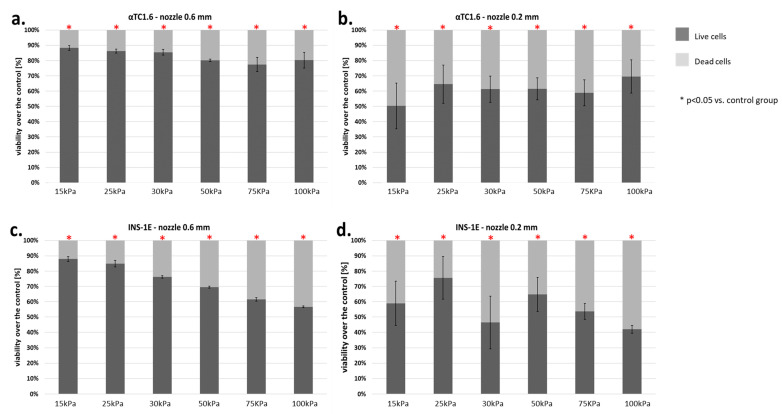
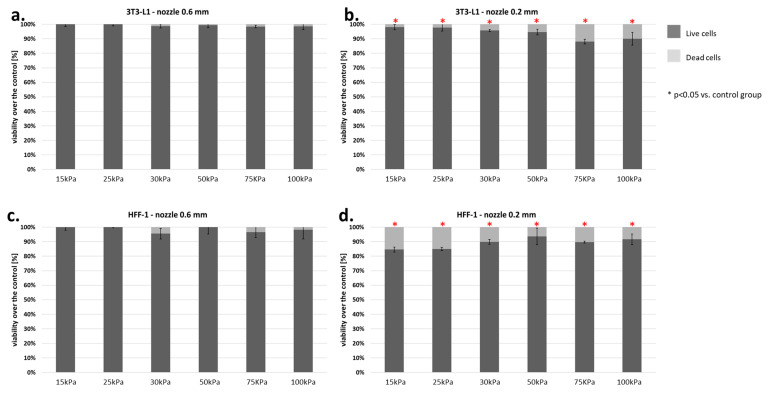
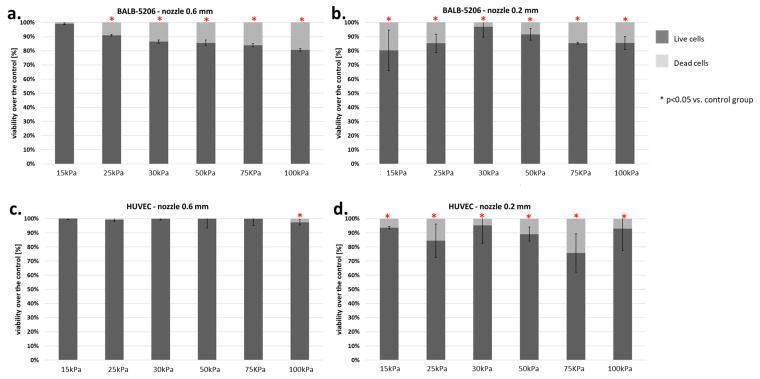
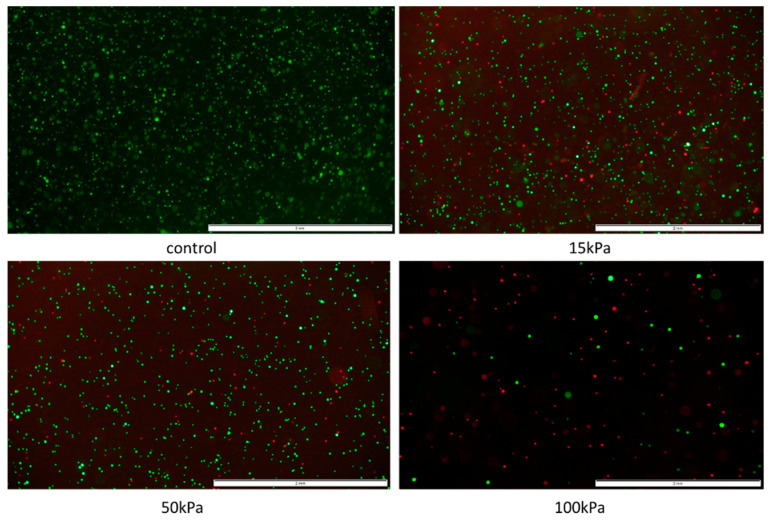
The BioX 3D printer (Cellink), 600 μm inner diameter nozzles, and 3% () alginate cell carrier solution were used with rat, porcine, and human pancreatic islets. Islets were divided into a control group (culture medium) and 6 experimental groups (each subjected to specific pressure between 15 and 100 kPa). FDA/PI staining was performed to assess the viability of islets. Analogous studies were carried out on α-cells, β-cells, fibroblasts, and endothelial cells.
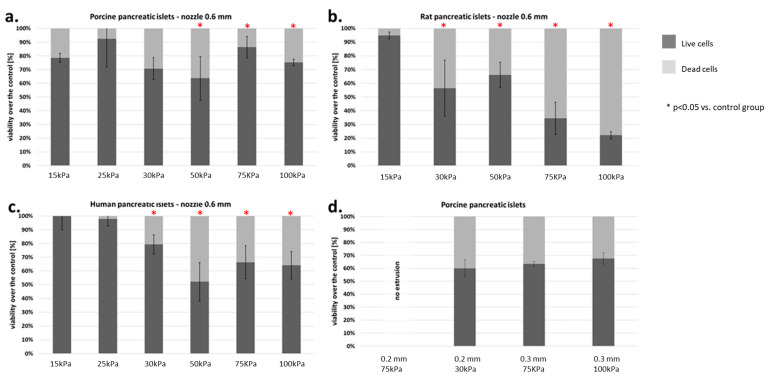
Viability of human pancreatic islets was as follows: 92% for alginate-based control and 94%, 90%, 74%, 48%, 61%, and 59% for 15, 25, 30, 50, 75, and 100 kPa, respectively. Statistically significant differences were observed between control and 50, 75, and 100 kPa, respectively. Similar observations were made for porcine and rat islets.
Optimal pressure during 3D bioprinting with pancreatic islets by the extrusion method should be lower than 30 kPa while using 3% () alginate as a carrier.
3D生物打印是构建功能性器官的未来发展方向。利用胰岛创建具有生物活性的支架面临诸多挑战。本文旨在评估3D生物打印过程如何影响胰岛的活力。
使用BioX 3D打印机(Cellink)、内径600μm的喷嘴以及3%()海藻酸盐细胞载体溶液,对大鼠、猪和人类的胰岛进行实验。胰岛被分为一个对照组(培养基)和6个实验组(每组承受15至100 kPa之间的特定压力)。采用FDA/PI染色法评估胰岛的活力。对α细胞、β细胞、成纤维细胞和内皮细胞进行了类似研究。
人类胰岛的活力如下:基于海藻酸盐的对照组为92%,15、25、30、50、75和100 kPa组分别为94%、90%、74%、48%、61%和59%。对照组与50、75和100 kPa组之间分别观察到具有统计学意义的差异。对猪和大鼠胰岛也有类似观察结果。
在使用3%()海藻酸盐作为载体通过挤压法进行3D生物打印胰岛时,最佳压力应低于30 kPa。