Department of Dermatology, University Medical Center Mainz, Langenbeckstraße 1, 55131 Mainz, Germany.
Miltenyi Biotec GmbH, Friedrich-Ebert-Strasse 68, 51429 Bergisch Gladbach, Germany.
Int J Mol Sci. 2021 Mar 11;22(6):2869. doi: 10.3390/ijms22062869.
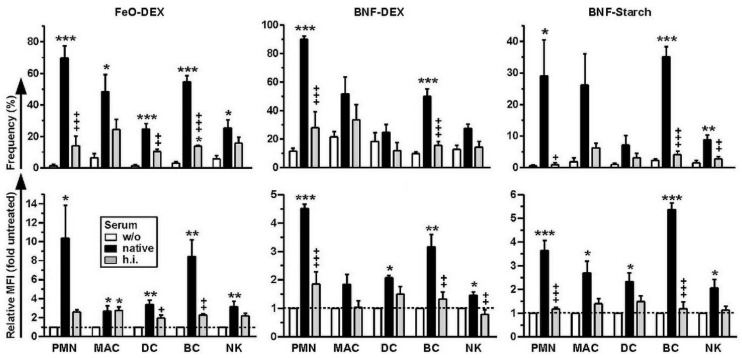
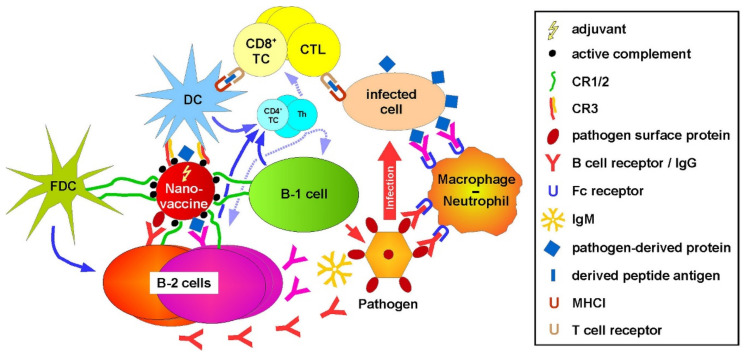
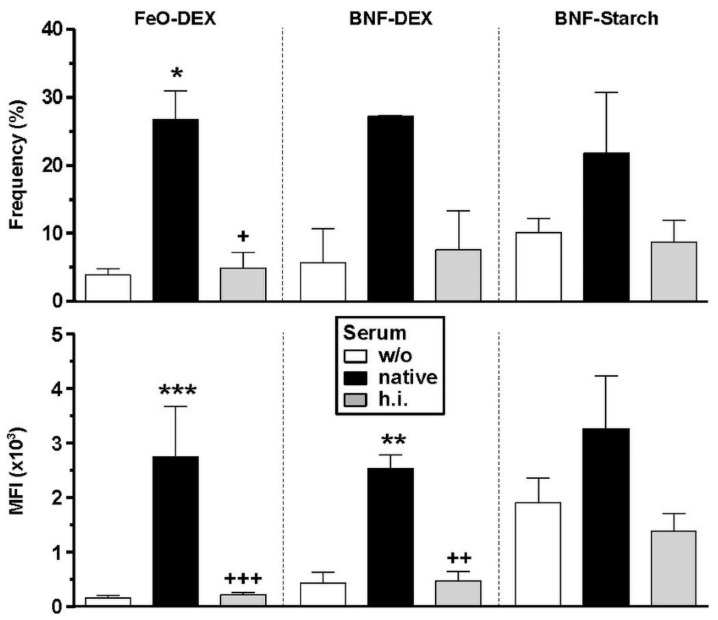
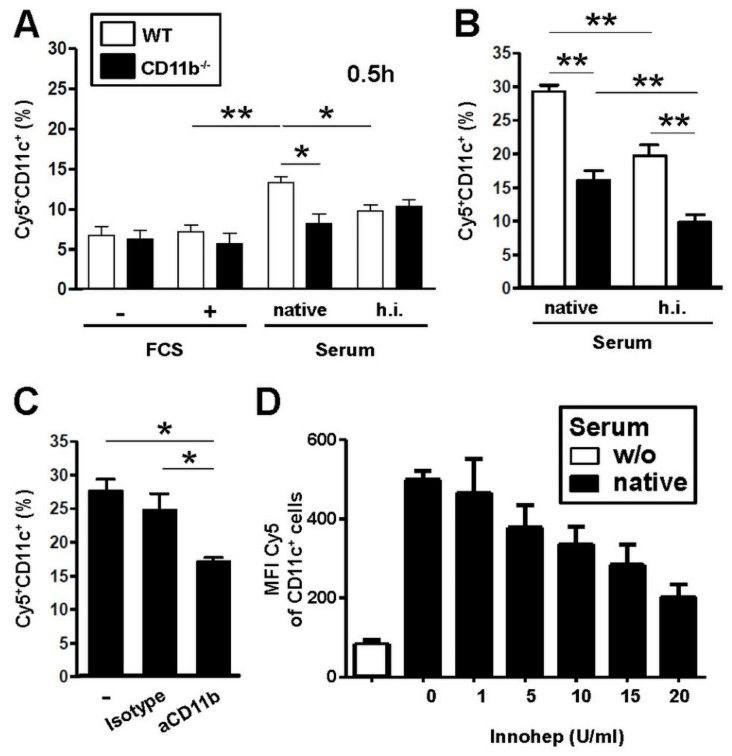
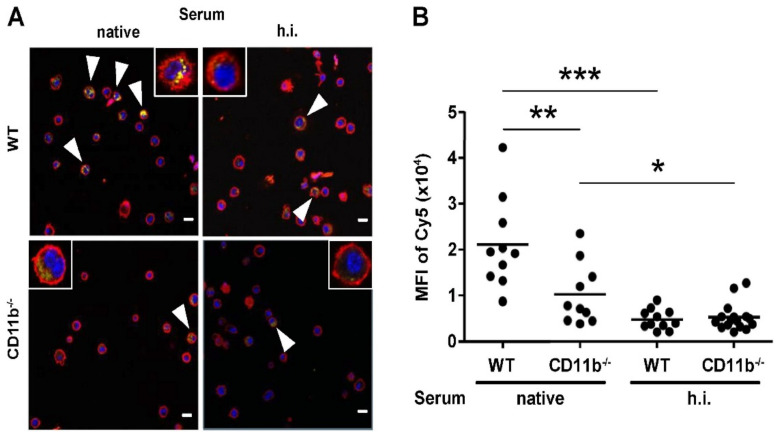
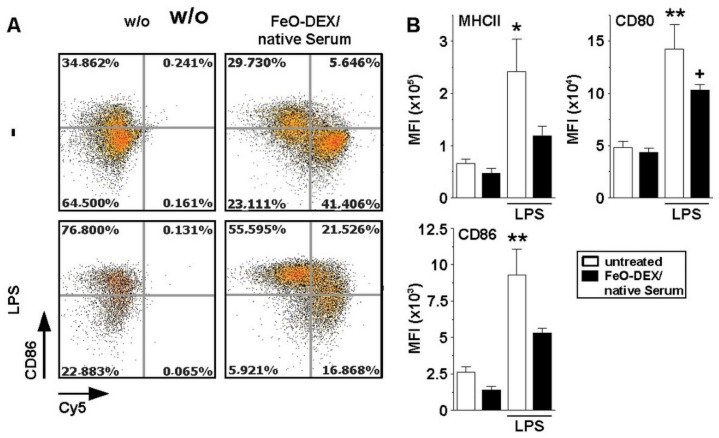
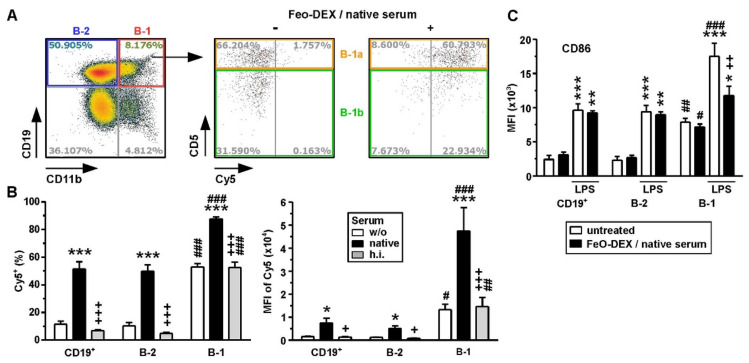
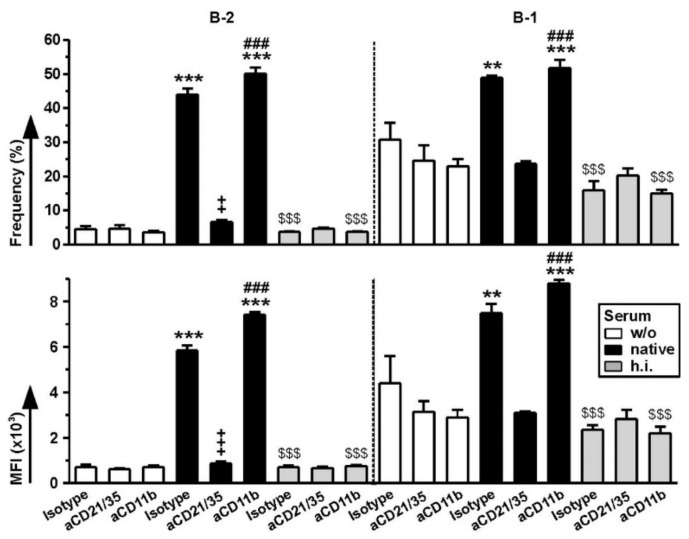
The development of nanocarriers (NC) for biomedical applications has gained large interest due to their potential to co-deliver drugs in a cell-type-targeting manner. However, depending on their surface characteristics, NC accumulate serum factors, termed protein corona, which may affect their cellular binding. We have previously shown that NC coated with carbohydrates to enable biocompatibility triggered the lectin-dependent complement pathway, resulting in enhanced binding to B cells via complement receptor (CR)1/2. Here we show that such NC also engaged all types of splenic leukocytes known to express CR3 at a high rate when NC were pre-incubated with native mouse serum resulting in complement opsonization. By focusing on dendritic cells (DC) as an important antigen-presenting cell type, we show that CR3 was essential for binding/uptake of complement-opsonized NC, whereas CR4, which in mouse is specifically expressed by DC, played no role. Further, a minor B cell subpopulation (B-1), which is important for first-line pathogen responses, and co-expressed CR1/2 and CR3, in general, engaged NC to a much higher extent than normal B cells. Here, we identified CR-1/2 as necessary for binding of complement-opsonized NC, whereas CR3 was dispensable. Interestingly, the binding of complement-opsonized NC to both DC and B-1 cells affected the expression of activation markers. Our findings may have important implications for the design of nano-vaccines against infectious diseases, which codeliver pathogen-specific protein antigen and adjuvant, aimed to induce a broad adaptive cellular and humoral immune response by inducing cytotoxic T lymphocytes that kill infected cells and pathogen-neutralizing antibodies, respectively. Decoration of nano-vaccines either with carbohydrates to trigger complement activation in vivo or with active complement may result in concomitant targeting of DC and B cells and thereby may strongly enhance the extent of dual cellular/humoral immune responses.
由于纳米载体(NC)具有以细胞类型靶向方式共递送药物的潜力,因此其在生物医学应用中的发展引起了广泛关注。然而,根据其表面特性,NC 会积聚血清因子,称为蛋白冠,这可能会影响它们与细胞的结合。我们之前已经表明,用碳水化合物涂覆 NC 以实现生物相容性会触发凝集素依赖性补体途径,从而通过补体受体(CR)1/2 增强与 B 细胞的结合。在这里,我们表明,当 NC 用天然小鼠血清预先孵育时,这种 NC 还会与已知高表达 CR3 的所有类型脾白细胞结合,从而导致补体调理。通过将树突状细胞(DC)作为一种重要的抗原呈递细胞类型进行重点研究,我们表明 CR3 对于结合/摄取补体调理的 NC 是必需的,而在小鼠中特异性表达的 CR4 则没有作用。此外,一种重要的一线病原体反应的 B 细胞亚群(B-1),以及共同表达 CR1/2 和 CR3,通常比正常 B 细胞更强烈地与 NC 结合。在这里,我们确定 CR-1/2 是结合补体调理 NC 的必要条件,而 CR3 则是可有可无的。有趣的是,补体调理的 NC 与 DC 和 B-1 细胞的结合会影响激活标志物的表达。我们的发现可能对设计针对传染病的纳米疫苗具有重要意义,纳米疫苗共递送病原体特异性蛋白抗原和佐剂,旨在通过诱导分别杀死感染细胞和中和病原体的细胞毒性 T 淋巴细胞和中和病原体的抗体,从而诱导广泛的适应性细胞和体液免疫反应。纳米疫苗的糖基化以在体内触发补体激活,或用活性补体进行修饰,可能会导致 DC 和 B 细胞的同时靶向,从而可能大大增强双重细胞/体液免疫反应的程度。