Xu E, Yang Hua, Ren Minmin, Wang Yuanxia, Xiao Mingfei, Tang Qingsong, Zhu Min, Xiao Yingping
Institute of Animal Nutrition and Feed Science, College of Animal Science, Guizhou University, Guiyang 550025, China.
State Key Laboratory for Managing Biotic and Chemical Threats to the Quality and Safety of Agro-Products, Institute of Agro-Product Safety and Nutrition, Zhejiang Academy of Agricultural Sciences, Hangzhou 310021, China.
Animals (Basel). 2021 Mar 8;11(3):730. doi: 10.3390/ani11030730.
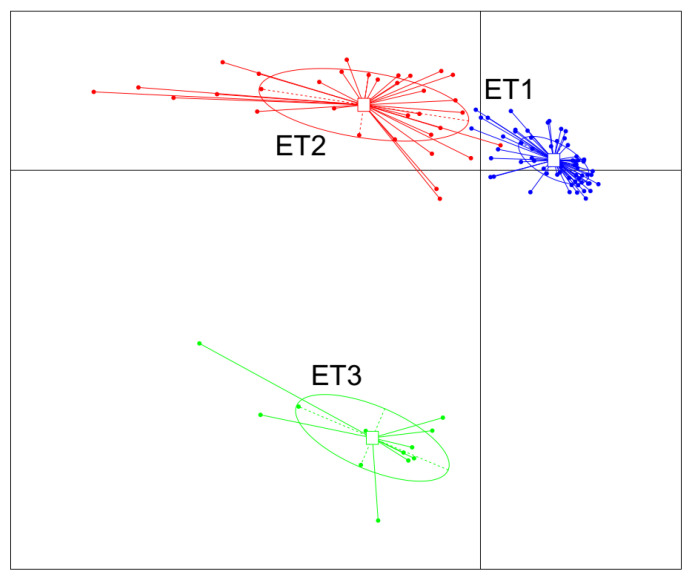
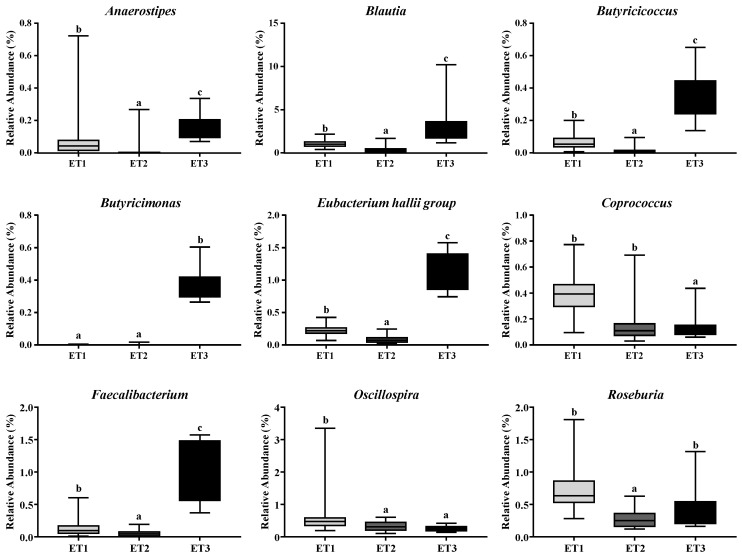
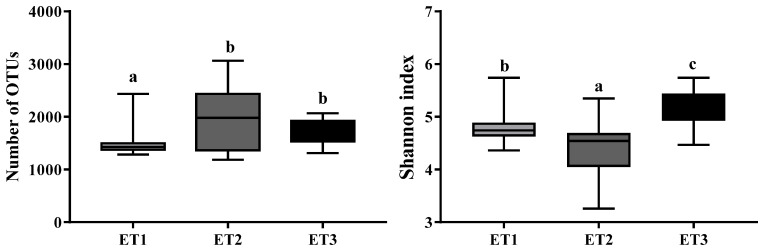
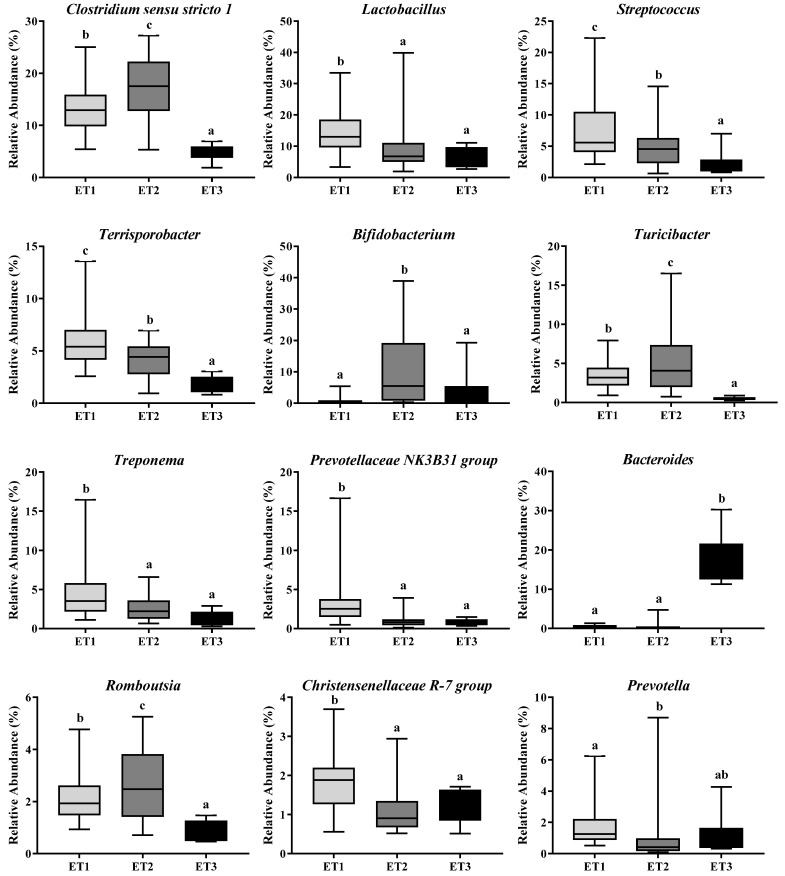
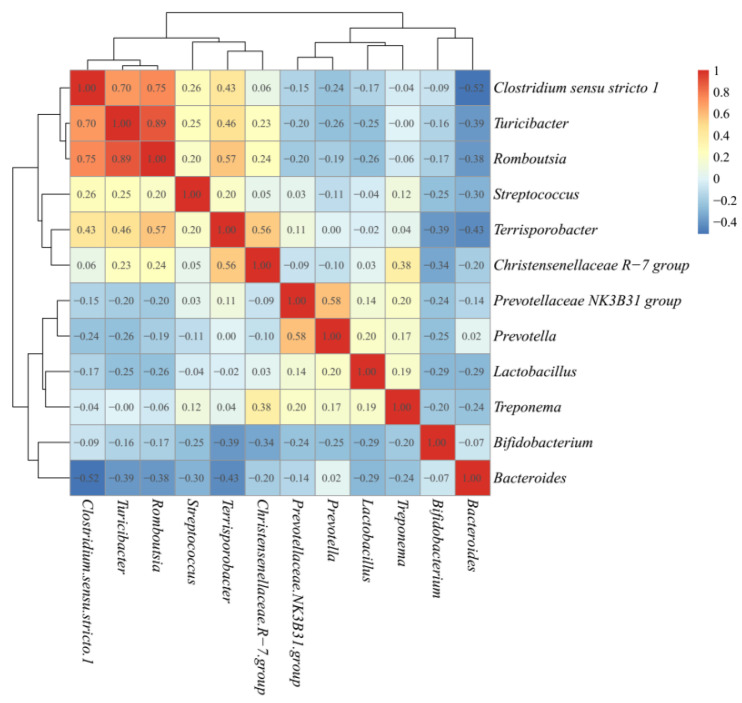
Gut microbiota is thought to play a crucial role in nutrient digestion for pigs, especially in processing indigestible polysaccharides in the diets to produce short-chain fatty acids (SCFAs). However, the link between microbiota community structure and phenotypic performances are poorly understood. In the present study, the fecal samples of 105 Jinhua pigs at 105 days of age were clustered into three enterotypes (ETs, ET1, ET2, and ET3) that are subpopulations of distinct bacterial community composition by using 16S rRNA high throughput sequencing. The α-diversity indices (the OTU number and Shannon index) were significantly different among the ETs ( < 0.001). At the genus level, the ET1 group was over-represented by (17.49%) and (11.78%), the ET2 group was over-represented by (17.49%) and (11.78%), and the ET3 group was over-represented by (18.17%). Significant differences in the fecal contents of butyrate were observed among ETs, with the highest level detected in ET3 and the lowest in ET2 ( < 0.05). Consistently, more copies of the terminal genes for butyrate synthesis, butyrate kinase (Buk) and butyryl coenzyme A (CoA): acetate CoA transferase (But) were detected by qPCR in the fecal samples of the ET3 group as compared to other two groups ( < 0.05). In addition, of the two genes, But was demonstrated to be more relevant to the butyrate content (R = 0.7464) than Buk (R = 0.4905) by correlation analysis. In addition, based on the taxonomic analysis, we found that was the most relevant butyrate-producing genera with fecal butyrate contents in Jinhua pigs, followed by , and all of which showed significantly higher richness in ET3 than as compared to ET1 and ET2 ( < 0.05). Collectively, this work presents a first overview of the enterotypes clustering in Jinhua pigs and will help to unravel the functional implications of ETs for the pig's phenotypic performance and nutrient metabolism.
肠道微生物群被认为在猪的营养消化中起着关键作用,特别是在处理日粮中难以消化的多糖以产生短链脂肪酸(SCFAs)方面。然而,微生物群落结构与表型性能之间的联系却知之甚少。在本研究中,通过16S rRNA高通量测序,将105头105日龄金华猪的粪便样本聚类为三种肠型(ETs,ET1、ET2和ET3),它们是具有不同细菌群落组成的亚群。ETs之间的α多样性指数(OTU数量和香农指数)存在显著差异(<0.001)。在属水平上,ET1组中[具体属名1](17.49%)和[具体属名2](11.78%)占比过高,ET2组中[具体属名3](17.49%)和[具体属名4](11.78%)占比过高,ET3组中[具体属名5](18.17%)占比过高。ETs之间的粪便丁酸盐含量存在显著差异,ET3中检测到的丁酸盐含量最高,ET2中最低(<0.05)。同样,与其他两组相比,通过qPCR在ET3组的粪便样本中检测到更多的丁酸盐合成末端基因丁酸盐激酶(Buk)和丁酰辅酶A(CoA):乙酸辅酶A转移酶(But)的拷贝数(<0.05)。此外,通过相关性分析表明,在这两个基因中,But与丁酸盐含量(R = 0.7464)的相关性比Buk(R = 0.4905)更高。此外,基于分类学分析,我们发现[具体属名6]是金华猪粪便丁酸盐含量最相关的丁酸盐产生属,其次是[具体属名7]、[具体属名8]和[具体属名9],所有这些属在ET3中的丰度均显著高于ET1和ET2(<0.05)。总的来说,这项工作首次概述了金华猪的肠型聚类情况,并将有助于揭示肠型对猪的表型性能和营养代谢的功能影响。