Ferreira Magda, Pinto Sandra N, Aires-da-Silva Frederico, Bettencourt Ana, Aguiar Sandra I, Gaspar Maria Manuela
Centre for Interdisciplinary Research in Animal Health (CIISA), Faculty of Veterinary Medicine, Universidade de Lisboa, 1300-477 Lisboa, Portugal.
Faculty of Pharmacy, Research Institute for Medicines (iMed.ULisboa), Universidade de Lisboa, 1649-003 Lisboa, Portugal.
Pharmaceutics. 2021 Mar 2;13(3):321. doi: 10.3390/pharmaceutics13030321.
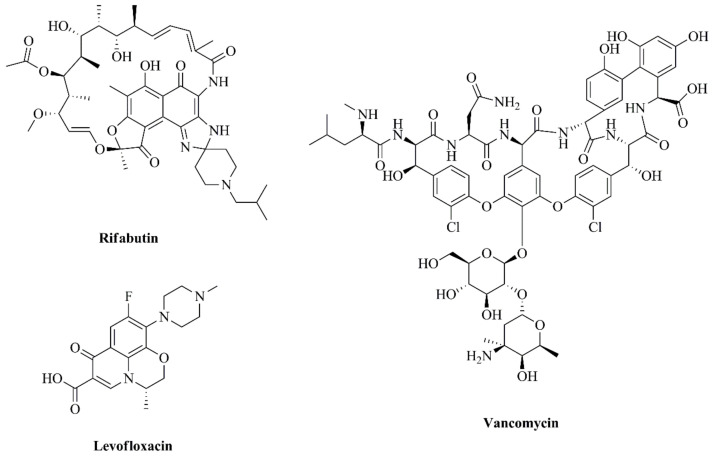
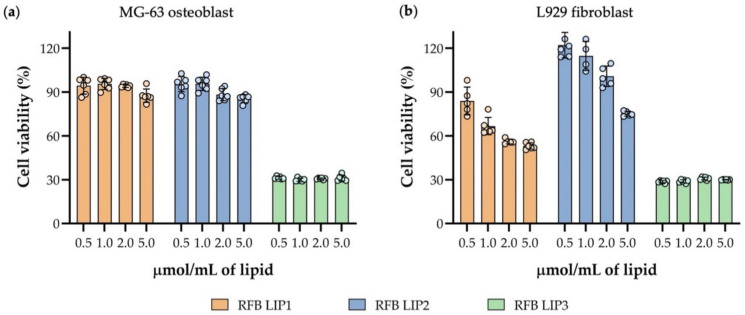
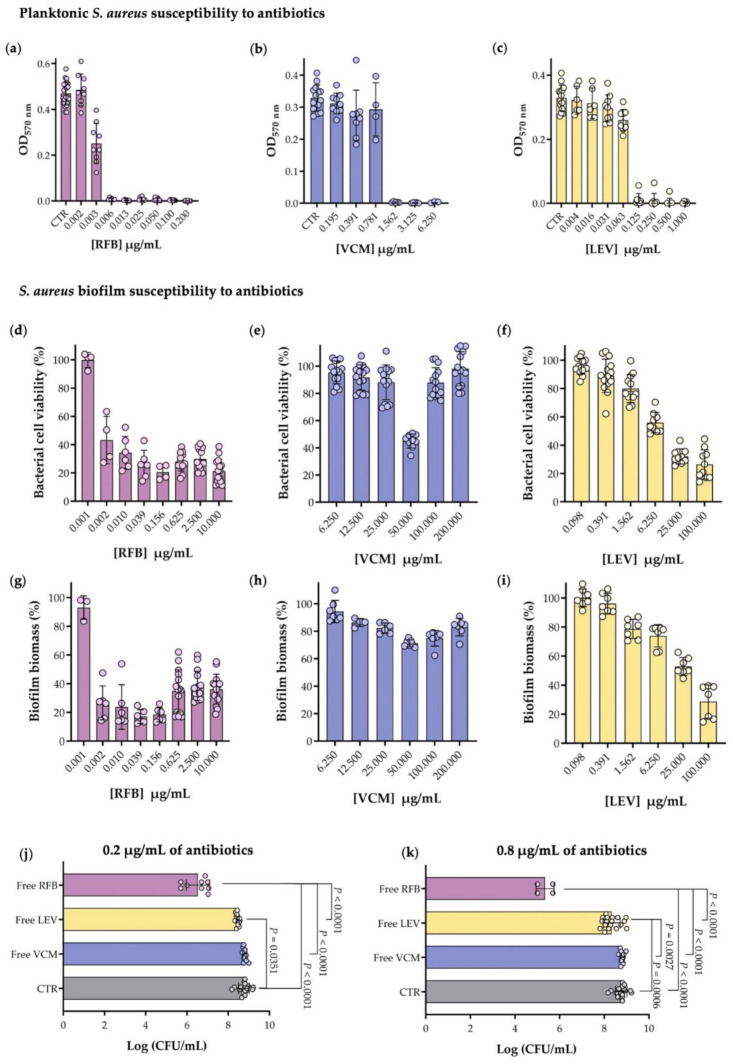
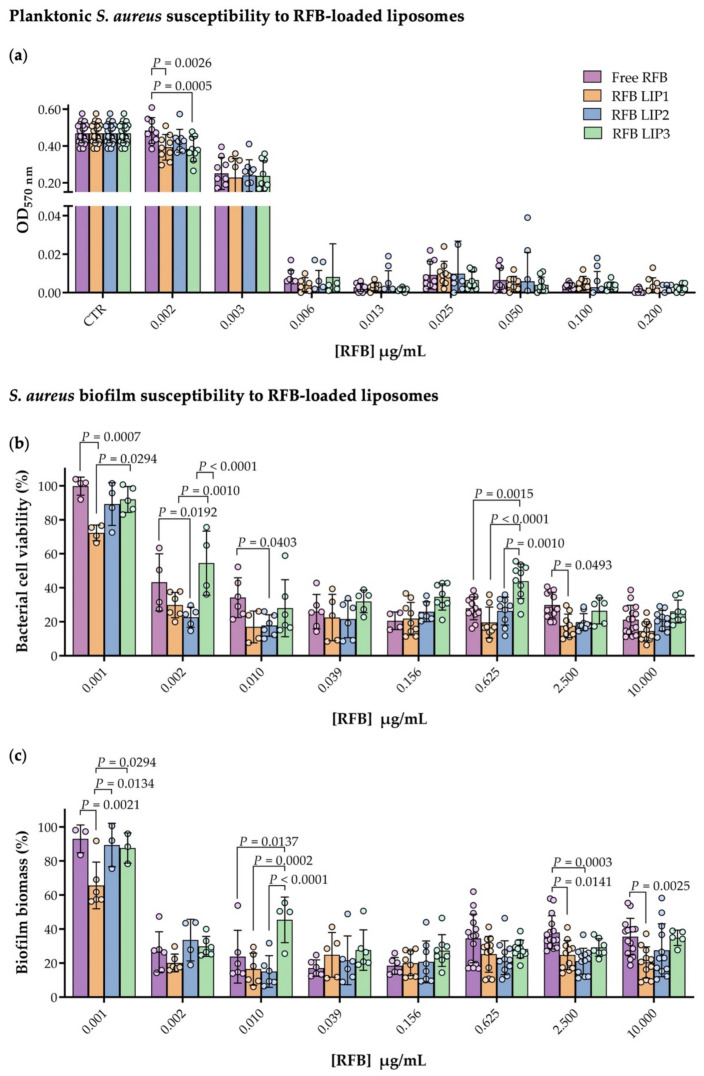
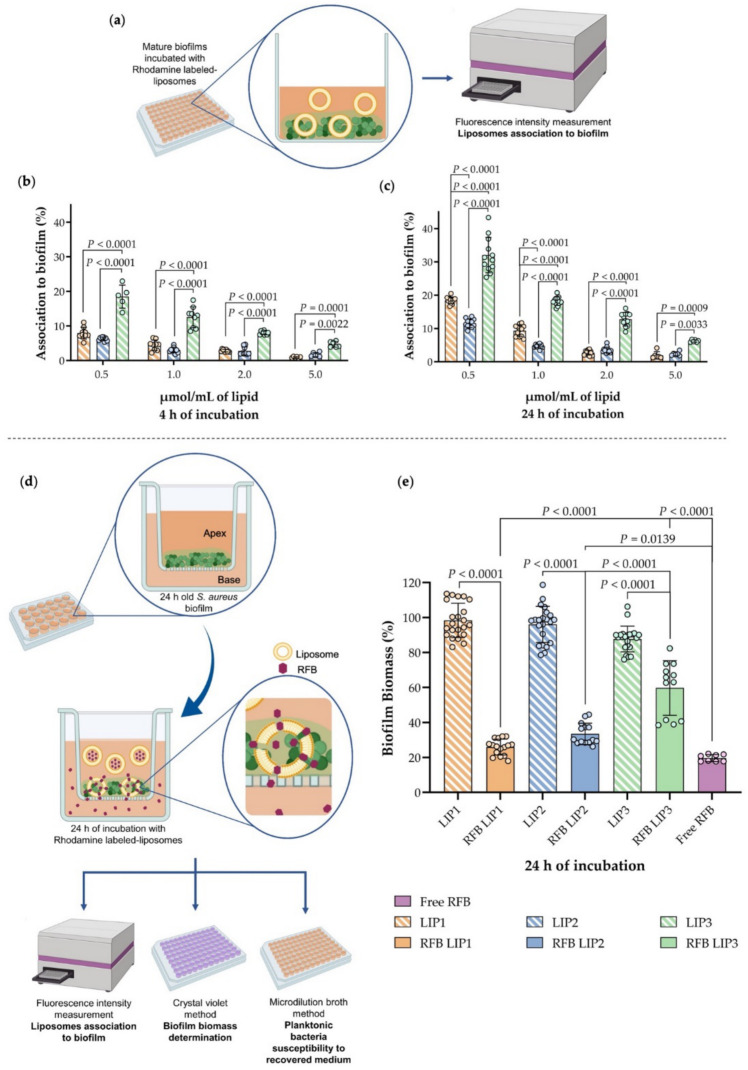
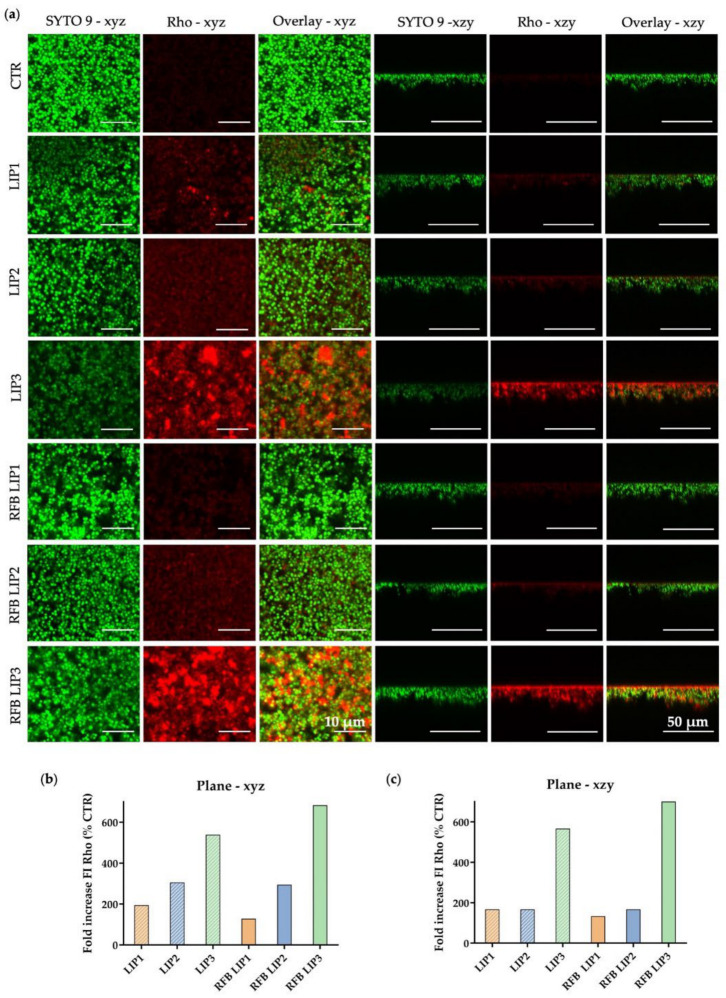
biofilm-associated infections are a major public health concern. Current therapies are hampered by reduced penetration of antibiotics through biofilm and low accumulation levels at infected sites, requiring prolonged usage. To overcome these, repurposing antibiotics in combination with nanotechnological platforms is one of the most appealing fast-track and cost-effective approaches. In the present work, we assessed the potential therapeutic benefit of three antibiotics, vancomycin, levofloxacin and rifabutin (RFB), through their incorporation in liposomes. Free RFB displayed the utmost antibacterial effect with MIC and MBIC below 0.006 µg/mL towards a methicillin susceptible (MSSA). RFB was selected for further in vitro studies and the influence of different lipid compositions on bacterial biofilm interactions was evaluated. Although positively charged RFB liposomes displayed the highest interaction with MSSA biofilms, RFB incorporated in negatively charged liposomes displayed lower MBIC values in comparison to the antibiotic in the free form. Preliminary safety assessment on all RFB formulations towards osteoblast and fibroblast cell lines demonstrated that a reduction on cell viability was only observed for the positively charged liposomes. Overall, negatively charged RFB liposomes are a promising approach against biofilm infections and further in vivo studies should be performed.
生物膜相关感染是一个重大的公共卫生问题。目前的治疗方法受到抗生素穿透生物膜能力降低以及感染部位积累水平低的阻碍,需要延长使用时间。为了克服这些问题,将抗生素与纳米技术平台结合进行重新利用是最具吸引力的快速且经济有效的方法之一。在本研究中,我们通过将三种抗生素万古霉素、左氧氟沙星和利福布汀(RFB)包封在脂质体中来评估它们潜在的治疗益处。游离的RFB对甲氧西林敏感金黄色葡萄球菌(MSSA)显示出最大的抗菌效果,其最低抑菌浓度(MIC)和最低生物膜抑制浓度(MBIC)低于0.006μg/mL。选择RFB进行进一步的体外研究,并评估了不同脂质组成对细菌生物膜相互作用的影响。尽管带正电荷的RFB脂质体与MSSA生物膜的相互作用最强,但与游离形式的抗生素相比,包封在带负电荷脂质体中的RFB显示出更低的MBIC值。对所有RFB制剂对成骨细胞和成纤维细胞系的初步安全性评估表明,仅观察到带正电荷脂质体的细胞活力有所降低。总体而言,带负电荷的RFB脂质体是对抗生物膜感染的一种有前景的方法,应进行进一步的体内研究。