Grupo de Investigación en Polifenoles (GIP-USAL), Unidad de Nutrición y Bromatología, Facultad de Farmacia, Campus Miguel de Unamuno, Universidad de Salamanca, 37007 Salamanca, Spain.
Unidad de Excelencia. Producción, Agrícola y Medioambiente (AGRIENVIRONMENT), Parque Científico, Universidad de Salamanca, 37185 Salamanca, Spain.
Molecules. 2021 Mar 10;26(6):1517. doi: 10.3390/molecules26061517.
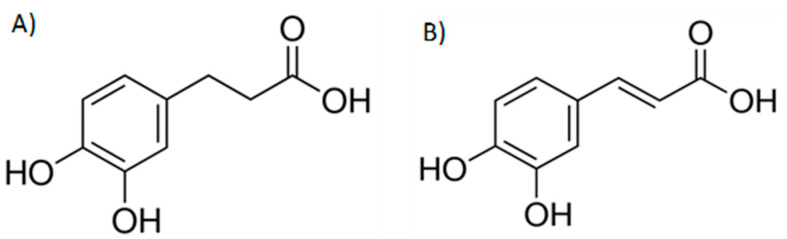
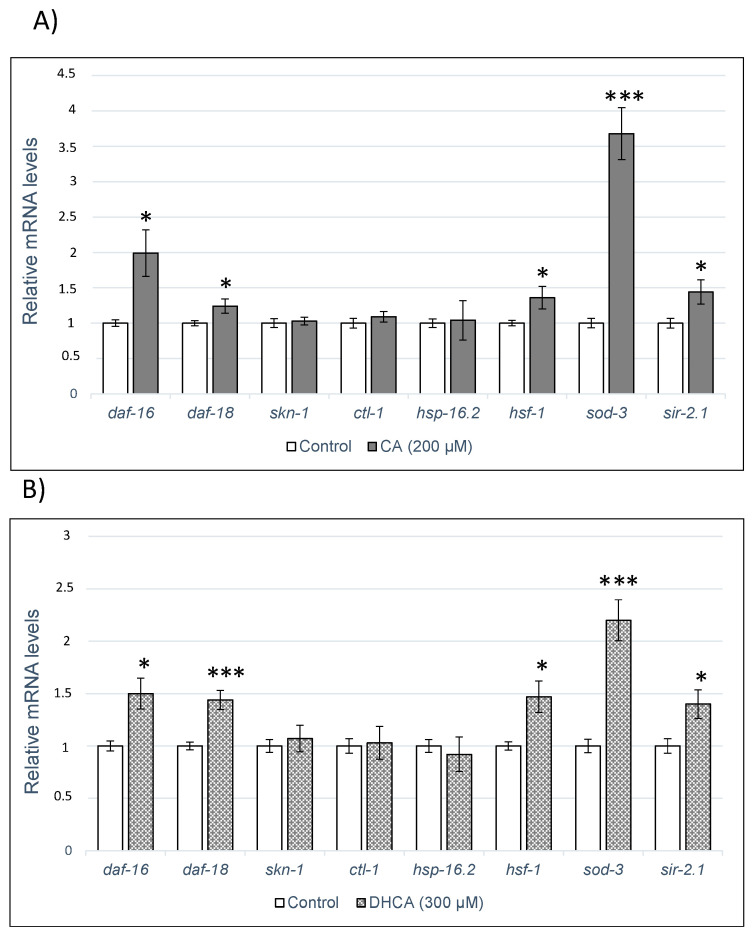
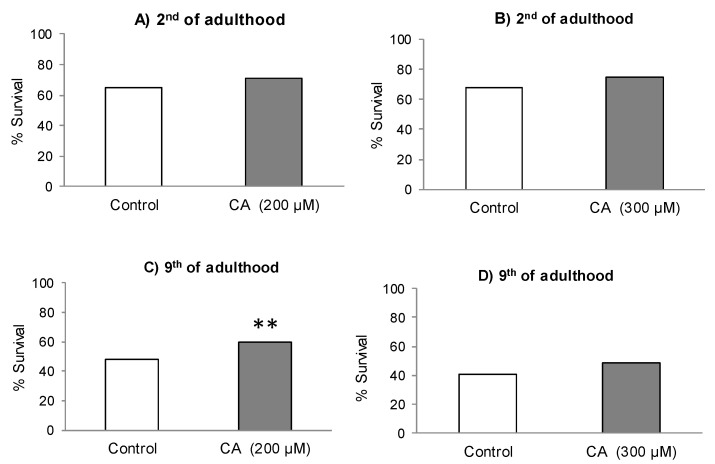
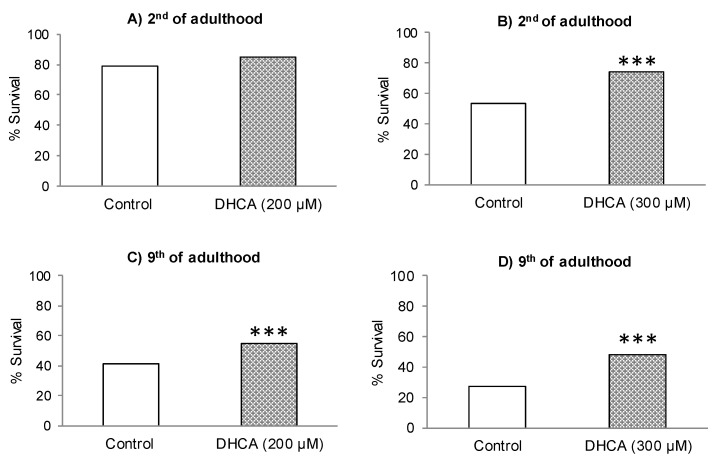
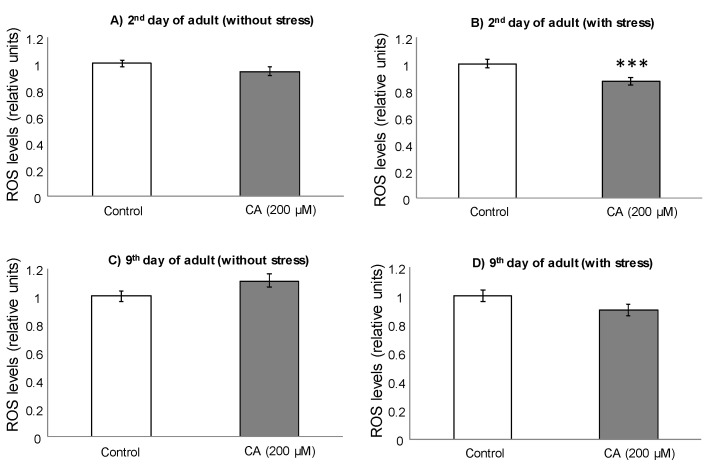
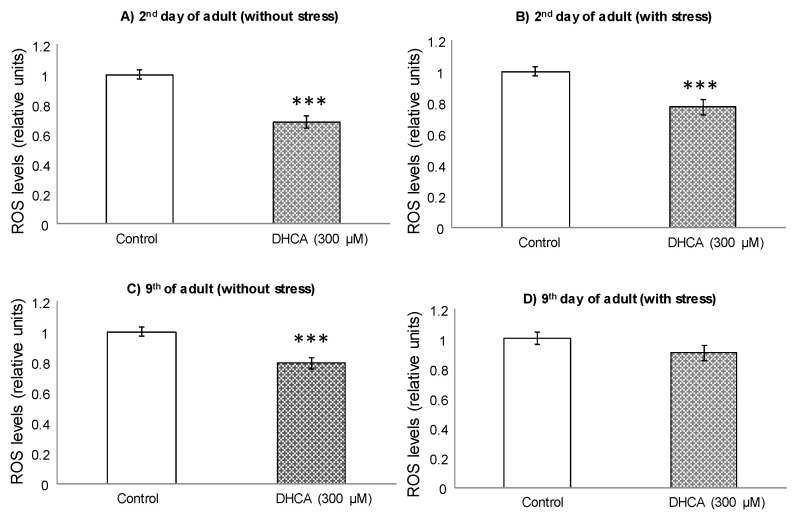
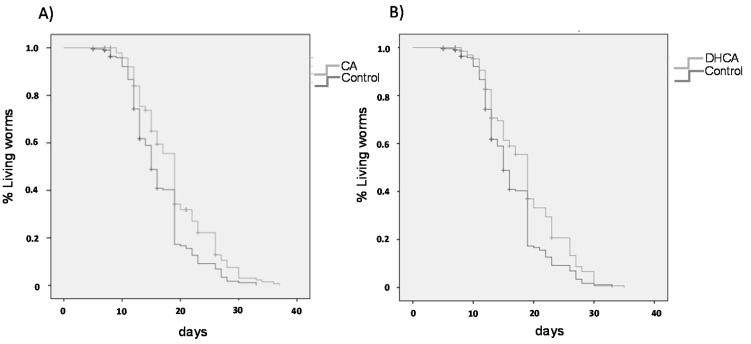
Caffeic and dihydrocaffeic acid are relevant microbial catabolites, being described as products from the degradation of different phenolic compounds i.e., hydroxycinnamoyl derivatives, anthocyanins or flavonols. Furthermore, caffeic acid is found both in free and esterified forms in many fruits and in high concentrations in coffee. These phenolic acids may be responsible for a part of the bioactivity associated with the intake of phenolic compounds. With the aim of progressing in the knowledge of the health effects and mechanisms of action of dietary phenolics, the model nematode has been used to evaluate the influence of caffeic and dihydrocaffeic acids on lifespan and the oxidative stress resistance. The involvement of different genes and transcription factors related to longevity and stress resistance in the response to these phenolic acids has also been explored. Caffeic acid (CA, 200 μM) and dihydrocaffeic acid (DHCA, 300 μM) induced an increase in the survival rate of under thermal stress. Both compounds also increased the mean and maximum lifespan of the nematode, compared to untreated worms. In general, treatment with these acids led to a reduction in intracellular ROS concentrations, although not always significant. Results of gene expression studies conducted by RT-qPCR showed that the favorable effects of CA and DHCA on oxidative stress and longevity involve the activation of several genes related to insulin/IGF-1 pathway, such as , and , as well as a sirtuin gene ().
咖啡酸和二咖啡酸是相关的微生物代谢产物,被描述为降解不同酚类化合物,即羟基肉桂酰衍生物、花青素或类黄酮的产物。此外,咖啡酸以游离和酯化形式存在于许多水果中,并在咖啡中含量很高。这些酚酸可能是与摄入酚类化合物相关的部分生物活性的原因。为了深入了解膳食酚类化合物的健康影响和作用机制,使用模式线虫来评估咖啡酸和二咖啡酸对寿命和抗氧化应激抗性的影响。还探索了这些酚酸对不同与长寿和应激抗性相关的基因和转录因子的影响。咖啡酸(CA,200 μM)和二咖啡酸(DHCA,300 μM)在热应激下诱导线虫存活率增加。与未处理的线虫相比,这两种化合物还增加了线虫的平均寿命和最大寿命。一般来说,这些酸的处理导致细胞内 ROS 浓度降低,尽管并不总是显著。通过 RT-qPCR 进行的基因表达研究结果表明,CA 和 DHCA 对氧化应激和长寿的有利影响涉及几种与胰岛素/IGF-1 途径相关的基因的激活,如 、 和 ,以及一个沉默信息调节因子基因()。