De Lellis Laura, Florio Rosalba, Di Bella Maria Cristina, Brocco Davide, Guidotti Francesca, Tinari Nicola, Grassadonia Antonino, Lattanzio Rossano, Cama Alessandro, Veschi Serena
Department of Pharmacy, "G. d'Annunzio" University of Chieti-Pescara, 66100 Chieti, Italy.
Department of Medical, Oral and Biotechnological Sciences, University "G. d'Annunzio", Chieti-Pescara, 66100 Chieti, Italy.
Biomedicines. 2021 Mar 9;9(3):275. doi: 10.3390/biomedicines9030275.
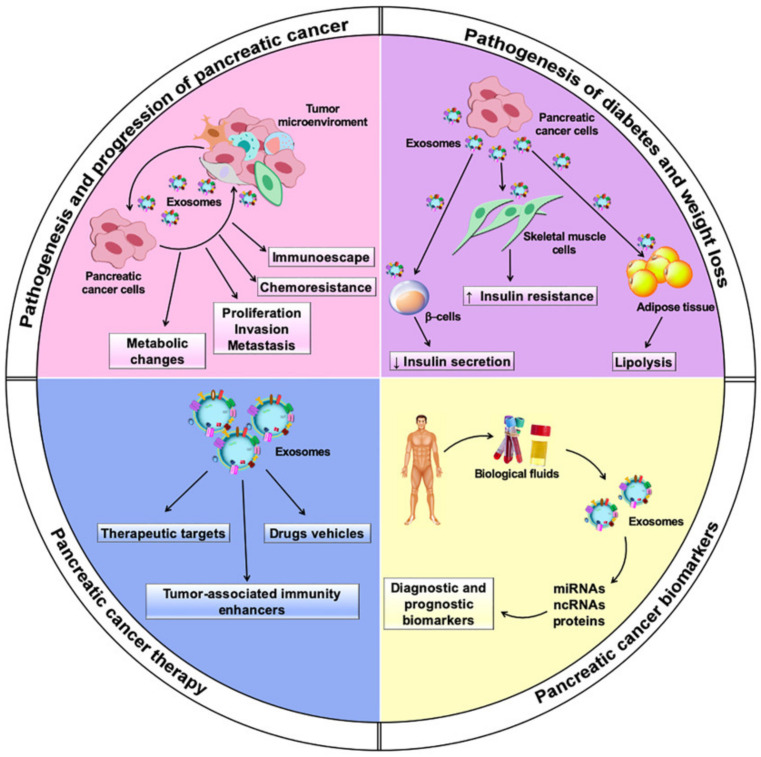
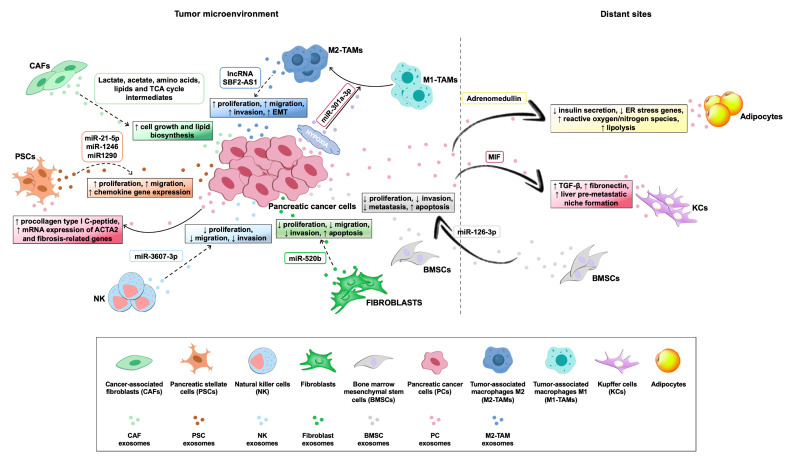
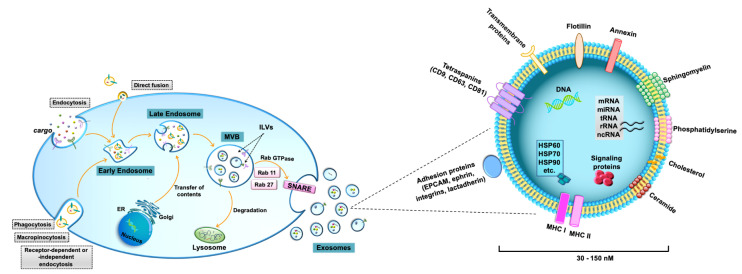
Pancreatic cancer (PC) incidence is rising and due to late diagnosis, combined with unsatisfactory response to current therapeutic approaches, this tumor has an extremely high mortality rate. A better understanding of the mechanisms underlying pancreatic carcinogenesis is of paramount importance for rational diagnostic and therapeutic approaches. Multiple lines of evidence have showed that exosomes are actively involved in intercellular communication by transferring their cargos of bioactive molecules to recipient cells within the tumor microenvironment and systemically. Intriguingly, exosomes may exert both protumor and antitumor effects, supporting or hampering processes that play a role in the pathogenesis and progression of PC, including shifts in tumor metabolism, proliferation, invasion, metastasis, and chemoresistance. They also have a dual role in PC immunomodulation, exerting immunosuppressive or immune enhancement effects through several mechanisms. PC-derived exosomes also induce systemic metabolic alterations, leading to the onset of diabetes and weight loss. Moreover, exosomes have been described as promising diagnostic and prognostic biomarkers for PC. Their potential application in PC therapy as drug carriers and therapeutic targets is under investigation. In this review, we provide an overview of the multiple roles played by exosomes in PC biology through their specific cargo biomolecules and of their potential exploitation in early diagnosis and treatment of PC.
胰腺癌(PC)的发病率正在上升,由于诊断较晚,再加上对当前治疗方法的反应不尽人意,这种肿瘤的死亡率极高。更好地了解胰腺癌发生的潜在机制对于合理的诊断和治疗方法至关重要。多条证据表明,外泌体通过将其生物活性分子货物转移到肿瘤微环境内和全身的受体细胞,积极参与细胞间通讯。有趣的是,外泌体可能发挥促肿瘤和抗肿瘤作用,支持或阻碍在胰腺癌的发病机制和进展中起作用的过程,包括肿瘤代谢、增殖、侵袭、转移和化疗耐药性的改变。它们在胰腺癌免疫调节中也具有双重作用,通过多种机制发挥免疫抑制或免疫增强作用。源自胰腺癌的外泌体还会引起全身代谢改变,导致糖尿病和体重减轻。此外,外泌体已被描述为胰腺癌有前景的诊断和预后生物标志物。它们作为药物载体和治疗靶点在胰腺癌治疗中的潜在应用正在研究中。在这篇综述中,我们概述了外泌体通过其特定的货物生物分子在胰腺癌生物学中发挥的多种作用,以及它们在胰腺癌早期诊断和治疗中的潜在应用。