Scott Simon M, Ali Zulfiqur
Healthcare Innovation Centre, School of Health and Life Sciences, Teesside University, Middlesbrough, Tees Valley TS1 3BX, UK.
Micromachines (Basel). 2021 Mar 18;12(3):319. doi: 10.3390/mi12030319.
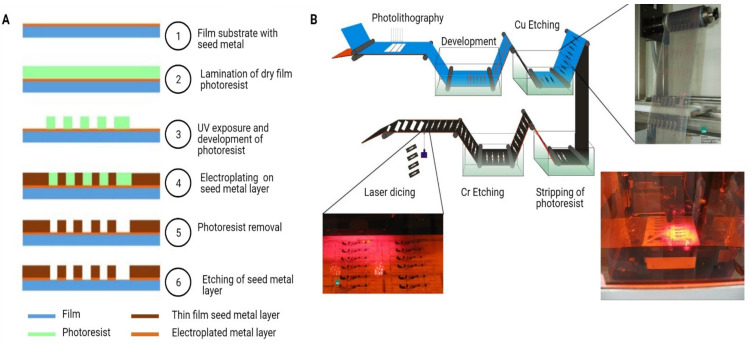
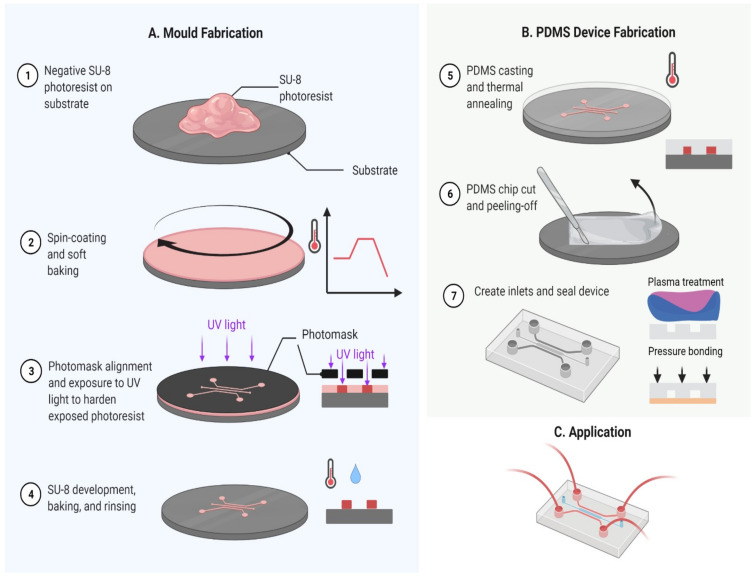
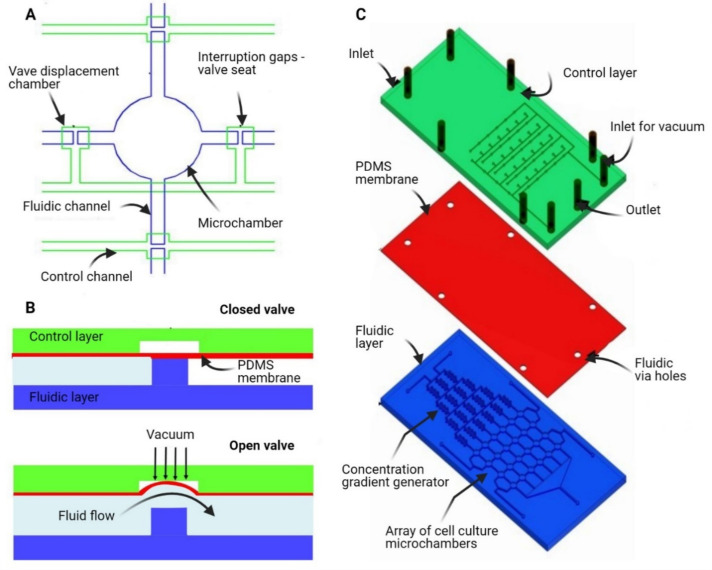
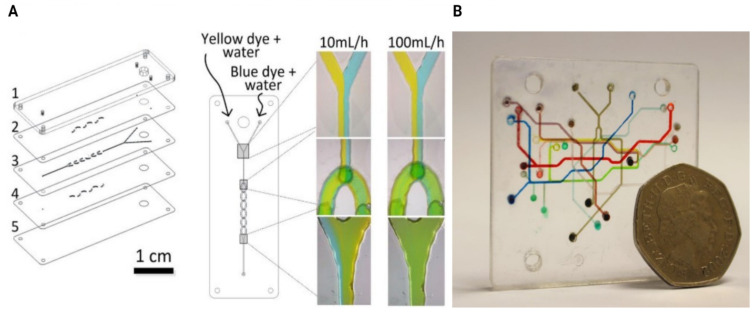
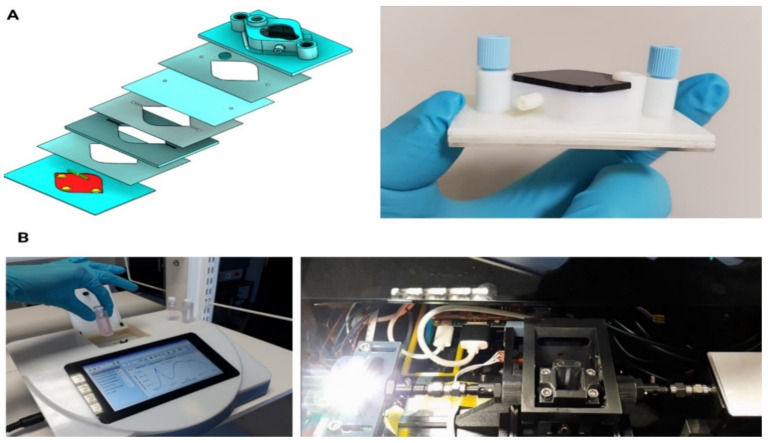
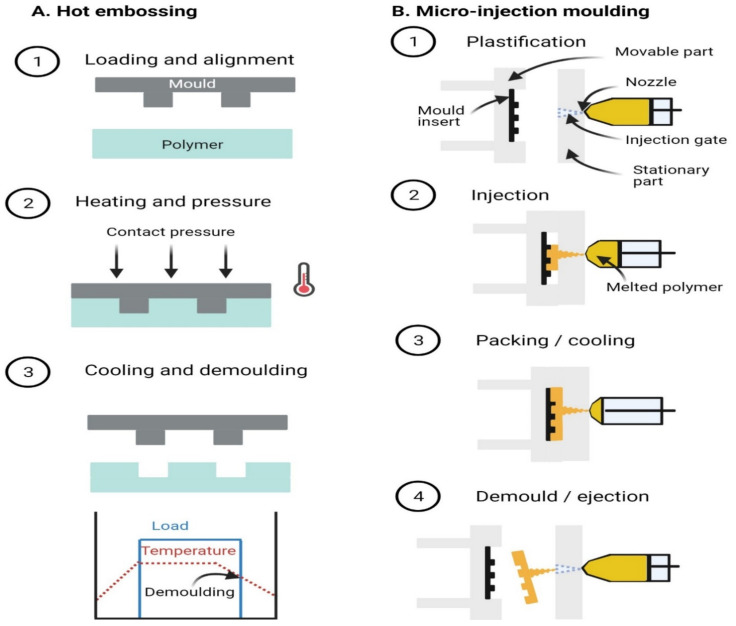
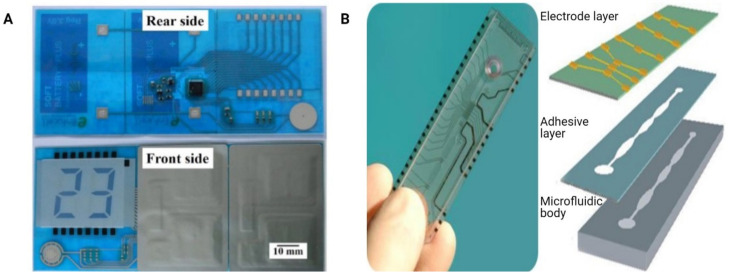
Microfluidic devices offer the potential to automate a wide variety of chemical and biological operations that are applicable for diagnostic and therapeutic operations with higher efficiency as well as higher repeatability and reproducibility. Polymer based microfluidic devices offer particular advantages including those of cost and biocompatibility. Here, we describe direct and replication approaches for manufacturing of polymer microfluidic devices. Replications approaches require fabrication of mould or master and we describe different methods of mould manufacture, including mechanical (micro-cutting; ultrasonic machining), energy-assisted methods (electrodischarge machining, micro-electrochemical machining, laser ablation, electron beam machining, focused ion beam (FIB) machining), traditional micro-electromechanical systems (MEMS) processes, as well as mould fabrication approaches for curved surfaces. The approaches for microfluidic device fabrications are described in terms of low volume production (casting, lamination, laser ablation, 3D printing) and high-volume production (hot embossing, injection moulding, and film or sheet operations).
微流控设备有潜力使各种化学和生物操作自动化,这些操作适用于诊断和治疗操作,具有更高的效率以及更高的重复性和再现性。基于聚合物的微流控设备具有特殊优势,包括成本和生物相容性方面的优势。在此,我们描述了聚合物微流控设备制造的直接法和复制法。复制法需要制造模具或母模,我们描述了不同的模具制造方法,包括机械法(微切割;超声加工)、能量辅助法(放电加工、微电化学加工、激光烧蚀、电子束加工、聚焦离子束(FIB)加工)、传统微机电系统(MEMS)工艺,以及曲面模具制造方法。微流控设备制造方法根据小批量生产(铸造、层压、激光烧蚀、3D打印)和大批量生产(热压印、注塑成型以及薄膜或片材操作)进行描述。