• 文献检索
  • 文档翻译
  • 深度研究
  • 学术资讯
  • Suppr Zotero 插件Zotero 插件
  • 邀请有礼
  • 套餐&价格
  • 历史记录
应用&插件
Suppr Zotero 插件Zotero 插件浏览器插件Mac 客户端Windows 客户端微信小程序
定价
高级版会员购买积分包购买API积分包
服务
文献检索文档翻译深度研究API 文档MCP 服务
关于我们
关于 Suppr公司介绍联系我们用户协议隐私条款
关注我们

Suppr 超能文献

核心技术专利:CN118964589B侵权必究
粤ICP备2023148730 号-1Suppr @ 2026

文献检索

告别复杂PubMed语法,用中文像聊天一样搜索,搜遍4000万医学文献。AI智能推荐,让科研检索更轻松。

立即免费搜索

文件翻译

保留排版,准确专业,支持PDF/Word/PPT等文件格式,支持 12+语言互译。

免费翻译文档

深度研究

AI帮你快速写综述,25分钟生成高质量综述,智能提取关键信息,辅助科研写作。

立即免费体验

基于深度卷积神经网络的 EEG 情绪识别中窗口大小和通道排列的比较研究。

A Comparative Study of Window Size and Channel Arrangement on EEG-Emotion Recognition Using Deep CNN.

机构信息

Department of Computer Science and Engineering, University of California San Diego, La Jolla, CA 92093-0404, USA.

Department of Computer Engineering, Chulalongkorn University, Pathum Wan, Bangkok 10330, Thailand.

出版信息

Sensors (Basel). 2021 Mar 1;21(5):1678. doi: 10.3390/s21051678.

DOI:10.3390/s21051678
PMID:33804366
原文链接:https://pmc.ncbi.nlm.nih.gov/articles/PMC7957771/
Abstract

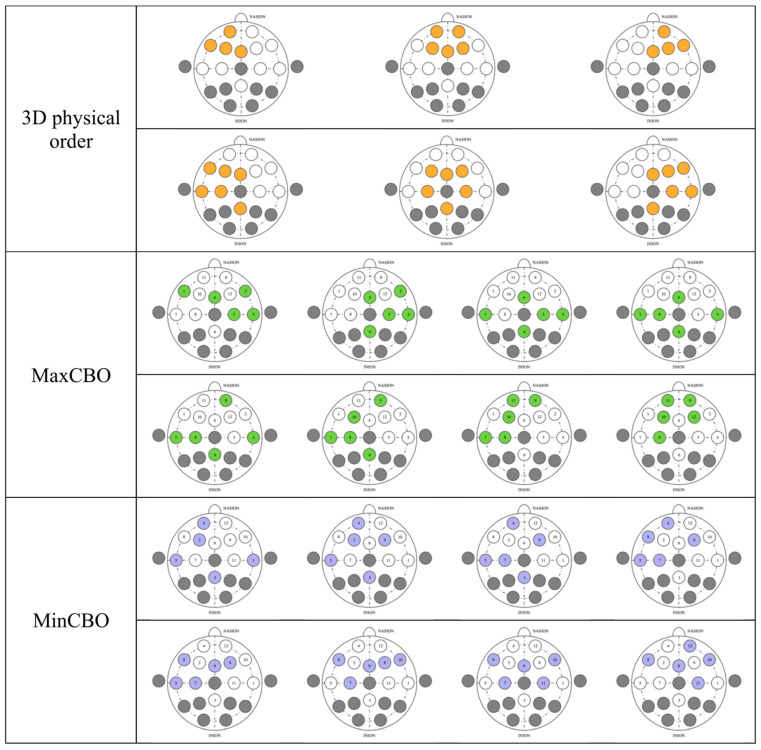
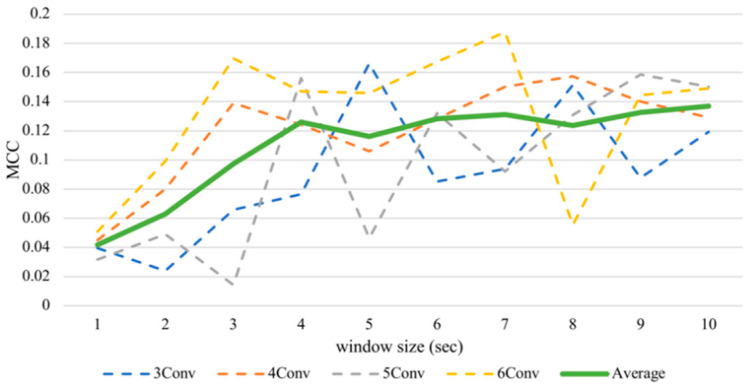
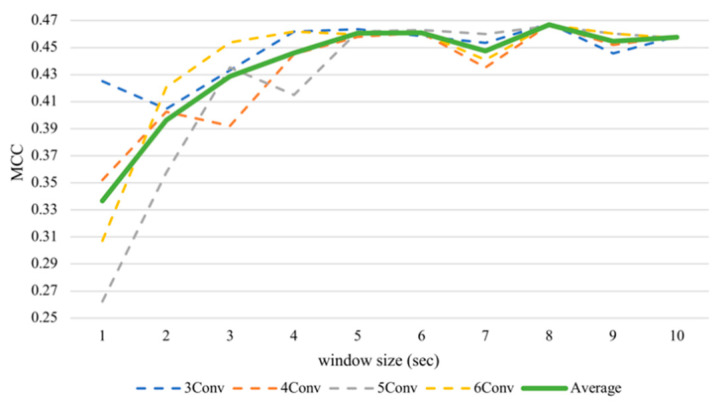
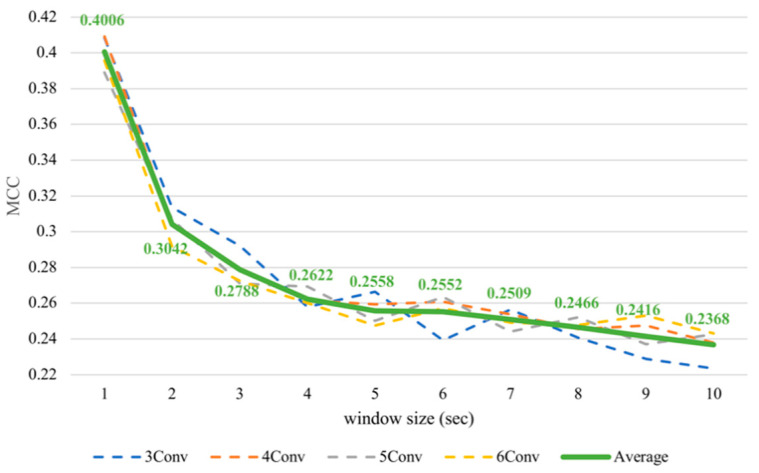
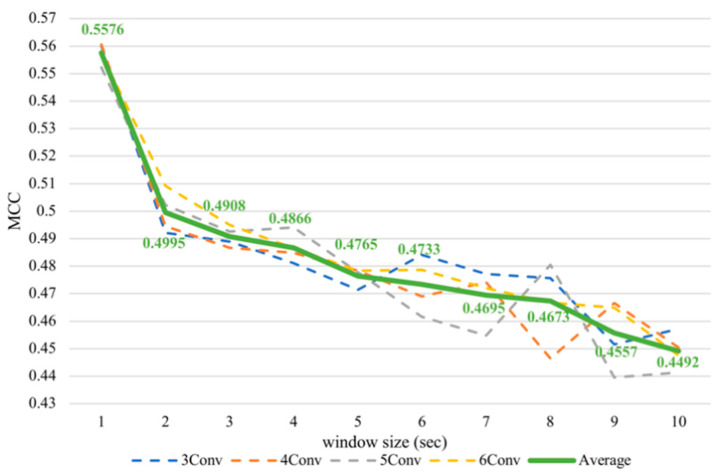
Emotion recognition based on electroencephalograms has become an active research area. Yet, identifying emotions using only brainwaves is still very challenging, especially the subject-independent task. Numerous studies have tried to propose methods to recognize emotions, including machine learning techniques like convolutional neural network (CNN). Since CNN has shown its potential in generalization to unseen subjects, manipulating CNN hyperparameters like the window size and electrode order might be beneficial. To our knowledge, this is the first work that extensively observed the parameter selection effect on the CNN. The temporal information in distinct window sizes was found to significantly affect the recognition performance, and CNN was found to be more responsive to changing window sizes than the support vector machine. Classifying the arousal achieved the best performance with a window size of ten seconds, obtaining 56.85% accuracy and a Matthews correlation coefficient (MCC) of 0.1369. Valence recognition had the best performance with a window length of eight seconds at 73.34% accuracy and an MCC value of 0.4669. Spatial information from varying the electrode orders had a small effect on the classification. Overall, valence results had a much more superior performance than arousal results, which were, perhaps, influenced by features related to brain activity asymmetry between the left and right hemispheres.

摘要

基于脑电图的情绪识别已经成为一个活跃的研究领域。然而,仅通过脑波来识别情绪仍然非常具有挑战性,尤其是在独立于主体的任务中。许多研究都试图提出识别情绪的方法,包括卷积神经网络 (CNN) 等机器学习技术。由于 CNN 已经显示出在不熟悉的主体上进行泛化的潜力,因此操纵 CNN 超参数,如窗口大小和电极顺序,可能会有所帮助。据我们所知,这是第一个广泛观察 CNN 参数选择对情绪识别影响的工作。不同窗口大小的时间信息被发现对识别性能有显著影响,并且 CNN 对窗口大小的变化比支持向量机更敏感。使用十秒的窗口大小对唤醒进行分类可获得最佳性能,准确率为 56.85%,马修斯相关系数 (MCC) 值为 0.1369。使用八秒的窗口长度对效价进行分类可获得最佳性能,准确率为 73.34%,MCC 值为 0.4669。改变电极顺序的空间信息对分类的影响很小。总的来说,效价的结果比唤醒的结果要好得多,这可能是由于左右半球脑活动不对称的特征的影响。
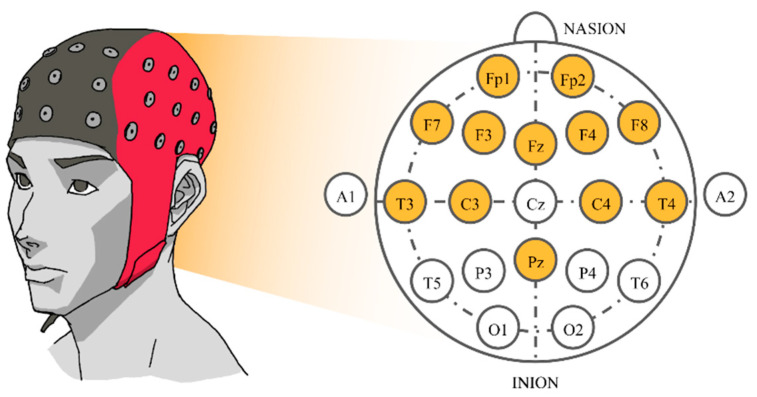
https://cdn.ncbi.nlm.nih.gov/pmc/blobs/03e4/7957771/306d382eaa7e/sensors-21-01678-g009.jpg
https://cdn.ncbi.nlm.nih.gov/pmc/blobs/03e4/7957771/b8ae097cebc3/sensors-21-01678-g001.jpg
https://cdn.ncbi.nlm.nih.gov/pmc/blobs/03e4/7957771/9364d42edcc4/sensors-21-01678-g002.jpg
https://cdn.ncbi.nlm.nih.gov/pmc/blobs/03e4/7957771/c9bd632df1ff/sensors-21-01678-g003.jpg
https://cdn.ncbi.nlm.nih.gov/pmc/blobs/03e4/7957771/60be8ee6ed37/sensors-21-01678-g004.jpg
https://cdn.ncbi.nlm.nih.gov/pmc/blobs/03e4/7957771/13b97a47f0ed/sensors-21-01678-g005.jpg
https://cdn.ncbi.nlm.nih.gov/pmc/blobs/03e4/7957771/a9a9f9fcb8d6/sensors-21-01678-g006.jpg
https://cdn.ncbi.nlm.nih.gov/pmc/blobs/03e4/7957771/99cd2b5fce88/sensors-21-01678-g007.jpg
https://cdn.ncbi.nlm.nih.gov/pmc/blobs/03e4/7957771/982717b118d3/sensors-21-01678-g008.jpg
https://cdn.ncbi.nlm.nih.gov/pmc/blobs/03e4/7957771/306d382eaa7e/sensors-21-01678-g009.jpg
https://cdn.ncbi.nlm.nih.gov/pmc/blobs/03e4/7957771/b8ae097cebc3/sensors-21-01678-g001.jpg
https://cdn.ncbi.nlm.nih.gov/pmc/blobs/03e4/7957771/9364d42edcc4/sensors-21-01678-g002.jpg
https://cdn.ncbi.nlm.nih.gov/pmc/blobs/03e4/7957771/c9bd632df1ff/sensors-21-01678-g003.jpg
https://cdn.ncbi.nlm.nih.gov/pmc/blobs/03e4/7957771/60be8ee6ed37/sensors-21-01678-g004.jpg
https://cdn.ncbi.nlm.nih.gov/pmc/blobs/03e4/7957771/13b97a47f0ed/sensors-21-01678-g005.jpg
https://cdn.ncbi.nlm.nih.gov/pmc/blobs/03e4/7957771/a9a9f9fcb8d6/sensors-21-01678-g006.jpg
https://cdn.ncbi.nlm.nih.gov/pmc/blobs/03e4/7957771/99cd2b5fce88/sensors-21-01678-g007.jpg
https://cdn.ncbi.nlm.nih.gov/pmc/blobs/03e4/7957771/982717b118d3/sensors-21-01678-g008.jpg
https://cdn.ncbi.nlm.nih.gov/pmc/blobs/03e4/7957771/306d382eaa7e/sensors-21-01678-g009.jpg

相似文献

1
A Comparative Study of Window Size and Channel Arrangement on EEG-Emotion Recognition Using Deep CNN.基于深度卷积神经网络的 EEG 情绪识别中窗口大小和通道排列的比较研究。
Sensors (Basel). 2021 Mar 1;21(5):1678. doi: 10.3390/s21051678.
2
Automated accurate emotion recognition system using rhythm-specific deep convolutional neural network technique with multi-channel EEG signals.基于多通道 EEG 信号的节律特定深度卷积神经网络技术的自动化精确情绪识别系统。
Comput Biol Med. 2021 Jul;134:104428. doi: 10.1016/j.compbiomed.2021.104428. Epub 2021 May 6.
3
Accelerating 3D Convolutional Neural Network with Channel Bottleneck Module for EEG-Based Emotion Recognition.基于 EEG 的情绪识别中使用通道瓶颈模块加速 3D 卷积神经网络。
Sensors (Basel). 2022 Sep 8;22(18):6813. doi: 10.3390/s22186813.
4
DSE-Mixer: A pure multilayer perceptron network for emotion recognition from EEG feature maps.DSE-Mixer:一种用于从 EEG 特征图中识别情绪的纯多层感知机网络。
J Neurosci Methods. 2024 Jan 1;401:110008. doi: 10.1016/j.jneumeth.2023.110008. Epub 2023 Nov 13.
5
Spatio-Temporal Representation of an Electoencephalogram for Emotion Recognition Using a Three-Dimensional Convolutional Neural Network.使用三维卷积神经网络进行情感识别的脑电图的时空表示。
Sensors (Basel). 2020 Jun 20;20(12):3491. doi: 10.3390/s20123491.
6
EEG Channel Correlation Based Model for Emotion Recognition.基于脑电通道相关性的情绪识别模型。
Comput Biol Med. 2021 Sep;136:104757. doi: 10.1016/j.compbiomed.2021.104757. Epub 2021 Aug 10.
7
M1M2: Deep-Learning-Based Real-Time Emotion Recognition from Neural Activity.M1M2:基于深度学习的神经活动实时情绪识别。
Sensors (Basel). 2022 Nov 3;22(21):8467. doi: 10.3390/s22218467.
8
Fused CNN-LSTM deep learning emotion recognition model using electroencephalography signals.基于脑电图信号的融合 CNN-LSTM 深度学习情绪识别模型。
Int J Neurosci. 2023 Jun;133(6):587-597. doi: 10.1080/00207454.2021.1941947. Epub 2021 Aug 27.
9
Affective Computing on Machine Learning-Based Emotion Recognition Using a Self-Made EEG Device.基于机器学习的情感识别的情感计算,使用自制 EEG 设备。
Sensors (Basel). 2021 Jul 29;21(15):5135. doi: 10.3390/s21155135.
10
Investigating the Use of Pretrained Convolutional Neural Network on Cross-Subject and Cross-Dataset EEG Emotion Recognition.研究基于预训练卷积神经网络的跨被试和跨数据集 EEG 情绪识别
Sensors (Basel). 2020 Apr 4;20(7):2034. doi: 10.3390/s20072034.

引用本文的文献

1
Emotion recognition framework based on adaptive window selection and CA-KAN.基于自适应窗口选择和CA-KAN的情感识别框架
Cogn Neurodyn. 2025 Dec;19(1):100. doi: 10.1007/s11571-025-10283-5. Epub 2025 Jun 24.
2
Probabilistic and deep learning approaches for conductivity-driven nanocomposite classification.基于电导率驱动的纳米复合材料分类的概率与深度学习方法。
Sci Rep. 2025 Mar 7;15(1):7954. doi: 10.1038/s41598-025-91057-1.
3
Music emotion recognition based on temporal convolutional attention network using EEG.基于脑电图(EEG)的时间卷积注意力网络的音乐情感识别

本文引用的文献

1
Cross-Frequency Power-Power Coupling Analysis: A Useful Cross-Frequency Measure to Classify ICA-Decomposed EEG.跨频功率-功率耦合分析:一种用于分类 ICA 分解 EEG 的有用跨频度量。
Sensors (Basel). 2020 Dec 9;20(24):7040. doi: 10.3390/s20247040.
2
EEG-Based Emotion Recognition: A State-of-the-Art Review of Current Trends and Opportunities.基于脑电图的情绪识别:当前趋势和机遇的最新综述。
Comput Intell Neurosci. 2020 Sep 16;2020:8875426. doi: 10.1155/2020/8875426. eCollection 2020.
3
Spatio-Temporal Representation of an Electoencephalogram for Emotion Recognition Using a Three-Dimensional Convolutional Neural Network.
Front Hum Neurosci. 2024 Mar 28;18:1324897. doi: 10.3389/fnhum.2024.1324897. eCollection 2024.
4
A study on the combination of functional connection features and Riemannian manifold in EEG emotion recognition.脑电图情感识别中功能连接特征与黎曼流形相结合的研究
Front Neurosci. 2024 Jan 15;17:1345770. doi: 10.3389/fnins.2023.1345770. eCollection 2023.
5
A Novel Approach for Sleep Arousal Disorder Detection Based on the Interaction of Physiological Signals and Metaheuristic Learning.基于生理信号交互和启发式学习的睡眠觉醒障碍检测新方法。
Comput Intell Neurosci. 2023 Jan 13;2023:9379618. doi: 10.1155/2023/9379618. eCollection 2023.
6
Channel Reduction for an EEG-Based Authentication System While Performing Motor Movements.基于脑电的运动中认证系统通道减少。
Sensors (Basel). 2022 Nov 25;22(23):9156. doi: 10.3390/s22239156.
7
EEG Emotion Classification Network Based on Attention Fusion of Multi-Channel Band Features.基于多通道频带特征注意力融合的 EEG 情绪分类网络。
Sensors (Basel). 2022 Jul 13;22(14):5252. doi: 10.3390/s22145252.
8
Affective computing of multi-type urban public spaces to analyze emotional quality using ensemble learning-based classification of multi-sensor data.基于集成学习的多传感器数据分类分析多类型城市公共空间情感质量的情感计算。
PLoS One. 2022 Jun 3;17(6):e0269176. doi: 10.1371/journal.pone.0269176. eCollection 2022.
9
Emotion Recognition Using a Reduced Set of EEG Channels Based on Holographic Feature Maps.基于全息特征图的使用较少 EEG 通道的情绪识别。
Sensors (Basel). 2022 Apr 23;22(9):3248. doi: 10.3390/s22093248.
10
Metaverse-Powered Experiential Situational English-Teaching Design: An Emotion-Based Analysis Method.元宇宙驱动的体验式情境英语教学设计:一种基于情感的分析方法。
Front Psychol. 2022 Mar 24;13:859159. doi: 10.3389/fpsyg.2022.859159. eCollection 2022.
使用三维卷积神经网络进行情感识别的脑电图的时空表示。
Sensors (Basel). 2020 Jun 20;20(12):3491. doi: 10.3390/s20123491.
4
Review of EEG, ERP, and Brain Connectivity Estimators as Predictive Biomarkers of Social Anxiety Disorder.脑电图(EEG)、事件相关电位(ERP)及脑连接性估计值作为社交焦虑障碍预测生物标志物的综述。
Front Psychol. 2020 May 19;11:730. doi: 10.3389/fpsyg.2020.00730. eCollection 2020.
5
A Multi-Column CNN Model for Emotion Recognition from EEG Signals.基于多列卷积神经网络的脑电信号情感识别方法
Sensors (Basel). 2019 Oct 31;19(21):4736. doi: 10.3390/s19214736.
6
Multi-method Fusion of Cross-Subject Emotion Recognition Based on High-Dimensional EEG Features.基于高维脑电特征的跨主体情绪识别多方法融合
Front Comput Neurosci. 2019 Aug 20;13:53. doi: 10.3389/fncom.2019.00053. eCollection 2019.
7
SleepEEGNet: Automated sleep stage scoring with sequence to sequence deep learning approach.SleepEEGNet:基于序列到序列深度学习方法的自动睡眠阶段评分。
PLoS One. 2019 May 7;14(5):e0216456. doi: 10.1371/journal.pone.0216456. eCollection 2019.
8
Emotion recognition from multichannel EEG signals using K-nearest neighbor classification.使用K近邻分类法从多通道脑电图信号中进行情绪识别。
Technol Health Care. 2018;26(S1):509-519. doi: 10.3233/THC-174836.
9
Emotional Responses to Music: Shifts in Frontal Brain Asymmetry Mark Periods of Musical Change.对音乐的情感反应:额叶脑不对称性的变化标志着音乐变化的阶段。
Front Psychol. 2017 Dec 4;8:2044. doi: 10.3389/fpsyg.2017.02044. eCollection 2017.
10
Deep Belief Networks for Electroencephalography: A Review of Recent Contributions and Future Outlooks.深度置信网络在脑电图中的应用:最新研究进展与未来展望综述。
IEEE J Biomed Health Inform. 2018 May;22(3):642-652. doi: 10.1109/JBHI.2017.2727218. Epub 2017 Jul 14.