Li Dak Sum Marine Biopharmaceutical Research Center, Department of Marine Pharmacy, College of Food and Pharmaceutical Sciences, Ningbo University, Ningbo 315800, China.
Mar Drugs. 2021 Mar 25;19(4):180. doi: 10.3390/md19040180.
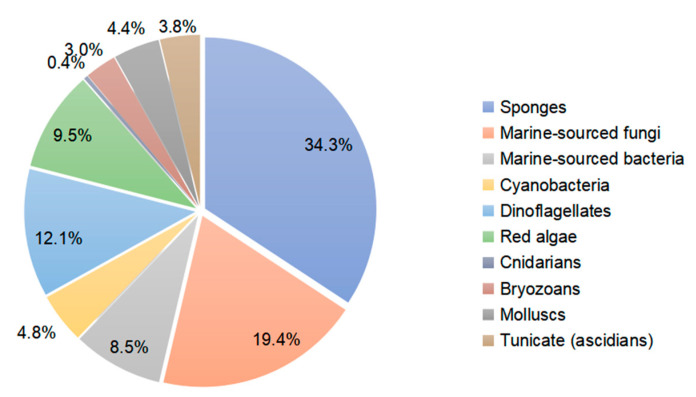
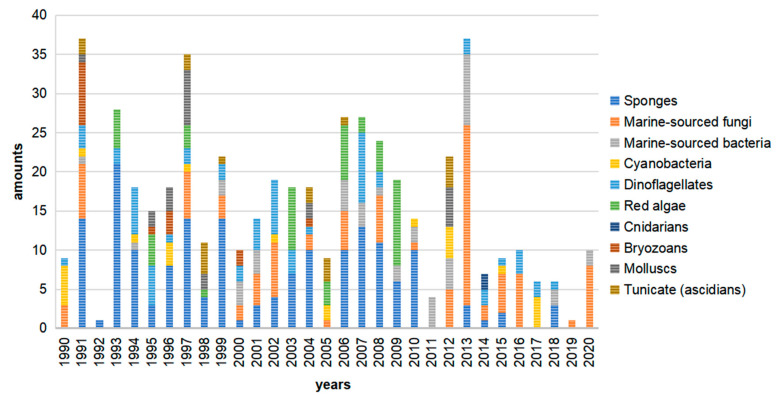
Macrolides are a significant family of natural products with diverse structures and bioactivities. Considerable effort has been made in recent decades to isolate additional macrolides and characterize their chemical and bioactive properties. The majority of macrolides are obtained from marine organisms, including sponges, marine microorganisms and zooplankton, cnidarians, mollusks, red algae, bryozoans, and tunicates. Sponges, fungi and dinoflagellates are the main producers of macrolides. Marine macrolides possess a wide range of bioactive properties including cytotoxic, antibacterial, antifungal, antimitotic, antiviral, and other activities. Cytotoxicity is their most significant property, highlighting that marine macrolides still encompass many potential antitumor drug leads. This extensive review details the chemical and biological diversity of 505 macrolides derived from marine organisms which have been reported from 1990 to 2020.
大环内酯类是具有多种结构和生物活性的天然产物大家族。近几十年来,人们付出了大量努力来分离更多的大环内酯类化合物,并对其化学和生物活性特性进行了表征。大多数大环内酯类化合物来自海洋生物,包括海绵、海洋微生物和浮游动物、刺胞动物、软体动物、红藻、苔藓虫和被囊动物。海绵、真菌和甲藻是大环内酯类化合物的主要生产者。海洋大环内酯类化合物具有广泛的生物活性,包括细胞毒性、抗菌、抗真菌、抗有丝分裂、抗病毒和其他活性。细胞毒性是它们最重要的特性,这突出表明海洋大环内酯类化合物仍然包含许多有潜力的抗肿瘤药物先导化合物。本综述详细介绍了 1990 年至 2020 年期间从海洋生物中分离得到的 505 种大环内酯类化合物的化学和生物多样性。