Elgamal Abdelbaset M, Ahmed Rania F, Abd-ElGawad Ahmed M, El Gendy Abd El-Nasser G, Elshamy Abdelsamed I, Nassar Mahmoud I
Department of Chemistry of Microbial and Natural Products, National Research Centre, 33 El-Bohouth St., Dokki, Giza 12622, Egypt.
Chemistry of Natural Compounds Department, National Research Center, 33 El Bohouth St., Dokki, Giza 12622, Egypt.
Plants (Basel). 2021 Mar 31;10(4):667. doi: 10.3390/plants10040667.
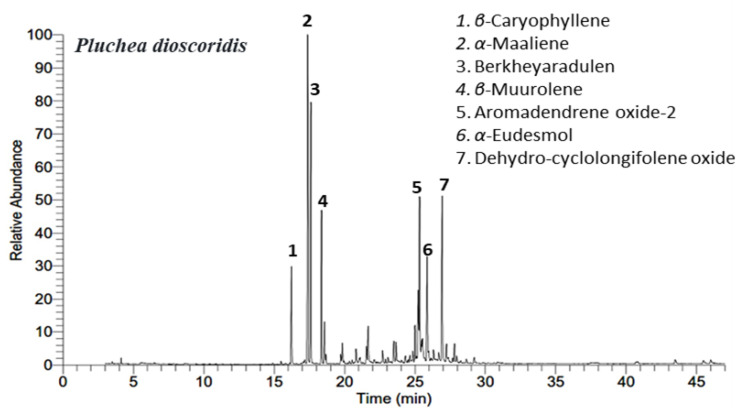
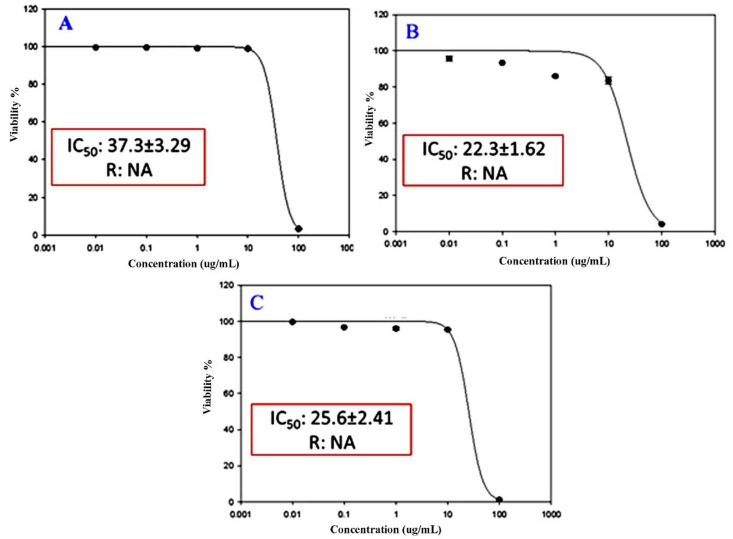
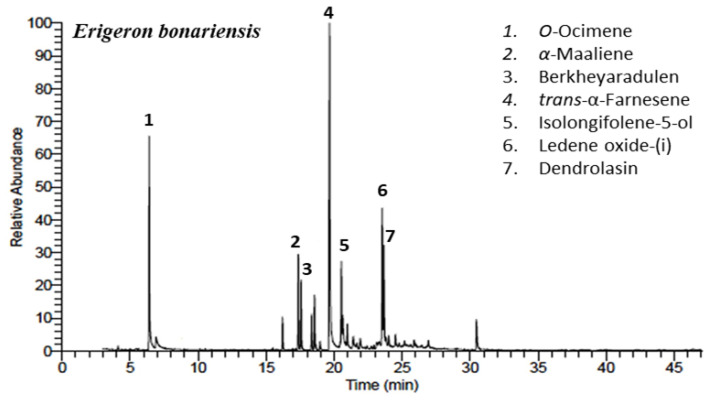
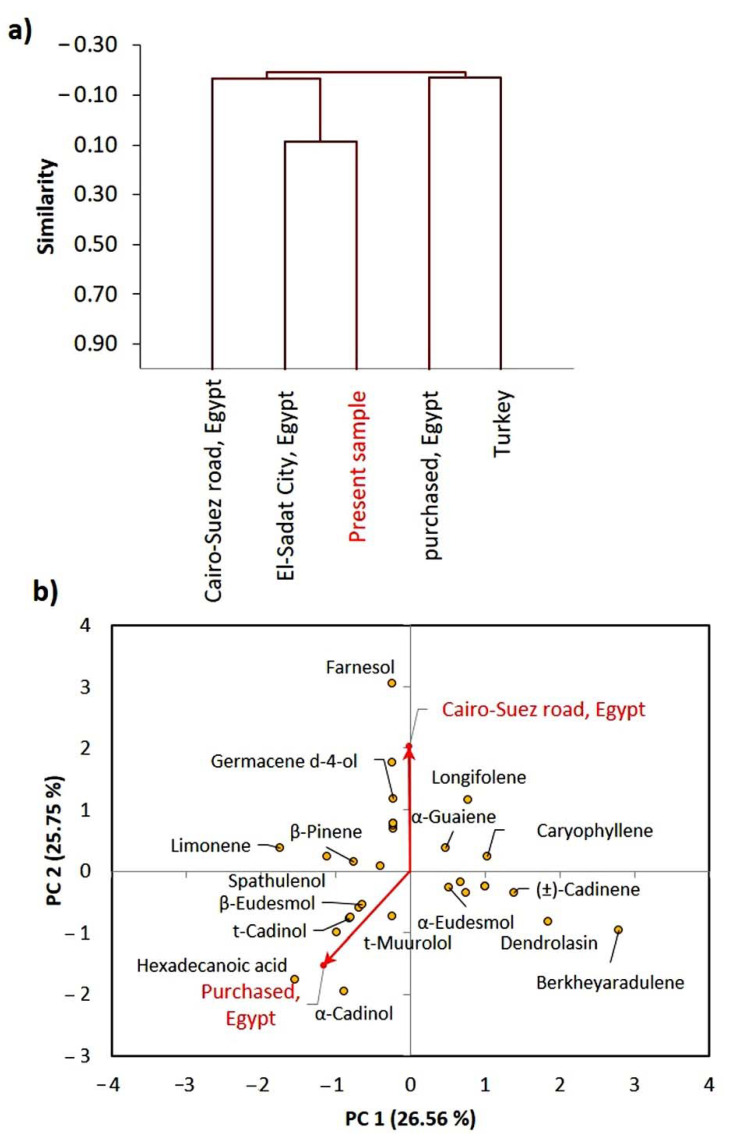
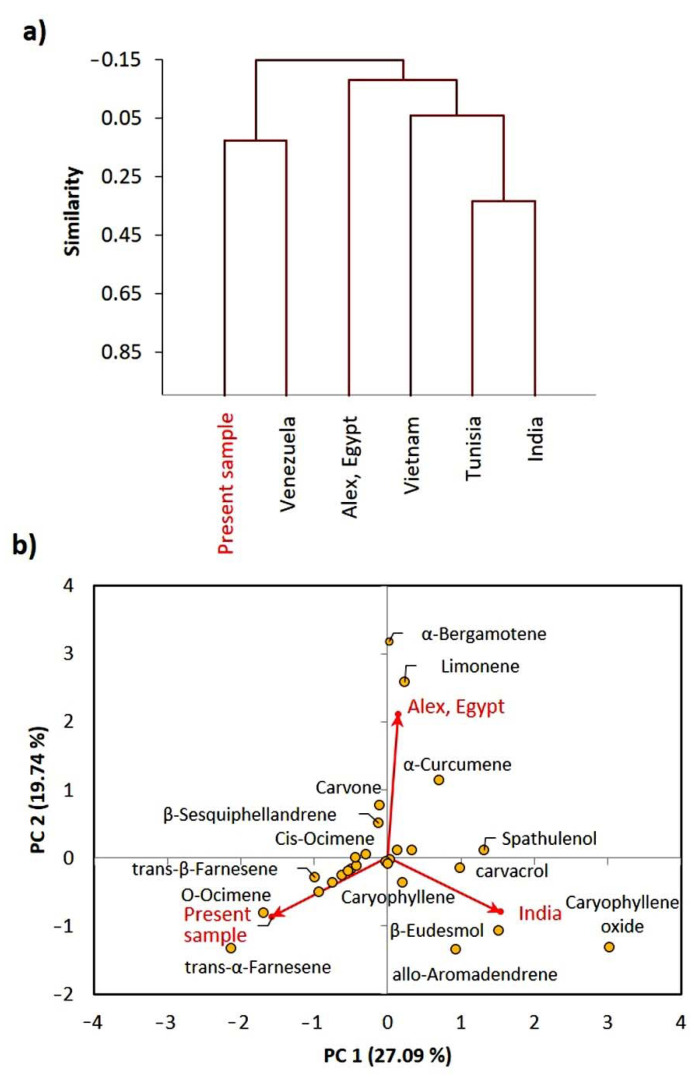
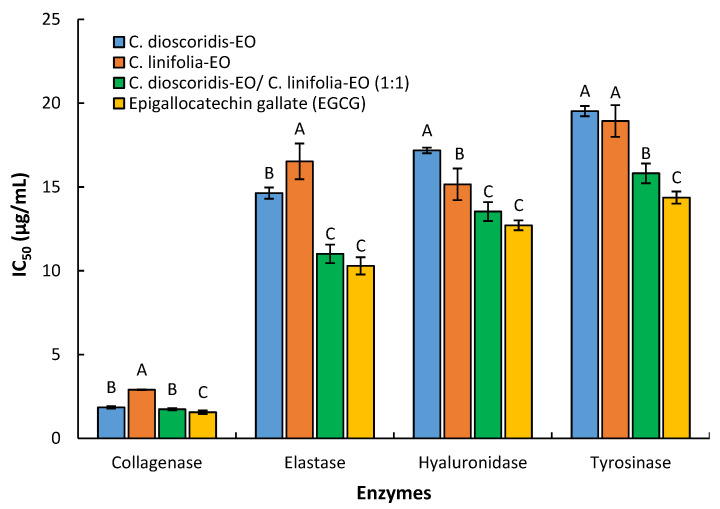
Plants belonging to the Asteraceae family are widely used as traditional medicinal herbs around the world for the treatment of numerous diseases. In this work, the chemical profiles of essential oils (EOs) of the above-ground parts of (L.) DC. and (L.) were studied in addition to their cytotoxic and anti-aging activities. The extracted EOs from the two plants via hydrodistillation were analyzed by gas chromatography-mass spectroscopy (GC-MS). GC-MS of EO of revealed the identification of 29 compounds representing 96.91% of the total oil. While 35 compounds were characterized from EO of representing 98.21%. The terpenoids were found the main constituents of both plants with a relative concentration of 93.59% and 97.66%, respectively, including mainly sesquiterpenes (93.40% and 81.06%). -Maaliene (18.84%), berkheyaradulen (13.99%), dehydro-cyclolongifolene oxide (10.35%), aromadendrene oxide-2 (8.81%), -muurolene (8.09%), and -eudesmol (6.79%), represented the preponderance compounds of EO of . While, trans-α-farnesene (25.03%), -ocimene (12.58%), isolongifolene-5-ol (5.53%), α-maaliene (6.64%), berkheyaradulen (4.82%), and -muurolene (3.99%), represented the major compounds EO of . A comparative study of our results with the previously described data was constructed based upon principal component analysis (PCA) and agglomerative hierarchical clustering (AHC), where the results revealed a substantial variation of the present studied species than other reported ecospecies. EO of exhibited significant cytotoxicity against the two cancer cells, MCF-7 and A-549 with IC of 37.3 and 22.3 μM, respectively. While the EO of the showed strong cytotoxicity against HepG2 with IC of 25.6 μM. The EOs of , , and their mixture (1:1) exhibited significant inhibitory activity of the collagenase, elastase, hyaluronidase, and tyrosinase comparing with epigallocatechin gallate (EGCG) as a reference. The results of anti-aging showed that the activity of mixture (1:1) > > against the four enzymes.
菊科植物在世界各地被广泛用作传统草药,用于治疗多种疾病。在这项研究中,除了研究了(L.)DC.和(L.)地上部分精油(EOs)的化学特征外,还研究了它们的细胞毒性和抗衰老活性。通过水蒸馏法从这两种植物中提取的精油,采用气相色谱 - 质谱联用仪(GC - MS)进行分析。对(植物名称1)精油的GC - MS分析鉴定出29种化合物,占总油含量的96.91%。而从(植物名称2)精油中鉴定出35种化合物,占总油含量的98.21%。发现萜类化合物是这两种植物精油的主要成分,相对含量分别为93.59%和97.66%,主要包括倍半萜烯(93.40%和81.06%)。-马勒烯(18.84%)、伯克亚拉杜烯(13.99%)、脱氢环长叶烯氧化物(10.35%)、氧化芳樟醇-2(8.81%)、-穆罗烯(8.09%)和-桉叶油醇(6.79%),是(植物名称1)精油中的主要化合物。而反式-α-法呢烯(25.03%)、-罗勒烯(12.58%)、异长叶烯-5-醇(5.53%)、α-马勒烯(6.64%)、伯克亚拉杜烯(4.82%)和-穆罗烯(3.99%),是(植物名称2)精油中的主要化合物。基于主成分分析(PCA)和凝聚层次聚类(AHC),将我们的结果与先前描述的数据进行了比较研究,结果显示,与其他报道的生态物种相比,本研究的物种存在显著差异。(植物名称1)的精油对两种癌细胞MCF - 7和A - 549表现出显著的细胞毒性,IC50分别为37.3和22.3 μM。而(植物名称2)的精油对HepG2表现出较强的细胞毒性,IC50为25.6 μM。与表没食子儿茶素没食子酸酯(EGCG)作为对照相比,(植物名称1)、(植物名称2)及其混合物(1:1)的精油对胶原酶、弹性蛋白酶、透明质酸酶和酪氨酸酶均表现出显著的抑制活性。抗衰老结果表明,混合物(1:1)>(植物名称1)>(植物名称2)对这四种酶的活性。