Abd-ElGawad Ahmed M, El Gendy Abd El-Nasser G, Assaeed Abdulaziz M, Al-Rowaily Saud L, Omer Elsayed A, Dar Basharat A, Al-Taisan Wafa'a A, Elshamy Abdelsamed I
Plant Production Department, College of Food and Agriculture Sciences, King Saud University, P.O. Box 2460, RIYADH 11451, Saudi Arabia.
Department of Botany, Faculty of Science, Mansoura University, Mansoura 35516, Egypt.
Plants (Basel). 2020 Aug 5;9(8):998. doi: 10.3390/plants9080998.
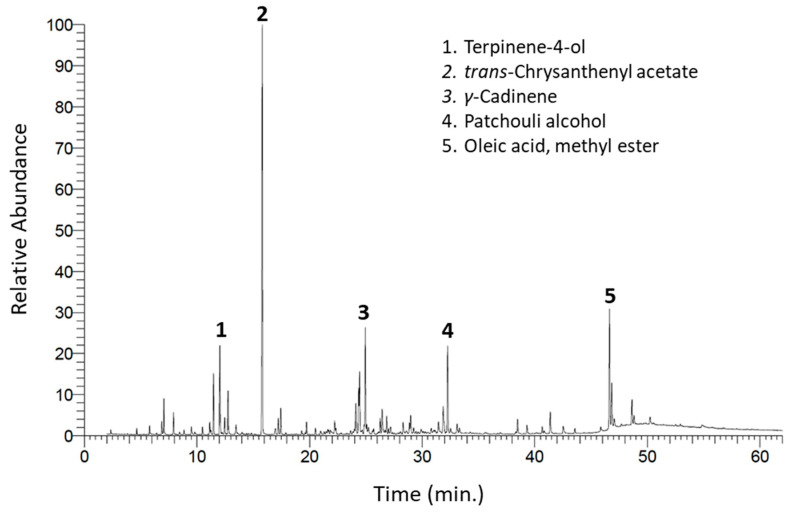
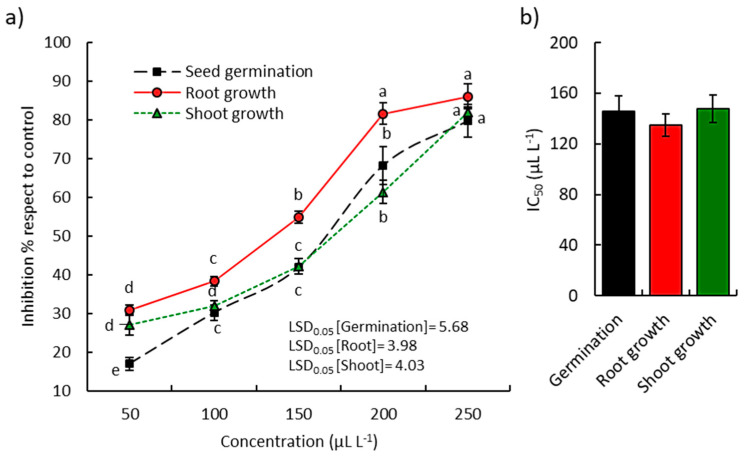
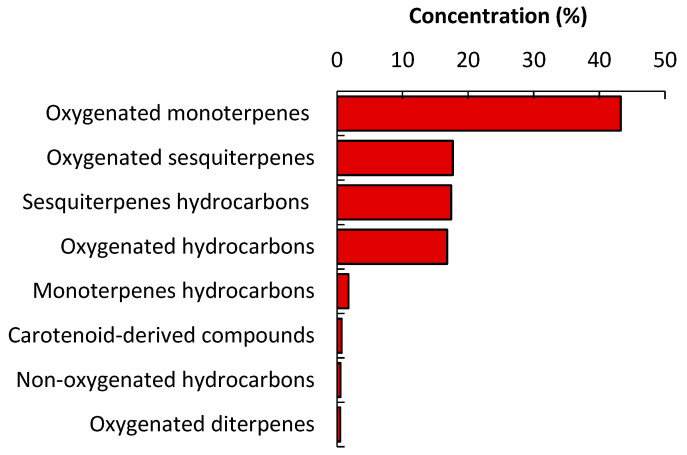
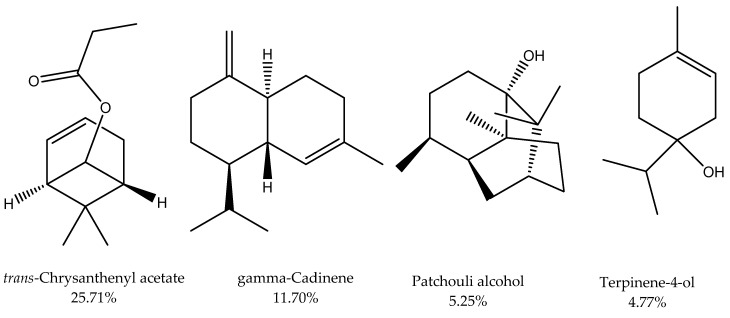
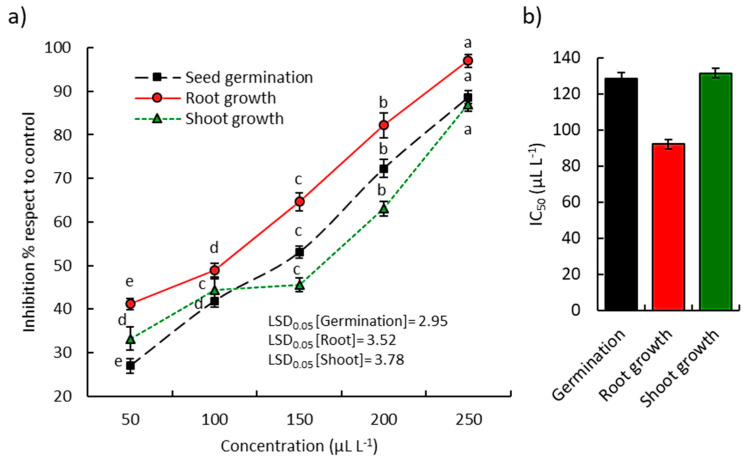
Invasive species are considered as one of the major threats to ecosystems worldwide. Although invasive plants are regarded as a foe, they could be considered as natural resources for valuable bioactive compounds. The present study aimed to characterize the chemical composition of the essential oil (EO) from the invasive plant Sweet, collected from Saudi Arabia, as well as to evaluate its phytotoxic activity. Seventy-four compounds were characterized via GC-MS analysis of EO representing 98.75% of the overall mass. The oxygenated constituents (79.01%) were found as the main constituents, including mono- (43.27%), sesqui- (17.67%), and di-terpenes (0.53%), as well as hydrocarbons (16.81%) and carotenoids (0.73%). Additionally, 19.69% from the overall mass was characterized as non-oxygenated compounds with mono- (1.77%), sesquiterpenes (17.41%), and hydrocarbons (0.56%) as minors. From all identified constituents, -chrysanthenyl acetate (25.71%), -cadinene (11.70%), oleic acid, methyl ester (7.37%), terpinene-4-ol (4.77%), dihydromyrcenol (2.90%), -muurolene (1.77%), and -himachalene (1.56%) were found as abundant. The EO of showed significant phytotoxic activity against the test plant and the noxious weed The EO attained IC values of 92.1, 128.6, and 131.6 µL L for seedling root growth, germination, and shoot growth of , respectively, while it had IC values of 134.8, 145.7, and 147.9 µL L, respectively, for . Therefore, this EO could be used as a bioherbicide against weeds, while further study is recommended for the characterization of the authentic materials of the main compounds in the EO as well as for the evaluation of potency of this oil on a field scale and the determination of its biosafety.
入侵物种被视为全球生态系统的主要威胁之一。尽管入侵植物被视为有害物,但它们可被视作富含珍贵生物活性化合物的自然资源。本研究旨在对采自沙特阿拉伯的入侵植物Sweet的精油(EO)化学成分进行表征,并评估其植物毒性活性。通过气相色谱 - 质谱联用(GC - MS)分析鉴定出74种化合物,占总质量的98.75%。含氧成分(79.01%)被发现是主要成分,包括单萜(43.27%)、倍半萜(17.67%)和二萜(0.53%),以及烃类(16.81%)和类胡萝卜素(0.73%)。此外,总质量的19.69%被表征为非含氧化合物,其中单萜(1.77%)、倍半萜(17.41%)和烃类(0.56%)含量较少。在所有鉴定出的成分中,发现乙酸 - 菊烯酯(25.71%)、杜松烯(11.70%)、油酸甲酯(7.37%)、萜品烯 - 4 - 醇(4.77%)、二氢月桂烯醇(2.90%)、γ - 衣兰油烯(1.77%)和α - 喜玛拉雅烯(1.56%)含量丰富。Sweet的精油对受试植物和有害杂草显示出显著的植物毒性活性。该精油对[受试植物名称]幼苗根生长、发芽和地上部分生长的IC值分别达到92.1、128.6和131.6 μL/L,而对[有害杂草名称]的IC值分别为134.8、145.7和147.9 μL/L。因此,这种精油可作为一种生物除草剂用于除草,同时建议进一步研究精油中主要化合物的真实材料表征、该精油在田间规模的效力评估及其生物安全性测定。