Wang Feng, Park Jeong-Su, Ma Yuanqiang, Ma Hwan, Lee Yeo-Jin, Lee Gyu-Rim, Yoo Hwan-Soo, Hong Jin-Tae, Roh Yoon-Seok
College of Pharmacy and Medical Research Center, Chungbuk National University, Cheongju, Chungbuk 28160, Korea.
Nutrients. 2021 Mar 5;13(3):856. doi: 10.3390/nu13030856.
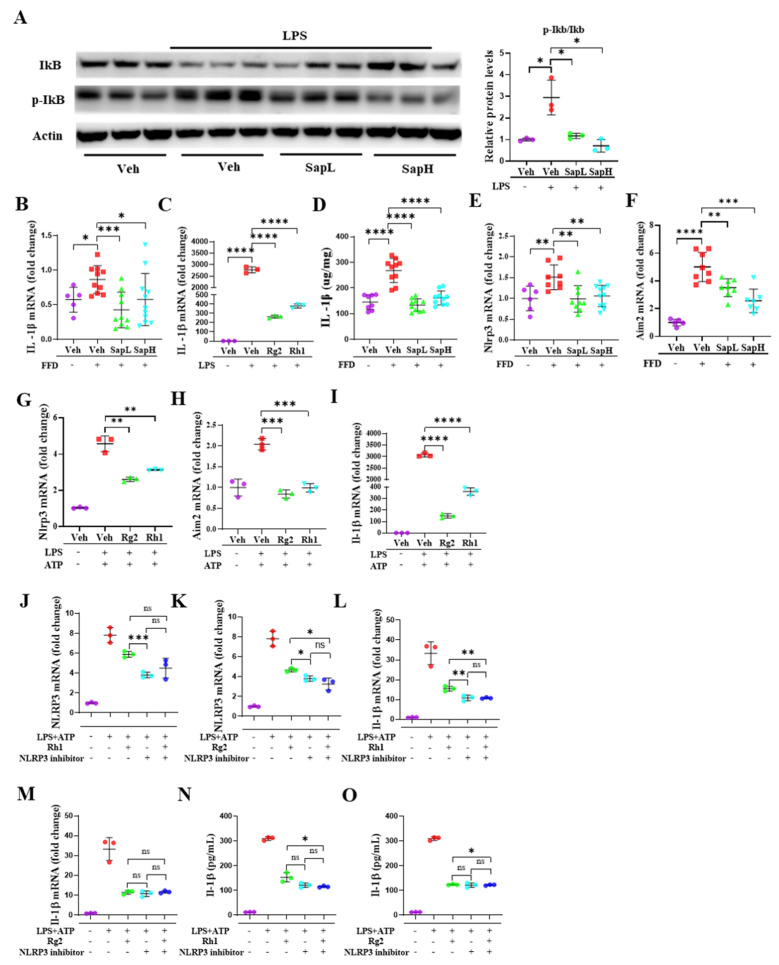
Nonalcoholic fatty liver disease (NAFLD) is becoming one of the most common chronic liver diseases in the world. One of the features of NAFLD is hepatic fat accumulation, which further causes hepatic steatosis, fibrosis, and inflammation. Saponins, the major pharmacologically active ingredients isolated from , contain several ginsenosides, which have various pharmacological and therapeutic functions. However, the ginsenoside-specific molecular mechanism of saponins in NAFLD remains unknown. This study aimed to elucidate the effects of ginseng saponin extract and its ginsenosides on hepatic steatosis, fibrosis, and inflammation and their underlying action mechanism in NAFLD. Mice were fed a fast food diet (FFD) for 16 weeks to induce NAFLD and then treated with saponin extract (50 or 150 mg/kg) for the remaining nine weeks to determine the effects of saponin on NAFLD. Saponin extract administration significantly alleviated FFD-induced hepatic steatosis, fibrosis, and inflammation. Particularly, saponin extract, compared with conventional red ginseng, contained significantly increased amounts of ginsenosides (Rh1 (10.34-fold) and Rg2 (7.1-fold)). In vitro Rh1 and Rg2 treatments exerted an anti-steatotic effect in primary hepatocytes, an antifibrotic effect in hepatic stellate cells, and anti-inflammatory and pro-mitophagy effects in immortalized mouse Kupffer cells. Mechanistically, saponin extract alleviated lipopolysaccharide-induced NLRP3 inflammasome activation by promoting mitophagy. In conclusion, saponin extract inhibited inflammation-mediated pathological inflammasome activation in macrophages, thereby preventing NAFLD development. Thus, saponin extract administration may be an alternative method for NAFLD prevention.
非酒精性脂肪性肝病(NAFLD)正成为全球最常见的慢性肝病之一。NAFLD的特征之一是肝脏脂肪堆积,这会进一步导致肝脂肪变性、纤维化和炎症。从[具体来源未提及]中分离出的主要药理活性成分皂苷含有多种人参皂苷,这些人参皂苷具有多种药理和治疗功能。然而,皂苷在NAFLD中人参皂苷特异性的分子机制仍不清楚。本研究旨在阐明人参皂苷提取物及其人参皂苷对肝脂肪变性、纤维化和炎症的影响及其在NAFLD中的潜在作用机制。给小鼠喂食快餐饮食(FFD)16周以诱导NAFLD,然后在接下来的九周用皂苷提取物(50或150mg/kg)进行治疗,以确定皂苷对NAFLD的影响。给予皂苷提取物可显著减轻FFD诱导的肝脂肪变性、纤维化和炎症。特别是,与传统红参相比,皂苷提取物中人参皂苷(Rh1(10.34倍)和Rg2(7.1倍))的含量显著增加。体外实验中,Rh1和Rg2处理在原代肝细胞中发挥抗脂肪变性作用,在肝星状细胞中发挥抗纤维化作用,在永生化小鼠库普弗细胞中发挥抗炎和促进线粒体自噬作用。机制上,皂苷提取物通过促进线粒体自噬减轻脂多糖诱导的NLRP3炎性小体激活。总之,皂苷提取物抑制巨噬细胞中炎症介导的病理性炎性小体激活,从而预防NAFLD的发展。因此,给予皂苷提取物可能是预防NAFLD的一种替代方法。