van Driel Beau Olivier, Schuldt Maike, Algül Sila, Levin Evgeni, Güclü Ahmet, Germans Tjeerd, Rossum Albert C van, Pei Jiayi, Harakalova Magdalena, Baas Annette, Jans Judith J M, van der Velden Jolanda
Amsterdam UMC, Vrije Universiteit Amsterdam, Physiology, Amsterdam Cardiovascular Sciences, De Boelelaan 1117, 1081 HZ Amsterdam, The Netherlands.
Amsterdam UMC, Universiteit van Amsterdam, Internal and Vascular Medicine, Meibergdreef 9, 1105 AZ Amsterdam, The Netherlands.
Int J Mol Sci. 2021 Mar 30;22(7):3569. doi: 10.3390/ijms22073569.
Calcific aortic valve disease (CAVD) is a rapidly growing global health problem with an estimated 12.6 million cases globally in 2017 and a 112% increase of deaths since 1990 due to aging and population growth. CAVD may develop into aortic stenosis (AS) by progressive narrowing of the aortic valve. AS is underdiagnosed, and if treatment by aortic valve replacement (AVR) is delayed, this leads to poor recovery of cardiac function, absence of symptomatic improvement and marked increase of mortality. Considering the current limitations to define the stage of AS-induced cardiac remodeling, there is need for a novel method to aid in the diagnosis of AS and timing of intervention, which may be found in metabolomics profiling of patients.
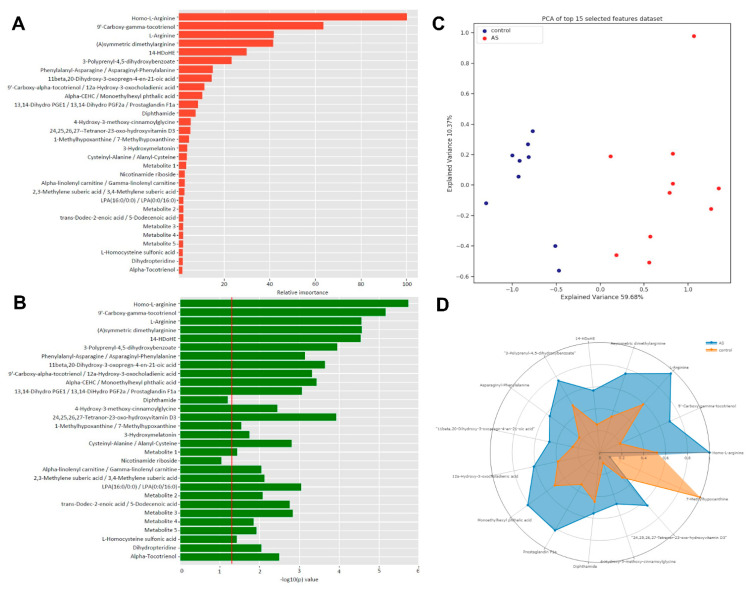
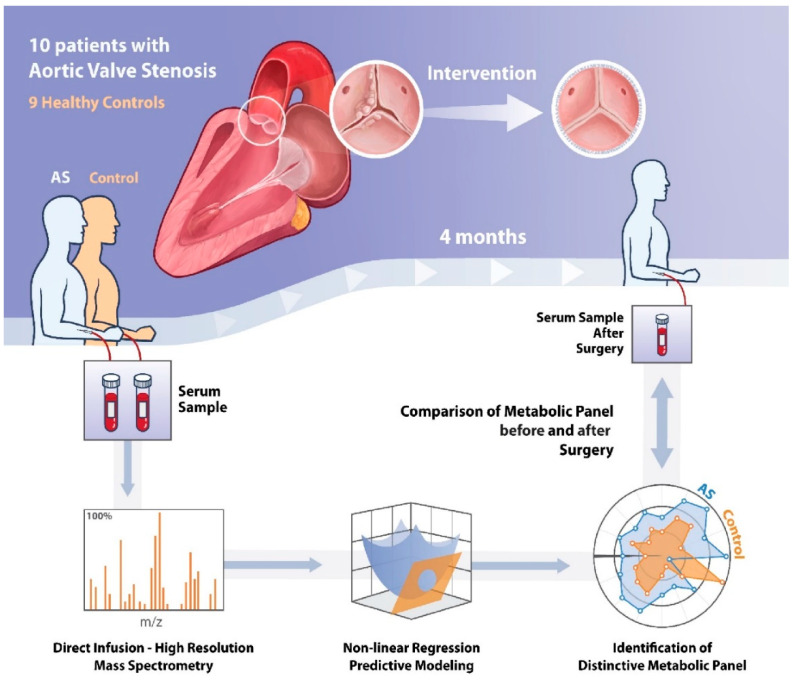
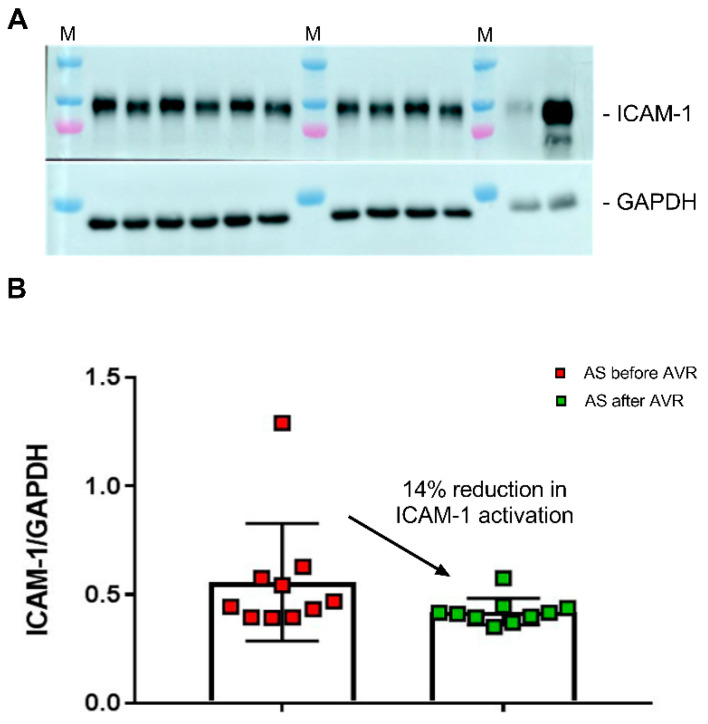
Serum samples of nine healthy controls and 10 AS patients before and after AVR were analyzed by untargeted mass spectrometry. Multivariate modeling was performed to determine a metabolic profile of 30 serum metabolites which distinguishes AS patients from controls. Human cardiac microvascular endothelial cells (CMECs) were incubated with serum of the AS patients and then stained for ICAM-1 with Western Blot to analyze the effect of AS patient serum on endothelial cell activation.
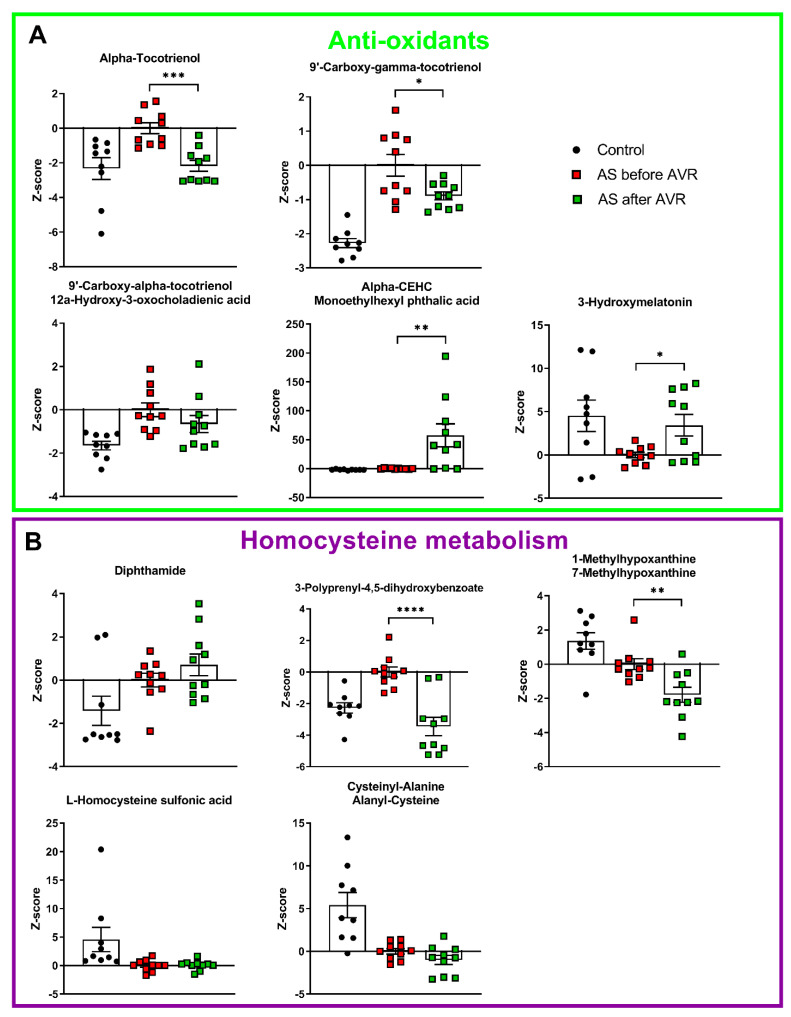
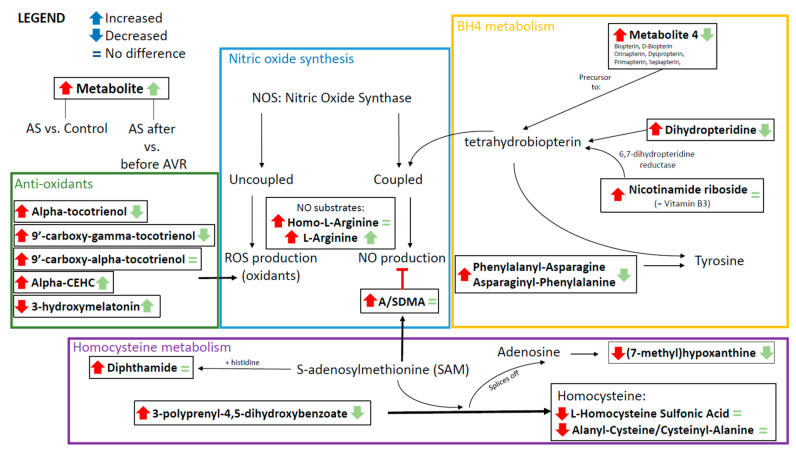
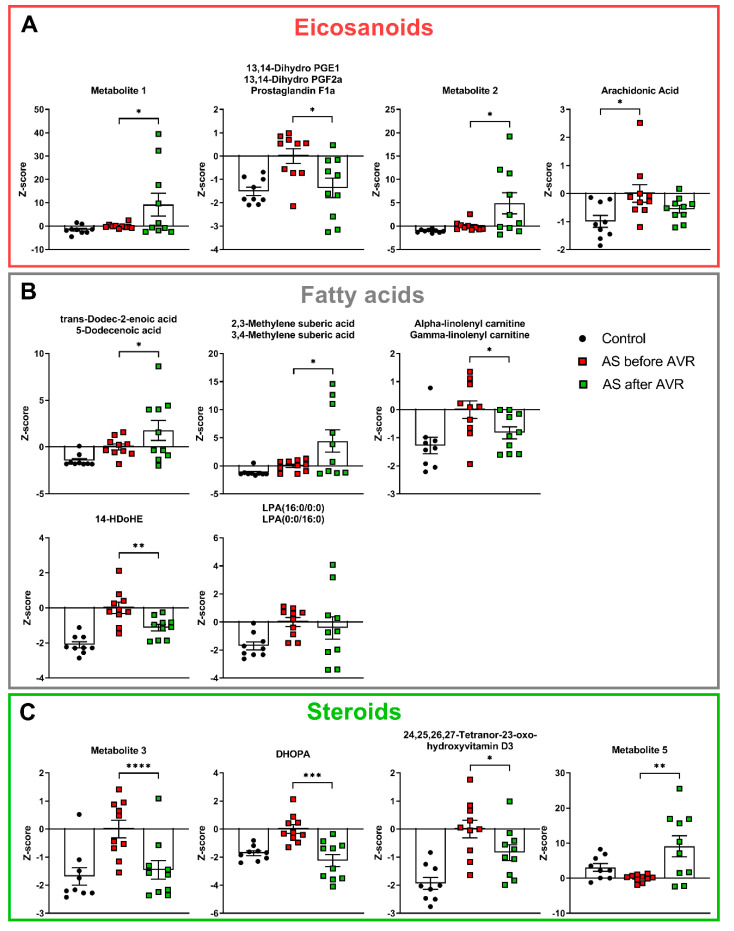
The top 30 metabolic profile strongly distinguishes AS patients from healthy controls and includes 17 metabolites related to nitric oxide metabolism and 12 metabolites related to inflammation, in line with the known pathomechanism for calcific aortic valve disease. Nine metabolites correlate strongly with left ventricular mass, of which three show reversal back to control values after AVR. Western blot analysis of CMECs incubated with AS patient sera shows a significant reduction (14%) in ICAM-1 in AS samples taken after AVR compared to AS patient sera before AVR.
Our study defined a top 30 metabolic profile with biological and clinical relevance, which may be used as blood biomarker to identify AS patients in need of cardiac surgery. Future studies are warranted in patients with mild-to-moderate AS to determine if these metabolites reflect disease severity and can be used to identify AS patients in need of cardiac surgery.
钙化性主动脉瓣疾病(CAVD)是一个在全球范围内迅速增长的健康问题,2017年全球估计有1260万例,自1990年以来,由于老龄化和人口增长,死亡人数增加了112%。CAVD可能通过主动脉瓣的逐渐狭窄发展为主动脉狭窄(AS)。AS的诊断不足,如果主动脉瓣置换术(AVR)治疗延迟,会导致心功能恢复不佳、症状无改善以及死亡率显著增加。考虑到目前在定义AS所致心脏重塑阶段方面的局限性,需要一种新的方法来辅助AS的诊断和干预时机的选择,这可能可以从患者的代谢组学分析中找到。
对9名健康对照者和10名接受AVR前后的AS患者的血清样本进行非靶向质谱分析。进行多变量建模以确定区分AS患者与对照者的30种血清代谢物的代谢谱。将人心脏微血管内皮细胞(CMECs)与AS患者的血清一起孵育,然后用蛋白质印迹法对细胞间黏附分子-1(ICAM-1)进行染色,以分析AS患者血清对内皮细胞活化的影响。
排名前30的代谢谱能够显著区分AS患者与健康对照者,包括17种与一氧化氮代谢相关的代谢物和12种与炎症相关的代谢物,这与钙化性主动脉瓣疾病已知的发病机制一致。九种代谢物与左心室质量密切相关,其中三种在AVR后恢复到对照值。对用AS患者血清孵育的CMECs进行蛋白质印迹分析显示,与AVR前的AS患者血清相比,AVR后采集的AS样本中ICAM-1显著降低(14%)。
我们的研究确定了一个具有生物学和临床相关性的排名前30的代谢谱,可作为血液生物标志物来识别需要心脏手术的AS患者。有必要对轻至中度AS患者进行进一步研究,以确定这些代谢物是否反映疾病严重程度,并可用于识别需要心脏手术的AS患者。